
Finding the perfect long table foldable setup for a Philippine balcony is a balance between creating an outdoor escape and keeping your walkways safe. Whether you are setting up a cozy sunset viewing spot in a high-rise condominium in Metro Manila or creating a small garden nook, the maximum length of your table is dictated by how much room you have to move around it. A table that is too long or deep turns a relaxing balcony into a cramped obstacle course.
To find the right fit, you must look beyond the overall length and carefully calculate your balcony’s depth, door clearances, and structural layout. By choosing the correct dimensions, you can enjoy an outdoor dining or workspace without compromising the safety and flow of your home.
Measuring Your Balcony and Calculating Walkway Clearance
To avoid buying a table that blocks your path, start with precise measurements of your balcony’s physical boundaries. Many homeowners mistake the total square footage of their balcony for usable space. In reality, structural columns, drainage pipes, and floor grates cut into your actual footprint. Use a steel measuring tape to record the total length (the wall or railing side where you plan to place the table) and the total depth (the distance from the interior wall to the outer edge of the railing).
Products mentioned in this guide
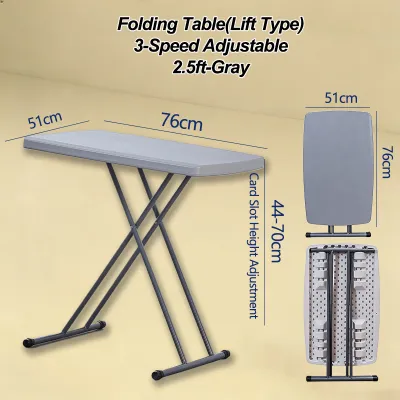
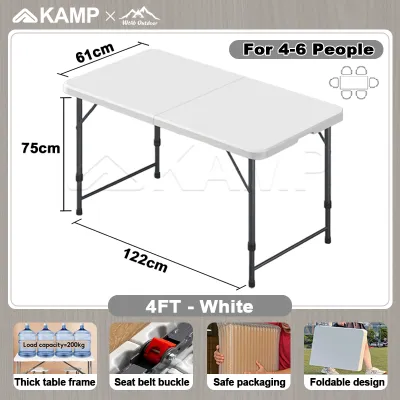
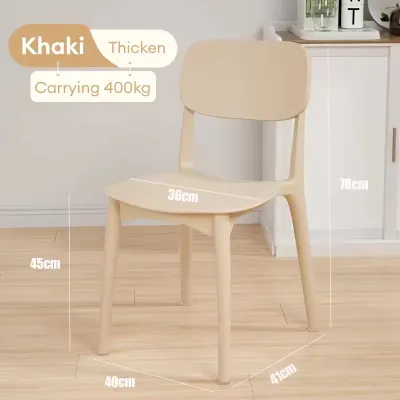
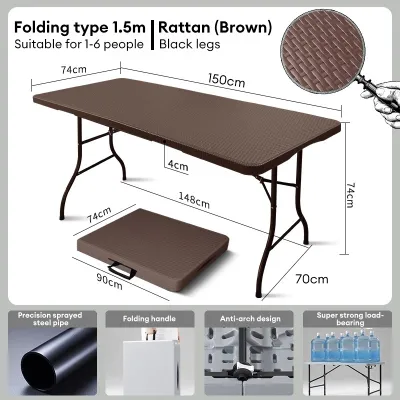
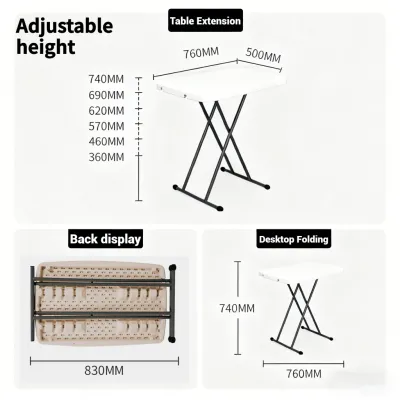
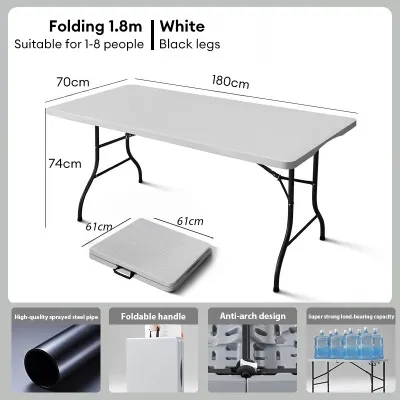
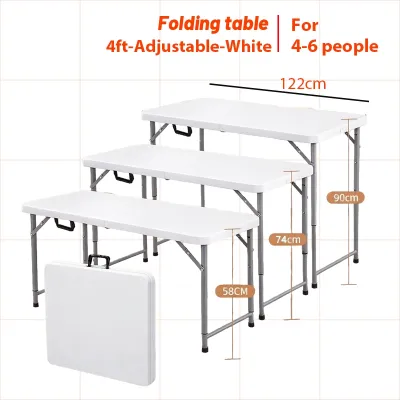
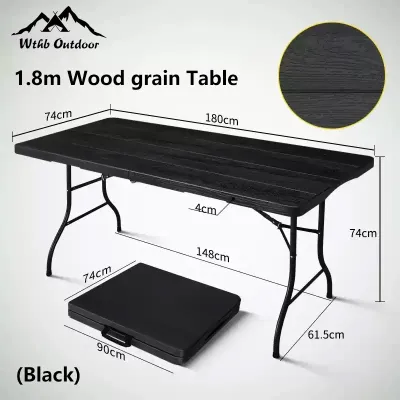
Prices are valid at publication and may change. Please refer to the product page for the latest price.
Maintaining a comfortable walkway is essential for safety and daily convenience. In general, ergonomic design standards recommend keeping a clear walkway of at least 60 to 90 cm (approximately 24 to 36 inches). This range allows a single adult to walk forward comfortably without squeezing sideways. If you frequently use your balcony to hang laundry, water plants, or carry large trays of food, aim for the higher end of this range.
In the Philippines, local condominium associations and property management offices (PMOs) often enforce strict safety rules regarding balcony clearances. Some buildings require a minimum unobstructed pathway to ensure safe evacuation during emergencies, such as typhoons or earthquakes. Always request a copy of your building’s tenant handbook or consult your PMO before purchasing or installing furniture on your balcony.
Another critical factor is the door swing radius. If your balcony has a traditional hinged door that opens outward, it will sweep across a significant portion of your floor space. Sliding glass doors are much more space-efficient, but they still require clear access. Measure the exact path of your swinging door and mark this zone on the floor. Your foldable table must sit entirely outside this arc to prevent collisions.
To find the absolute limit for your table’s depth, use this simple calculation:
Maximum Table Depth = Total Balcony Depth – Required Walkway Clearance – Door Swing Space (if applicable)
For example, if your balcony has a total depth of 120 cm, you require a 70 cm walkway, and your sliding door does not swing outward, your maximum table depth is 50 cm. Once you establish this boundary, you can safely select a table length that runs parallel to your railing or wall without choking your outdoor space.
Matching Foldable Table Lengths to Your Balcony Layout
When browsing for a long table foldable option, it is easy to confuse length with depth. In outdoor balcony layouts, “length” refers to the long side of the table that runs parallel to your wall or railing. “Depth” is the measurement that projects outward into your walking path. While length determines how many people can sit together, depth is the critical dimension that determines whether your walkway remains functional.

The shape of your balcony dictates the best configuration for your foldable table. Let’s look at how different layouts handle these dimensions:
- Narrow and Long Balconies: Often found in high-rise apartments, these layouts benefit most from long, shallow tables. A table measuring 100 to 150 cm in length but only 40 to 50 cm in depth fits perfectly against a concrete wall or railing. This gives you ample room for laptop work, drinks, or light meals while leaving the remaining balcony width open for movement.
- Wide or Square Balconies: If you are blessed with a deeper balcony, you have more freedom. You can opt for freestanding folding tables that stretch 180 cm or longer. You can even consider L-shaped folding configurations that wrap around a corner. However, even with a square layout, you must ensure the table's depth does not encroach on the 60 to 90 cm walkway zone.
To help you visualize these limits, here is a quick guide comparing balcony depth to recommended table dimensions:
| Available Balcony Depth | Recommended Table Depth | Maximum Length Considerations |
|---|---|---|
| Under 90 cm | 20 to 30 cm | Best suited for ultra-slim, railing-mounted bar ledges up to 100 cm long. |
| 90 to 120 cm | 30 to 45 cm | Ideal for wall-mounted folding tables or slim freestanding consoles up to 120 cm long. |
| 120 to 150 cm | 45 to 60 cm | Accommodates standard folding tables up to 150 cm long while keeping a clear walkway. |
| Over 150 cm | 60 cm or more | Suitable for full-sized folding dining tables (180 cm+ long) or multi-functional setups. |
Before committing to a specific table length, inspect the continuous wall or railing space where the table will go. Do not assume a 150 cm table will fit just because your balcony is 200 cm long. Check for protruding structural columns, outdoor electrical outlets, drainage pipes, and safety grilles. Your table must fit cleanly within a flat, unobstructed span to fold down properly when not in use.
Space-Saving Installation and Placement Options
How you mount or place your foldable table plays a massive role in how much physical and visual space it occupies. Choosing the right installation method can help you reclaim valuable floor area when the table is folded away.
- Wall-Mounted Foldable Tables: These drop-leaf tables are anchored directly to your balcony wall. When folded down, they lie virtually flat against the wall, completely freeing up the floor beneath them. Before installing one, check your wall's construction. Solid concrete walls, common in Philippine condominiums, offer excellent load-bearing capacity but require a hammer drill and heavy-duty masonry anchors. Hollow concrete blocks require specialized toggle bolts to prevent the table from pulling out under weight. If you are unsure about your wall's structural integrity, always consult a professional contractor.
- Railing-Mounted Foldable Tables: If drilling into your building's exterior walls is prohibited, railing-mounted tables are an outstanding alternative. These tables hang over your existing balcony balustrade using adjustable brackets. Because they do not touch the floor, they keep your walkway completely clear. When buying, measure your railing's top profile carefully. Brackets must fit securely around square, round, or flat handrails. Always inspect the structural integrity of your railing; it must be solid and free of rust or loose welds to support the weight of the table and anything placed on it.
- Freestanding Folding Tables: For renters or those who want maximum versatility, freestanding tables are highly practical. You can unfold them for weekend gatherings and fold them flat to store against a wall during the workweek. However, keep in mind that freestanding models require dedicated storage space when folded. Their legs may also splay outward slightly, which can create minor tripping hazards in tight walkways when the table is fully deployed.
Regardless of the style you choose, always check your building’s property management guidelines. Many residential towers in the Philippines have strict covenants regarding exterior facades. Some prohibit drilling into outer walls to preserve waterproofing membranes, while others ban hanging items over railings due to wind hazards during typhoons. Confirming these rules beforehand saves you from costly fines and safety violations.
Common Sizing and Clearance Mistakes to Avoid
Designing a small outdoor space requires precision, and even minor miscalculations can make your balcony unusable. Avoiding these common mistakes will ensure your setup is both comfortable and safe.
- Focusing Only on Length: Many shoppers search for a "long table foldable" model and focus entirely on how many people it can seat. However, table depth is the metric that actually dictates walkway clearance. A table that is 180 cm long but 80 cm deep will completely block a standard 120 cm wide balcony, rendering the space impassable. Always prioritize a shallow depth (40 to 50 cm) for narrow spaces.
- Ignoring Seating Clearance: A table does not exist in a vacuum; you need space to sit. When you pull out a chair or stool, it extends your dining footprint by another 40 to 50 cm. If you do not account for this, your walkway will be completely blocked whenever someone sits down. To maximize space, pair your long table with stackable stools, folding chairs, or backless bar stools that tuck entirely underneath the table frame when not in use.
- Overlooking Utility Access: Balconies often house essential building utilities. Placing a foldable table directly in front of an air conditioning condenser unit, an outdoor electrical outlet, or a drainage cleanout pipe is a major mistake. Not only does this block airflow—which can cause your air conditioner to overheat—but it also prevents technicians from performing routine maintenance.
- Assuming Universal Railing Compatibility: Many railing-mounted folding tables claim to have "universal" brackets. However, these brackets often fail to fit custom-designed railings, extra-thick concrete parapets, or modern glass balustrades. Always measure the exact width and depth of your handrail before purchasing, and verify that the mounting clamps can be locked down securely.
Frequently Asked Questions (FAQ)
How much walkway space should I leave on my balcony?
For a comfortable and safe balcony path, you should leave a minimum of 60 to 90 cm (24 to 36 inches) of clear space. This allows you to walk naturally without having to turn sideways. If you routinely carry bulky items across your balcony, such as laundry baskets, trash bins, or potted plants, aim closer to the 90 cm mark. Additionally, check your local building codes or condominium fire safety guidelines, as some properties mandate specific clearance widths to keep emergency escape routes clear.
Can I mount a foldable table on a glass balcony railing?
Mounting a foldable table directly onto glass panels is highly unsafe and should be avoided. Glass balustrades are not designed to handle the localized, downward, or twisting physical forces exerted by a loaded table. If your balcony has a glass railing supported by a robust metal frame or a heavy-duty top handrail, you must ensure that all mounting brackets attach exclusively to these metal structural components. Always consult your building’s engineering office and the table manufacturer’s guidelines to confirm safety limits before installation.
Community discussion
Share your experience or ask a question. Comments are reviewed before publication.