
Fitting a comfortable reclining chair or a cozy lazy sofa into a 20 square meter condo living room requires balancing personal relaxation with spatial harmony. In a compact urban home, every square centimeter of floor space must be utilized intentionally to prevent the room from feeling cramped or difficult to navigate. The ideal seating solution should offer maximum comfort while maintaining clear pathways and preserving the visual openness of your living area.
To achieve this balance, a single compact reclining chair should ideally have an upright footprint of no more than 80 centimeters in width and 90 centimeters in depth, while a lazy sofa should be kept under 100 centimeters in width. When fully extended, the total length of the furniture must not encroach upon the central traffic zones or block access to essential areas like the balcony or kitchen. By selecting pieces with slim profiles, space-saving mechanisms, and breathable materials suited for tropical climates, you can create a cozy retreat that enhances rather than cluttering your limited condo space.
Assessing Your 20 Sqm Living Room Layout
Before purchasing any new furniture, it is essential to calculate the actual usable floor area of your living room. A 20 square meter space often sounds generous on paper, but once you subtract the footprint of a television console, a main sofa, side tables, and structural elements like columns or recessed walls, the remaining open space shrinks rapidly. Grab a measuring tape and map out the exact dimensions of your room, noting down the fixed boundaries that cannot be altered.
Products mentioned in this guide
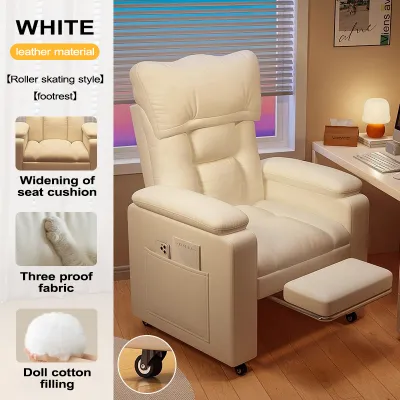
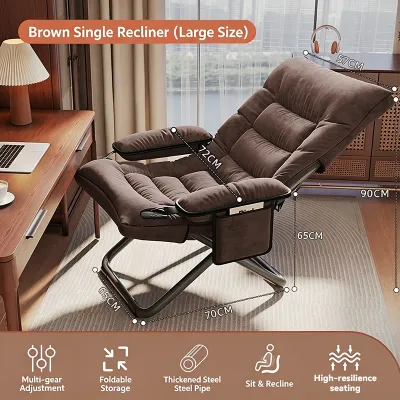

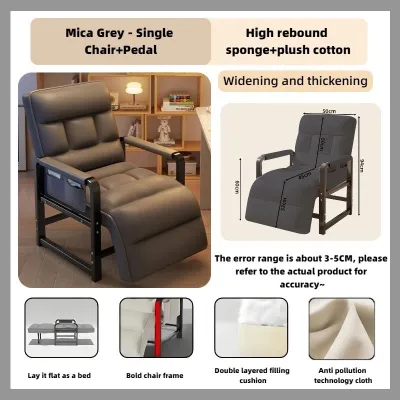
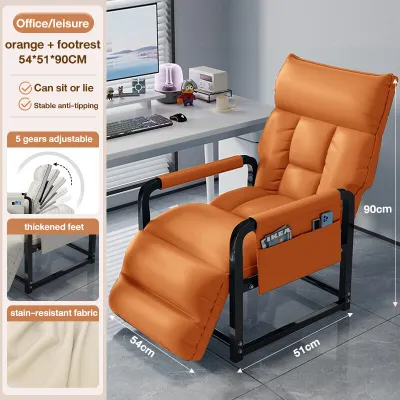
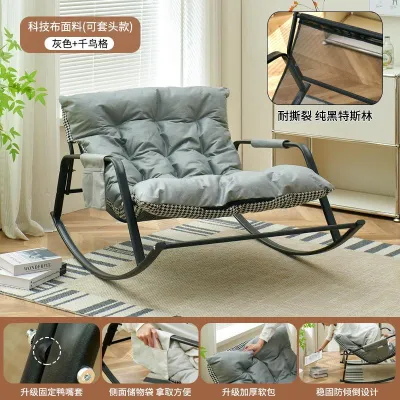
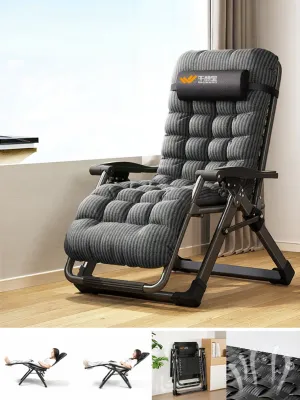
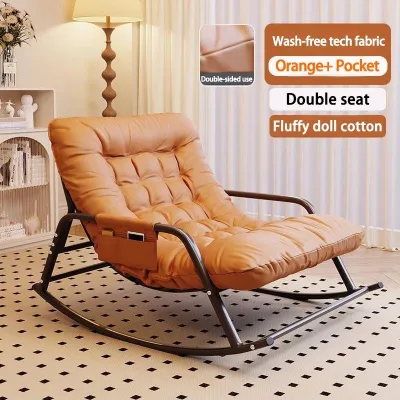
Prices are valid at publication and may change. Please refer to the product page for the latest price.
Next, identify the primary focal point of the room, which is typically the television screen, a large window, or a balcony door. Your new reclining chair or lazy sofa must align with this focal point to ensure comfortable viewing or relaxation, but it should never block the natural sightlines. Placing a tall, bulky recliner directly in front of a window can block natural light, making a small condo feel dark and even smaller than it actually is.
Finally, trace the daily traffic routes through your living room. Mark the pathways between the entrance, the kitchen, the dining area, and the balcony. Doors must be able to swing fully open without hitting the furniture, and there should be a clear, unobstructed path of at least 60 to 70 centimeters for comfortable walking. If your condo features a sliding balcony door, ensure the chair’s placement does not restrict access to the track or prevent you from opening the door fully to let in a fresh breeze.
Target Dimensions for Reclining Chairs and Lazy Sofas
When shopping for a compact reclining chair, look for models that maintain a slim silhouette. Standard compact recliners generally feature an upright width of 70 to 80 centimeters, a depth of 85 to 95 centimeters, and an overall height of 90 to 100 centimeters. These dimensions provide sufficient ergonomic support for most body types without dominating the room’s layout. For floor-level lazy sofas, aim for a width of 80 to 100 centimeters and a depth of 90 to 110 centimeters, keeping the overall height low to the ground to create an illusion of higher ceilings.

Comparing a single reclining chair to a multi-seat modular lazy sofa reveals distinct spatial trade-offs. A single reclining chair offers dedicated, structured support and occupies a highly defined, predictable footprint, making it easy to tuck into a corner or place alongside an existing sofa. On the other hand, a modular lazy sofa provides casual, flexible seating that can be rearranged for lounging, working, or hosting guests. However, modular pieces often have a wider horizontal footprint, which can quickly consume valuable floor space if not positioned carefully against a wall.
The most critical dimension to consider is the fully extended length of the furniture. A reclining chair that appears perfectly compact when upright can expand significantly when the footrest is raised and the backrest is tilted. Many standard recliners require an extended length of 150 to 170 centimeters to recline fully. You must measure this total extended length against your available space to ensure the footrest does not collide with your coffee table or force family members to climb over the chair to cross the room.
Space-Saving Mechanisms and Profiles
To maximize the functionality of your 20 square meter living room, prioritize furniture equipped with space-saving mechanisms. Wall-hugger or zero-clearance recliners are specifically engineered for tight spaces. Unlike traditional recliners that tilt backward and require significant space behind the chair, wall-huggers slide forward on a track as they recline. This unique mechanism allows you to place the back of the chair as close as 5 to 10 centimeters from the wall, saving valuable floor space in the center of the room.
For those leaning toward a lazy sofa, look for foldable, multi-functional, or low-profile designs. Many modern lazy sofas feature adjustable internal frames that allow them to transition from an upright floor chair to a relaxed lounger or even a flat mattress for overnight guests. When not in use, some models can be folded completely in half or stacked neatly, allowing you to reclaim floor space for daily activities, home workouts, or cleaning.
The visual weight of the furniture is just as important as its physical dimensions. To keep your condo looking airy and spacious, select chairs with armless profiles or ultra-slim armrests. Thick, overstuffed armrests can add 15 to 20 centimeters of unnecessary width to a chair without increasing the actual seating area. Choosing a model with sleek, narrow arms or an open wooden frame reduces the visual bulk, allowing light to pass through and making the entire room feel more expansive.
Delivery and In-Room Clearance Checklist
A common oversight when purchasing condo furniture is failing to plan for the delivery process. Before finalizing your purchase, measure the height and width of your building’s elevator doors, the interior dimensions of the elevator cabin, and any tight turns in the stairwells. You must also measure the clear width of your condo unit’s main entryway and any interior hallways. Many high-rise developments in urban areas of the Philippines have narrow doorways and sharp corridor angles that can prevent fully assembled recliners from entering the unit.
Once the furniture is inside, you must verify the operational clearance within the room itself. Ensure there is a minimum of 60 centimeters of clearance in front of the chair when the footrest is fully extended so that you can easily stand up and sit down. If you plan to place a coffee table or a side table nearby, check that the swinging motion of the footrest will not strike the table legs or knock over items placed on top.
Additionally, pay close attention to the location of your electrical outlets. If you select a motorized power recliner or a model with built-in USB charging ports, the chair will need to be positioned close to a wall outlet. Avoid running extension cords across open walkways, as this creates a serious tripping hazard and looks untidy. If an outlet is not nearby, consider manual reclining models that rely on a simple lever or body weight tension to operate, eliminating the need for cords entirely.
Common Sizing and Layout Mistakes
One of the most frequent mistakes condo owners make is ignoring the fully extended depth of their reclining furniture during the planning phase. It is easy to fall in love with a chair in a spacious showroom, only to realize that when you try to recline at home, the footrest blocks the path to the kitchen or hits the television console. Always plan your layout based on the maximum extended dimensions rather than the upright footprint.
Another common error is choosing heavily padded, dark leather designs that are better suited for large suburban basement theaters. In a 20 square meter condo, these bulky pieces visually dominate the space, making the room feel cramped and dark. Furthermore, heavy leather can trap heat and moisture, which is highly impractical for the warm, humid tropical climate of the Philippines. Opt instead for light-colored, breathable fabric upholstery that promotes airflow and keeps the room feeling fresh.
Finally, do not forget to account for the operational clearance of manual levers or buttons. If your recliner uses a side lever to release the footrest, you must leave at least 10 to 15 centimeters of clear space on that side of the chair to allow your hand to reach and operate the mechanism comfortably. Placing the lever side flush against a wall or a side table will make the chair incredibly frustrating to use on a daily basis.
Frequently Asked Questions (FAQ)
Can a lazy sofa replace a traditional sofa in a 20 sqm living room?
A lazy sofa can serve as primary seating if you prefer a casual, low-profile aesthetic, but it offers less seating capacity and back support than a traditional sofa. The low height can make sitting upright or hosting formal guests challenging. For a balanced setup, consider pairing a compact traditional two-seater sofa with a single flexible lazy sofa.
How much wall clearance does a zero-wall recliner actually need?
Most zero-wall or wall-hugger recliners require only 5 to 10 centimeters of clearance from the wall behind them. Because the seat slides forward on its track as the backrest reclines, the top of the chair avoids hitting the wall. Always check the manufacturer’s manual for the exact clearance specifications of your specific model.
Are floor-level lazy sofas suitable for users with mobility limitations?
Floor-level lazy sofas are generally not recommended for individuals with mobility limitations, joint pain, or difficulty standing up. The low seating position requires significant leg and core strength to transition to a standing posture. For better accessibility, choose an elevated reclining chair with supportive armrests and a stable, standard-height seat base.
Community discussion
Share your experience or ask a question. Comments are reviewed before publication.