
Hosting a family gathering in the Philippines is a cherished tradition, but organizing a comfortable meal for a large group requires careful spatial planning. If you are wondering whether a standard uratex monoblock table can comfortably seat 6 to 10 family members, the short answer is no—at least not with a single standard table. A typical rectangular monoblock table is designed to accommodate 4 to 6 people comfortably. Attempting to crowd 8 to 10 diners around one standard table will result in a cramped, uncomfortable experience where guests lack the elbow room to eat and space to place their plates.
To successfully host a large family of 6 to 10 people, you must look beyond a single standard setup. Achieving a comfortable dining environment requires understanding table dimensions, calculating proper room clearances, and implementing smart table configurations. By combining multiple tables, selecting alternative seating types, or utilizing auxiliary serving stations, you can easily transform lightweight, durable monoblock furniture into a highly functional banquet setup for your next family feast.
Standard Uratex Monoblock Table Sizes vs. Seating Needs for 6 to 10 Diners
When planning a dining layout, it is essential to look at the actual dimensions of the furniture rather than relying on visual estimates. In the Philippines, standard rectangular monoblock tables typically measure around 30 inches by 48 inches (approximately 76 cm in width by 122 cm in length). Some larger premium models or alternative brands may offer slightly longer options, but the 4-foot length remains the most common standard found in households and local hardware stores. Because “monoblock” refers to the injection-molded manufacturing process rather than a single universal size, dimensions will vary by specific model, making it critical to verify the product specifications before purchasing.
Products mentioned in this guide
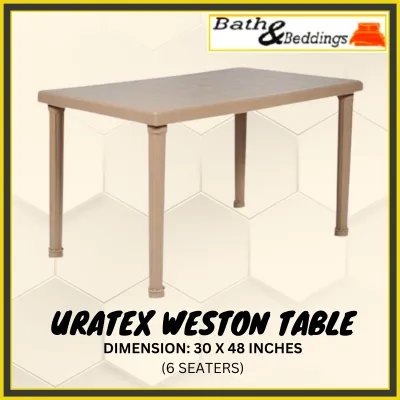
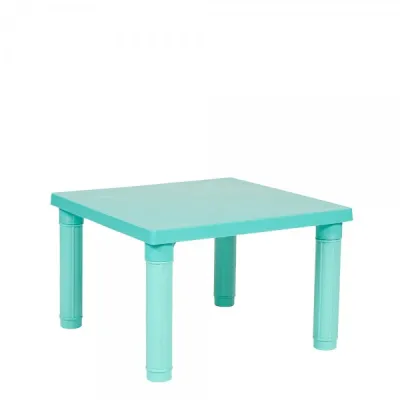
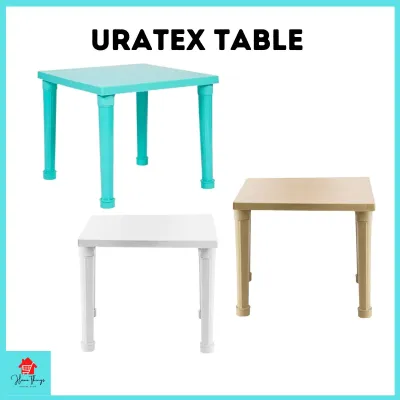
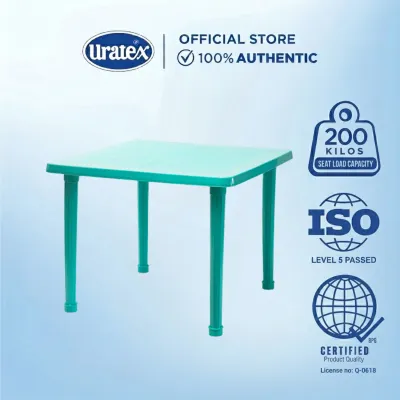
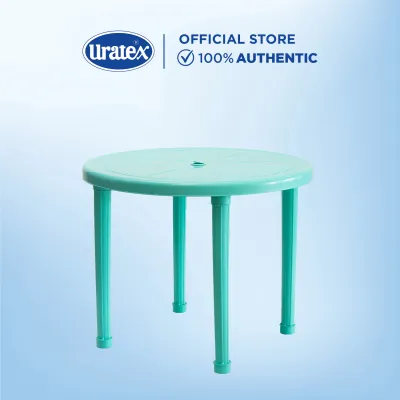
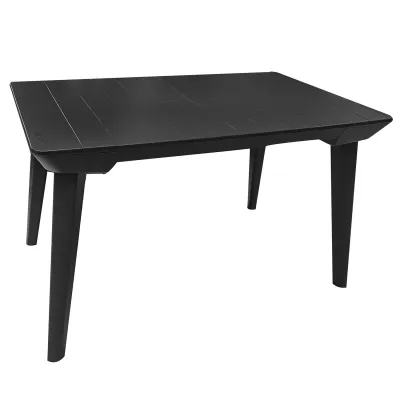
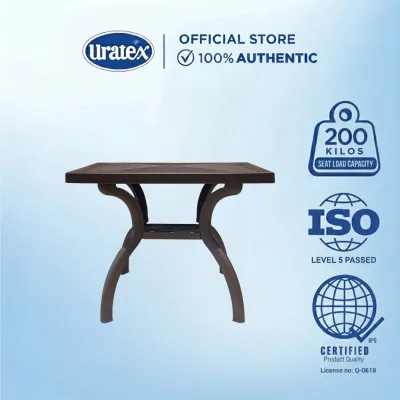
Prices are valid at publication and may change. Please refer to the product page for the latest price.
To determine how many people can sit at a table, furniture designers rely on basic ergonomic rules. A comfortable dining setup requires approximately 60 centimeters (24 inches) of table edge width per person. This measurement matches the average shoulder width of an adult while leaving a small buffer for arm movement, utensils, and glassware. Additionally, a standard place setting requires a depth of about 30 to 40 centimeters from the edge of the table inward to accommodate plates, serving bowls, and drinks.
Applying these ergonomic rules to a standard 122 cm (48-inch) rectangular table reveals its true capacity limits. The long sides of the table can accommodate two people each, as 122 cm divided by two yields exactly 61 cm of space per person. If you place one person at each of the short ends (the 76 cm widths), the table reaches a maximum capacity of 6 diners. While this setup is physically possible, it leaves virtually no space in the center of the table for shared serving platters, rice bowls, or beverage pitchers, which are central to traditional Filipino family-style dining.
Attempting to squeeze 8 to 10 people around a single 122 cm table forces diners to share less than 40 cm of edge space. This layout leads to bumped elbows, spilled drinks, and an overall stressful dining experience. To accommodate 8 to 10 people comfortably, you must expand your setup. You will either need an oversized specialty table, a large round monoblock model, or a multi-table configuration that provides a minimum of 4.8 to 6 meters of total perimeter edge space.
Measuring Your Dining Space for a 6 to 10 Person Setup
Before purchasing additional furniture or arranging a large dining layout, you must measure your physical dining room to ensure the setup fits safely. A table that is technically large enough to seat 10 people is useless if your family members cannot physically sit down or walk around it. To calculate the required space, start by measuring the length and width of your available floor area using a standard measuring tape.

Next, calculate the footprint of your proposed table configuration. For example, if you plan to push two standard 122 cm rectangular tables together end-to-end, your combined table length will be 244 cm (8 feet), with a width of 76 cm. To this footprint, you must add the critical “chair pull-out” clearance zone. A person needs at least 60 to 90 centimeters (24 to 36 inches) of empty space behind their chair to comfortably slide back, stand up, and sit down without striking a wall, a sideboard, or other household obstacles.
Furthermore, you must account for the flow of traffic in the room. If family members need to walk behind seated guests to serve food, clear dishes, or access the kitchen, you should aim for the upper limit of 90 centimeters of clearance. In tight dining spaces, pushing a large table setup too close to a wall can trap diners in their seats, forcing everyone on that side to stand up whenever one person needs to leave the table.
Finally, do not forget to measure the access pathways leading into your dining area. While monoblock tables are lightweight and relatively easy to carry, some larger models are molded as a single, rigid piece with fixed legs that do not detach. Measure the widths of your doorways, narrow hallways, and staircases to ensure that a large table can physically pass through these bottlenecks during delivery or when moving the furniture between indoor and outdoor spaces. You should also map out the placement of existing bulky items, such as display cabinets (plateras), water dispensers, or mobile carts, which permanently reduce your usable floor area.
Practical Table Configurations for Large Filipino Family Meals
When a single standard table is insufficient for Sunday lunches or holiday gatherings, you can use several practical, space-efficient configurations to comfortably accommodate 8 to 10 family members.
Pushing Two Rectangular Tables Together
One of the most accessible solutions is to join two standard rectangular monoblock tables end-to-end to create a continuous 8-foot dining surface. This layout provides ample space for 8 to 10 diners, allowing four people to sit on each long side and one person at each end. To ensure stability, check that the table legs are aligned perfectly. Because lightweight plastic legs can easily slide on smooth tiled floors, place non-slip rubber pads under the feet, or use heavy-duty plastic table clips or zip ties underneath the table rims to lock the frames together and prevent them from separating mid-meal.
Opting for a Large Round Table
If your dining room is square rather than long and narrow, a large round monoblock table is an excellent alternative. Round tables maximize perimeter seating because they lack sharp corners, making it easier to distribute chairs evenly. A round table with a diameter of 120 cm to 150 cm can comfortably seat 8 people, while fostering a more inclusive atmosphere where everyone can easily see and converse with one another. However, keep in mind that the center of a large round table can be difficult to reach, meaning you may need to pass serving dishes around more frequently.
Mixing Seating Types
Standard monoblock chairs with wide armrests take up substantial lateral space, which can limit your seating capacity. To fit more people along the sides of your table setup, swap armrest chairs for armless monoblock models, backless plastic stools, or slim benches. Backless stools are particularly useful because they can be tucked completely underneath the table when not in use, instantly clearing up floor space and making it easier for family members to navigate the dining room before and after the meal.
Using Auxiliary Folding Tables
To keep your main dining table clear and comfortable, consider setting up a secondary, lightweight folding table nearby. This auxiliary table can serve as a dedicated buffet or beverage station. By placing the rice cooker, large serving platters, pitchers, and extra plates on a separate surface, you free up valuable space on the primary monoblock table, allowing your 6 to 10 guests to dine without feeling crowded by serving dishes.
Common Sizing and Clearance Mistakes to Avoid
Setting up a temporary or permanent dining area for a large group can easily lead to layout errors that compromise comfort and safety. Awareness of these common pitfalls will help you create a seamless dining experience.
- Ignoring the Walkway: Avoid pushing your table configuration directly into high-traffic pathways. Blocking the main route between the kitchen and the dining area creates a severe bottleneck and increases the risk of accidents, especially when family members are carrying hot dishes like soups or sizzling plates.
- Overloading the Table: While high-quality plastic monoblock tables are highly durable, they are not indestructible. Every table has a maximum weight limit specified by the manufacturer. Avoid placing exceptionally heavy items—such as large stone mortars (sangkalan), heavy kitchen appliances, or massive cast-iron pots filled with stew—directly in the center of the table without verifying its load rating. Overloading can cause the plastic to bow, weaken, or collapse.
- Assuming Uniform Heights: If you are mixing different brands, models, or older and newer generations of monoblock tables to create a larger surface, do not assume they are the same height. Even a minor difference of half an inch can create an uneven seam, causing cups to tip over, plates to wobble, and table decorations to sit unstably.
- Neglecting Heat Protection: Plastic monoblock surfaces are vulnerable to thermal damage. Placing hot pots, pans, or freshly baked dishes directly onto the plastic can cause permanent warping, melting, or discoloration. Always protect your table by using thick trivets, wooden cutting boards, or heat-resistant silicone mats under hot cookware.
Frequently Asked Questions (FAQ)
How much weight can a standard plastic monoblock table hold?
The weight capacity of a plastic monoblock table varies significantly depending on its specific design, plastic thickness, and leg reinforcement. To find the exact weight limit, always refer to the manufacturer’s product label or official specification sheet. While these tables are structurally stable for standard dining use, they have clear limits and should never be subjected to heavy, highly concentrated loads or used as a step stool.
Can I leave my monoblock table outside for patio dining?
Whether you can leave your table outside depends on the weatherproofing and UV-resistance specifications of your specific model. While monoblock tables are highly resistant to moisture, prolonged exposure to intense tropical sunlight and heavy rain can cause the plastic to degrade, fade, and become brittle over time. To extend the lifespan of your furniture, store the table indoors when not in use, or protect it with a heavy-duty, weather-resistant outdoor cover.
Community discussion
Share your experience or ask a question. Comments are reviewed before publication.