
Choosing the right wardrobe for your bedroom in the Philippines involves balancing style, storage capacity, and the physical realities of your living space. With urban condos and suburban homes alike navigating compact layouts and high tropical humidity, the decision between a wardrobe with sliding doors and a traditional hinged door wardrobe is more than just an aesthetic choice. It directly impacts how easily you move around your bed, how you organize your daily wear, and how well your furniture withstands local environmental factors. By examining your room’s layout, your daily routines, and the structural requirements of each door type, you can select a wardrobe that maximizes your floor plan while keeping your clothes protected and accessible.
Evaluating Bedroom Space and Door Clearance
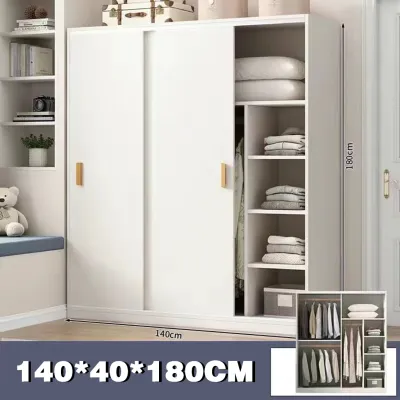
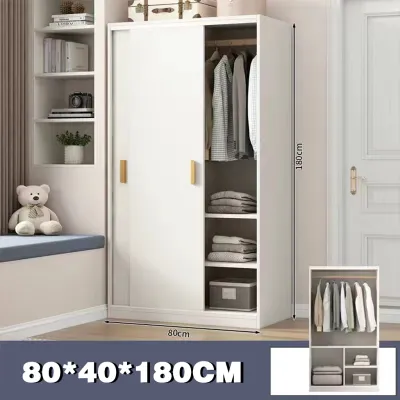
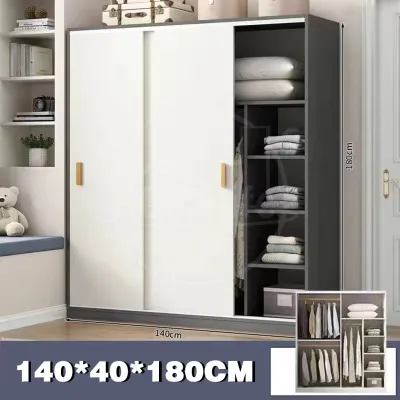
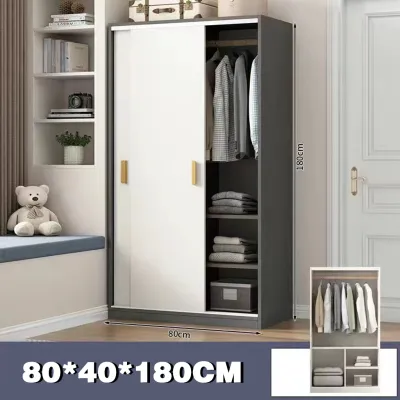
Before purchasing any major bedroom furniture, measuring your actual floor space and mapping out traffic paths is essential. A wardrobe with sliding doors operates entirely within its own frame, making it an excellent option for tight spaces where every centimeter counts. Because the doors glide horizontally along a track, you do not need to worry about leaving empty space in front of the wardrobe for doors to swing open. This allows you to place the wardrobe closer to your bed, bedside tables, or narrow walkways without blocking your path or risking collisions with other furniture.
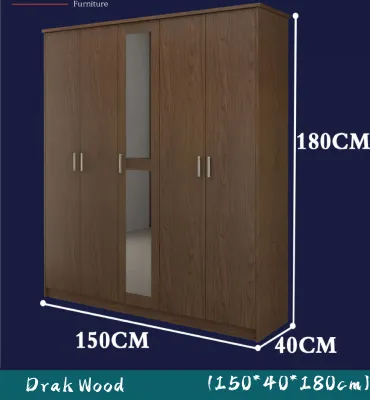
In contrast, a hinged door wardrobe requires a clear semi-circular clearance zone in front of each door. You must measure the width of the door panels—typically ranging from 40 to 60 centimeters—and ensure that this swing arc is completely unobstructed. If your bed is positioned close to the wardrobe, opening a hinged door might force you to squeeze past or step onto the bed just to reach your clothes. Additionally, you must verify that nearby bedroom doors, bathroom doors, or windows will not collide with the wardrobe doors when both are open simultaneously.
Products mentioned in this guide
![[On Hand]Nordic Luxury Sliding Door Wardrobe Cabinet Wood Furniture Wardrobe Organizer 180cm Simple Assembly Wardrobe Organizer](https://img.lazcdn.com/g/p/e5d9fb9dfbc188aac006e3415a5274ee.jpg_400x400q80.jpg_.webp)
Prices are valid at publication and may change. Please refer to the product page for the latest price.
Beyond the floor footprint, ceiling height and wall width dictate whether standard off-the-shelf units will fit or if custom sizing is necessary. Sliding door systems often require a slightly deeper overall cabinet frame—usually an extra 5 to 10 centimeters—to accommodate the double or triple track mechanism. When planning your layout, ensure your room can handle this extra depth without narrowing your main walkways. Finally, consider delivery and installation logistics; check if the long track rails or large sliding door panels can easily fit through your home’s doorways, stairwells, or condominium service lifts before finalizing your order.
Daily Access and Sharing the Closet
The way you interact with your wardrobe every morning depends heavily on the door mechanism you choose. Hinged doors offer the distinct advantage of full-width visibility. When you open all the doors of a hinged wardrobe, your entire wardrobe collection is exposed at once, allowing you to scan your clothes, shoes, and accessories in one glance. This makes coordinating outfits much faster and simplifies the process of putting away laundry.

A wardrobe with sliding doors, however, operates on a system of overlapping panels, meaning you can only open one section of the closet at a time. If you slide the door to the left to access your hanging shirts, the right side of the wardrobe remains covered. This partial access can become a daily inconvenience if two people share the same wardrobe and need to get dressed at the same time. One partner will inevitably have to wait for the other to slide the door back to access their side of the closet.
Physical effort, smoothness, and noise levels also vary between the two designs. High-quality sliding tracks allow large, heavy doors to glide with minimal effort, but cheaper or poorly installed tracks can feel heavy, jump off the rails, or produce a grinding noise. In the humid Philippine climate, wooden frames and doors can expand slightly due to moisture absorption. This swelling can cause hinged doors to rub against the frame, requiring hinge adjustments, while sliding doors might experience increased friction along their tracks if the frame warps even slightly.
Internal Storage and Drawer Clearance
The door mechanism you select directly influences how you can configure the interior shelves, hanging rods, and drawers. In a sliding door wardrobe, the overlapping panels create specific “dead zones” where the doors meet. If you place internal drawers or pull-out wire baskets too close to these overlap areas, the drawers will strike the edge of the sliding door when you try to pull them out. To prevent this interference, internal drawers must be designed with spacer panels or positioned strictly within the clear opening width of each sliding section.
Hinged wardrobes offer much more flexibility for internal organization. Because the doors swing completely out of the way, you can install wide, full-width drawers and pull-out trays right up to the edge of the cabinet frame. You do not have to worry about door overlaps blocking your drawers, making it easier to utilize every cubic centimeter of storage space. Hanging rods can also run continuously from one side of the wardrobe to the other without structural partitions blocking the middle.
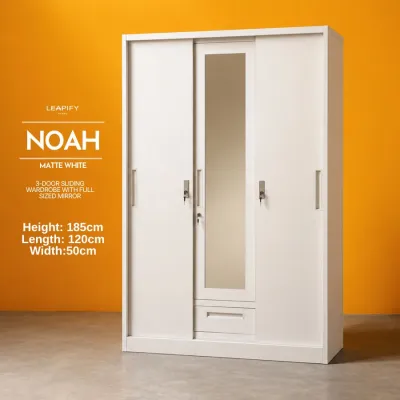
Mirror integration is another key design consideration. With a hinged wardrobe, you can easily mount a full-length mirror on the inside of a door panel, keeping it hidden when the wardrobe is closed and preserving a clean exterior look. For a wardrobe with sliding doors, internal mirror mounting is rarely practical because the mirror would strike the adjacent door panel when slid open. Instead, sliding wardrobes typically feature mirrors integrated directly onto the exterior face of the sliding panels, which can help reflect light and make a small bedroom feel significantly larger.
Installation Checks and Long-Term Upkeep
Ensuring the longevity of your wardrobe requires careful installation checks and a commitment to routine maintenance. For sliding door wardrobes, a perfectly level floor is absolutely critical. If your bedroom floor slopes even slightly, gravity will pull the sliding doors toward the lower side, causing them to drift open on their own or slide shut unexpectedly. Before installation, use a spirit level to check the floor, and use adjustable leveling feet or shims to ensure the wardrobe frame is perfectly plumb.
The tracks of a sliding wardrobe act as natural collection points for dust, lint, hair, and small debris. Over time, this accumulation can clog the rollers, causing the doors to stutter, squeak, or derail. In the Philippines, where open windows can let in fine outdoor dust, you should make it a habit to vacuum or wipe down the bottom tracks every few weeks. Applying a dry silicone lubricant to the tracks can help maintain a smooth glide, but avoid heavy oils or greases that attract and hold onto dust.
Hinged wardrobes are generally more forgiving of slightly uneven floors, but they require their own set of regular checks. The weight of the doors constantly pulls down on the hinges, which can cause the doors to sag or become misaligned over time. You will need to periodically tighten the mounting screws and use the adjustment screws on the hinges to realign the doors so they close flush. Additionally, high humidity can cause metal hinges to rust or squeak; checking for early signs of corrosion and applying a rust-inhibiting lubricant will keep the doors operating quietly and smoothly.
Final Decision: Which Wardrobe Fits Your Needs?
To make the right choice for your bedroom, evaluate your specific room dimensions, daily habits, and structural conditions. A wardrobe with sliding doors is the ideal choice if your bedroom has limited floor space, if your bed or other furniture sits close to the wardrobe, or if you prefer a sleek, modern, and streamlined aesthetic. It eliminates the need for door clearance, allowing you to maximize your usable floor area. However, you must ensure your floor is level and that you are willing to perform regular track maintenance.
On the other hand, a hinged door wardrobe is highly recommended if you share your closet with a partner, prefer full-width visibility to see all your clothes at once, and want the freedom to install wide internal drawers without track interference. It is also a more adaptable option if your bedroom floor is slightly uneven or if you prefer a classic, traditional look.
Before making your final purchase, verify the structural integrity of your bedroom walls if you plan to anchor a heavy wardrobe, and double-check that your chosen unit can be delivered through your doorways and hallways. By matching these practical checks with your personal storage needs, you will secure a wardrobe that serves your home beautifully for years to come.
Frequently Asked Questions (FAQ)
Can I convert a hinged door wardrobe to sliding doors later?
Converting an existing hinged wardrobe to a sliding door system is structurally challenging and often impractical. Sliding doors require a dedicated track system that typically needs 5 to 10 centimeters of depth at the front of the wardrobe frame. Most standard hinged wardrobe frames do not have this extra depth built in, meaning you would have to extend the entire cabinet frame forward or sacrifice internal hanging space. Additionally, you would need to patch and paint the old hinge holes left in the frame, and ensure the existing structure can support the top-heavy weight of sliding tracks and panels. In most cases, purchasing a purpose-built sliding wardrobe is more cost-effective and structurally sound.
Do sliding door wardrobes let in more dust than hinged ones?
Sliding door wardrobes can let in slightly more dust than hinged wardrobes due to the natural gaps required for the doors to slide past one another. While hinged doors close flush against the cabinet frame, sliding panels must overlap, leaving a small gap between the front and rear doors. To minimize dust accumulation inside your closet, look for sliding wardrobes equipped with high-quality brush seals or weather stripping along the overlapping edges. Regularly cleaning the bottom tracks is also essential, as accumulated dust in the tracks can prevent the doors from closing fully, leaving larger gaps that allow dust and tropical humidity to enter and affect your clothes.
Community discussion
Share your experience or ask a question. Comments are reviewed before publication.