
Choosing the right wardrobe cabinet is one of the most critical decisions you will make when furnishing a bedroom. The choice between a sliding door wardrobe and a swing door wardrobe is not merely an aesthetic preference; it directly dictates how you interact with your bedroom space every single day. Your decision will impact your room’s traffic flow, your ability to access your belongings, and the overall organization of your personal storage.
To make the right choice, you must evaluate your bedroom’s physical dimensions, the clearance space around your bed and other furniture, your daily storage habits, and the environmental conditions of your home. By analyzing these factors, you can select a wardrobe cabinet that maximizes your floor plan while providing an efficient, durable storage solution.
Quick Answer: Which Wardrobe Door Type Fits Your Space?
Selecting the ideal wardrobe door type depends primarily on your bedroom’s available floor clearance and its overall layout. There is no single superior option, as both configurations serve as highly effective storage solutions, but their physical footprints and mechanical operations suit entirely different spatial conditions.
Products mentioned in this guide
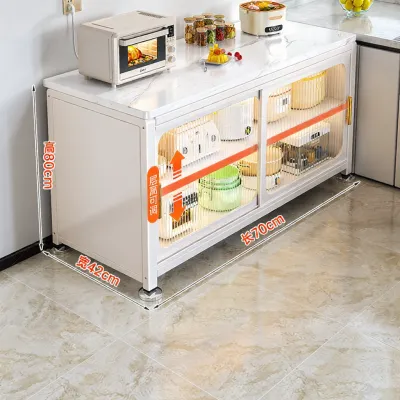
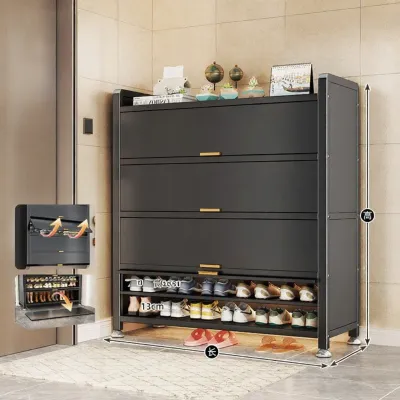
Prices are valid at publication and may change. Please refer to the product page for the latest price.
If your bedroom has limited floor space, narrow walkways, or if the wardrobe must be placed close to the bed frame, a sliding door wardrobe is the most practical choice. Because the doors glide horizontally within the cabinet’s frame, they require zero outward floor space to open, allowing you to maximize every square inch of your room.
Conversely, if your bedroom is spacious and you have ample clearance in front of the cabinet, a swing door wardrobe is often the better option. Swing doors allow you to open the entire cabinet simultaneously, offering an unobstructed view of your entire wardrobe and permitting the use of door-mounted storage accessories.
Space and Clearance: Evaluating Your Bedroom Layout
The physical layout of your bedroom is the most absolute constraint when selecting a wardrobe cabinet. Before browsing styles or finishes, you must understand how much floor space you can allocate to the unit and, more importantly, how much clearance remains for the doors to operate without obstructing the room’s traffic flow.

Swing Door Wardrobes: Clearance and Traffic Flow
Swing door wardrobes operate on hinges that swing outward into the bedroom space. This traditional design requires a specific amount of clear floor space directly in front of the cabinet to function. To calculate the necessary clearance, you must add the width of the individual door panel—typically ranging from 45 to 60 centimeters—to the space required for a person to stand comfortably in front of the open door, which is an additional 50 to 60 centimeters.
If your bedroom is narrow or has a tight layout, a swing door can easily disrupt the room’s traffic flow. For example, if the cabinet is positioned opposite the foot of your bed, an open swing door might completely block the walkway, forcing you to close the wardrobe before you can move around the room. This layout conflict can become a daily source of frustration, especially in shared bedrooms where multiple people may need to navigate the space at the same time.
Before purchasing a swing door cabinet, it is vital to measure the exact distance between the planned cabinet frame and any adjacent furniture, such as bed frames, nightstands, or desks. You must also ensure that the outward swing of the wardrobe doors does not collide with entry doors, bathroom doors, or window treatments. If the clearance is tight, you may need to look for models with narrower door panels, though this will increase the total number of doors on the cabinet.
Sliding Door Wardrobes: Maximizing Tight Spaces
Sliding door wardrobes are engineered specifically to solve the spatial challenges of compact living. Because the door panels glide smoothly along a horizontal track system parallel to the cabinet frame, they operate entirely within the wardrobe’s own footprint. This means you require zero outward floor clearance to access your clothes, allowing you to place the wardrobe directly alongside a bed, behind a bedroom door, or in a tight hallway where a swing door would be physically impossible to open.
This zero-clearance operation makes sliding door cabinets highly popular in modern studio apartments, micro-condominiums, and smaller secondary bedrooms. It allows you to maintain a continuous, unobstructed walkway through the room, even when the wardrobe doors are fully open. This spatial efficiency gives you greater flexibility when arranging other bedroom furniture, as you do not need to leave a wide, empty buffer zone in front of the cabinet.
However, this space-saving mechanism comes with a structural trade-off regarding the cabinet’s depth. Sliding door wardrobes require a deeper cabinet frame to accommodate the track system and the overlapping door panels. While a standard swing door wardrobe typically has an external depth of 55 to 60 centimeters, a sliding door wardrobe usually requires an external depth of 65 to 70 centimeters, with about 8 to 10 centimeters of that space dedicated solely to the sliding tracks. If your bedroom is exceptionally shallow, this extra cabinet depth might encroach too far into your living space, making it crucial to measure both the width and the depth of your available floor area.
Accessibility and Internal Storage Systems
Beyond the physical space the cabinet occupies, the door style you choose directly influences how you organize, view, and access your clothing and accessories on a daily basis. The internal storage system must align with your personal routine and organizational preferences.
Full View and Organization with Swing Doors
One of the greatest functional advantages of a swing door wardrobe is the ability to open all the doors at the same time. This provides a complete, panoramic view of the entire interior of your cabinet. If you share a wardrobe with a partner, simultaneous access allows both of you to reach your respective sections at the same time without blocking each other, streamlining your morning routines.
This full visibility also makes organizing your wardrobe much easier. You can easily coordinate outfits by viewing hanging items, folded clothes, and shoe racks all at once. Furthermore, swing door wardrobes offer excellent structural flexibility for internal drawer placement. Because the doors swing completely out of the way, internal drawers and pull-out trays can be pulled straight forward without any risk of hitting the door panels or the cabinet frame.
Additionally, swing doors allow you to utilize the back of the doors themselves as valuable storage space. You can easily mount lightweight accessories, such as tie and belt racks, scarf organizers, small hanging baskets, or full-length dressing mirrors, directly onto the interior face of the door panels. This extra storage layer keeps frequently used accessories organized and within arm’s reach, maximizing the utility of the cabinet’s physical structure.
Partial Access and Track Constraints with Sliding Doors
Sliding door wardrobes operate on a system of overlapping panels, which introduces specific limitations regarding accessibility. Because one door panel must always slide behind or in front of another, you can only open and view one section of the wardrobe at any given time. Typically, you will only have access to 50% of the cabinet’s interior at once, which can make searching for specific items or coordinating outfits more time-consuming.
This partial access also requires careful planning when designing the internal storage layout. Any internal drawers, pull-out wire baskets, or trouser racks must be positioned precisely within the center of their respective sections. If a drawer is placed too close to the central overlap zone of the sliding doors, it may collide with the edge of the door panel when pulled open, potentially damaging both the drawer front and the door track mechanism. You must verify these clearances with the manufacturer or retailer before purchasing.
To minimize the inconvenience of partial access, you must organize your wardrobe’s interior zones strategically. It is best to group your clothing by frequency of use or by category, keeping daily essentials in one easily accessible section while storing seasonal items, formal wear, or extra bedding in the sections that require sliding the doors to the opposite side. Additionally, because the doors glide flush against each other, you cannot mount any storage accessories, hooks, or mirrors to the interior or exterior of the door panels, as any protrusion would prevent the doors from sliding past one another.
Durability, Maintenance, and Climate Considerations
The longevity of your wardrobe cabinet depends heavily on its hardware components and how well they withstand daily wear and tear, as well as local environmental conditions. In the tropical climate of the Philippines, high relative humidity, seasonal temperature fluctuations, and airborne dust can significantly affect the performance of both swing and sliding door mechanisms.
Swing door wardrobes rely on standard hinges, which are mechanically simple and highly durable. High-quality concealed hinges or soft-close hydraulic hinges are designed to distribute the weight of the door panel evenly across the cabinet frame. If a swing door begins to sag or misalign over time due to natural settling, adjusting the hinges is a straightforward task that can usually be completed with a standard screwdriver. However, in humid environments, it is essential to check that all hinges are made of rust-resistant materials, such as stainless steel, to prevent corrosion and squeaking.
Sliding door wardrobes rely on a more complex system of top-hung or bottom-rolling rollers, guides, and metal tracks. This mechanism requires a perfectly level floor to operate correctly; if your bedroom floor has even a slight slope, gravity may cause the sliding doors to drift open or closed on their own. Additionally, the bottom tracks of sliding wardrobes act as natural collection points for dust, lint, hair, and dirt. If this debris is allowed to accumulate, it can clog the rollers, causing the doors to glide roughly, jump off their tracks, or squeak loudly. To ensure smooth and quiet operation, you must commit to vacuuming and wiping down the sliding tracks regularly.
Furthermore, the tropical humidity in the Philippines can cause certain wood-based materials—such as standard particle board or medium-density fiberboard (MDF)—to absorb moisture from the air, leading to swelling, warping, or mold growth. If a sliding door panel warps even slightly, it can bind within the track system, rendering the wardrobe difficult or impossible to open.
When choosing either wardrobe style, it is crucial to review the manufacturer’s material specifications. Look for cabinets constructed from moisture-resistant materials, such as marine plywood, high-pressure laminates (HPL), or solid wood treated with protective sealants. Ensure that all raw edges are sealed with high-quality PVC edge banding to prevent moisture penetration. If you plan to use heavy solid wood doors or large mirrored panels on a sliding wardrobe, always verify the weight limits of the roller hardware with the manufacturer to ensure the track system can support the load over the long term.
Sliding vs Swing Door Wardrobe: Feature Comparison
To help you quickly evaluate the structural and functional differences between these two wardrobe configurations, refer to the comparison table below. This matrix outlines the key decision dimensions you should verify against your bedroom’s specific requirements.
| Comparison Dimension | Swing Door Wardrobe | Sliding Door Wardrobe |
|---|---|---|
| Space Requirement | Requires 45–60 cm of outward clearance for doors, plus 50–60 cm of walking space. | Requires 0 cm of outward clearance; operates entirely within the cabinet's footprint. |
| Cabinet Depth | Standard depth of 55–60 cm; maximizes internal hanging space relative to external footprint. | Requires extra depth (65–70 cm) to accommodate the double-track sliding system. |
| Accessibility | Full, simultaneous view of the entire interior; ideal for shared cabinets. | Partial view (typically 50% at a time) due to overlapping door panels. |
| Internal Door Storage | Highly compatible; allows mounting of mirrors, hooks, and accessory racks on door backs. | Incompatible; doors must remain completely flat to slide past one another. |
| Hardware Maintenance | Simple hinges; easy to adjust with a screwdriver; low risk of mechanical failure. | Complex roller and track system; requires regular cleaning of tracks to prevent jamming. |
| Floor Levelness | Highly tolerant of minor floor unevenness; cabinet feet can often be adjusted. | Requires a perfectly level floor; slopes can cause doors to drift or jump off tracks. |
| Ideal Room Layout | Spacious bedrooms, walk-in closets, or rooms with wide walkways. | Small bedrooms, studio condos, narrow walkways, or cabinets placed close to beds. |
| Verification Checklist | Check door swing radius; verify hinge material (stainless steel); check wall anchoring points. | Verify track depth; check roller weight capacity; inspect track cleaning accessibility; check floor levelness. |
How to Decide: A Practical Checklist for Your Bedroom
To finalize your decision and ensure you purchase a wardrobe cabinet that integrates seamlessly into your home, follow this step-by-step practical framework.
Step 1: Measure Your Space and Traffic Flow
Use a steel measuring tape to map out the exact footprint of the proposed wardrobe on your bedroom floor. Mark the front edge of the cabinet frame on the floor using masking tape.
- For a swing door wardrobe, measure outward from that tape line by at least 110 centimeters. If this clearance area overlaps with your bed frame, nightstand, or door entryways, a swing door will cause physical obstructions.
- For a sliding door wardrobe, ensure you have at least 65 to 70 centimeters of total depth available from the back wall to prevent the cabinet from blocking walkways or windows.
- Measure your home's doorways, stairwells, and elevator cabins to ensure the flat-packed or pre-assembled wardrobe panels can be safely transported into your bedroom during delivery.
Step 2: Assess Your Daily Usage and Storage Habits
Analyze how you organize your clothes and who will be using the cabinet.
- If you share the wardrobe with a partner and both need to get dressed simultaneously, or if you prefer to see all your clothes at once to coordinate outfits, prioritize a swing door wardrobe.
- If you prefer to hang accessories on the doors or want to integrate internal drawers without worrying about door alignment, swing doors are highly advantageous.
- If you live alone, have a highly structured wardrobe organization system, or simply prioritize saving floor space over full visibility, a sliding door wardrobe is the ideal match.
Step 3: Evaluate the Structural Readiness of Your Room
Examine the physical condition of the room where the wardrobe will be installed.
- Place a spirit level on the floor along the line where the wardrobe will stand. If the floor is uneven, you must address this before installing a sliding door wardrobe, either by using adjustable leveling feet or by shimming the cabinet base to prevent the doors from drifting.
- Check the wall material. Tall, heavy wardrobes—regardless of door type—must be securely anchored to the wall to prevent tipping. Ensure your bedroom walls are structurally sound enough to hold heavy-duty wall anchors.
Step 4: Review Product Material and Hardware Specifications
Before making your final purchase from a local furniture retailer or online marketplace, inspect the product label and specifications sheet carefully.
- In hot, humid regions like the Philippines, verify that the cabinet materials are moisture-resistant and that all edges are fully sealed with PVC edge banding.
- Inspect the quality of the hardware. For swing doors, look for heavy-duty, rust-resistant stainless steel hinges (preferably soft-close). For sliding doors, look for smooth-gliding aluminum tracks and high-quality nylon or brass rollers with built-in anti-jump mechanisms.
- Ask the manufacturer or retailer about the weight capacity of the shelves, hanging rods, and drawers to ensure the cabinet can safely support your belongings.
By prioritizing your bedroom’s physical spatial reality and functional clearance over pure aesthetic preferences, you can select a wardrobe cabinet that operates flawlessly, protects your clothing, and enhances the daily comfort of your living space.
Frequently Asked Questions (FAQ)
Can I convert a swing door wardrobe to a sliding door cabinet later?
Converting a pre-built swing door wardrobe into a sliding door cabinet is generally not recommended and is rarely structurally feasible. Swing door cabinets are built with a shallower frame (55 to 60 centimeters) and do not have the necessary top and bottom clearance or depth required to mount a double-track sliding system, which typically needs an extra 8 to 10 centimeters of space. Attempting to retrofit sliding tracks onto a standard swing cabinet frame will usually reduce the internal hanging depth, causing your clothes hangers to rub against the sliding doors. If you wish to make modifications, always consult a professional carpenter or the original manufacturer to avoid damaging the cabinet structure and voiding your warranty.
Which wardrobe door type handles humid climates better?
The door operation type itself (sliding versus swinging) has less impact on humidity resilience than the underlying construction materials and hardware finishes. However, swing doors are slightly more forgiving in humid climates because standard hinges are less sensitive to minor material warping than sliding tracks. In highly humid environments, wooden panels can absorb moisture and warp slightly; if a sliding door warps, it can easily jam or jump out of its tracks, whereas a slightly warped swing door will usually still open and close. To handle a humid climate successfully, look for cabinets constructed from moisture-resistant marine plywood or high-pressure laminates, ensure all metal components (hinges, tracks, and rollers) are rust-treated or made of stainless steel, maintain good room ventilation, and consider placing silica gel packs or small dehumidifiers inside the cabinet.
Community discussion
Share your experience or ask a question. Comments are reviewed before publication.