
When preparing your living space for frequent gatherings, a smart coffee table can serve as a functional centerpiece that combines storage, entertainment, and convenience. Because product availability and sales rankings fluctuate constantly across online furniture retailers, relying solely on “best-selling” labels can lead to mismatched expectations regarding size, power requirements, and actual utility. Instead of chasing temporary sales trends, this guide focuses on how to evaluate smart coffee tables based on stable decision-making criteria. By understanding the core features, spatial requirements, and safety considerations, you can confidently select a model that genuinely enhances your hosting experience and fits your specific living room layout.
In the Philippines, where warm weather and high relative humidity are constant factors, choosing the right smart furniture requires looking closely at how these electronic appliances perform under local conditions. A well-chosen smart coffee table does more than just hold a coffee cup; it acts as a central hub for charging devices, playing music, and keeping refreshments cold. To find a model that will serve your household reliably through years of family gatherings and holiday celebrations, you must assess its technical specifications, physical dimensions, and material durability before making a purchase.
Key Features to Look for in a Guest-Ready Smart Coffee Table
When evaluating smart coffee tables, it is easy to get distracted by flashy digital displays and touch controls. To ensure your investment provides genuine utility during social gatherings, prioritize features that directly improve convenience for you and your guests. The most practical smart tables focus on seamless integration of refrigeration, power access, audio, and convertible surfaces.
Products mentioned in this guide
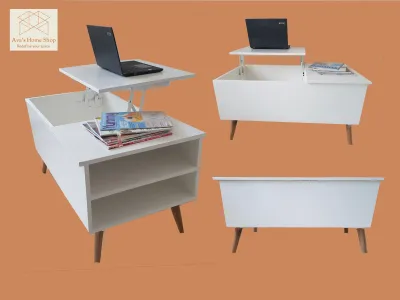
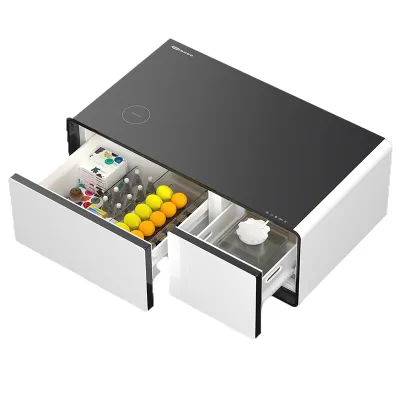
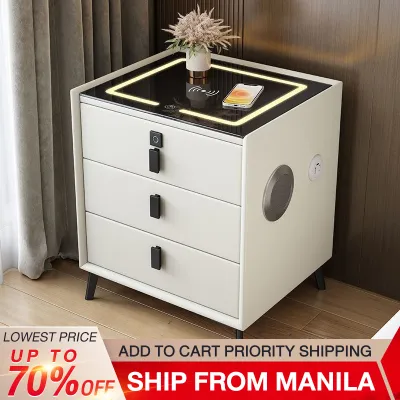
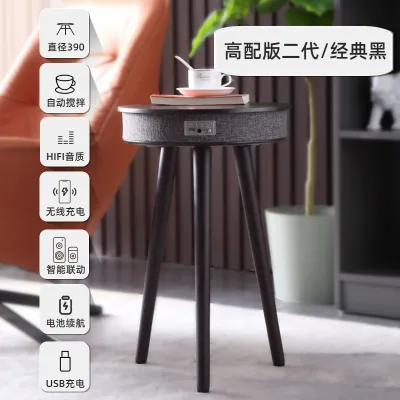
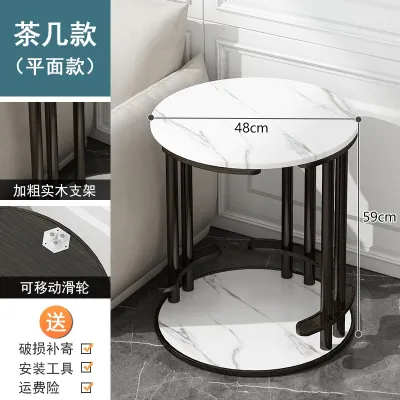
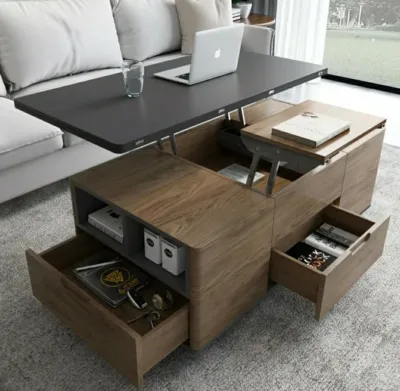
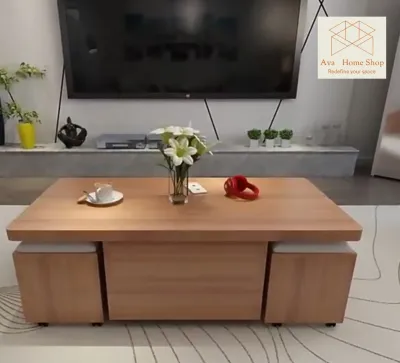

Prices are valid at publication and may change. Please refer to the product page for the latest price.
Built-in refrigeration compartments are among the most sought-after features for hosting. These drawers allow you to keep soft drinks, water, and beer chilled right in the seating area, saving you and your guests frequent trips to the kitchen. When comparing models, check whether the cooling system uses a compressor or a thermoelectric setup. Compressor-based cooling is highly recommended for tropical climates because it cools down faster and maintains lower temperatures even when the room ambient temperature is high. Ensure the drawer has high-quality rubber seals to prevent cold air from escaping and to minimize condensation buildup on the exterior frame.
Accessible power is another critical feature for a guest-ready living room. Look for tables equipped with multiple wireless charging pads integrated directly into the top surface, alongside accessible USB-A and USB-C ports on the sides. This setup allows multiple guests to charge their smartphones simultaneously without cluttering the floor with extension cords. The wireless charging zones should be clearly marked and designed with water-resistant seals to protect the internal circuitry from accidental liquid spills.
Bluetooth audio integration can transform your coffee table into an ambient sound system. Look for models with built-in speakers that offer balanced sound dispersion, ideally through side-firing or downward-firing speaker grilles. While these speakers are not meant to replace a dedicated home theater system, they should provide clear, distortion-free audio for background music during dinner parties or casual chats. Check that the Bluetooth version is modern enough to maintain a stable connection from several meters away.
Finally, a mechanical lift-top feature adds immense versatility to your living room. A lift-top mechanism allows a portion of the table surface to rise and extend forward, bringing it closer to guests seated on the sofa. This is incredibly useful for serving finger foods, setting up a casual buffet, or providing a stable surface for guests who want to use a laptop. Ensure the lifting mechanism is supported by sturdy gas struts or heavy-duty springs that operate smoothly without sudden, jarring movements.
Sizing and Space Planning for High-Traffic Living Rooms
Even the most advanced smart coffee table will become a nuisance if it blocks the natural flow of traffic in your living room. Because these tables house heavy electronic components and cooling compressors, they are much harder to slide or reposition than traditional wooden tables. Precise spatial planning is essential to ensure your room remains comfortable and easy to navigate.

Start by applying standard clearance rules to maintain comfortable legroom and easy passage. You should leave a gap of 30 to 45 centimeters between the front edge of your sofa cushions and the edge of the coffee table. This distance is wide enough to allow guests to sit down and stand up comfortably without bumping their knees, yet close enough that they can easily reach for a drink or use the table’s touch controls. For walkways around the other sides of the table, aim for at least 76 centimeters of clear space to allow guests to walk past without having to squeeze through sideways.
Aligning the table height with your existing seating is equally important for ergonomic comfort. Ideally, the top surface of the smart coffee table should sit at the same height as your sofa’s seat cushions, or up to 5 centimeters lower. A table that is too tall will obstruct the visual line of your living room and make the space feel cramped, while a table that is too low makes reaching for drinks uncomfortable. If the table features a lift-top, measure its height when fully deployed to ensure it aligns comfortably with a seated guest’s lap.
In high-traffic entertaining spaces, the shape of the table plays a major role in safety and movement. Round or oval smart coffee tables are excellent choices because they lack sharp corners, minimizing the risk of painful bumps in crowded or dimly lit rooms. If your layout demands a rectangular or square model, look for designs that feature rounded corners or soft, protective edge profiles.
Do not forget to account for the extra space required when the table’s moving parts are fully extended. If the table has refrigeration drawers that pull outward, measure the depth of the drawer when fully open. You must ensure that opening the drawer does not require moving other furniture or blocking the main path through the room. Similarly, a lift-top mechanism that moves upward and outward will shift the table’s center of gravity and require extra clearance on the side facing the sofa.
Power, Connectivity, and Safety Considerations
Operating an appliance-grade piece of furniture in the center of your living room requires careful electrical planning. Because a smart coffee table must remain plugged into a wall outlet to power its refrigerator, speakers, and charging ports, safety and cord management must be addressed before the table is delivered.
Plan your cord management route carefully to eliminate trip hazards. Running a thick power cord across an open floor where guests walk is highly dangerous. If your living room does not have a floor outlet directly beneath where the table will sit, you will need to run the cord to the nearest wall outlet. Use a low-profile, heavy-duty floor cord protector that matches your flooring color, or run a flat, safety-certified extension cord beneath a heavy area rug. Ensure the cord is positioned away from high-traffic paths and is never pinched under the heavy legs of the table itself.
Verify that the smart coffee table’s electrical specifications are fully compatible with local standards in the Philippines. The standard residential voltage is 220V at a frequency of 60Hz. Because many smart tables are imported, you must double-check the manufacturer’s label to confirm the unit is rated for 220V/60Hz. Operating a 110V appliance on a 220V system without a heavy-duty step-down transformer will permanently damage the electronics and poses a severe fire hazard. Additionally, ensure the plug type matches your wall outlets safely without relying on loose, poorly fitting adapters.
Weight capacity is another critical safety factor, particularly for models with lift-top mechanisms. Manufacturers specify maximum load limits for both the closed tabletop and the extended lift-top. Exceeding these limits can bend the metal brackets, strip the mounting screws, or cause the top to collapse suddenly. Always check these weight ratings and instruct guests not to lean heavily or sit on the extended table surface.
Lastly, look for built-in safety features that protect your household and the appliance itself. If you have young children or pets, a digital control panel lock is essential to prevent accidental temperature adjustments or speaker volume spikes. Overload protection for the USB ports and automatic thermal shut-off features for the wireless charging pads help prevent overheating, ensuring the table operates safely even when multiple devices are connected for hours.
Material and Finish Choices for Easy Maintenance
Because a smart coffee table serves as a hub for food, drinks, and social activity, its surfaces must be durable enough to withstand frequent spills, heat, and physical wear. Selecting the right material and finish will determine how much effort is required to keep the table looking pristine over time.
Tempered glass is one of the most practical surface materials for a smart coffee table. It is completely non-porous, meaning it will not stain, warp, or absorb liquids from spilled drinks. Water rings from cold glasses can be wiped away instantly with a microfiber cloth. However, glass surfaces do show fingerprints and dust easily, requiring regular wiping to maintain a clean appearance. Sintered stone and high-quality ceramic composites are also excellent options, offering exceptional scratch resistance and heat tolerance, though they add significant weight to the furniture.
Treated wood and engineered wood composites (such as MDF with a protective veneer) offer a warmer, more traditional aesthetic. If you prefer a wood finish, verify that the surface has been treated with a high-quality, moisture-resistant polyurethane or lacquer coating. Untreated or poorly sealed wood will quickly warp, crack, or discolor when exposed to condensation from cold drinks or accidental spills.
Special attention must be paid to areas near built-in coolers and ventilation vents. In the humid climate of the Philippines, cold refrigeration drawers will naturally generate condensation when opened. Avoid tables that feature highly porous or untreated natural surfaces near these cooling zones. Moisture can seep into the joints of the furniture, leading to mold growth or structural swelling that can jam the drawer tracks.
Finally, evaluate the overall scratch resistance of the table’s finish. The surface will constantly interact with ceramic mugs, metal keys, glassware, and decorative items. A durable, scratch-resistant coating ensures that the table maintains its premium look without developing unsightly scuffs from daily use. When cleaning, always follow the manufacturer’s guidelines, avoiding harsh chemical solvents or abrasive scrubbing pads that could degrade the protective finish or damage nearby electronic interfaces.
Evaluating Smart Coffee Table Options Before You Buy
Before finalizing your purchase on any e-commerce platform, take the time to run through a practical checklist. This ensures that the model you choose fits your physical space, aligns with your budget, and comes with reliable customer support.
First, verify the exact shipping dimensions of the product box, not just the assembled table dimensions. Smart coffee tables with built-in refrigerators are incredibly heavy and are usually shipped fully assembled to protect the internal wiring and compressor. You must measure your doorways, hallway corners, stairwells, and elevator doors to confirm that the delivery team can physically transport the box into your living room. If you live in a high-rise condominium, check your building’s rules regarding delivery sizes and elevator weight limits.
Second, carefully review the warranty terms. Because a smart coffee table is a hybrid of furniture and home appliance, a standard furniture warranty that only covers the wooden frame is not enough. Look for a warranty that explicitly covers the electronic components, the refrigeration compressor, the Bluetooth speakers, and the mechanical lift-top joints for at least one year. Understand how warranty service is handled—whether a technician will visit your home or if you are required to ship the heavy table back to a service center.
Third, check the return policies and restocking fees of the online marketplace or retailer. Returning a large, heavy piece of furniture can be incredibly difficult and expensive. Some sellers charge high restocking fees or require the buyer to cover the return shipping costs, which can be substantial for an item weighing over 40 kilograms. Make sure you are fully satisfied with the specifications and reviews before authorizing the shipment.
Lastly, confirm the delivery and assembly conditions. Find out if the delivery service includes bringing the item inside your home and unboxing it, or if they will simply drop it off at your building’s lobby or gate. While most smart coffee tables are designed to be “plug-and-play,” requiring only a standard wall outlet, some models may require minor assembly of the legs or drawer handles. Knowing what to expect on delivery day will prevent unnecessary stress and ensure a smooth setup process.
Frequently Asked Questions (FAQ)
How do I clean a smart coffee table with built-in electronics?
Always unplug the coffee table from the wall outlet before performing any cleaning to eliminate the risk of electrical shock or short circuits. Use a dry or slightly damp microfiber cloth to wipe down the surfaces, taking care not to let moisture seep into the seams of charging pads, USB ports, or speaker grilles. For stubborn stains on glass or composite tops, apply a mild, non-abrasive cleaner directly to the cloth first rather than spraying it onto the table surface. Regularly vacuum the dust from the bottom or rear ventilation grilles using a soft brush attachment to maintain proper airflow for the cooling system.
Can I use a smart coffee table on a thick rug or carpet?
Placing a smart coffee table on a thick pile rug can restrict the airflow to the bottom-mounted ventilation vents, which are critical for cooling the internal power supply and refrigeration compressor. Overheating can shorten the lifespan of the electronics or cause the unit to shut down automatically. Additionally, soft, uneven surfaces can compromise the stability of the table, making lift-top mechanisms wobbly or misaligned during operation. If you must place the table on a thick rug, use rigid caster cups under the legs or place a solid, flat base board beneath the unit to ensure adequate clearance and stable leveling.
What happens to the smart features during a power outage?
During a power outage, all active electronic features—including the wireless chargers, Bluetooth speakers, and digital displays—will stop functioning immediately. Built-in refrigeration drawers act like standard insulated coolers and can retain a cold temperature for a limited time, typically a few hours, provided the drawer remains closed. If the outage lasts longer, remove perishable items to prevent spoilage. Lift-top mechanisms are purely mechanical and can still be opened, closed, or locked manually without electrical power. Once power is restored, the table’s digital systems will reboot; check if the unit features surge protection to safeguard its sensitive circuits from sudden voltage spikes.
Community discussion
Share your experience or ask a question. Comments are reviewed before publication.