
Selecting a sofa bed that can withstand the daily energy of a large family requires prioritizing structural integrity and high-performance materials over aesthetic trends. The most durable combination for heavy, multi-person use consists of a kiln-dried hardwood or reinforced steel frame, high-density or high-resiliency (HR) polyurethane foam or pocket spring cushions, and heavy-duty performance synthetic upholstery (such as tight-weave microfiber) or protected top-grain leather.
However, material names alone do not guarantee longevity. To ensure your investment survives years of movie nights, sleepovers, and daily lounge wear, you must verify the manufacturer’s specific engineering standards, weight capacities, and joint construction. Furthermore, because a 3-to-5-seat or L-shaped sofa bed occupies a significant footprint, you must carefully measure your home’s entryways, hallways, and stairwells before purchasing to ensure the unit can be safely delivered and assembled.
Frame Materials: Building a Foundation for Daily Folding and Heavy Loads
The frame is the backbone of any sofa bed, enduring both the static weight of multiple seated family members and the dynamic stress of a folding mechanism. For a large family, cheap frame materials will quickly lead to structural failure, squeaking, or misalignment of the bed mechanism.
Products mentioned in this guide
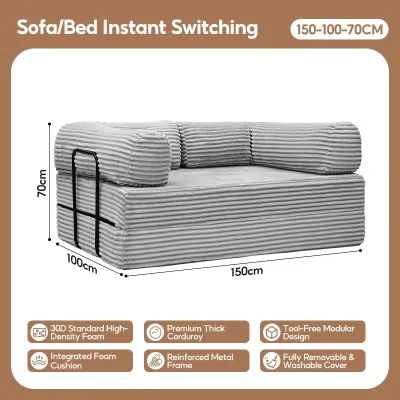
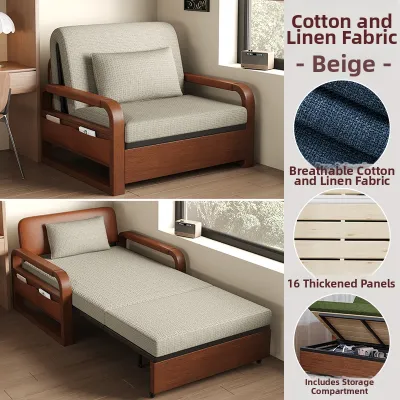
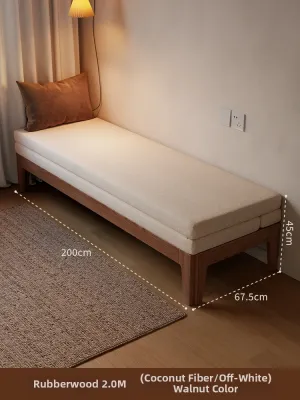
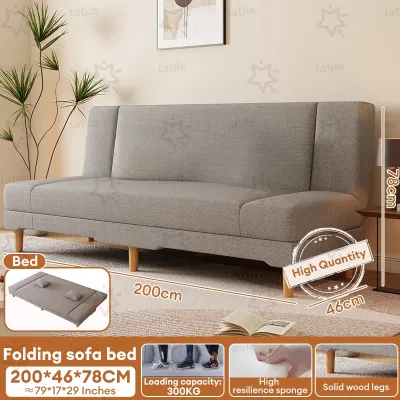
![[AVAILABLE ONHAND] Classic Black Leather Folding Sofa Bed Foldable up to 180 Degree](https://img.lazcdn.com/g/p/56577d29f132e6501a5ea4451c45d397.jpg_400x400q80.jpg_.webp)
![[Vacuumed Comfy Rest Sofa Bed] Joyce & Diana Vacuumed Comfy Rest Sofa Bed 6inches/8inches with FREEBIE](https://img.lazcdn.com/g/p/9739273a130e5d2281c72c84ea958f26.png_400x400q80.png_.webp)
Prices are valid at publication and may change. Please refer to the product page for the latest price.
Kiln-dried hardwoods, such as oak, ash, beech, or birch, represent the gold standard for wooden frames. The kiln-drying process removes moisture from the wood, preventing it from warping, cracking, or bowing when exposed to changing indoor climates. In contrast, softwoods like untreated pine or engineered woods like medium-density fiberboard (MDF) and particleboard are highly susceptible to splitting under heavy loads or stripping at connection points over time.
For ultimate strength, reinforced steel frames offer exceptional durability, especially in modern modular or L-shaped designs. When evaluating any frame, do not rely solely on the wood species or metal label. Verify the construction of the joints: high-quality frames feature corner blocks that are double-doweled, screwed, and glued. Avoid frames held together primarily by staples, nails, or simple glue, as these fasteners will loosen under the repeated leverage required to open and close the bed.
Always check the manufacturer’s stated weight capacity for both the sofa and the bed configurations. A robust 3-to-5-seat sofa bed should explicitly support the collective weight of your household. Before finalizing your purchase, use this practical delivery checklist to ensure the frame can actually reach your living room:
- Measure Entry Points: Document the height and width of all outer doorways, interior doors, and narrow hallways.
- Assess Stairwells and Elevators: If you live in a multi-story home or a condominium, measure the clearance height, corner turn radiuses, and elevator cabin dimensions.
- Verify Assembly Requirements: Confirm whether the sofa bed delivers fully assembled or in modular sections. Modular configurations are often easier to navigate through tight spaces but require verifying that all interlocking brackets are made of heavy-gauge steel.
Upholstery Fabrics: Resisting Wear, Spills, and Humidity
With multiple family members, pets, and daily activities, the upholstery fabric of your sofa bed will face constant friction, spills, and environmental exposure. Choosing a weak fabric means the sofa will look worn, pilled, or stained long before the frame or cushions fail.

Performance fabrics made from solution-dyed synthetics (such as high-grade polyester, nylon, or acrylic blends) and tight-weave microfibers offer the highest resistance to daily wear. To verify a fabric’s durability, look for its double rub count, which measures abrasion resistance through standardized industry tests (such as the Wyzenbeek or Martindale methods). For a high-traffic family living room, seek a fabric rated for heavy duty, typically requiring a minimum of 15,000 to 30,000+ double rubs.
Be cautious of purely aesthetic marketing terms like “linen-look” or “velvet” without checking the actual fiber composition. A delicate natural linen or loose cotton weave will snag, stretch, and absorb liquid spills rapidly. If you prefer a textured look, ensure it is achieved with synthetic fibers engineered for stain resistance and easy cleaning.
Protected or top-grain leathers are also highly durable and naturally resist liquid penetration, making them easy to wipe clean. However, they present distinct maintenance trade-offs. In hot, humid tropical climates, leather requires regular conditioning with manufacturer-approved products to prevent the material from drying, cracking, or becoming uncomfortably sticky. Additionally, natural leather can be vulnerable to scratches from pet claws.
Always check the manufacturer’s care instructions and standard cleaning codes before applying any spot treatments:
- Code W: Can be cleaned with water-based cleaning agents.
- Code S: Requires mild, water-free dry-cleaning solvents.
- Code WS: Safe for either water-based or solvent-based cleaners.
- Code X: Clean only by vacuuming or light brushing; do not use liquid agents.
Cushion Fillings: Preventing Sagging in High-Traffic Seating and Sleeping
A sagging sofa bed is uncomfortable to sit on and painful to sleep on. Because sofa bed cushions often double as part of the sleeping surface, the filling must recover its shape quickly after supporting heavy, localized pressure.
High-resiliency (HR) polyurethane foam is the premier choice for durable foam cushioning. When choosing HR foam, look for density specifications rather than just initial firmness. High-density foam (typically rated at 1.8 to 2.5 pounds per cubic foot or higher) contains more material per cubic inch, allowing it to retain its structural integrity and springiness for years. Low-density promotional foams may feel soft in the showroom but will permanently compress and bottom out within a few months of heavy use.
Another excellent option for large families is a pocket spring core wrapped in high-density foam. Pocket springs distribute weight evenly across the cushion, reducing wear on individual areas and providing excellent contouring support for sleeping. Conversely, pure down, feather, or loose polyester fiber fills are highly vulnerable to clumping and flattening; they require constant fluffing and offer insufficient support for a primary sleeping surface.
To maximize the lifespan of your cushions, look for options wrapped in a protective layer of Dacron or polyester batting, which softens the edges and prevents the upholstery fabric from rubbing directly against the foam core. Additionally, prioritize sofa beds with removable, washable cushion covers. This feature is essential for maintaining hygiene, allowing you to wash away sweat, dust mites, and accidental spills according to the manufacturer’s textile care guidelines.
The Folding Mechanism: Checking Hardware and Joint Construction
The folding mechanism is the most complex component of a sofa bed and represents a primary point of mechanical failure. If the metal hardware bends, rusts, or slips out of alignment, the entire unit becomes unusable.
When evaluating the mechanism, look for thick, heavy-gauge steel hardware rather than thin, flexible aluminum. The joints of the mechanism should be securely riveted or bolted, and the moving parts should glide smoothly without grinding, catching, or requiring excessive physical force. High-quality mechanisms often feature built-in assist springs to reduce the effort needed to open the bed, as well as secure locking positions that prevent the frame from shifting while in use.
Safety is also paramount for families. Ensure the mechanism features anti-tip bars or stable, self-deploying legs that keep the bed perfectly level when extended. If you are purchasing a modular or L-shaped trundle-style sofa bed, verify that the pull-out drawer glides on heavy-duty casters that will not scratch your flooring.
Before purchasing, carefully review the manufacturer’s warranty terms. A reliable manufacturer will often offer a dedicated, multi-year warranty specifically covering the mechanism and frame, separate from the fabric and cushion warranty. If the mechanism ever becomes stiff or jammed during daily use, do not force it, as this can bend the steel linkages or strip the mounting screws. Instead, consult the manufacturer’s troubleshooting guide or contact a qualified professional to inspect and lubricate the hardware.
Frequently Asked Questions (FAQ)
How often should I rotate the cushions on a large sofa bed?
To distribute wear evenly and prevent localized sagging, you should rotate and flip your cushions every one to three months. However, the exact frequency depends on your family’s daily usage intensity, whether the cushions are reversible, and the manufacturer’s specific care and maintenance instructions. If certain seats are used more frequently than others, swapping their positions will help maintain a uniform appearance and feel across the entire sofa.
Does a higher thread count mean a more durable upholstery fabric?
No. Thread count is a metric used primarily for cotton bed sheets to measure the number of threads woven into one square inch of fabric. For sofa upholstery, thread count is not a reliable indicator of durability. Instead, you should evaluate the fabric’s double rub count (abrasion resistance), fiber composition (such as nylon or polyester performance blends), weave tightness, and the manufacturer’s official abrasion test results to accurately judge how well the material will withstand daily family use.
Community discussion
Share your experience or ask a question. Comments are reviewed before publication.