
Finding the right home shoe rack for a compact bedroom closet depends entirely on your specific spatial constraints and footwear collection. In many Philippine homes, bedroom closets are compact, and high humidity levels mean that proper shoe storage is essential to prevent mold and dust accumulation. The most effective space-saving shoe rack is one that maximizes unused vertical or dead space without interfering with hanging clothes or closet doors. By selecting a rack that fits your specific closet layout, you can keep your footwear organized, ventilated, and easily accessible.
Measure Your Closet Space Before Choosing a Rack
Before purchasing any home shoe rack, you must accurately assess your closet’s usable dimensions. Start by measuring the interior width, depth, and height of the closet floor or the specific shelf where you plan to place the rack. Be sure to account for how low your hanging clothes drape, as long dresses, trousers, or jackets can easily block the top shelves of a shoe rack or drag dirt onto your footwear. You should also check for any floor obstructions, such as baseboard protrusions, floor-mounted safes, or uneven tiling, which can cause freestanding racks to wobble.
Next, evaluate the door clearance. If you are considering an over-the-door or door-mounted organizer, measure the thickness of the door panel and the gap between the top of the door and the frame when closed. Ensure there is enough clearance for the mounting hooks to sit comfortably without scraping the frame. For swing-out doors, map the path of the door’s swing to ensure a floor rack won’t block it from opening fully. If you have sliding closet doors, remember that only one side of the closet is accessible at a time, so your rack must fit entirely within the active opening width.
Products mentioned in this guide
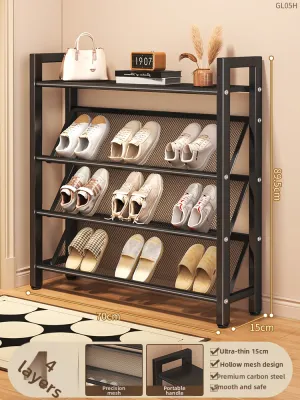
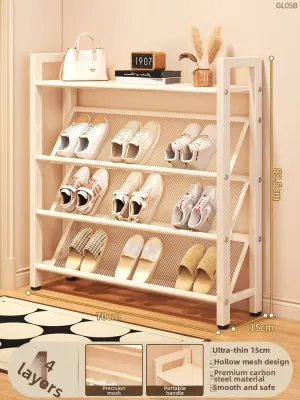
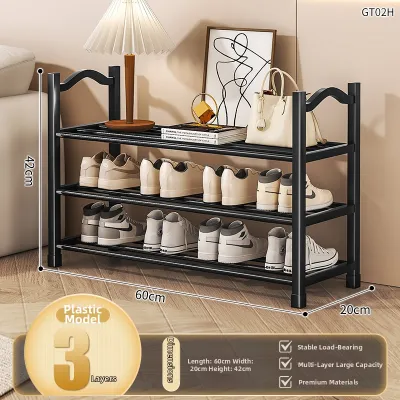
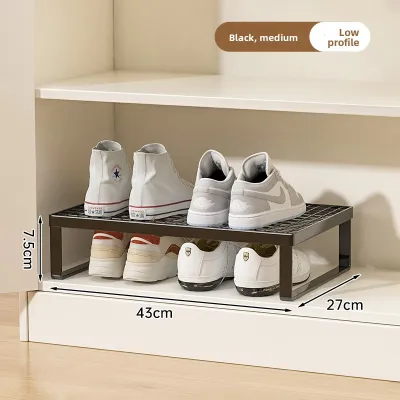
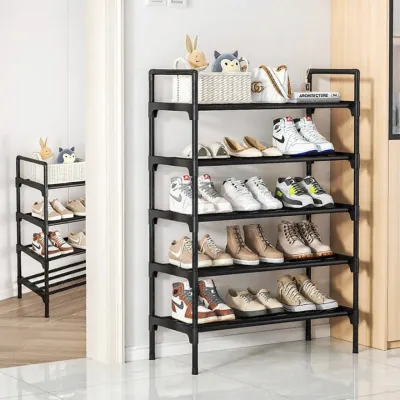
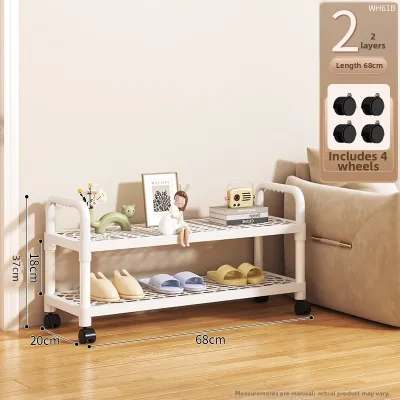
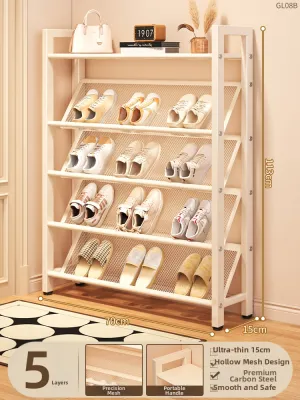
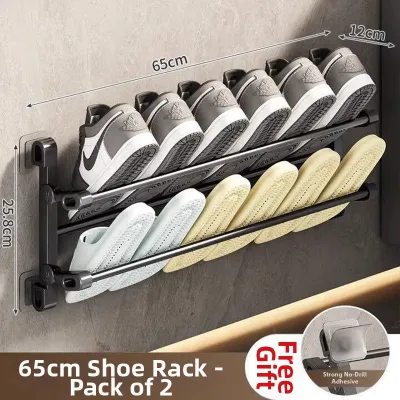
Prices are valid at publication and may change. Please refer to the product page for the latest price.
Space-Saving Shoe Rack Types for Compact Closets
Utilizing vertical, dead, or door space is the key to keeping your closet floor clear and organized. Different shoe rack designs target different areas of the closet, allowing you to customize your setup based on your available space and installation preferences.

Stackable and Expandable Shelf Racks
Stackable and expandable shelf racks are highly versatile options for floor-level or shelf-level closet storage. Many of these racks feature expandable width mechanisms, allowing you to adjust the horizontal span to match your closet’s exact interior width. Before expanding the rack, verify that the extended frame will not block adjacent storage bins or prevent sliding doors from sliding smoothly.
When stacking multiple units, it is crucial to check the vertical clearance between the top tier and your existing closet rods. If your hanging clothes touch the shoes below, it can restrict airflow, leading to musty odors in humid tropical climates. Additionally, inspect the joint sturdiness and interlocking mechanisms of stackable units. Ensure the connection points are secure and do not wobble when the rack is fully loaded with shoes.
Over-the-Door and Hanging Organizers
Over-the-door and hanging organizers are excellent for utilizing unused vertical space on the back of a closet door or hanging directly from a closet rod. Before purchasing an over-the-door model, verify that your door can support the added weight. Heavy footwear can strain door hinges over time, so it is best to reserve these organizers for lighter items like slippers, sandals, or canvas flats.
There is always a trade-off between the floor space you save and the depth added to the door or closet rod. A fully loaded hanging organizer can protrude several inches, which might prevent your closet doors from closing completely if your wardrobe depth is shallow. To avoid this, check the pocket dimensions and material stiffness of the organizer. Stiffer fabrics like heavy canvas or reinforced mesh help keep the pockets flat against the door, preventing them from sagging outward and blocking the door frame.
Under-Shelf and Drop-Down Racks
Under-shelf and drop-down racks are designed to maximize the dead space directly beneath existing closet shelves. These racks typically feature tension-mounted bars or clip-on brackets that slide onto the shelf above. To ensure a secure fit, measure the thickness of your closet shelf and compare it to the bracket opening. The bracket should slide on snugly without requiring drilling, which is ideal for rental properties.
Because these racks rely on tension or slide-on friction, they have strict weight limits. They are best suited for lightweight footwear, such as flip-flops, sandals, or thin flats. Avoid overloading them with heavy leather shoes or thick-soled sneakers, as this can cause the brackets to bend or slip off the shelf. Additionally, make sure the drop-down or slide-out mechanism has enough clearance to operate smoothly without hitting hanging clothes or items stored on the floor below.
Match the Rack to Your Shoe Collection and Weight Limits
Aligning your chosen home shoe rack with the physical dimensions and weight of your actual footwear collection is essential for long-term durability. Manufacturer capacity claims are often based on standard shoe sizes or flat footwear. Bulky sneakers, high heels, and boots require significantly more vertical clearance and depth than flat sandals or slippers. If you have a collection of larger shoes, you may need to reduce the estimated pair capacity of the rack to ensure everything fits without being crushed.
Always check the manufacturer’s weight ratings on the product label or specification sheet before installation. This is especially important for suspended, tension-mounted, or adhesive-based racks. In the Philippines, high relative humidity can affect the structural integrity of certain materials over time. For instance, untreated particle board shelves may sag or warp under heavy loads in humid conditions, while lightweight plastic joints can become brittle. Look for racks with powder-coated steel tubes, rust-resistant metal frames, or reinforced polymer connectors to ensure they can handle the weight of your shoes without sagging or collapsing.
Installation and Safety Checks for Closet Organizers
Installing your closet shoe rack safely prevents damage to your home and avoids sudden collapses. Homeowners and renters should differentiate between drill-free options—such as tension rods, adhesive hooks, and over-the-door brackets—and drilled installations. In many Filipino homes, closet walls are made of solid concrete or hollow blocks, which require a masonry drill bit and wall plugs for a secure, drilled installation. If you are renting, drill-free options are generally preferred to avoid losing your security deposit.
If you choose to use adhesive-mounted organizers, always test the adhesive on an inconspicuous area of the closet wall first. Clean the surface thoroughly to remove dust and moisture, which can prevent the adhesive from bonding properly. Follow the manufacturer’s recommended curing time—often 24 hours—before hanging any weight on the organizer. If you are drilling into walls or existing wooden closet structures and encounter resistance, or if you are unsure of what lies behind the wall, stop immediately. Consult a qualified professional or the manufacturer to avoid damaging electrical wiring or structural supports.
Common Sizing and Fit Mistakes to Avoid
One of the most common mistakes when shopping for a home shoe rack is relying solely on marketing terms like “3-tier” or “12-pair capacity.” These labels do not account for the actual physical dimensions of your shoes or the frame itself. Always compare the physical width, depth, and height of the rack against your measured closet space to ensure a proper fit.
Another frequent error is ignoring the depth of your shoes when they are placed on the rack. Shoes often overhang the front or back of a shelf by several inches. If your closet depth is tight, this overhang can prevent sliding or hinged doors from closing. Finally, remember to account for the physical footprint of the rack’s legs, mounting brackets, or hardware. A rack might have shelves that fit your space, but wide-set legs or protruding side screws can make the overall unit too wide for a narrow closet nook.
Frequently Asked Questions (FAQ)
How do I prevent a freestanding shoe rack from tipping inside a closet?
To prevent a freestanding shoe rack from tipping, always place your heaviest footwear, such as leather boots or thick-soled sneakers, on the bottom shelves to lower the center of gravity. Avoid overloading the top tiers with heavy items. If the manufacturer provides anti-tip straps or wall anchors, install them according to the instructions. For uneven closet floors, which are common in older homes, use adjustable leveling feet or place small, non-slip shims under the rack’s legs to ensure it sits perfectly level and stable.
Can I use adhesive hooks for heavy shoe organizers on closet walls?
Using adhesive hooks for heavy shoe organizers is generally not recommended, especially in humid environments. High humidity can weaken the adhesive bond over time, leading to the organizer falling and damaging your walls or shoes. If you must use adhesives, check the manufacturer’s weight rating carefully and ensure the total weight of the organizer and shoes is well below that limit. Always clean and dry the wall surface thoroughly before application, and be prepared for potential paint or drywall damage when removing the hooks later.
Community discussion
Share your experience or ask a question. Comments are reviewed before publication.