
Finding the right shoes cabinet storage for a small condo or apartment closet in the Philippines requires balancing ultra-tight physical dimensions with high-density organization. The most effective solutions are slim, vertical freestanding cabinets, stackable modular cubbies, or under-shelf pull-out inserts that maximize dead space. Because tropical humidity can rapidly damage footwear and storage structures alike, success depends on precise spatial planning and moisture-resistant material finishes.
How to Measure Your Closet and Estimate Shoe Capacity
To avoid purchasing a unit that blocks your wardrobe or fails to fit through your bedroom door, start with a comprehensive measurement of your closet interior. Use a reliable steel tape measure to record the exact width, depth, and height of the closet floor, as well as any existing built-in shelves. Write these down in both centimeters and inches to prevent conversion errors when shopping across different retail platforms.
Do not rely solely on open floor space; you must account for structural and functional obstructions. Measure the thickness of your baseboards, as they can prevent a freestanding cabinet from sitting flush against the wall, creating an unstable gap. Note the location of electrical outlets, light switches, and the lower hem of hanging clothes, ensuring your new storage unit will not crush delicate garments or block utility access.
Products mentioned in this guide
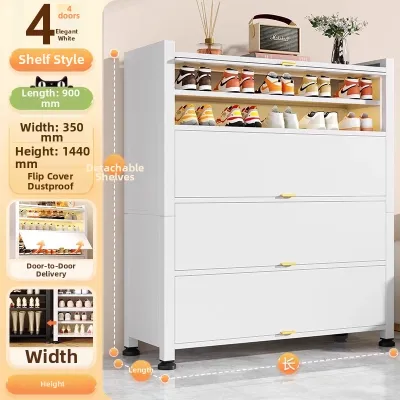
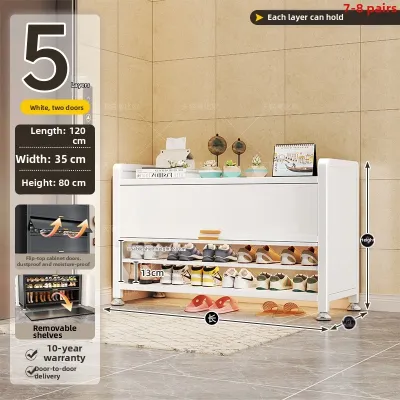
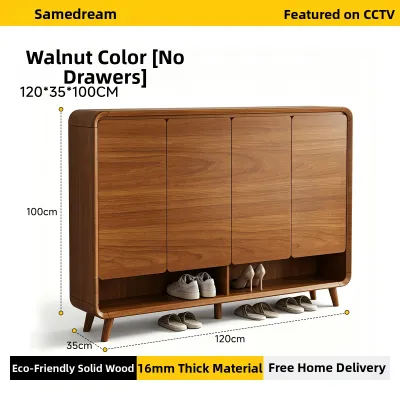
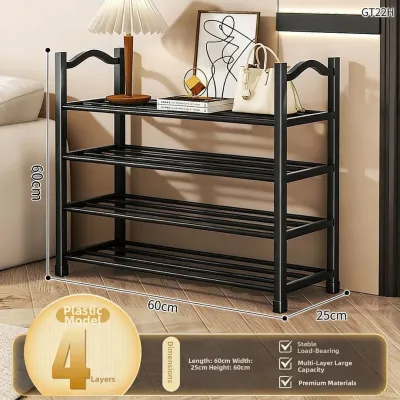
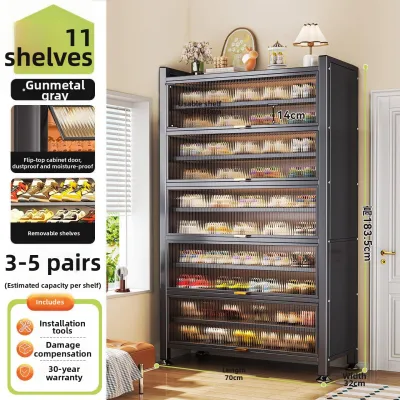
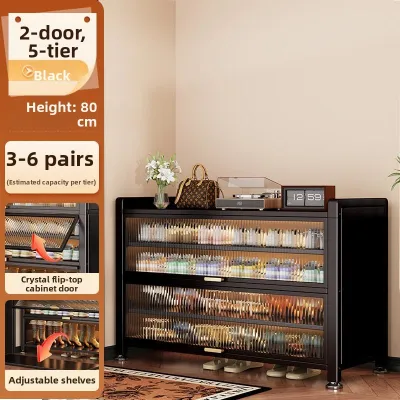
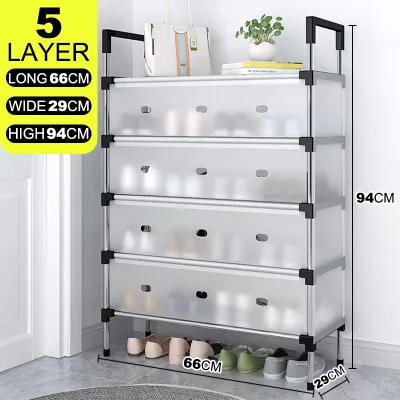
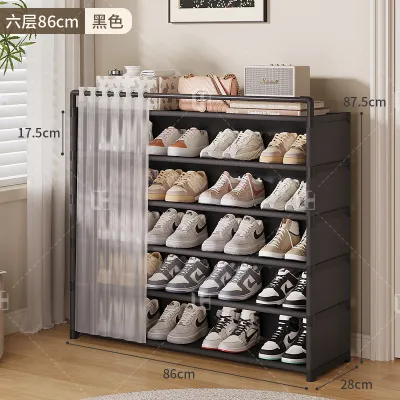
Prices are valid at publication and may change. Please refer to the product page for the latest price.
Next, calculate the clearance needed for closet door swings. Whether you have sliding doors, bi-fold panels, or standard hinged doors, map out their path of travel. A cabinet that fits perfectly when doors are closed is useless if it blocks a sliding door track or prevents a hinged door from opening wide enough for you to reach your shoes.
To estimate your required shoe capacity, audit your household collection by grouping shoes by height and width. Standard flats, sandals, and slippers require minimal vertical clearance (roughly 10 to 12 centimeters), whereas high heels, bulky basketball sneakers, and boots need up to 20 to 30 centimeters of height. Multiply the average width of your shoe pairs (typically 20 to 25 centimeters per pair for adults) by the number of pairs you own to determine the total linear shelving length required.
Finally, prioritize walkway safety. Ensure that even with the cabinet doors or drawers fully extended, you still have at least 60 centimeters of clear walkway space. This allows you to bend down, retrieve your footwear, and move comfortably within the room or closet perimeter without tripping.
Best Shoes Cabinet Storage Designs for Tight Closet Spaces
Selecting the right design means matching the physical limitations of your closet with a structure that optimizes every cubic centimeter. Standard deep drawers often fail in shallow condo wardrobes, making specialized space-saving configurations necessary.

Slim and Vertical Freestanding Cabinets
Slim, vertical freestanding cabinets are highly effective for narrow closet corners or the unused space beside a wardrobe section. Many of these units utilize tilting drawer mechanisms, where shoes are stored vertically and tilt outward when opened. This design slims the cabinet depth down to a mere 15 to 24 centimeters, allowing it to sit behind doors or in tight passageways where a traditional cabinet would block traffic.
Before purchasing a tall vertical unit, verify your closet’s ceiling height and the clearance of any overhead shelving. A unit that is even a centimeter too tall cannot be stood upright inside a confined closet, especially if you must tilt the cabinet during assembly. Always check the manufacturer’s product manual for the minimum clearance required for upright installation.
Because vertical cabinets have a high center of gravity and a very narrow footprint, they present a significant tip-over hazard when loaded with heavy footwear. It is critical to secure these units to the wall using the manufacturer-provided anti-tip hardware. If you are renting a condo where drilling is restricted, consult your property management office regarding approved anchoring methods before proceeding.
Modular and Stackable Shoe Cubbies
Modular and stackable shoe cubbies offer exceptional flexibility, allowing you to customize your storage layout as your footwear collection grows or changes. These systems consist of individual compartments or interlocking tiers that can be stacked vertically to utilize high walls, or arranged horizontally to fit beneath low-hanging clothes.
When planning a stacked configuration, you must verify the manufacturer’s weight limits per tier and the overall structural stability of the material. Overloading lightweight plastic or thin composite cubbies can cause the lower frames to buckle, warping the doors and misaligning the entire stack. Check the product specifications for the maximum recommended stacking height and weight capacity.
To maintain safety and alignment, always use the interlocking clips, dowels, or brackets supplied by the manufacturer to secure stacked modules together. Avoid relying on gravity alone to hold stacked units in place, as sudden impacts or daily vibrations from closing closet doors can cause unanchored tiers to slide off and collapse.
Pull-Out and Under-Shelf Cabinet Inserts
Pull-out and under-shelf cabinet inserts are designed to capture the dead space that often exists beneath existing closet shelves or hanging rods. These solutions typically feature sliding metal wire baskets or low-profile drawers mounted on rolling tracks, allowing you to pull your shoes forward into the light for easy selection.
To install these successfully, measure the exact vertical clearance between the bottom of your hanging garments and the closet floor, or between two existing shelves. Ensure the pull-out tracks have enough clearance to glide smoothly without snagging delicate fabrics or rubbing against the closet door frame.
Additionally, evaluate the load-bearing capacity of the existing shelf or wardrobe base that will support the insert’s tracks. Heavy leather shoes or thick-soled boots can put substantial stress on mounting screws; ensure the host furniture is constructed of solid wood or high-density fiberboard capable of holding the added weight.
Choosing Materials and Finishes for Humid Climates
In the tropical climate of the Philippines, high relative humidity levels can quickly ruin poorly constructed furniture and cause mold to grow on cherished footwear. Simply reading a material name like “wood” or “metal” is not enough to guarantee long-term durability. You must look for specific manufacturing treatments and care instructions designed to withstand moisture.
When shopping for wood-based products, avoid raw, untreated particleboard, which acts like a sponge in humid air, swelling and warping until the joints fail. Instead, look for manufacturer labels specifying moisture-resistant laminates, sealed edges, or water-resistant medium-density fiberboard (MDF) designed for indoor use in humid environments. For metal components, verify that they feature powder-coated or rust-resistant anodized finishes to prevent corrosion over time.
Ventilation is absolutely vital in enclosed condo closets to prevent stagnant air from trapping moisture and creating unpleasant odors. Choose shoe cabinets with slatted doors, mesh panels, or open-back designs that promote continuous airflow around your footwear. If you prefer solid doors for a cleaner look, ensure the unit has built-in ventilation grommets or leave the closet doors slightly ajar during the humid rainy season.
Routine maintenance is key to protecting both your cabinet and your shoes. Never place wet or damp shoes directly into an enclosed storage unit after walking through a sudden Manila downpour; let them dry completely in a well-ventilated area first. Periodically wipe down the interior shelves of your cabinet with a dry microfiber cloth to remove any condensation, and consider using reusable silica gel dehumidifier packs inside the cabinet to help control moisture levels.
Sizing and Installation Mistakes to Avoid
A successful installation requires avoiding several common spatial and structural errors that can make your closet unusable or unsafe. One of the most frequent mistakes is ignoring the door swing arc of both the closet door and the shoe cabinet doors. If these paths overlap, you risk trapping yourself inside the closet, scratching the furniture finishes, or causing physical damage during daily use.
Another critical error is overloading shelves beyond their rated capacity. It is easy to underestimate the cumulative weight of several pairs of heavy shoes, especially when using wide, unsupported shelves. Overloaded shelves will sag over time, putting uneven pressure on the cabinet joints and eventually leading to structural failure or a sudden collapse. Always distribute weight evenly, placing heavier boots on the bottom shelves and lighter sandals near the top.
Failing to anchor tall, narrow freestanding cabinets is a dangerous safety oversight. In the tight confines of a condo closet, you are highly likely to bump against the cabinet while reaching for clothes or vacuuming the floor. Without secure wall anchors, a top-heavy unit can easily tip forward, causing injury or damaging your belongings.
Lastly, watch out for measurement unit errors. Many furniture manufacturers list dimensions in millimeters or inches, while local floor plans often use meters or centimeters. Mixing these units up during the planning phase can result in purchasing a cabinet that is slightly too wide to fit into your closet alcove. Double-check all conversions before finalizing your purchase, and always allow a safety margin of at least two to three centimeters on all sides to accommodate uneven walls or baseboards.
Frequently Asked Questions (FAQ)
How many pairs of shoes can a standard slim cabinet hold?
The actual capacity of a slim cabinet depends heavily on its internal configuration, shelf adjustability, and the specific types of footwear you own. While marketing descriptions might claim a unit holds 12 to 15 pairs, this estimate is usually based on flat sandals or small-sized shoes. Bulky sneakers, high heels, and larger men’s shoes take up significantly more physical space and may reduce the actual capacity by half. Always check the detailed product specifications and internal shelf dimensions rather than relying on generic pair counts.
Do I need to anchor a shoe cabinet inside a closet?
Yes, anchoring is essential for any tall, narrow, or top-heavy freestanding shoe cabinet, even when placed inside a closet. The confined space of a closet increases the likelihood of accidentally bumping, pulling, or leaning on the unit during daily routines. Securing the cabinet to the wall using the manufacturer-provided anti-tip hardware prevents tipping hazards, ensuring a safe and stable storage setup.
Community discussion
Share your experience or ask a question. Comments are reviewed before publication.