
Finding the right bookshelves rack organizer for a compact home office or condo study room in the Philippines requires balancing storage capacity with spatial efficiency. In tight urban dwellings, where floor space is at a premium, a poorly chosen shelf can quickly make a room feel cramped. Selecting the ideal organizer involves measuring your footprint, evaluating structural designs, and verifying load capacities to ensure safety and durability. By focusing on smart spatial planning and robust materials, you can create an organized, productive workspace that feels open and inviting.
Assessing Your Space and Storage Needs
Before browsing online marketplaces or local furniture showrooms, you must accurately map out the physical limits of your room. Start by measuring the available floor width and depth where you plan to place the unit. Do not forget to account for baseboards, which can prevent a flat-backed bookshelf from sitting flush against the wall, potentially stealing valuable centimeters of floor space. Measure the vertical clearance from the floor to the ceiling, and note the locations of wall outlets, light switches, window sills, and air conditioning units. You must also ensure that the footprint of the shelf does not obstruct walkways or prevent doors and cabinet drawers from opening fully.
Once you have the physical dimensions of the room, categorize the items you intend to store. Heavy academic textbooks, binders, and office equipment require deeper shelves and higher load capacities than light novels, decorative plants, or small stationery boxes. Grouping your items by size and weight helps you determine the minimum shelf depth and height spacing you will need.
Products mentioned in this guide
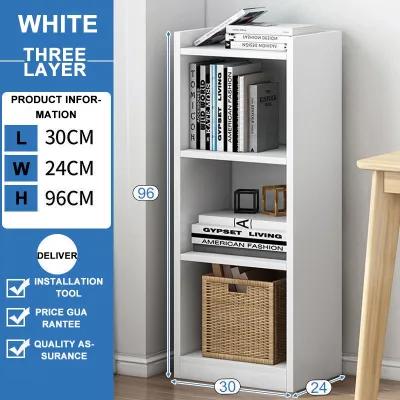
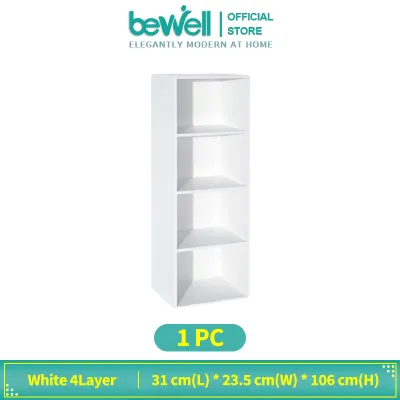
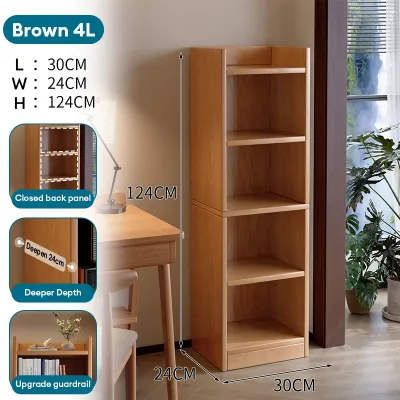
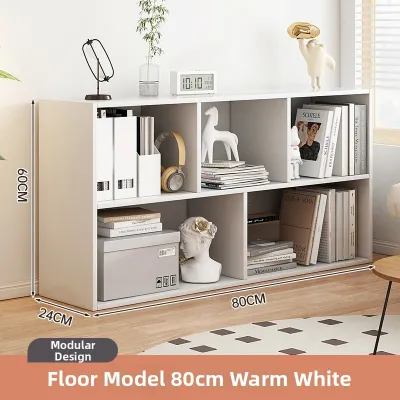
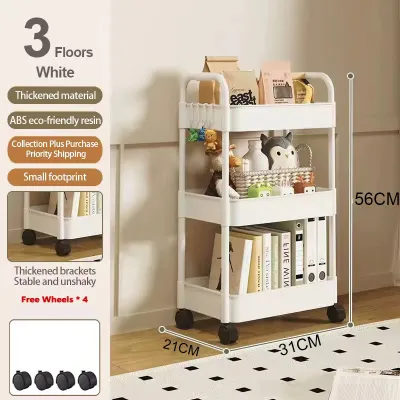
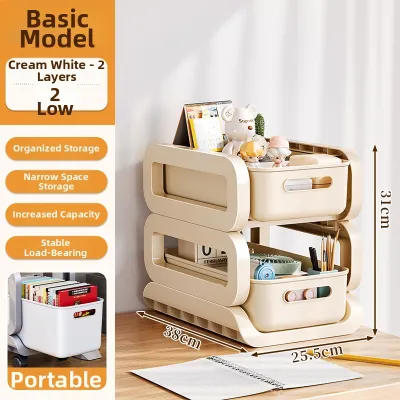
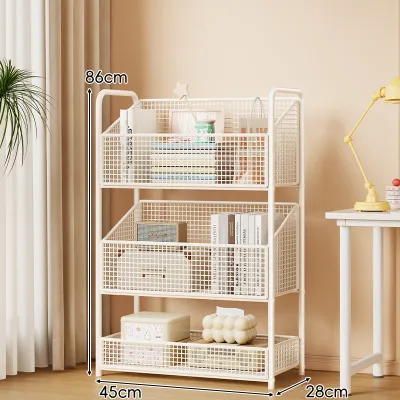
Prices are valid at publication and may change. Please refer to the product page for the latest price.
Finally, if you live in a high-rise condominium or a rented apartment, consult your building administration or property management office (PMO) regarding structural guidelines. Many buildings have strict rules against drilling into post-tension slabs or shared partition walls. Knowing these limitations beforehand will dictate whether you must look for a completely freestanding unit or if you are permitted to install wall-mounted shelves that require heavy-duty anchors.
Key Features to Look for in Compact Bookshelf Organizers
When shopping for a bookshelves rack organizer, look past aesthetic appeal and focus on practical specifications. Always verify the exact external dimensions provided by the manufacturer and compare them against your room measurements. A discrepancy of even a few millimeters can prevent a shelf from fitting into a tight alcove or beside a desk.

Do not rely solely on material names like “solid wood” or “steel frame” to judge durability. Instead, look for the manufacturer’s specified load capacity per shelf, usually listed in kilograms. In the humid tropical climate of the Philippines, moisture resistance is a critical factor for furniture longevity. Unprotected engineered wood can swell and sag under high humidity, while untreated metal frames are susceptible to rust. Look for units with protective surface treatments, such as powder-coated steel, water-resistant laminates, or sealed polyurethane finishes, which help protect the structure from moisture damage.
Examine the joint construction and overall stability of the unit. High-quality organizers often feature reinforced corner brackets, back braces, or adjustable leveling feet to compensate for uneven floors. If a bookshelf stands taller than standard desk height, it poses a potential tipping hazard, especially when fully loaded. Ensure the product description explicitly states that anti-tip hardware is included, and verify that this hardware is compatible with your specific wall type, whether it is concrete, hollow block, or drywall.
Top Bookshelf Rack Organizer Types for Small Rooms
The structural design of your bookshelves rack organizer directly impacts how efficiently you utilize your limited floor area. Choosing the right form factor allows you to maximize storage capacity while maintaining smooth traffic flow and comfortable movement within your study room.
Vertical and Corner Shelving Units
Vertical shelving units are highly effective for small home offices because they capitalize on unused wall space without expanding the physical footprint on your floor. By building upward rather than outward, a tall, narrow bookcase can hold a substantial number of books and files while occupying less than half a square meter of floor space. When planning for a tall vertical unit, always check your ceiling clearance and ensure the top of the shelf does not block overhead lighting fixtures, air conditioning vents, or ceiling fans.
Corner shelving units offer another excellent way to reclaim underutilized space. These specialized racks are designed to fit snugly into 90-degree corners, turning awkward dead zones into functional storage hubs. Before purchasing a corner unit, use a carpenter’s square or a simple alignment check to ensure your walls meet at a true right angle. Even a slight wall deviation can prevent a corner shelf from sitting flush, leaving unsightly gaps and reducing the unit’s overall stability.
Mobile and Modular Rack Organizers
For multi-purpose rooms or dynamic workspaces that require frequent rearrangement, mobile and modular rack organizers offer exceptional flexibility. Mobile units equipped with heavy-duty casters allow you to roll your storage out of the way when you need extra floor space for other activities. When evaluating mobile shelves, pay close attention to the wheel design. Ensure that at least two of the casters feature robust locking mechanisms to keep the unit firmly stationary when it is loaded with books and office supplies.
Modular organizers, on the other hand, allow you to customize the shelving configuration to match your changing storage needs. Many modular systems feature adjustable shelf heights, removable dividers, or stackable compartments. This adaptability is particularly useful if you transition from storing standard novels to housing tall binders or bulky storage boxes. However, always adhere to the manufacturer’s guidelines regarding weight distribution limits, especially when stacking modular components or extending adjustable shelves to their maximum limits.
How to Arrange and Maximize Your Bookshelf Space
An organized bookshelf not only improves your productivity but also enhances the safety and visual appeal of your small study room. The fundamental rule of shelf organization is to place your heaviest items, such as thick reference books, binders, and heavy office equipment, on the lowest shelves. This practice keeps the unit’s center of gravity low, significantly reducing the risk of accidental tipping and preventing individual shelves from bowing over time.
To combat visual clutter in a small room, utilize uniform storage boxes, baskets, or drawer inserts on middle and lower shelves. These containers are perfect for concealing loose items like charging cables, stationery, calculators, and miscellaneous paperwork that otherwise make a workspace look chaotic. Labeling these boxes clearly ensures you can find what you need quickly without having to rummage through multiple compartments.
Finally, avoid the temptation to pack every shelf to its absolute capacity. Leaving some open space—often referred to as breathing room—between books and decorative items creates a more balanced, visually pleasing aesthetic. More importantly, in humid environments, maintaining open space allows air to circulate freely around your books. Proper airflow helps prevent moisture buildup, which can lead to mold growth, musty odors, and the deterioration of paper pages. Aim to leave at least ten to fifteen percent of each shelf vacant to facilitate this airflow and leave room for future additions.
Frequently Asked Questions (FAQ)
How do I prevent a tall bookshelf from tipping over in a small room?
To prevent a tall bookshelf from tipping over, you must secure it directly to the wall using the manufacturer-provided anti-tip kit. Always follow the included installation instructions carefully. Because wall materials vary, you must select the correct wall anchors for your specific wall type. Concrete and solid masonry walls require expansion shields or masonry anchors, while drywall requires toggle bolts or heavy-duty hollow-wall anchors. If you are unsure about your wall’s structural composition or lack the necessary tools, consult a qualified professional to handle the drilling and installation safely.
What should I check before buying a bookshelf online for a condo?
Before purchasing a bookshelf online, measure the dimensions of your building’s elevator, stairwells, and doorways to ensure the delivery box can physically reach your unit. Next, review the assembly instructions and check if your condominium administration restricts noisy activities. Many properties permit drilling and hammering only during specific daytime hours on weekdays. Finally, carefully read the seller’s return policy, checking for potential restocking fees or return shipping costs, in case the unit arrives with mismatched dimensions or structural defects.
Community discussion
Share your experience or ask a question. Comments are reviewed before publication.