
In compact Philippine condominiums, square footage is at a premium. Balancing a comfortable work-from-home setup with daily living requires deliberate planning. A computer table with drawer serves as a vital dual-purpose furniture piece, offering a dedicated workstation while keeping work tools, documents, and digital accessories organized and out of sight. Finding the right desk involves more than just picking an appealing style; it requires matching precise physical dimensions with the unique spatial constraints of high-rise living.
How to Measure Your Condo Space for a Desk and Chair
When setting up a home office in a limited area, the most common oversight is focusing solely on the static footprint of the desk. The static footprint is merely the physical width and depth of the table top when it is unoccupied. To create a functional and comfortable workspace, you must measure the dynamic footprint, which includes the space required for your body, your office chair, and the daily movement of both.
Begin by measuring the clear floor area where the desk will stand. Next, calculate the operational depth needed for your chair. A standard ergonomic chair requires at least 60 to 75 centimeters of clearance behind the desk edge to allow you to sit down, push back comfortably, and stand up without striking walls, beds, or other furniture. If your workspace is positioned in a high-traffic hallway or a multi-purpose living area, this clearance is essential to ensure that your active working posture does not completely block the flow of movement through the condo.
Products mentioned in this guide
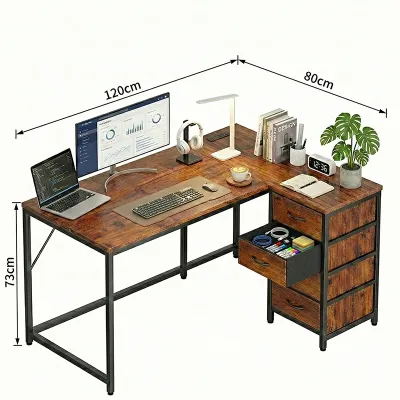
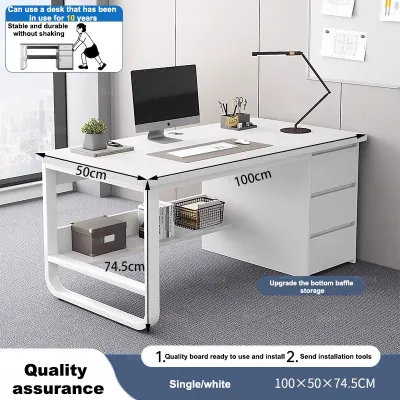
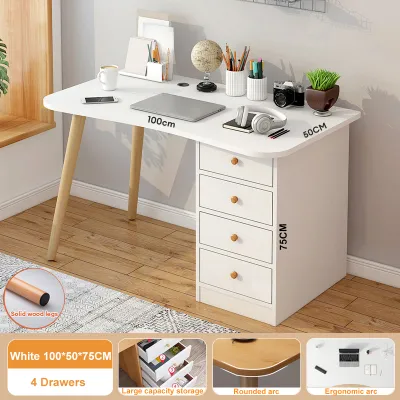
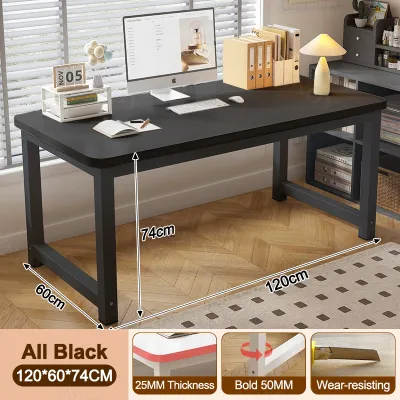
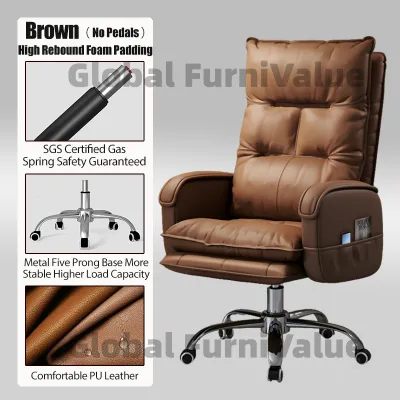
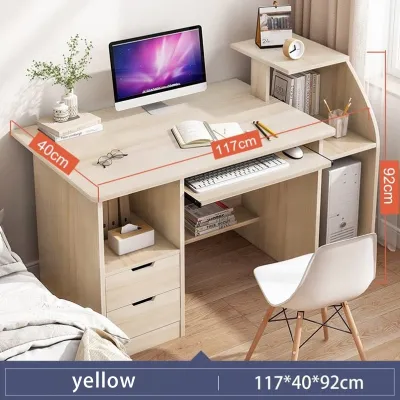
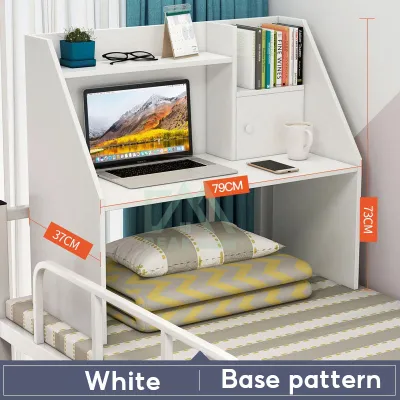
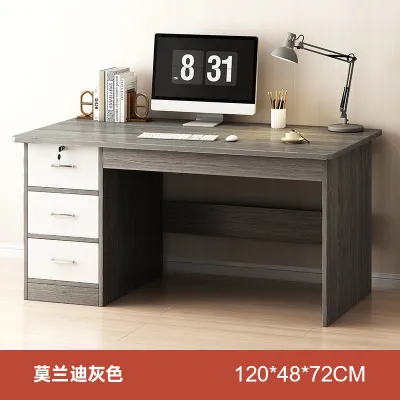
Prices are valid at publication and may change. Please refer to the product page for the latest price.
Another critical dynamic factor is the drawer extension space. A computer table with drawer requires additional clearance in front of the unit to allow the drawers to slide open fully. If a drawer has a depth of 40 centimeters, you must ensure there is at least that much unobstructed space directly in front of the desk face. Failing to account for this can leave you with drawers that strike your bedframe, wardrobe, or adjacent walls, rendering your built-in storage unusable.
Beyond the room itself, you must map out the delivery path. High-rise condominium living introduces logistics that ground-floor homes do not face. Measure the height, width, and diagonal clearance of your condo unit’s main entrance, narrow interior hallways, and tight corners. Crucially, verify the dimensions of the building’s passenger or freight elevators. Even if a desk fits perfectly in your designated corner, a fully assembled unit or an exceptionally long flat-pack box may not fit inside the elevator or navigate the tight turns of your floor’s corridor.
Finally, inspect the floor-to-wall transitions in your selected space. Many modern Philippine condos feature prominent skirting boards or baseboards along the bottom of the walls. These baseboards can prevent the back of your desk from sitting flush against the wall, creating a gap of one to two centimeters. If your measurements are tight down to the millimeter, this small gap can push the entire desk forward, disrupting your chair clearance or blocking a nearby doorway.
Essential Dimensions to Check for a Compact Computer Table with Drawer
When browsing online furniture stores or local showrooms, labeling terms like “compact,” “space-saving,” or “condo-sized” can be highly subjective. To avoid purchasing a piece of furniture that overwhelms your room, you must ignore marketing labels and scrutinize the actual manufacturer specification sheets. A truly compact computer table with drawer typically features a width ranging from 80 to 100 centimeters and a depth of 50 to 60 centimeters, which provides sufficient space for a laptop and external monitor without consuming excessive floor area.

The external dimensions of the desk tell only half the story; you must also evaluate the internal dimensions of the drawers. Many compact desks feature shallow decorative drawers that cannot accommodate standard office supplies. If you plan to store specific work essentials, such as A4 documents, a 15-inch laptop, external hard drives, or tablet devices, verify the internal drawer width, depth, and height. Ensure the drawer slides are rated for smooth operation and can support the weight of your stored electronics without sagging.
Underside clearance is another critical ergonomic and spatial dimension. The addition of drawers directly beneath the desktop inevitably reduces the vertical space available for your legs and your chair. Measure the distance from the floor to the lowest point of the drawer frame or desk support beam. This underside clearance must be compared against the height of your office chair’s armrests and seat cushion. If the clearance is too low, you will not be able to slide your chair completely under the desk when the workday is over, leaving the chair protruding into your living space.
Proper ergonomic alignment is vital for long working hours, making it necessary to coordinate the desk height with your chair’s adjustable range. Most standard desks stand between 73 and 75 centimeters tall. Ensure that your adjustable office chair can be set to a height that allows your elbows to rest at a 90-degree angle on the desktop while your feet remain flat on the floor. If you must raise your chair significantly to reach the desk comfortably, verify that you have enough legroom beneath the drawer assembly to avoid cramping.
Space-Saving Desk Configurations for Small Condos
Choosing the right desk configuration depends on how you balance your storage needs against the available floor area. Different structural layouts offer unique spatial trade-offs, installation requirements, and organizational benefits.
Vertical Desks with Overhead Storage and Drawers
Vertical desks, often referred to as hutch desks, maximize storage capacity by utilizing the unused wall space above your computer. By combining base drawers with overhead shelves or cubbies, these units allow you to store reference books, decorative items, and files vertically, keeping the desk’s physical footprint on the floor remarkably small.
Before selecting a vertical unit, you must verify your condo’s ceiling height and the placement of any wall-mounted light fixtures, air conditioning units, or sprinkler heads. It is also essential to check the manufacturer’s specified weight capacity and stability ratings. Because these desks are top-heavy, they present a higher risk of tipping if the upper shelves are overloaded. Inspect the unit’s joint construction and ensure you can secure the desk to the wall using appropriate anchoring hardware, especially in high-rise buildings subject to minor structural vibrations.
Corner L-Shaped Desks with Drawer Pedestals
Corner L-shaped desks are highly effective for transforming underutilized corner space into a highly productive workstation. By wrapping around a corner, these desks provide a generous amount of surface area for multi-monitor setups while keeping the center of your room open and unobstructed.
When planning for an L-shaped desk, measure the diagonal depth of the corner carefully to ensure the desk does not extend too far into your primary walkway. Additionally, pay close attention to the drawer pedestal configuration. Some L-shaped desks feature a fixed drawer unit on one specific side, while others offer a reversible design that allows you to install the drawers on either the left or right side. Choosing a reversible model provides greater flexibility if you decide to rearrange your condo layout in the future.
Wall-Mounted or Foldable Desks with Shallow Drawers
For extremely tight spaces, such as studio units or micro-condos, wall-mounted or foldable desks offer a highly adaptable solution. These desks can be folded flat against the wall when not in use, instantly reclaiming valuable floor space for daily living.
Because of their folding mechanisms, these desks typically feature very shallow drawers designed only for small, lightweight items like pens, charging cables, and slim notebooks. Before purchasing, you must verify your condo’s wall construction. Mounting a folding desk onto a solid concrete wall or a concrete hollow block wall provides excellent stability, but mounting onto a standard drywall or gypsum partition requires locating the structural studs and using specialized heavy-duty wall anchors. Always check the maximum weight limit of the folding hinges and brackets to ensure they can safely support your laptop, monitor, and typing pressure.
Common Sizing Mistakes When Buying Desks Online
Shopping on online marketplaces or digital furniture platforms offers convenience, but it also increases the risk of purchasing a desk that does not fit your space or your working style. One of the most frequent mistakes is measuring only the closed, static dimensions of the desk. Buyers often find a spot that perfectly matches the width and depth of the desktop, only to discover upon assembly that they cannot open the drawers fully because they hit an adjacent bed, wardrobe, or door frame.
Another common oversight is assuming that standard office chairs will fit under any desk. Desks with built-in drawers, especially those with wide center drawers directly under the main writing surface, have significantly reduced knee clearance. If you use an ergonomic chair with fixed armrests or a thick seat cushion, you may find yourself unable to sit close enough to the desk to work comfortably, or unable to tuck the chair away when your shift ends.
Power outlet placement and cable management are also frequently ignored during the planning phase. If your condo’s electrical outlets are located directly behind where the desk will stand, the plugs and power strips will prevent the desk from sitting flush against the wall. This can push the desk forward by five to ten centimeters, altering your carefully calculated chair clearance. To prevent this, look for desks with built-in cable management slots or plan to position the desk slightly offset from the outlets.
Finally, many online shoppers rely solely on stylized product photos, which can be shot at angles that make a desk appear larger or more spacious than it actually is. Always scroll down to the detailed technical drawings and verify the exact dimensions. Reading user reviews and Q&A sections is highly beneficial, as other buyers often share real-world feedback on the actual assembled dimensions, the ease of drawer alignment, and whether the manufacturing tolerances match the online specifications.
Frequently Asked Questions (FAQ)
How much weight can a typical condo floor support for a solid wood desk with drawers?
Standard residential condominium floors in the Philippines are engineered to support typical household furniture loads, including heavy solid wood desks with drawers. However, it is best to distribute the weight of your workspace evenly across the floor area rather than concentrating heavy items in a single spot. Avoid placing exceptionally heavy, non-standard items—such as large security safes or massive server racks—inside or on top of your desk drawers. If you are planning to install an unusually heavy, custom-built solid wood library unit or a massive executive desk, consult your condo’s building administration or a structural engineer to verify the floor’s load-bearing limits.
Can I assemble a large desk with drawers if my condo elevator is small?
Yes, but you must plan the delivery logistics carefully before completing your purchase. Always check the manufacturer’s packaging specifications to find the dimensions and weight of the shipping boxes, and compare these against your condo’s passenger or freight elevator limits. To simplify the process, request flat-pack delivery, which divides the desk into smaller, manageable boxes that easily fit into standard elevators. You should also verify if the furniture retailer offers professional in-room assembly services to handle the construction within your unit. As a backup plan, measure your building’s stairwell width and landing clearances to ensure the delivery team can manually carry up the longest boxes if the elevator is too small.
Community discussion
Share your experience or ask a question. Comments are reviewed before publication.