
Finding the right shoe storage for a compact closet in a typical Filipino home requires a balance of spatial efficiency and moisture control. With limited bedroom floor plans in modern condominiums and traditional townhouses, standard bulky shoe racks often block pathways or overcrowd the room. The most effective shoe organizers for small closets are those that maximize vertical dead space, utilize the back of doors, or slide into narrow gaps, all while keeping footwear protected from the local tropical humidity.
To make the most of your closet, you must look beyond generic storage solutions and focus on options that fit your specific closet dimensions and shoe collection. Whether you are organizing everyday slippers, office leather shoes, or bulky sneakers, selecting the right system involves precise measurements and a clear understanding of how different organizer designs function in tight spaces.
Measure Your Closet and Available Space First
Before purchasing any organizer on an online marketplace, you must measure the exact interior dimensions of your closet. Use a physical measuring tape to record the interior width, depth, and height of the specific area where you plan to place the organizer. Be sure to account for the space already occupied by hanging clothes, as long dresses, barongs, or trousers will reduce the available vertical clearance on the closet floor.
Products mentioned in this guide
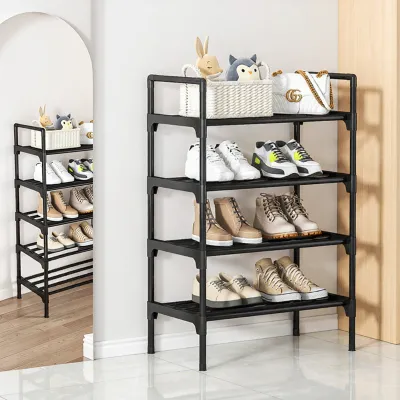
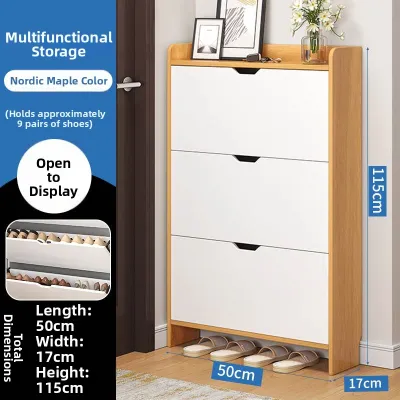
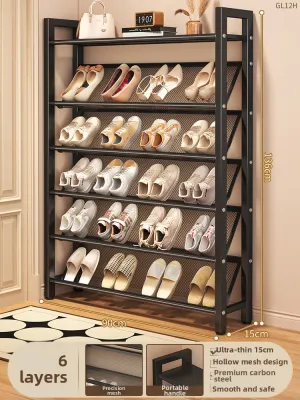
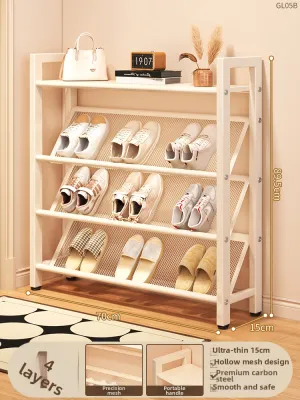
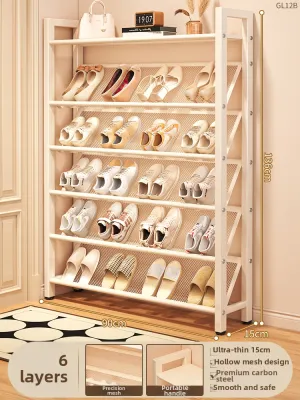
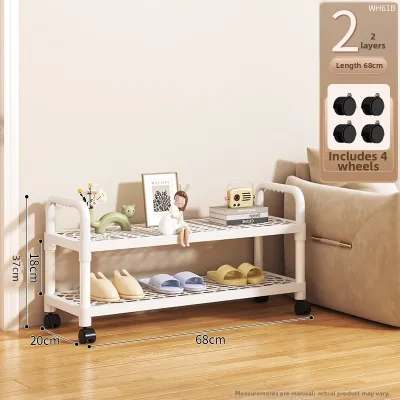
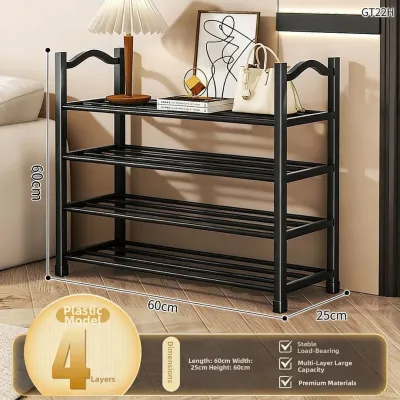
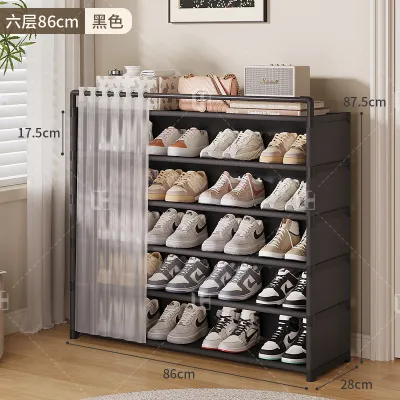
Prices are valid at publication and may change. Please refer to the product page for the latest price.
Door clearance and hinge swing are equally critical factors that many homeowners overlook. If your closet has hinged doors that swing inward or sliding doors that overlap, an organizer placed too close to the front edge can prevent the doors from closing fully or block smooth access. Measure the clearance between the front of your shelves and the closed door to ensure there is enough room for both the organizer and the front of your shoes.
Additionally, different types of footwear require varying depths and heights. Standard flat shoes, sandals, and slippers typically need a depth of only 25 to 30 centimeters, whereas bulky running shoes, high heels, or boots can require 35 centimeters or more. Compare the physical depth of your largest pair of shoes against the depth of your closet shelves to avoid a situation where your shoes prevent the closet doors from shutting.
Space-Efficient Shoe Organizer Types for Small Closets
When floor space is at a premium, traditional wide shoe racks are rarely practical. Instead, space-saving organizers are designed to exploit underutilized areas within your existing closet layout, such as vertical shelf gaps, the back of closet doors, or narrow side voids.

These specialized organizers generally fall into three main categories: stackable slots that double your shelf capacity, hanging systems that suspend shoes from rods or doors, and low-profile slide-out units. Each type addresses a specific spatial challenge, allowing you to customize your storage based on whether you have excess vertical height, unused door surfaces, or narrow gaps between your furniture.
Stackable and Adjustable Shoe Slots
Stackable and adjustable shoe slots are individual plastic stands designed to hold one shoe directly above the other, effectively cutting the required shelf footprint for each pair in half. These slots are highly effective for closets with fixed wooden shelves that have ample vertical clearance but limited horizontal width. By stacking one shoe over its partner, you utilize the empty vertical space that would otherwise go to waste.
Many of these slots feature adjustable height settings, which allow you to customize the angle of the top platform. This adjustability is particularly useful for accommodating different styles of footwear, such as flat sandals on a lower setting and high-heeled pumps or wedge shoes on a higher angle. When selecting these slots, always measure the maximum height of the stacked unit with your shoes on it to ensure it fits comfortably between your closet shelves.
It is important to note that while these slots work exceptionally well for low-profile footwear, bulky sneakers with thick soles or high-top designs may not fit standard slots. Before buying a large pack, check the base footprint of the slot against your shelf depth and test a single pair of your widest shoes to ensure they do not slide off or overhang excessively.
Over-the-Door and Hanging Organizers
Over-the-door and hanging organizers are excellent for utilizing vertical space without taking up any floor or shelf area. Over-the-door options typically feature rows of pockets or hooks that hang on the inside of your closet door, while hanging organizers use fabric shelves suspended directly from your main closet rod.
When choosing between these two, consider the trade-off between visibility and dust protection. Clear plastic pocket organizers allow you to see your entire collection at a glance, which is highly convenient for busy mornings, but they offer less protection from ambient dust. Fabric hanging shelves, on the other hand, provide individual cubbies that shield shoes from light and dust, though they occupy valuable hanging rod space that might otherwise be used for clothes.
Before purchasing an over-the-door organizer, verify your closet door thickness and the clearance around the top and side hinges. Standard over-the-door hooks must fit snugly over the top edge of the door without scraping the door frame or preventing the door from latching. Additionally, be mindful of weight distribution; overloading a lightweight hollow-core door with heavy leather shoes or thick-soled boots can strain the hinges and potentially cause the door to warp over time.
Under-Bed and Slim Slide-Out Racks
If your closet interior is completely full, look to the surrounding dead space, such as the gap beneath your bed frame or narrow voids between the closet and the wall. Under-bed storage boxes with internal dividers are ideal for keeping seasonal footwear, formal shoes, or less frequently worn items out of sight but easily accessible.
For narrow gaps inside or just outside the closet, slim slide-out racks or multi-tier tension-rod systems offer a highly compact footprint. These units are often designed with wheels or smooth glides, allowing you to pull them out like a drawer to access your shoes and slide them back into a space as narrow as 20 centimeters.
To ensure these low-profile options work in your room, measure the exact clearance height under your bed frame or the precise width of the closet gap. Keep in mind that floors in typical homes may have slight unevenness, so choose slide-out units with sturdy wheels or adjustable feet to prevent tipping when fully loaded.
How to Match Organizer Capacity to Your Shoe Collection
An organized closet starts with an accurate assessment of your actual footwear collection rather than an estimate. Begin by gathering all your shoes in one place, counting the total number of pairs, and categorizing them by how often you wear them and their physical size. This step prevents you from purchasing an organizer that is either too small or structurally unsuited for your specific types of shoes.
A common mistake is buying an organizer based solely on the manufacturer’s advertised “pair capacity.” These capacity ratings are often calculated using standard, low-profile flat shoes or children’s sizes. If your collection consists of bulky running shoes, wide leather loafers, or high heels, the actual capacity of the rack will be significantly lower than advertised. Always compare the physical dimensions of your shoes against the individual compartment or shelf measurements provided by the seller.
When planning your storage system, it is wise to leave a 10% to 20% buffer for future purchases or guest footwear. If you currently own 15 pairs of shoes, aim for a storage system that can accommodate at least 18 pairs. This prevents your closet from immediately becoming overcrowded the next time you acquire a new pair of shoes.
Finally, prioritize your storage zones based on daily accessibility. Keep your most frequently worn footwear, such as daily work shoes, school shoes, or casual slippers, in the most accessible “active zone” of your closet, typically at waist or eye level. Store formal shoes, heavy boots, or seasonal footwear in less accessible areas, such as top shelves or under-bed storage boxes, to keep your daily routine efficient.
Installation, Weight Limits, and Material Checks
Ensuring the structural safety and longevity of your shoe organizer requires careful attention to material quality and installation limits. Always check the manufacturer’s product specifications for the maximum weight capacity per shelf, hook, or individual slot. Overloading a plastic or fabric organizer can cause the shelves to sag, the joints to crack, or the entire unit to collapse, potentially damaging your footwear.
If you are using adhesive hooks or tension rods to mount organizers inside your closet, verify that these mounting methods are compatible with your closet’s surface material. Adhesive backings often struggle to grip textured or painted wood surfaces in high-humidity environments, while tension rods require solid, non-yielding walls to remain secure. Laminated boards or thin plywood backing on budget closets may flex under pressure, causing tension rods to slip or damage the closet structure.
Inspect the joints and connection points of any stackable or hanging unit before assembly. Look for reinforced plastic connectors, thick metal screws, or double-stitched fabric seams, as these are the primary stress points that bear the weight of your shoes. If your organizer wobbles or leans after assembly, do not attempt to load it to its maximum capacity.
If your chosen storage solution requires drilling into closet walls or modifying built-in wooden shelving, and you are uncertain about the structural integrity or the location of wall studs, stop and consult a professional carpenter or installer. Modifying built-in furniture without proper support can compromise the safety of the entire closet system.
Frequently Asked Questions (FAQ)
Can I use tension rods to create extra shoe shelves inside a small closet?
Yes, tension rods can be used to create temporary, low-profile shoe shelves, provided you install them between two parallel, solid walls. To support shoes securely, you will need to install two parallel rods at slightly different heights so the shoes can rest at an angle. Always check the weight rating of the tension rods and avoid using them for heavy leather boots or thick-soled sneakers, as excessive weight can cause the rods to slip and fall.
How do I prevent mold on shoes stored in small, enclosed closets?
To prevent mold growth in the humid Philippine climate, never store shoes while they are damp from sweat or rain; allow them to air dry completely in a well-ventilated area first. Place moisture-absorbing disposable dehumidifier tubs or reusable silica gel packets inside your closet to lower the humidity levels. Additionally, avoid packing your shoes too tightly together on your organizers, leaving a small gap of one to two centimeters between pairs to allow air to circulate freely.
Community discussion
Share your experience or ask a question. Comments are reviewed before publication.