
Finding the right shoe rack for a compact condominium closet in the Philippines requires balancing tight floor space with practical accessibility. The most effective shoe rack style depends entirely on your closet’s specific layout: stackable tiered racks work best for wide but shallow closet floors; over-the-door organizers maximize vertical space on standard hinged doors; and slim pull-out sliding racks are ideal for deep, narrow cavities.
By matching the physical characteristics of your storage space with the right rack design, you can keep your footwear organized, protected, and easily accessible without cluttering your living area.
Assessing Your Condo Closet Space and Shoe Capacity Needs
Before purchasing any storage organizer, you must accurately measure the interior dimensions of your closet. Use a metal tape measure rather than a soft sewing tape to ensure precise vertical and horizontal lines. Measure the total interior width, depth, and height of the target area. Be sure to subtract the space occupied by protruding baseboards, door frames, sliding door tracks, and internal hinge mechanisms, as these can easily obstruct a tight-fitting rack.
Products mentioned in this guide
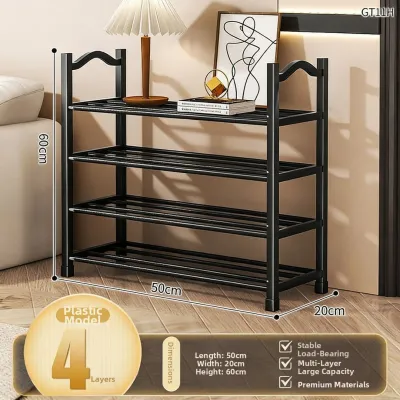
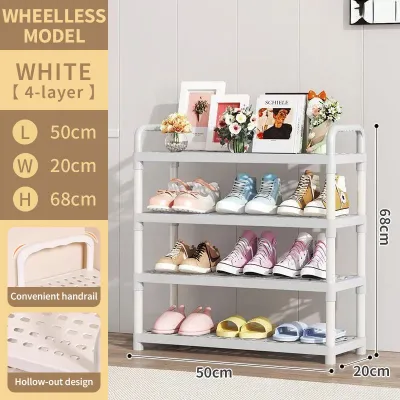
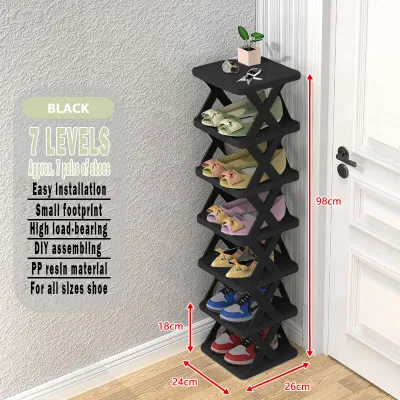
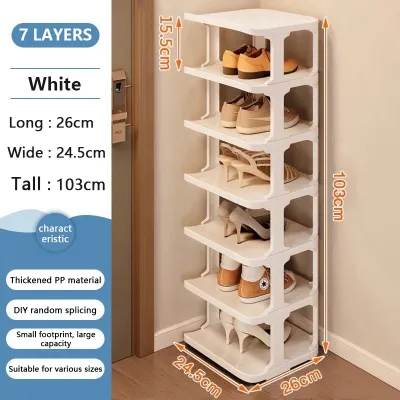
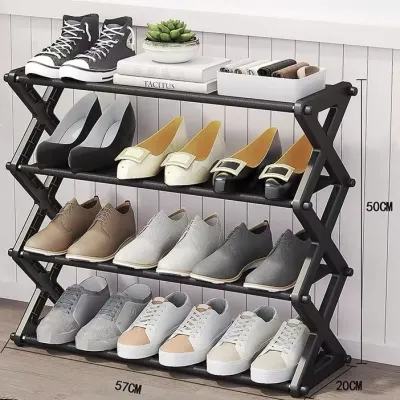
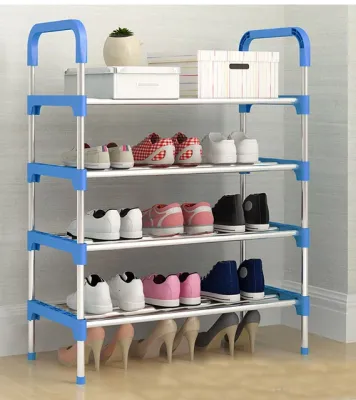
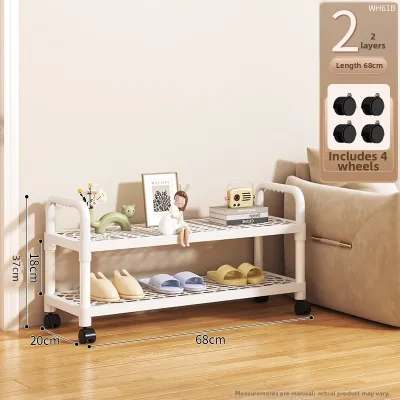
Prices are valid at publication and may change. Please refer to the product page for the latest price.
Understanding the difference between usable floor space and vertical space is crucial for selecting the right footprint. If your closet floor has a depth of less than 35 centimeters, standard adult shoes cannot sit straight on a flat shelf without blocking sliding doors. In such cases, you will need to look for angled shelves, vertical hanging systems, or sideways storage configurations that minimize the depth profile.
Next, estimate your actual shoe capacity based on your household size and the types of footwear you own. Different styles of shoes require vastly different amounts of physical space. A pair of men’s athletic sneakers or bulky running shoes typically requires a width of 22 to 25 centimeters and a height of 15 centimeters. In contrast, women’s flat sandals or slip-ons may only require 15 centimeters of width and less than 10 centimeters of height. Group your shoes by type to determine how many tall, medium, and flat shelves you actually need.
Finally, analyze the surrounding environment, specifically the closet door swing radius and adjacent hallway clearance. In many Metro Manila studio and one-bedroom condo layouts, closets are situated in narrow entryways or right next to the bed. If your closet has hinged doors, ensure that the door can open to its full angle without hitting bedroom furniture. If you install an over-the-door rack, verify that the added depth of the shoes will not prevent the door from swinging open fully or block the walking path.
Space-Efficient Shoe Rack Styles for Tight Closets
Evaluating space efficiency in a compact condo layout requires finding a balance between the physical footprint on the floor and the utilization of vertical wall space. A good shoe rack should maximize storage capacity without making the closet feel cramped or difficult to navigate. The primary goal is to utilize areas that are otherwise wasted, such as the empty space beneath hanging clothes or the back of a closet door.

Your closet’s shape—specifically whether it is shallow and wide or deep and narrow—will dictate the most effective rack style. Shallow closets benefit most from flat, wide, or wall-mounted systems that keep the depth profile to a minimum. Deep closets, on the other hand, allow you to use sliding or pull-out mechanisms that let you access items stored at the very back without having to reach blindly into dark corners.
Stackable and Tiered Shoe Racks
Freestanding stackable and tiered shoe racks are highly versatile solutions, particularly suited for closets with wide, shallow floor spaces. These racks sit directly on the closet floor, often underneath short-hanging garments like shirts and folded trousers. Because they are modular, you can start with a low two-tier setup and add additional levels upward as your footwear collection grows, making excellent use of vertical space. Basic plastic or wire tiered racks are highly accessible, often ranging from ₱300 to ₱800 in local home improvement stores.
One of the main advantages of quality tiered racks is the inclusion of adjustable or removable shelves. This design feature allows you to customize the height of individual tiers. For example, you can remove a middle shelf to accommodate taller ankle boots or high-top sneakers, while keeping the lower shelves tightly spaced for flat sandals and step-ins. This adaptability prevents wasted vertical space between shelves.
However, freestanding floor racks have distinct limitations. They consume valuable floor space that might otherwise be used for storing heavy luggage, storage bins, or vacuum cleaners. Additionally, accessing the lowest tiers requires significant bending or crouching. This physical requirement may not be suitable for older adults, individuals with back pain, or anyone looking for quick, eye-level access to their daily footwear.
Over-the-Door and Hanging Organizers
Over-the-door and hanging organizers are exceptional for maximizing unused vertical space without taking up a single square centimeter of your closet floor. These systems typically utilize fabric pockets, plastic sleeves, or wire loops suspended from the top of a standard door or hung directly from an existing closet rod. They are highly affordable, often priced between ₱250 and ₱600, and require no permanent installation, making them ideal for renters.
Before choosing an over-the-door model, you must check the thickness of your closet door and the clearance of the top frame. Most standard residential doors are between 35 and 40 millimeters thick, so ensure the included hanging hooks match these dimensions. Additionally, inspect the door hinges; heavy-duty solid wood doors can easily support the weight of a fully loaded organizer, but lightweight, hollow-core doors common in many modern condos can sag or warp over time if subjected to excessive weight.
Keep in mind that hanging organizers are designed primarily for lightweight, low-profile footwear. They are perfect for flats, step-ins, canvas slip-ons, sandals, and flip-flops. Attempting to stuff heavy leather work shoes, thick-soled basketball sneakers, or boots into fabric pockets will cause the organizer to sag, stretch out of shape, and potentially damage the closet rod or door frame.
Slim Pull-Out and Sliding Racks
For deep, narrow closet spaces or bottom cabinets, slim pull-out and sliding shoe racks offer a premium, highly organized storage solution. These systems feature metal or wooden trays mounted on ball-bearing drawer slides, allowing you to pull the entire rack forward to view and access your shoes. This design eliminates the frustration of reaching into the dark, dusty rear corners of a deep closet. These premium systems typically range from ₱1,500 to over ₱4,000 depending on the slide mechanism and materials.
Precise measurements are absolutely critical when planning a pull-out rack installation. You must measure the exact cabinet opening width, ensuring the sliding tracks will clear the closet door hinges and door frames when extended. Additionally, verify that there is enough physical clearance in front of the closet for the rack to slide out to its full depth without hitting your bed, walls, or other obstacles.
While sliding racks offer unparalleled accessibility and a clean, hidden aesthetic, they do require a higher level of installation effort. Most systems must be screwed securely into the closet floor or side panels. This process requires basic DIY skills, a drill, and precise leveling. If your closet is constructed from thin particle board, you may need to reinforce the mounting points or seek professional installation to ensure the tracks do not pull loose under the weight of the shoes.
Installation, Clearance, and Humidity Considerations
Door and Frame Clearance: When installing over-the-door organizers, ensure the hanging hooks do not scrape against the top door frame or prevent the door from latching securely. If the hooks fit too tightly, they can strip the paint or varnish from both the door and the frame. To prevent this, apply thin, adhesive-backed foam pads or felt strips to the inside of the hooks. This simple step protects the wood surfaces, dampens vibrations, and prevents the organizer from clattering loudly every time you open or close the door.
Weight Distribution and Stability: Maintaining proper weight distribution is essential for both safety and the longevity of your storage system. Always place your heaviest footwear, such as leather boots, safety shoes, and thick-soled sneakers, on the very bottom shelves or directly on the closet floor. This keeps the center of gravity low and prevents the rack from becoming top-heavy. For freestanding stackable racks that exceed three tiers or one meter in height, it is highly recommended to anchor the frame to the wall or the closet’s back panel using anti-tip straps or L-brackets. This precaution is particularly important in high-rise condominiums, where minor building vibrations or seismic activity can cause tall, unanchored furniture to wobble or tip over.
Ventilation and Humidity: The tropical climate of the Philippines presents unique challenges for indoor storage, with high relative humidity levels often exceeding 80 percent during the rainy season. In closed condo closets, stagnant, humid air creates an ideal breeding ground for mold, mildew, and musty odors, which can rapidly ruin leather, suede, and canvas shoes. Avoid storing your footwear in fully enclosed plastic storage boxes or airtight cabinets inside the closet. Instead, choose shoe racks made of open-wire grids, slatted wood, or breathable non-woven fabrics. These open designs promote natural airflow around your shoes, allowing trapped moisture to evaporate. Additionally, placing moisture-absorbing silica gel packets or hanging dehumidifier bags inside your closet can help maintain a dry environment.
Floor Protection: Condo flooring, whether made of laminate wood, vinyl planks, or ceramic tiles, is susceptible to scratching, scuffing, and moisture damage. Freestanding metal or plastic shoe racks can leave permanent indentations or scratches if they slide around. To protect your floors, place non-slip rubber feet or felt pads on the bottom of the rack’s legs. If you frequently store damp shoes after walking in the rain, place a slim, low-profile, moisture-resistant silicone mat beneath the rack to catch dripping water and dirt, preventing moisture from seeping into your flooring joints.
Common Sizing and Placement Mistakes to Avoid
Ignoring Shoe Height Variations: One of the most common mistakes is purchasing a shoe rack with fixed, uniform shelf heights—typically around 12 to 15 centimeters—without considering your actual shoe collection. While this height is perfectly fine for flats and low-profile sneakers, it will not accommodate high heels, mid-cut basketball shoes, or ankle boots. Forcing these shoes into tight spaces can bend their collars, scuff the materials, and waste valuable vertical space. Always ensure your chosen rack has at least one or two taller shelves, or opt for a modular system with adjustable heights.
Overlooking Door Swing and Traffic Flow: A shoe rack that fits perfectly inside your closet on paper can still cause daily frustration if it interferes with the room’s traffic flow. Before finalizing your purchase, visualize the closet doors in both their fully closed and fully open positions. If a floor-standing rack or an over-the-door organizer prevents the closet door from opening past a 90-degree angle, it will restrict your access to the rest of your clothes. Furthermore, in narrow condo hallways, a rack that protrudes even slightly past the closet threshold can create a constant tripping hazard.
Miscalculating Depth: Many buyers look only at the external dimensions of a shoe rack and assume it will fit their closet. However, they often forget that the listed depth of the rack does not account for the physical overhang of the shoes themselves. For example, a shoe rack might have a frame depth of 28 centimeters, but a pair of size 11 men’s sneakers can measure up to 32 centimeters in length. If you place these shoes on a flat shelf, they will stick out past the edge of the rack, preventing sliding closet doors from closing or hitting the front door of a shallow hinged closet.
Overloading Hanging Organizers: Hanging organizers are highly convenient, but they are not designed to carry unlimited weight. Overloading a fabric hanging organizer or an over-the-door rack can put immense stress on your closet rod, drywall anchors, or door hinges. Over time, this excessive weight can cause closet rods to bow and snap, or pull door frames out of alignment, making the door difficult to close. Always adhere strictly to the manufacturer’s specified weight limits and distribute the weight as evenly as possible across the pockets or shelves.
Frequently Asked Questions (FAQ)
How many pairs of shoes can a standard over-the-door rack hold?
Most standard over-the-door shoe organizers are designed to hold between 12 and 24 pairs of lightweight shoes, depending on the number of fabric pockets or wire hooks. However, you should prioritize the manufacturer’s maximum weight limit over the physical pocket count. Avoid filling every pocket with heavy footwear; instead, mix lighter sandals and flats with a few heavier pairs to avoid straining your door hinges.
Are tall stackable shoe racks safe in high-rise condos?
Tall, freestanding stackable shoe racks can become top-heavy and unstable, posing a tipping hazard during minor earthquakes or daily use. If your stackable rack exceeds three tiers or stands taller than one meter, you should secure it to the wall or the closet’s back panel using anti-tip straps or L-brackets. Always place heavier shoes on the bottom shelves to maintain a stable, low center of gravity.
Can I use a tension rod shoe rack inside a small closet?
Yes, tension rods can serve as an effective, space-saving DIY shoe storage solution in narrow closet alcoves or unused corners. By installing two parallel tension rods at slightly different heights, you can rest your shoes securely by their heels. However, tension rods can slip off smooth, painted, or laminated surfaces if they are overloaded, so they are best reserved for lightweight footwear.
Community discussion
Share your experience or ask a question. Comments are reviewed before publication.