
Finding the right shoe storage organizer for a small closet depends on identifying your unused closet real estate—whether that is the narrow floor strip beneath your hanging clothes, the vertical wall space, or the back of the closet door. For most compact closets, a modular, vertical system like stackable drop-front boxes or a hanging over-the-door organizer works best because it capitalizes on underutilized spaces without expanding your closet’s footprint. By elevating your footwear off the floor, you protect your investment from dust and moisture while keeping your daily pairs easily accessible.
Assess Your Closet Space and Shoe Capacity Needs
Before purchasing any shoe storage organizer, you must establish the exact physical boundaries of your closet. Start by taking a metal measuring tape to record the usable floor width, depth, and vertical height inside the cabinet or walk-in space. Do not just measure wall-to-wall; deduct the space occupied by baseboards, door frames, and the lower hem of your existing hanging clothes. A common mistake is assuming the floor is completely open, only to find that long dresses or trousers hang down and crowd out a potential shoe rack.
Next, analyze how your closet doors operate. For hinged doors, measure the clearance space to ensure the door can swing open fully without hitting a floor-standing rack. If you have sliding doors, determine the track clearance and identify the dead zones where the doors overlap, as an organizer placed in these areas can block access or derail the sliding mechanism.
Products mentioned in this guide
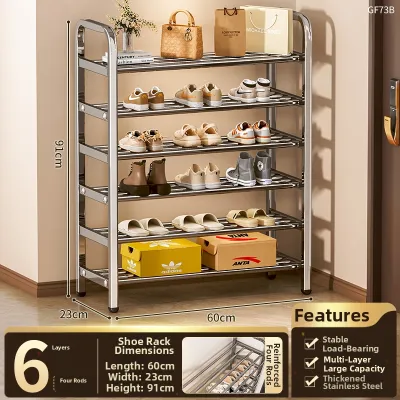
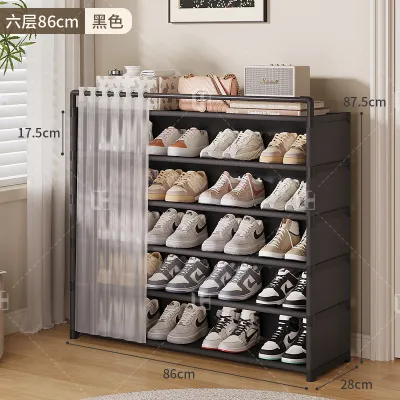
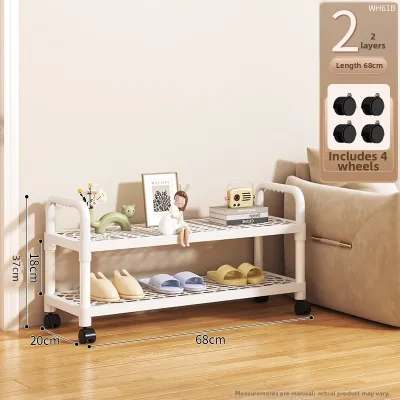
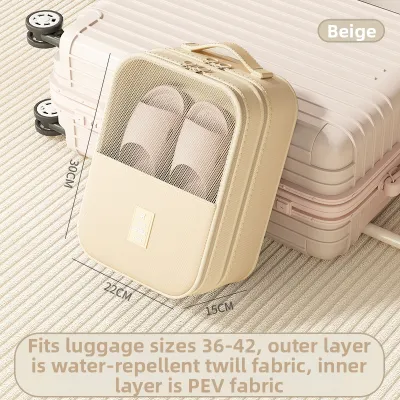
Prices are valid at publication and may change. Please refer to the product page for the latest price.
Finally, take an honest inventory of your shoe collection and group them by style and height. Flat sandals, slippers, and low-profile sneakers require very little vertical clearance, whereas high-top sneakers, high heels, and boots need taller compartments. Counting your pairs and categorizing them by height prevents you from buying a unit with uniform, shallow shelves that cannot accommodate your taller footwear.
Selecting the Best Shoe Storage Organizer for Small Closets
Selecting the ideal shoe storage organizer involves matching your closet’s unique layout with a structural design that maximizes every square centimeter. Different organizer styles offer distinct spatial advantages, depending on whether you have open floor space, unused hanging rods, or bare doors.

Stackable Clear Shoe Boxes
Stackable clear shoe boxes are highly efficient for closets with generous vertical clearance but limited floor width. These individual containers allow you to build a customized storage tower that fits perfectly into narrow corners or on top of overhead shelves. Before building your tower, check the manufacturer’s guidelines for the maximum safe stacking height to prevent the column from tipping over.
You must also verify the weight capacity of the individual boxes and the shelf supporting them. Heavy leather shoes or thick-soled boots can cause lightweight plastic boxes to warp, which may lead to a collapse of the entire stack. Ensure the underlying shelf—especially if made of thin particleboard—is rated to support the concentrated weight of multiple stacked pairs.
To maintain convenience, select boxes that feature drop-front or side-opening magnetic doors. This design detail allows you to slide out a specific pair of shoes from the bottom or middle of the stack without needing to unstack and restack the containers above it.
Over-the-Door and Hanging Organizers
If your closet floor is completely occupied, over-the-door and hanging organizers utilize the dead space on your door or hanging rod. Over-the-door units typically hang from metal hooks that slip over the top of the door frame. Before choosing this style, measure your door’s thickness to ensure the hooks will fit snugly, and check the hinge weight limit to avoid sagging or alignment issues over time.
Make sure there is enough clearance at the bottom of the door so the organizer does not drag on the floor or crush the shoes stored in the lowest pockets. For hanging organizers that attach directly to the closet rod, verify that the rod is securely anchored to support the extra weight of several pairs of shoes pulling downward.
Always match the pocket or compartment dimensions to your shoe sizes. Narrow pockets designed for flat sandals will stretch, tear, or fail to hold bulkier athletic shoes or structured heels, rendering several slots unusable.
Slim Tiered Shelving and Expandable Racks
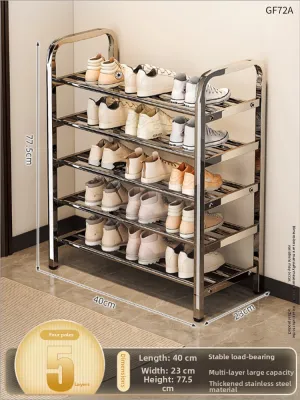
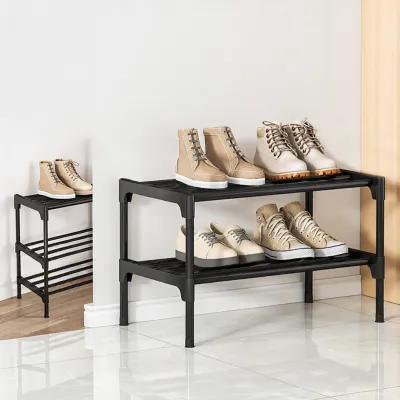
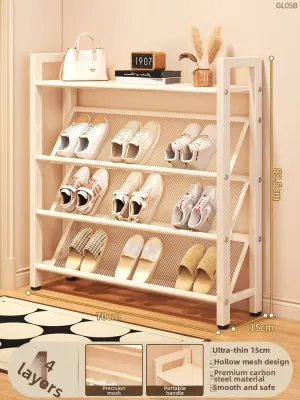
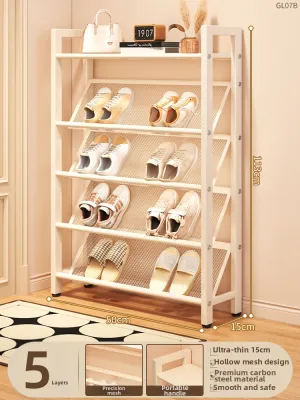
Slim tiered shelving and expandable metal racks are excellent for closets with narrow floor strips that cannot accommodate standard furniture. Expandable racks feature telescoping bars that let you adjust the width of the frame to fit the exact dimensions of your closet floor. This flexibility allows you to maximize horizontal space without leaving awkward gaps.
For taller, narrow racks with three or more tiers, stability becomes a primary concern. Look for units that include anti-tip hardware or wall-anchoring straps, which secure the rack to the back wall of the closet to prevent accidental tipping when you pull out a pair of shoes.
Always verify the base footprint of the rack against your closet’s usable floor depth. If the rack protrudes even a few centimeters beyond the door frame, it can prevent sliding doors from closing or obstruct your walking space, creating a constant tripping hazard.
Verify Clearances, Weight Limits, and Installation Needs
A shoe storage organizer must not only fit within your closet’s dimensions but also function seamlessly within your daily routine. This requires verifying the dynamic clearances needed during actual use. For instance, if you select drop-front boxes or pull-out drawer systems, calculate the necessary aisle space in front of the unit. You need enough room to stand comfortably, open the compartment fully, and retrieve your shoes without bumping into walls or adjacent furniture.
Weight distribution is another critical safety factor. Avoid concentrating all your heaviest footwear, such as work boots or thick wedges, on a single shelf or hanging section. Instead, distribute the load evenly, placing heavier shoes on the bottom shelves and lighter footwear like flats or sandals near the top. If your closet features built-in shelves made of particleboard, be aware that concentrated heavy loads can cause the material to bow or crack over time, whereas solid wood or reinforced wire shelves offer higher load capacities.
Additionally, inspect your closet’s interior for utility obstructions. Your organizer must not block baseboard heating vents, air conditioning returns, or built-in light fixtures. Blocking vents can restrict airflow and cause temperature imbalances, while covering light sources makes it difficult to see your wardrobe.
Finally, consider the physical installation requirements of your chosen organizer. Taller racks and wall-mounted shelves often require drilling brackets into the wall. If you live in a rental property, check your lease agreement regarding wall modifications. You must also identify your wall type; mounting a heavy organizer on drywall requires specialized anchors, whereas concrete or hollow-block walls require masonry drill bits and wall plugs to ensure a secure, stable hold.
Evaluate Materials and Humidity Resistance for Local Climates
In tropical climates like the Philippines, high humidity levels present a constant threat to footwear and storage systems. Moisture can quickly trap mold, mildew, and unpleasant odors inside closed spaces. When shopping for a shoe storage organizer, do not assume a material is durable simply because of its name; instead, check the manufacturer’s product specifications for explicit moisture-resistant treatments or sealed finishes.
The choice between breathable and sealed materials depends heavily on your closet’s ventilation. Breathable fabrics, such as canvas or open mesh, allow air to circulate around your shoes, which helps dissipate moisture after wear. However, if your closet is already damp, fabric can absorb atmospheric moisture and foster mold growth. On the other hand, sealed plastic boxes protect shoes from external dust and humidity, but they can trap residual moisture if you store shoes that are still damp from sweat or rain.
To maintain your organizer and protect your shoes, establish a routine inspection and maintenance schedule. Periodically check metal frames for signs of rust, especially near joints and screws. If you use engineered wood or MDF components, inspect them for swelling or warping, which indicates moisture absorption. For plastic containers, wipe down the interior and exterior surfaces regularly with a dry microfiber cloth to prevent dust buildup and inspect your shoes for any early signs of mildew.
Common Sizing and Placement Mistakes to Avoid
Avoiding common purchasing errors can save you time, money, and frustration when organizing a small closet. One of the most frequent mistakes is ignoring door thickness and hinge placement when purchasing over-the-door organizers. If the hanging hooks are too wide for the door, they will slide around, scratch the paint, and prevent the door from latching shut properly.
Another common pitfall is buying fixed-height shelving units. While these units work well for standard flats and low-top sneakers, they leave no room for ankle boots, high heels, or high-top sneakers. This forces you to store your taller shoes sideways—which can deform their structure—or leave them scattered on the floor, defeating the purpose of the organizer.
Overloading hanging canvas organizers is also a risk. It is easy to underestimate the cumulative weight of several pairs of shoes. Overloading these fabric units puts excessive strain on your closet rod, which can cause the rod to bend, pull away from its wall brackets, or collapse entirely, damaging your closet structure.
Lastly, many buyers fail to account for the depth of their shoes’ heels or toe boxes. A shelf might have a depth of 25 centimeters, but if your shoes measure 30 centimeters from heel to toe, they will protrude. This protrusion can block sliding closet doors from closing or constantly catch on hanging clothes, creating unnecessary clutter and frustration.
Community discussion
Share your experience or ask a question. Comments are reviewed before publication.