
Selecting the right stainless steel wall cabinets for your kitchen in the Philippines requires a careful evaluation of material specifications, structural load capacities, and your specific wall construction. In a tropical climate characterized by high humidity and coastal salt air, selecting the wrong grade of metal or failing to secure the unit properly can lead to premature corrosion, sagging, or structural failure. By focusing on verified manufacturer specifications rather than generic product claims, you can secure a durable, hygienic, and highly functional storage solution that maximizes your kitchen’s vertical space.
Wall-mounted storage is particularly valuable in compact urban kitchens, where floor space is at a premium. Stainless steel is a preferred material for these environments because it resists moisture, does not harbor pests, and is exceptionally easy to sanitize. However, because these units must support heavy cookware, dinnerware, and pantry staples, understanding the technical details of their construction and installation is essential before making a purchase.
Core Selection Criteria for Stainless Wall Cabinets
To ensure your cabinet can withstand the daily demands of a busy kitchen, you must first verify the specific grade of stainless steel used in its construction. Do not rely on vague marketing terms like “premium metal” or “rust-proof steel.” Instead, check the product tags, specification sheets, or manufacturer labels for explicit grade designations.
Products mentioned in this guide
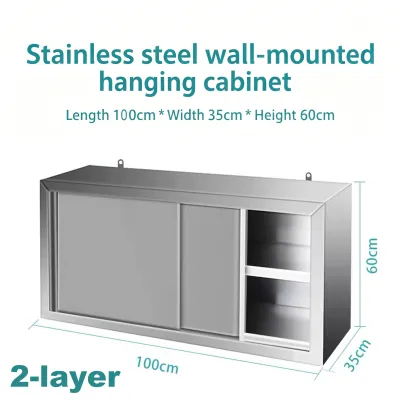
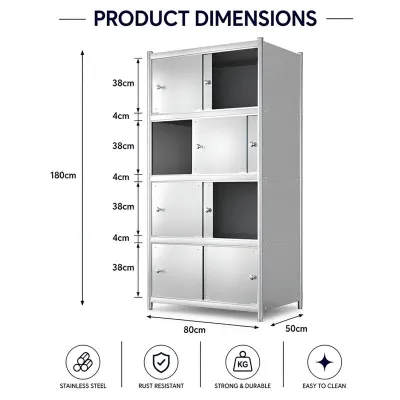


Prices are valid at publication and may change. Please refer to the product page for the latest price.
Grade 304 stainless steel (often labeled as SUS304 or AISI 304) is the industry standard for high-moisture environments. It contains a high percentage of chromium and nickel, which create a self-healing protective layer that resists rust and corrosion even when exposed to water, food acids, and humid air. Grade 201 is a more budget-friendly alternative that replaces some nickel with manganese. While Grade 201 is suitable for dry storage, it is more susceptible to surface rust (often called tea staining) in highly humid or coastal areas of the Philippines, requiring more frequent cleaning and maintenance.
Beyond the steel grade, the thickness of the metal panels directly dictates the cabinet’s structural integrity and resistance to denting. Sheet metal thickness is typically measured in millimeters or gauge numbers. For residential kitchen cabinets, look for panel thicknesses between 0.8 mm and 1.2 mm. Thinner sheets, such as those measuring 0.6 mm or less, are prone to flexing or “oil-canning” when pressure is applied, which can compromise the cabinet’s stability over time.
The method of construction is equally critical to the cabinet’s long-term durability. Inspect the joints and seams of the cabinet frame; fully welded joints offer superior strength and a seamless finish compared to units held together by rivets or light screws. Welded construction prevents moisture and grease from seeping into the joints, reducing the risk of internal corrosion and bacterial growth.
Finally, evaluate the surface finish of the stainless steel, as this affects both aesthetics and maintenance. A brushed or hairline finish is highly practical for busy kitchens because its textured pattern helps conceal minor scratches, smudges, and fingerprints. A mirror-polished finish provides a bright, reflective look that can make small kitchens feel larger, but it requires constant wiping to maintain its shine and easily shows water spots and grease marks.
Configurations and Layouts for Kitchen Storage
Selecting the right cabinet configuration involves matching the physical dimensions of the unit to your available wall space and the specific items you plan to store. Standard wall cabinets typically range in depth from 30 cm to 40 cm. This depth is ideal because it provides ample space for dinner plates, mixing bowls, and small appliances while remaining shallow enough to prevent you from bumping your head while working at the countertop below.

When planning the height of your installation, ensure there is adequate clearance between the bottom of the cabinet and your countertop. A standard clearance of 45 cm to 60 cm is generally recommended. If you plan to install the cabinet above a range hood or a cooking range, consult the appliance manual to maintain the required safety clearance, preventing heat and steam from damaging the cabinet’s underside or its contents.
The choice of door mechanism should be guided by your kitchen’s layout and aisle width. Traditional hinged doors offer full access to the cabinet interior but require clear space to swing outward. In narrow galley kitchens or tight condominium spaces, hinged doors can block walkways and create safety hazards.
Sliding doors are an excellent alternative for tight spaces because they operate entirely within the cabinet’s footprint. However, sliding doors only allow access to one side of the cabinet at a time, which can be inconvenient during busy meal preparation. Another modern option is the lift-up door, which uses hydraulic or pneumatic struts to lift the door panel vertically. While highly convenient, ensure the manufacturer uses high-quality struts, as tropical heat and humidity can degrade low-grade seals over time, causing the doors to sag.
The internal shelving configuration must also support your specific storage needs. Look for cabinets with adjustable shelving tracks, which allow you to customize the interior height to accommodate tall stockpots, rice cookers, or bulk pantry items. Ensure the shelves themselves are structurally reinforced, ideally with a welded support rib running underneath the center of the shelf to prevent sagging under the weight of heavy cast iron pans or stacked ceramic dishes.
Space Planning and Installation Prerequisites
Safe installation is the most critical aspect of adding a stainless steel wall cabinet to your kitchen. Because these units are inherently heavy even when empty, they require a secure anchoring system and a structurally sound wall to prevent catastrophic failure.
Most residential walls in the Philippines are constructed from concrete hollow blocks (CHB) or solid concrete. Mounting a heavy cabinet to these surfaces requires heavy-duty masonry expansion bolts, commonly known as sleeve anchors or dynabolts, rather than standard plastic wall plugs. If your kitchen features drywall or light partition walls, you must locate the internal wooden or metal studs and secure the cabinet directly to them using heavy-duty toggle bolts, or install additional structural backing behind the wall before mounting.
Before drilling, you must calculate the total loaded weight of the cabinet. This is the sum of the cabinet’s dry weight and the maximum weight of the items you plan to store inside. Compare this total weight against both the manufacturer’s rated load capacity and the structural limits of your wall. Never exceed the lower of these two values.
Locating hidden hazards behind the wall is a vital safety step. Use a reliable wall scanner or consult your home’s architectural and utility blueprints to identify the paths of electrical conduits, PVC water pipes, and ventilation ducts. Drilling into a live electrical wire or a pressurized water line can cause severe injury, flooding, and expensive structural repairs.
If you encounter any uncertainty during the planning or installation process, stop immediately. If the wall shows signs of cracking, moisture damage, or structural weakness, or if you are unsure how to properly secure the mounting brackets, consult a qualified contractor or structural engineer. Professional installation ensures the cabinet remains securely anchored, protecting your family and your investment.
Sourcing and Pre-Purchase Verification Checklist
When shopping for stainless steel wall cabinets on online marketplaces or in local home improvement showrooms, a systematic verification process will help you avoid low-quality products and misleading claims. Do not rely solely on promotional titles or attractive product photos.
Start by cross-referencing the online product description with the manufacturer’s official specification sheet. Verify that the listed dimensions, net weight, and steel grade match across all documentation. If a seller cannot provide a detailed specification sheet or is vague about the steel grade, treat this as a significant red flag.
Be cautious of listings that make absolute guarantees such as “100% rust-proof forever” or “indestructible construction” without providing clear care instructions or material certifications. Reliable manufacturers will always state the specific conditions under which their products perform best and provide clear guidelines for cleaning and maintenance.
Review the warranty terms and return policies carefully before finalizing your purchase. Ensure the warranty covers structural defects, weld failures, or premature corrosion under normal residential use. Because stainless steel panels are highly susceptible to denting and scratching during transit, choose sellers who offer secure packaging and allow you to inspect the unit upon delivery. Inspect all corners, door alignments, and surfaces before signing the receiving slip.
Finally, compare price points relative to the materials and hardware provided. High-quality SUS304 cabinets with robust hinges, reinforced shelves, and included heavy-duty mounting hardware will naturally command a higher price, often ranging from ₱8,000 to ₱15,000 or more depending on the size. Extremely low-priced options often compromise on steel thickness, use lower-grade SUS201 steel, or include cheap plastic hardware that will require early replacement. Investing in a verified, high-quality unit ensures long-term safety and utility in your kitchen.
Frequently Asked Questions (FAQ)
Do stainless steel cabinets rust in humid environments?
Yes, stainless steel can rust if it is not properly maintained or if the wrong grade is selected for highly humid environments. While the chromium in stainless steel forms a protective oxide layer, exposure to salty coastal air, high humidity, and harsh chemical cleaners like chlorine bleach can break down this barrier. To prevent corrosion, choose Grade 304 stainless steel, clean the surfaces regularly with mild soap and warm water, and always wipe the metal completely dry.
How much weight can a standard wall-mounted cabinet hold?
There is no single weight limit for all wall-mounted cabinets, as capacity depends entirely on the cabinet’s sheet thickness, internal reinforcement, and the quality of the wall anchors used. A standard residential unit may have a rated capacity ranging from 20 kg to 50 kg or more. Always verify the exact weight limit on the manufacturer’s product label or specification sheet, and ensure your wall type can support that load.
Is professional installation required for heavy stainless steel cabinets?
Professional installation is highly recommended, especially when mounting cabinets onto concrete hollow block walls, handling large multi-door units, or when you are uncertain about the wall’s structural integrity. Improper DIY mounting carries a high risk of cabinet collapse, which can cause severe injury and expensive damage to your kitchen. A professional installer will ensure the correct heavy-duty anchors are used and that the unit is perfectly level and secure.
Community discussion
Share your experience or ask a question. Comments are reviewed before publication.