
Adult students balancing higher education, professional careers, and family responsibilities require a dedicated workspace that supports long hours of concentration. Finding the right study table for student adult setups involves more than just picking an appealing design; it requires a careful evaluation of your physical space, study habits, and ergonomic needs. The choice between a standing desk, a foldable desk, or an L-shaped desk can significantly impact your productivity, physical comfort, and overall learning experience.
Each of these desk configurations offers distinct advantages tailored to different lifestyles and living arrangements. A standing desk promotes physical movement and alertness, a foldable desk solves the problem of limited floor space in shared or compact homes, and an L-shaped desk provides an expansive surface for heavy multitasking. By analyzing how you study and where you live, you can select a desk that serves as a reliable foundation for your academic journey.
Assessing Your Study Habits and Room Layout
Before browsing online marketplaces or visiting local furniture showrooms, you must establish a clear picture of your physical environment. Begin by using a tape measure to map out the exact floor area where you plan to place the desk. It is essential to measure not only the width and depth of the space but also the clearance needed for your office chair to slide back comfortably, which typically requires at least 80 to 90 centimeters of unobstructed space behind the desk.
Products mentioned in this guide
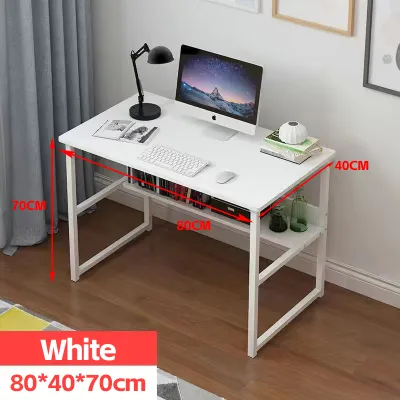
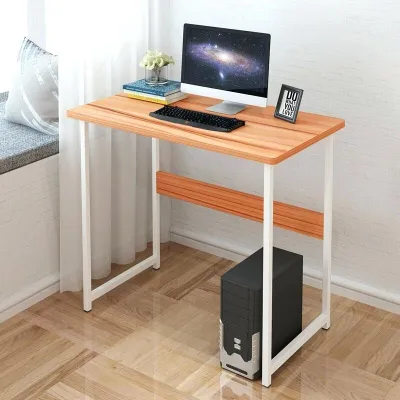
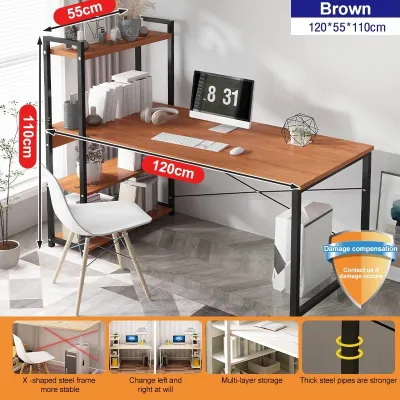
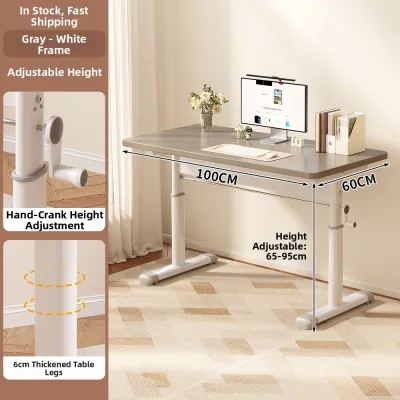
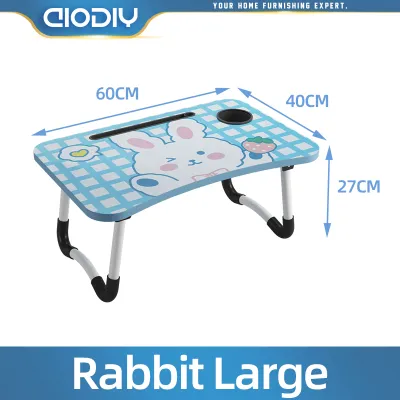
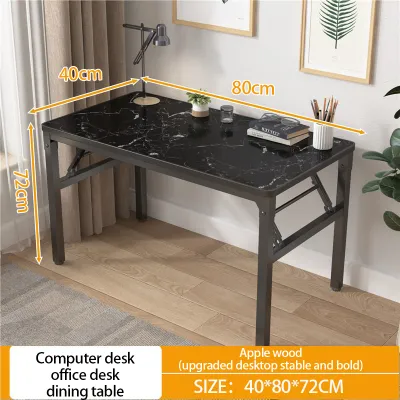
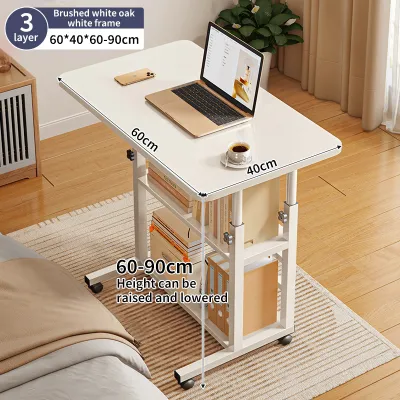
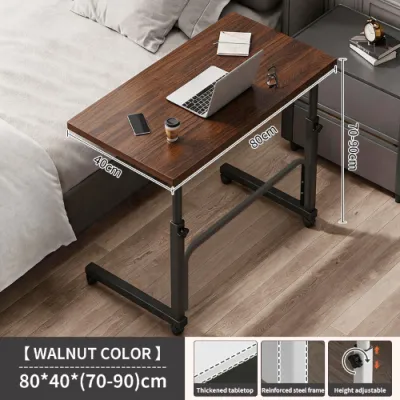
Prices are valid at publication and may change. Please refer to the product page for the latest price.
In tropical climates like the Philippines, room layout planning must also account for local environmental factors. Placing your study table directly in front of a large window might offer pleasant natural light, but it can also expose you to intense afternoon heat and screen glare, making study sessions uncomfortable. Additionally, you must position your desk to maintain optimal airflow from electric fans or air conditioning units, ensuring you stay cool during long study sessions without blocking essential ventilation pathways.
Your daily study habits and the equipment you use will dictate the size and structural requirements of your desk. An adult student who relies solely on a lightweight laptop and a digital tablet requires far less surface area than someone who uses a large desktop monitor, multiple printed textbooks, and physical notebooks. If your coursework involves a mix of digital typing and manual handwriting, you will need a deeper desk surface to avoid constantly shifting your keyboard out of the way to make room for your notebooks.
Finally, consider the duration of your study sessions and how they fit into your daily routine. If you study in short, highly focused bursts of thirty minutes to an hour, a simple and compact desk may suffice. However, if you regularly spend entire weekends or late nights reviewing course materials, ergonomic features and physical comfort become critical priorities to prevent neck strain, shoulder tension, and lower back pain.
Standing Desks: Active Learning and Posture Flexibility
Standing desks have gained immense popularity among adult students who want to combat the physical toll of prolonged sitting. These desks allow you to transition smoothly between sitting and standing positions throughout the day, which can help maintain high energy levels and improve focus during long reading or lecture-watching sessions. By changing your posture periodically, you stimulate blood circulation and reduce the physical fatigue associated with sedentary study habits.

When evaluating a standing desk, you must choose between manual crank models and motorized versions. Motorized standing desks offer the convenience of push-button adjustments and often include programmable memory presets, allowing you to return to your preferred heights instantly. However, these models require close proximity to a reliable power outlet, and you must ensure the power cord has enough slack to move freely through the desk’s entire height range without pulling on the wall socket.
Manual crank standing desks, on the other hand, do not require electricity, making them highly versatile in terms of room placement. The trade-off is the physical effort required to turn the crank handle, which might discourage you from changing positions as often as you should. If you choose a manual model, verify that there is sufficient clearance on the side of the desk to rotate the handle without hitting adjacent walls, bookshelves, or wardrobe doors.
Stability is a critical safety factor for any standing desk, especially when it is fully extended to its maximum height. Before purchasing, check the manufacturer’s specifications for the maximum weight capacity and look for a frame constructed from heavy-duty steel. When testing a desk, apply gentle pressure to the surface at standing height; a high-quality desk should exhibit minimal wobble, ensuring your laptop screen and reference materials remain steady while you type or write.
Foldable Desks: Space-Saving Solutions for Compact Rooms
For adult students living in studio apartments, shared condominiums, or multi-purpose rooms, a permanent desk can severely restrict daily movement. Foldable desks offer a highly practical solution by providing a sturdy study surface when needed and folding flat for easy storage when your study session ends. This flexibility allows you to reclaim your living space during the day and establish a clear boundary between study time and personal life.
Because foldable desks must be lightweight enough to move and store easily, they are generally constructed from materials like engineered wood, plastic, or slim metal tubing. While this makes them highly portable, it also means they have lower weight capacities than permanent desks. A foldable desk is ideal for students who work primarily on a laptop, but it may not be suitable for supporting heavy desktop computers, multiple monitors, or large stacks of heavy reference books.
When shopping for a foldable desk, pay close attention to the structural integrity of the hinges, joints, and locking mechanisms. A reliable model must feature secure locking brackets that prevent the legs from folding accidentally while you are working. Inspect the desktop surface to ensure it is completely flat; some foldable designs feature split tops or folding seams that can create an uneven writing surface, which can be highly frustrating when taking handwritten notes.
Another important consideration is the daily operational effort required to set up and pack away the desk. If the folding mechanism is stiff, complicated, or requires significant physical strength, you may find yourself leaving the desk set up permanently, defeating its space-saving purpose. Look for designs that can be folded and unfolded in a few simple steps without the need for tools, allowing you to transition your room from a study zone to a living space in seconds.
L-Shaped Desks: Multitasking and Corner Space Optimization
L-shaped desks are the ultimate workspace solution for adult students who manage complex projects, use extensive physical materials, or require multiple digital screens. The unique two-sided design allows you to establish distinct functional zones within a single workspace. For example, you can dedicate one side of the desk entirely to your computer and keyboard, while keeping the other side clear for reading textbooks, writing notes, or sketching diagrams.
This zoning capability is highly beneficial for cognitive focus, as it physically separates your digital distractions from your analog tasks. Furthermore, L-shaped desks are exceptionally efficient at utilizing corner space, which often goes unused in standard room layouts. By tucking the desk into a corner, you can maximize your available floor area while enjoying a massive amount of desktop surface within arm’s reach.
However, the large footprint of an L-shaped desk requires careful layout planning. Unlike standard rectangular desks, an L-shaped desk is difficult to reposition once assembled, and it can easily dominate a small room if placed along a main wall rather than in a corner. You must also plan your cable routing carefully, as managing power cords for multiple devices across a larger surface area can quickly lead to a cluttered and hazardous tangle of wires under your desk.
Assembly is another factor to keep in mind, as L-shaped desks are typically heavy and consist of multiple interlocking panels and support frames. During assembly, it is crucial to check the alignment of the desktop segments; even a minor misalignment can create a noticeable ridge at the seam where the two sides meet, which can interfere with your mouse movement or writing comfort. Additionally, verify if the desk frame is reversible, allowing you to install the longer side on either the left or the right to match your room’s layout.
Comparison Matrix: Matching Desk Types to Student Profiles
To help you decide which desk configuration best suits your academic journey, the following matrix compares the three desk types across key practical dimensions:
| Desk Type | Space Footprint | Equipment Capacity | Assembly Complexity | Posture Flexibility | Ideal Student Profile |
|---|---|---|---|---|---|
| Standing Desk | Medium | Medium to High | Moderate to High | Excellent | Students who study for long hours and prioritize physical movement and ergonomics. |
| Foldable Desk | Very Low | Low (Laptop only) | Low (Often pre-assembled) | Low (Fixed height) | Students in compact or shared living spaces who need to clear their study area daily. |
| L-Shaped Desk | High | Very High | High | Low (Fixed height) | Multitaskers using dual screens, heavy textbooks, and requiring separate work zones. |
Using this conditional framework, you can quickly narrow down your options based on your primary constraints. If your study space is strictly limited and must serve other household functions during the day, a foldable desk is the most practical choice. If you have a dedicated corner in your room and need to spread out multiple books and screens simultaneously, an L-shaped desk will provide the surface area you need to stay organized.
If your primary concern is physical fatigue and maintaining high energy levels during long study sessions, a standing desk is the ideal option. However, it is important to recognize scenarios where none of these three types may fit your needs without room modifications. For instance, if your room has highly irregular walls, low window sills, or lacks accessible power outlets, you might need to consider a compact, standard rectangular writing desk with built-in shelving instead.
Pre-Purchase Verification and Delivery Checks
Once you have selected the ideal desk type, perform a final round of physical checks before placing your order. Start by verifying the delivery access path to your home. Measure the width of your front door, apartment corridors, stairwells, and elevator doors, and compare these measurements against the packaged dimensions of the desk provided by the retailer. Large L-shaped desks and heavy motorized standing desk frames often arrive in bulky, heavy boxes that can be extremely difficult to maneuver through tight corners.
Next, carefully review the product labels and specifications for material care and weight limits. In humid tropical environments, engineered wood desks without proper edge banding can absorb moisture from the air, leading to swelling, warping, or peeling over time. Look for desks with moisture-resistant finishes, and consider using a protective desk mat to shield the surface from sweat, humidity, and accidental spills.
Finally, confirm the retailer’s return policy and check for the availability of professional assembly services. Assembling a complex L-shaped desk or a motorized standing desk can take several hours and require specialized tools. If you are not confident in your assembly skills, paying for a professional installation service ensures that your desk is put together safely and securely, protecting your investment and ensuring a stable, wobble-free study environment.
Frequently Asked Questions (FAQ)
Is a standing desk worth the investment for a student?
A standing desk is a highly valuable investment if you spend several hours a day studying and regularly experience physical fatigue, lower back pain, or loss of focus. The ability to transition between sitting and standing helps keep you alert during late-night study sessions and promotes better long-term posture. However, if your study sessions are short or you prefer to study in various locations like libraries or coffee shops, a standard fixed-height desk may be a more cost-effective choice.
Can a foldable desk support a heavy desktop computer?
Most foldable desks are designed specifically for lightweight, portable setups, such as a laptop, a tablet, and a single notebook. While some heavy-duty foldable models feature reinforced steel frames that can support a desktop monitor, you must always verify the manufacturer’s rated weight capacity before purchasing. To ensure safety, distribute the weight evenly across the surface rather than placing a heavy monitor directly in the center, and avoid leaning heavily on the front edge of the desk.
How do I measure my room for an L-shaped desk?
To measure your room for an L-shaped desk, map out the specific corner where you plan to place it by measuring the length along both walls starting from the corner outward. Ensure there are no low wall outlets, light switches, window frames, or air conditioning vents that the desk will block. Additionally, measure the diagonal clearance in front of the corner to ensure your office chair can rotate and slide back freely without hitting the desk legs, walls, or other furniture in the room.
Community discussion
Share your experience or ask a question. Comments are reviewed before publication.