
Quick Answer: Matching Your Work Habits to the Right Desk Type
Choosing the right desk table with drawer for your work-from-home (WFH) setup depends on how you interact with your workspace throughout the day. If your priority is physical wellness and alternating between sitting and standing, a height-adjustable standing desk with integrated drawers keeps you active while keeping essentials close. For those working in tight spaces, studio apartments, or multi-purpose rooms, a foldable desk with drawers offers a temporary workspace that can be tucked away when the workday ends. If you manage multiple monitors, heavy paperwork, and extensive hardware, an L-shaped desk with drawers provides the expansive surface area and deep storage capacity needed to organize a dedicated home office.
Evaluate Your Space and Daily Workflow First
Before browsing online marketplaces or local furniture showrooms, you must conduct a thorough assessment of your physical environment and daily work requirements. Start by measuring the exact floor area where the desk will sit, taking into account baseboards, power outlets, and window locations. In tropical climates like the Philippines, positioning your desk away from direct sunlight helps protect electronic equipment from overheating and prevents wood finishes from fading. Additionally, measure the clearances of your doorways, hallways, and elevator cabins to ensure the flat-packed or pre-assembled furniture can actually reach your room.

Next, take a detailed inventory of the equipment you use daily. A simple laptop setup requires far less surface area and weight capacity than a configuration featuring dual monitors, a desktop tower, a printer, and an uninterruptible power supply (UPS). Note the weight of these items; this total weight will dictate the structural strength your new desk must possess. Finally, consider how the room is used outside of working hours. If your workspace shares a bedroom or a living area, a bulky, permanent desk might disrupt the flow of the room, whereas a compact or convertible option preserves your living space.
Products mentioned in this guide
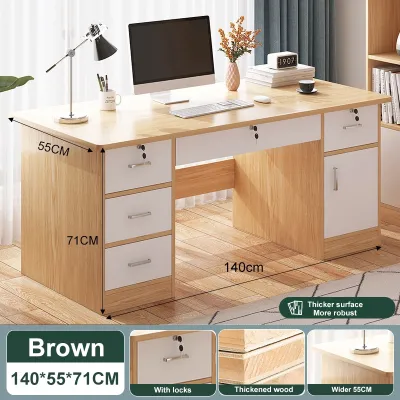
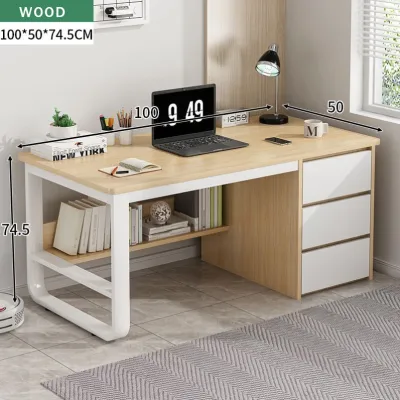
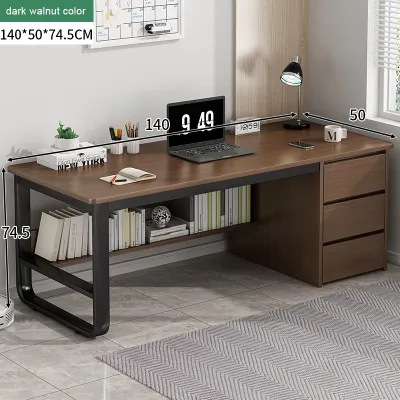
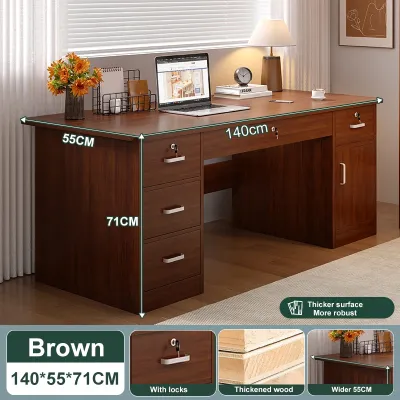
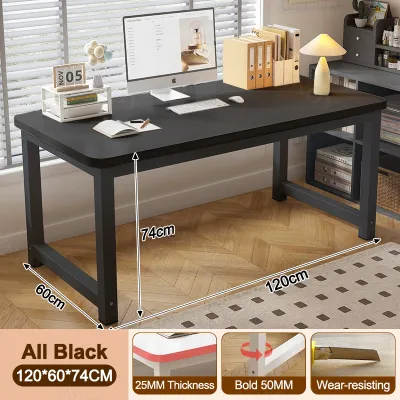
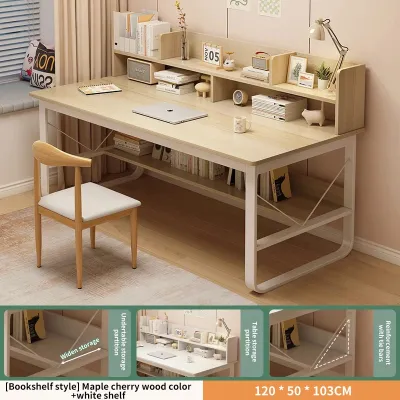
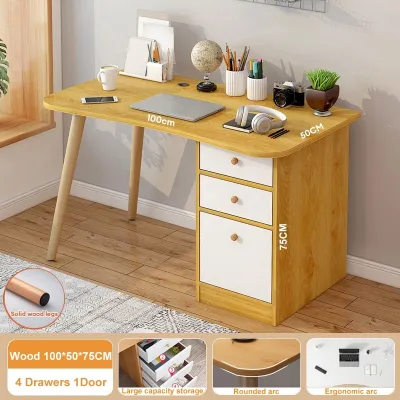
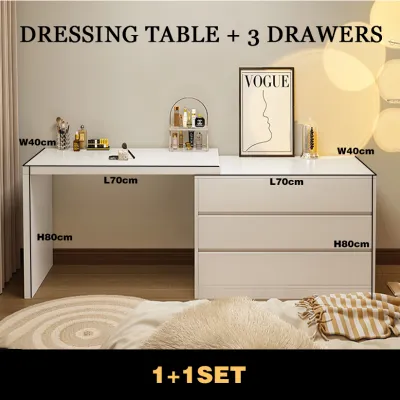
Prices are valid at publication and may change. Please refer to the product page for the latest price.
Standing Desks With Drawers: For Active and Ergonomic Routines
Standing desks have become a staple of modern ergonomic workspaces, but adding storage to a height-adjustable frame introduces unique design considerations. When evaluating a standing desk table with drawer, the primary factor to check is the lifting capacity of the motorized or manual crank mechanism. Every drawer adds dead weight to the desk frame, and filling those drawers with heavy notebooks, chargers, and office supplies increases the strain on the motor. Always verify the manufacturer’s maximum weight limit, ensuring it accounts for both the weight of the loaded drawers and your desktop equipment.
Another critical aspect is the physical clearance of the drawers. Because a standing desk must accommodate both sitting and standing heights, the drawer unit must not obstruct your knees or thighs when you are seated. Some models feature slim, under-desktop drawers that span the width of the frame, while others utilize suspended drawer pods on one side. Sit in your office chair and measure the height from the floor to the top of your thighs, then compare this to the lowest height setting of the desk minus the thickness of the drawer unit.
Cable management also requires careful planning when dealing with moving parts. As the desk transitions between sitting and standing heights, cables must have enough slack to move freely without catching on the drawer slides or getting pinched behind the drawer cabinet. Look for standing desks that feature integrated cable trays or routing channels behind the drawer units to keep power strips and cords organized and out of harm’s way.
Foldable Desks With Drawers: For Compact Spaces and Flexible Rooms
For professionals living in compact condominiums or shared households, a foldable desk table with drawer provides a highly flexible working solution. These desks are designed to maximize utility during the day and minimize their footprint at night. However, the folding mechanism itself can affect the overall stability of the workspace. When inspecting a foldable desk, pay close attention to the locking hinges and frame materials. A sturdy steel or reinforced aluminum frame is generally more reliable than lightweight plastic joints, especially when you extend the desk and load the drawers.
The integration of drawers in a foldable design presents a unique engineering challenge. Manufacturers often use lightweight fabric drawers, detachable storage bins, or pivoting wooden compartments to keep the overall weight manageable. Before purchasing, check the folding path of the desk. Ensure that the drawers do not block the folding hinges and that you do not have to completely empty and remove the drawers every time you want to fold the desk away.
Portability is the main advantage of a foldable desk, but it comes with a trade-off in permanent storage capacity. If you require deep filing cabinets or heavy-duty storage for books and reference materials, a foldable model may not offer the structural support you need. These desks are best suited for minimalist setups where the drawers are used for light items like pens, notebooks, and tablets.
L-Shaped Desks With Drawers: For Multi-Monitor Setups and Maximum Storage
If you have a dedicated room for your home office and require a high-performance workspace, an L-shaped desk table with drawer is the ultimate organizational tool. The primary benefit of an L-shaped configuration is the sheer amount of surface area it provides, allowing you to separate your computer work from physical paperwork or creative projects. When planning for an L-shaped desk, accurate corner measurements are essential. You must verify whether the desk has a reversible configuration or if it is strictly left-facing or right-facing, ensuring it fits your room’s layout without blocking windows or doors.
Drawer placement in an L-shaped desk is crucial for maintaining an efficient workflow. Ideally, the primary drawer unit or pedestal should be positioned on the side of your dominant hand for easy access to frequently used tools. If the desk features a corner curved seating area, ensure that the drawers are set far enough to the side so they do not restrict your legroom or prevent your office chair from swiveling freely.
Because L-shaped desks are large and often hold substantial weight, proper weight distribution is vital. Heavy items, such as printers or desktop towers, should be placed directly over the support legs rather than in the middle of a long span. When loading the drawers, place the heaviest items in the bottom drawers to maintain a low center of gravity and prevent the desk from tipping or bowing over time. In humid environments, check that the drawer slides are treated with rust-resistant coatings to ensure smooth operation year after year.
Final Selection Checklist: Clearances, Stability, and Drawer Mechanics
To finalize your decision and ensure your chosen desk table with drawer meets your expectations, use this practical checklist before making your purchase:
- Drawer Slide Quality: Check the product specifications for ball-bearing drawer slides. These provide smoother operation and greater durability than simple plastic or wooden tracks, especially when drawers are fully loaded.
- Weight Capacity Labels: Verify the individual weight limits for both the desktop surface and the internal drawers as specified by the manufacturer.
- Floor and Wall Clearances: Confirm that the fully assembled desk leaves at least 80 to 90 centimeters of open space behind it to allow your office chair to glide back comfortably.
- Material and Finish Checks: In humid climates, look for moisture-resistant finishes such as melamine or high-pressure laminates over engineered wood to prevent warping and bubbling.
- Assembly Requirements: Review the assembly instructions. Heavy L-shaped desks and motorized standing desks often require two people for safe assembly and lifting, while foldable desks should require minimal to no tool assembly.
By systematically evaluating your space, workflow, and the mechanical details of each desk type, you can select a workspace setup that enhances your productivity and fits seamlessly into your home.
Community discussion
Share your experience or ask a question. Comments are reviewed before publication.