
Quick Answer: Matching Desk Types to Your Workspace
Finding the right wooden office table with drawers for your work-from-home (WFH) setup depends on balancing your daily physical comfort, storage needs, and the physical limits of your room. Each configuration serves a distinct working style and spatial layout, making it essential to identify your primary constraints before purchasing.
An L-shaped wooden desk is ideal for professionals who require expansive desktop space for multiple monitors and substantial storage, provided they have a dedicated corner or a spacious room. This setup allows you to separate your computer tasks from physical paperwork or creative projects.
A standing wooden desk suits active workers who prioritize posture variation throughout long shifts. It requires careful consideration of drawer placement to avoid interfering with the lifting mechanism, but it offers excellent ergonomic benefits for those who prefer to alternate between sitting and standing.
Products mentioned in this guide
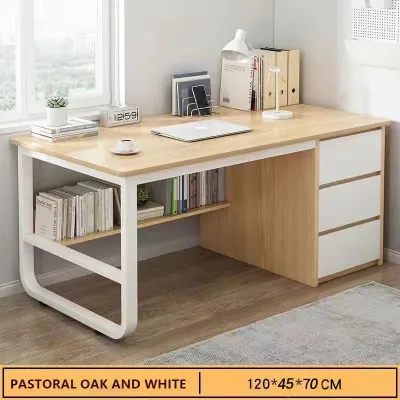
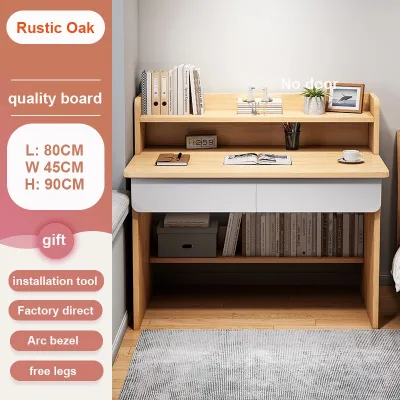
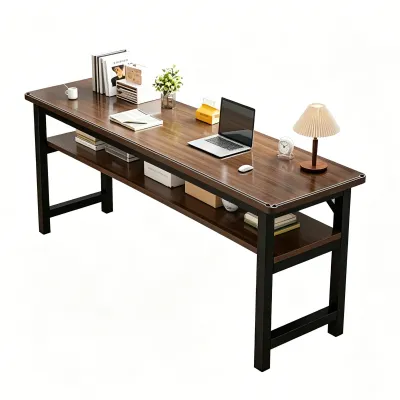
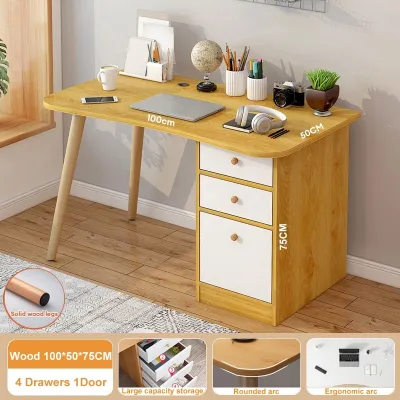
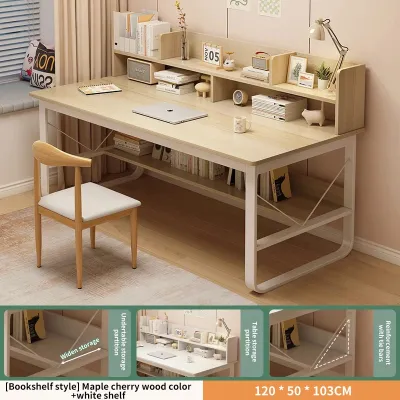
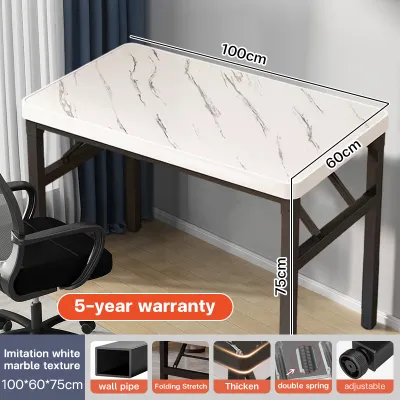
Prices are valid at publication and may change. Please refer to the product page for the latest price.
A foldable wooden desk serves as an excellent space-saving solution for multi-purpose rooms or smaller apartments. It allows you to pack away your workspace at the end of the day, helping you maintain a healthy boundary between your professional and personal life.
To make the right choice, you must evaluate three primary constraints: your available floor area, your typical working hours, and the volume of physical files or equipment you need to store. Balancing these factors ensures your new desk supports both your productivity and your living space.
Space and Layout Requirements
Before purchasing any wooden office table with drawers, you must map out the physical footprint of your room to ensure the furniture does not block essential pathways. A desk that looks perfect online can easily overwhelm a room if you do not account for clearance zones and traffic flow.

L-shaped desks require a significant, continuous block of wall space and a clear corner. They occupy two perpendicular walls, meaning you must measure both lengths carefully and account for baseboards that might push the desk away from the wall. This configuration is highly efficient for corner utilization but can make a small room feel cramped if placed near entryways.
Standing desks generally have a rectangular footprint, but they require vertical clearance. You must ensure that overhead shelves, wall-mounted air conditioning units, or window frames do not obstruct the desk when it rises to its maximum height. Additionally, leave enough space around the desk to prevent cables from catching on nearby furniture during height adjustments.
Foldable desks have the smallest footprint when closed, but they require a clear “swing zone” when deployed. You must measure the floor space in front of the desk to ensure chairs can slide out and users can move freely without hitting nearby beds, wardrobes, or doors. This makes them highly adaptable for shared spaces.
Door swing paths are a frequently overlooked layout hazard. Ensure that bedroom doors, closet doors, or cabinet doors can open fully without colliding with any part of your desk or chair. A collision-free layout prevents accidental damage to both your walls and your wooden furniture.
For foldable wall-mounted units, structural integrity is paramount. You must verify whether your wall is made of solid concrete, brick, or hollow drywall, as heavy wooden desks require secure anchoring into studs or solid masonry to prevent collapse. Never mount a heavy wooden desk directly into unsupported drywall.
Freestanding desks, especially heavy wooden L-shaped models, require a level floor. Uneven flooring can cause drawer tracks to misalign, leading to sticky drawers or structural strain on the joints over time. Check your floor with a spirit level before assembly, and use adjustable leveling feet if your desk includes them.
Work Habits and Ergonomic Needs
Your daily work habits dictate the ideal desk configuration far more than aesthetic preferences alone. Aligning your desk choice with your physical routine prevents discomfort and boosts long-term productivity.
If your job involves managing multiple monitors, large documents, or physical reference books, an L-shaped desk provides distinct task zones. You can dedicate one side of the “L” to your computer setup and the other side to writing, reviewing paperwork, or handling physical tasks. This separation helps maintain mental focus by organizing your workflow into physical zones.
This zoned approach also reduces clutter around your primary keyboard area. By keeping non-digital tasks on the secondary return of the desk, you maintain a clean, organized workspace that minimizes distractions during intense focus sessions.
For those who spend eight or more hours at a computer, a standing desk supports posture variation. Alternating between sitting and standing throughout the day can help manage physical fatigue and keep you alert. It is a proactive way to integrate movement into an otherwise sedentary routine.
However, standing desks require you to consider cable management carefully. Cables must have enough slack to stretch safely when the desk rises, without pulling on plugs or tensioning the wooden frame. Using flexible cable sleeves and under-desk power strips can prevent cable strain and potential hazards.
Foldable desks are best suited for occasional use, part-time remote work, or hot-desking in shared household spaces. If you only work from home a few days a week, a foldable model allows you to reclaim your living room or bedroom over the weekend, keeping your home feeling like a home.
While foldable desks offer excellent flexibility, they are less suited for heavy desktop computers or complex multi-monitor setups. These setups require permanent wiring and heavy mounting brackets that do not align with the quick-disassembly nature of a foldable desk.
Storage Capacity and Drawer Configurations
A wooden office table with drawers must balance storage capacity with user comfort, as poorly placed drawers can severely restrict your legroom. Understanding where drawers are positioned on each desk type helps you avoid ergonomic issues.
L-shaped desks offer the most versatile drawer configurations. Drawers are typically housed in a pedestal under one of the side returns, keeping them within arm’s reach without cluttering the main seating area. This design allows you to stretch your legs freely under the primary workspace.
Some L-shaped designs feature a mix of shallow utility drawers for stationery and deep file drawers for documents. This variety allows you to organize items by frequency of use, keeping daily essentials close by while archiving older paperwork in the lower compartments.
Standing desks present a unique challenge for drawer integration. Because the desktop must move up and down, heavy under-desk drawers can strain the lifting motor or manual crank mechanism. Consequently, storage on these desks is often limited to keep the overall weight manageable.
Drawers on standing desks are usually shallow and centered directly under the desktop, which can limit your vertical thigh clearance when sitting. You must check the product specifications to ensure your knees will not bump against the drawer bottom when your chair is adjusted to a comfortable height.
Foldable desks often feature minimal drawer space to keep the unit lightweight and easy to fold. Drawers in these models are typically small compartments built into the desktop surface or a single shallow drawer underneath. They are designed for basic stationery rather than heavy files.
When evaluating any wooden desk, check the manufacturer’s labels for weight limits on individual drawers. Overloading drawers can warp the wooden tracks or damage the metal glides, leading to sticking, misalignment, or complete failure of the drawer mechanism.
Look for smooth drawer operation mechanisms, such as ball-bearing glides or soft-close rollers. These features prevent the desk from shaking and disturbing your computer equipment when you open a drawer, protecting both your work and your hardware.
Decision Framework: Choosing Your Configuration
To finalize your choice, compare your daily routine and room constraints against these specific decision profiles.
Choose an L-shaped wooden desk if:
- You have a dedicated home office room or a large, unused corner.
- You use multiple monitors, printers, or large creative tablets.
- You require extensive storage for physical files, books, and office supplies.
Choose a standing wooden desk if:
- You prioritize physical movement and want to alternate between sitting and standing.
- Your work is primarily digital, requiring minimal physical storage.
- You have sufficient vertical wall space free of low-hanging shelves or fixtures.
Choose a foldable wooden desk if:
- Your workspace must double as a bedroom, living room, or dining area.
- You work on a single laptop and do not use heavy external peripherals.
- You prefer to completely hide your work setup when your shift ends.
Verify first if:
- The delivery path, including narrow stairwells, doorways, or condominium elevators, can accommodate the packaged desk dimensions.
- The assembly process requires specialized tools or professional assistance, especially for complex L-shaped joints or motorized standing desk frames.
- The floor surface is level enough to support stable operation of drawers and adjustable legs.
If none of these configurations fit your current living situation, consider alternative modular solutions. A compact writing desk paired with a separate mobile drawer pedestal on wheels offers excellent flexibility, allowing you to reposition your storage as needed without committing to a massive furniture footprint.
Pre-Purchase Measurement and Inspection Checklist
Before finalizing your purchase of a wooden office table with drawers, complete these essential physical checks to avoid delivery or installation issues.
- Ceiling and Vertical Clearance: For standing desks, measure the height of the desk at its maximum extension and ensure there is at least 30 centimeters of clearance from any overhead cabinets, light fixtures, or wall decorations.
- Folded and Unfolded Footprint: For foldable desks, measure both the closed depth against the wall and the fully extended depth on the floor. Mark these boundaries on your floor using masking tape to visualize the actual space occupied.
- Corner Alignment: For L-shaped desks, use a carpenter's square or a simple alignment check to ensure your room's corner is a true 90-degree angle. Out-of-square walls can leave unsightly gaps behind the desk.
- Delivery Access Paths: Measure the width and height of all doorways, hallway turns, stairwells, and elevator doors. Heavy wooden desks often ship in large, flat-packed boxes that require ample turning clearance.
- Weight Capacity and Care: Review the manufacturer's specifications for the maximum weight limit of the desktop and individual drawers. Additionally, check the recommended care instructions to ensure the wood finish is compatible with your cleaning habits.
Frequently Asked Questions (FAQ)
Can I add drawers to a standing desk later?
Yes, you can often retrofit under-desk drawers to a standing desk, but you must perform several compatibility checks first. Verify the clearance under the desktop, ensuring the drawer housing will not interfere with the desk’s central support crossbar or the lifting motor.
Check the weight capacity of your standing desk frame; adding heavy wooden drawers will reduce the remaining weight capacity available for your monitors and computer equipment. Consult the manufacturer’s guidelines before drilling new holes into the wooden desktop, as unauthorized modifications can void the warranty or compromise the structural integrity of the wood.
How do I maintain wooden drawers in a humid climate?
In humid tropical environments, wood naturally absorbs moisture, which can cause drawers to swell and stick in their tracks. Check the product label to see if the wood has been treated with a moisture-resistant sealant or lacquer, and reapply protective finishes as recommended by the manufacturer.
Ensure your workspace has adequate ventilation, utilizing air conditioning or dehumidifiers during the wet season to maintain stable indoor humidity levels. Avoid placing your wooden desk in direct sunlight or directly beneath air conditioning vents, as rapid temperature and moisture changes can cause the wood to warp or crack. Applying a thin layer of paraffin wax or candle wax along the wooden drawer runners can also reduce friction and ensure smooth sliding during humid months.
Community discussion
Share your experience or ask a question. Comments are reviewed before publication.