
A steel shoe cabinet’s capacity depends on its physical dimensions, internal shelf layout, and the specific types of footwear your family wears. While a compact three-tier unit might comfortably house 9 to 12 pairs of flat shoes, a larger six-tier vertical cabinet can easily accommodate 24 to 36 pairs. Finding the perfect balance requires evaluating your household’s actual shoe inventory alongside the physical limits of your living space.
How to Calculate the Right Shoe Cabinet Capacity for Your Household
To determine the ideal capacity, start by conducting a comprehensive audit of your current shoe collection. Gather every piece of footwear in your household, including daily-use tsinelas, school shoes, leather office brogues, high-top sneakers, and delicate heels. Separate these into active, everyday pairs and specialty or seasonal items that could alternatively be stored in bedroom closets. Do not forget to account for guest slippers, which are essential in Filipino households to keep outdoor dirt from entering the living areas.
Once you have a clear count of your current inventory, project your household’s future footwear needs. If you have growing children, their shoe sizes will naturally increase, requiring wider and taller shelf allocations in the coming years. Similarly, active lifestyle changes—such as starting a running routine or taking up hiking—will introduce bulkier footwear into your storage system. A good rule of thumb is to choose a cabinet with at least 15% to 20% more capacity than your current inventory to accommodate seasonal purchases and guests.
Products mentioned in this guide
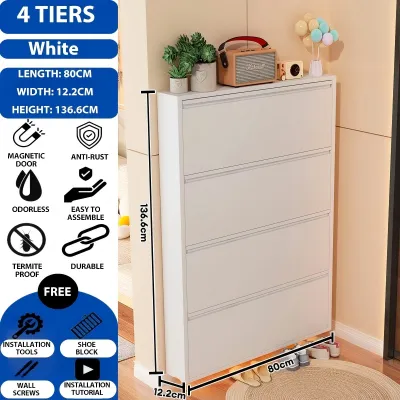
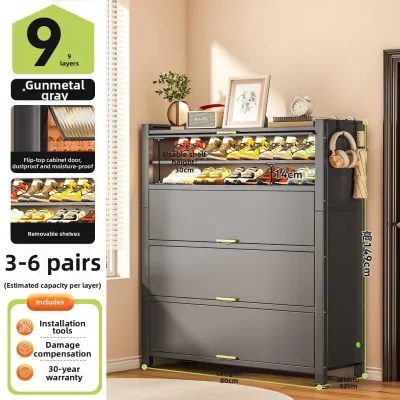
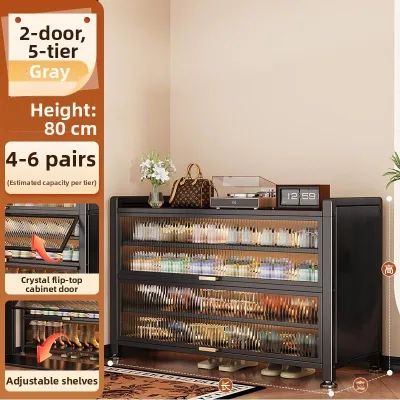
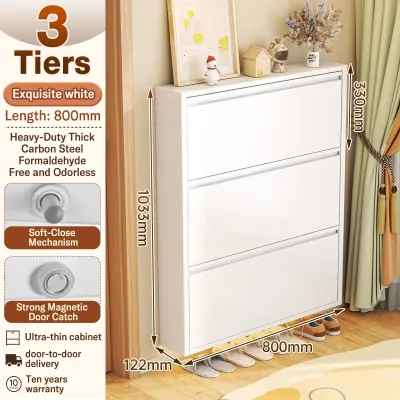
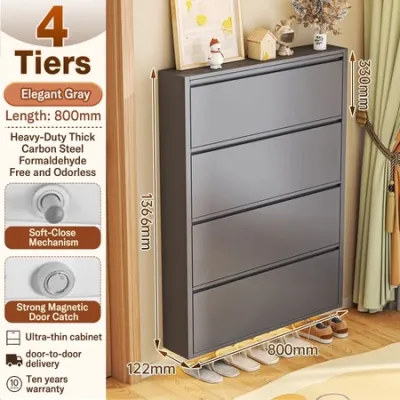
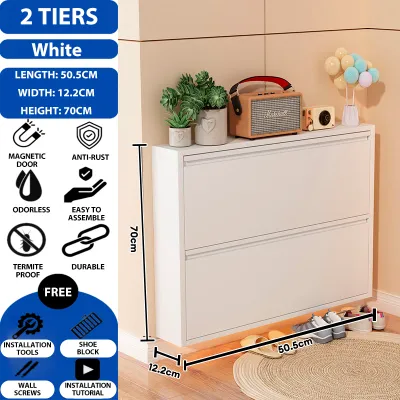
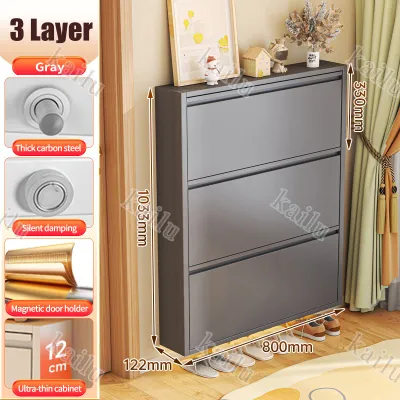
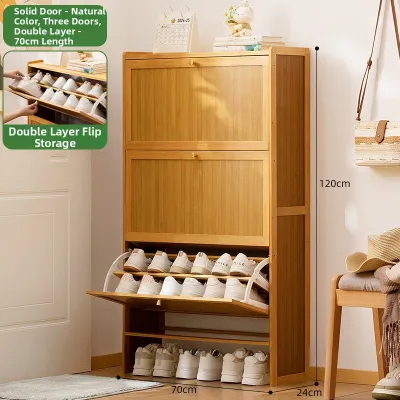
Prices are valid at publication and may change. Please refer to the product page for the latest price.
Remember that capacity is not merely a single number provided by a manufacturer. It is a dynamic combination of shelf width, depth, and vertical clearance. A cabinet that claims to hold 20 pairs might only do so if every pair consists of flat sandals or slim loafers. If your household relies heavily on high-top basketball shoes, platform heels, or work boots, these bulkier profiles will quickly reduce the actual number of pairs that can fit side-by-side. Categorizing your footwear by height and width before shopping ensures you select a cabinet with appropriate vertical spacing.
Matching a Shoe Cabinet Steel Unit to Your Available Floor Space
Before finalizing your purchase, you must carefully measure the designated area in your entryway, hallway, or condominium foyer. In compact urban residences across the Philippines, floor space is at a premium, making every centimeter count. Measure the maximum width, depth, and height available for the cabinet, ensuring it does not obstruct main pathways. A cabinet that is too deep will turn a narrow hallway into an awkward bottleneck, disrupting the natural flow of your home.

When taking measurements, do not rely solely on open floor dimensions. You must account for architectural details such as baseboards or skirting boards along the bottom of the walls. If the cabinet design does not feature a recessed back or high legs, the baseboards will prevent the unit from sitting flush against the wall, causing it to protrude further into the room than expected. Additionally, calculate the door swing arcs of both your main entrance door and the cabinet’s own doors or drawers to prevent physical collisions.
The physical footprint of the cabinet should also preserve the safety and comfort of your living space. Avoid placing large, solid units where they block natural light from windows or cover electrical outlets and light switches. A poorly positioned cabinet can create dark corners or force you to reach awkwardly behind the unit to plug in appliances. Ensuring a clear, unobstructed walkway of at least 90 centimeters in front of the cabinet allows family members to put on and take off shoes comfortably without tripping.
Finally, verify the delivery and installation pathway. Many steel cabinets are delivered fully assembled or in large, heavy flat-packs. Measure the height and width of your building’s elevator doors, narrow stairwell turns, and your apartment’s front door frame. Confirming these dimensions beforehand prevents the frustrating scenario of purchasing a high-capacity cabinet only to find it cannot physically pass through your building’s entry points.
Understanding Tier Configurations and Actual Pair Estimates
The physical design and tier configuration of a steel cabinet directly determine its practical storage capacity. Vertical units ranging from three to six tiers are highly popular because they utilize height rather than consuming valuable floor area. A standard three-tier cabinet is excellent for low-profile spaces, such as under a window or behind a door, and typically holds 9 to 12 pairs of average-sized shoes. Mid-sized four-tier and five-tier units expand this capacity to 16 to 20 pairs, while tall six-tier cabinets can easily organize 24 to 30 pairs.
To calculate a highly accurate estimate of how many of your own shoes will fit on a single shelf, you can use a simple mathematical formula. First, measure the internal width of the cabinet shelf in centimeters. Next, measure the widest part of your average pair of shoes placed side-by-side (typically 20 to 24 centimeters for men’s casual shoes, and 16 to 20 centimeters for women’s flats). Divide the shelf width by your average shoe width to find the true pairs-per-tier count. For example, a shelf with an internal width of 80 centimeters will comfortably hold four pairs of shoes that are 20 centimeters wide.
The flexibility of the internal shelves is another critical factor in maximizing capacity. Fixed-shelf cabinets offer uniform spacing, which is ideal if your shoe collection consists entirely of uniform footwear like flats, loafers, or low-profile sneakers. However, if your collection includes ankle boots, high heels, or high-top sports shoes, fixed shelves can lead to wasted vertical space or force you to lay taller shoes on their sides. Choosing a cabinet with adjustable shelves allows you to customize the height of each tier, ensuring that tall boots and flat sandals each have optimized, space-saving compartments.
Cabinet depth also dictates how shoes must be oriented inside the unit. Standard cabinets with a depth of 32 to 35 centimeters allow shoes to sit straight and flat, pointing directly toward the back of the cabinet. If you are dealing with an exceptionally narrow hallway, you might opt for an ultra-slim cabinet with a depth of 15 to 20 centimeters. These shallow units utilize tilting or angled compartments where shoes are stored vertically. While highly space-efficient, these angled configurations often limit the maximum height and bulkiness of the shoes you can store, making them less suitable for large boots or heavy sneakers.
Common Sizing, Placement, and Material Mistakes to Avoid
Avoiding common oversights during selection and placement will prevent long-term functional issues and premature wear. One frequent spatial mistake is ignoring the clearance needed for ventilation. Because shoes naturally accumulate moisture and odor, a tightly sealed cabinet without adequate airflow can become a breeding ground for mold and mildew. Look for steel cabinets that feature ventilated doors, louvers, or open-back designs to encourage continuous air circulation.
When evaluating materials, remember that the term “steel” alone does not guarantee long-term durability or rust resistance. In the humid, tropical climate of the Philippines, moisture in the air can quickly lead to corrosion if the metal is left unprotected. Always check product specifications for high-quality surface treatments. Look for electrostatic powder coating or rust-resistant epoxy finishes, which seal the steel against ambient humidity and wet footwear. Additionally, inspect the joints and welds to ensure they are smooth and free of exposed, untreated metal.
Another critical mistake is overloading the cabinet’s shelves. While steel is inherently strong, individual shelves still have specific weight capacities that must not be exceeded. Overloading shelves with heavy work boots or safety shoes can cause the metal to bow, warp, or pull away from the side supports, leading to structural instability. Always consult the manufacturer’s care instructions and weight limits per tier. To ensure maximum safety and stability, place heavier footwear on the bottom shelves and secure tall cabinets to the wall using appropriate anchoring hardware.
Frequently Asked Questions (FAQ)
How do I know if a steel shoe cabinet shelf will bend under heavy shoes?
To determine if a shelf can support your footwear without bending, check the manufacturer’s specified load capacity per shelf, which is typically listed in the product manual. Do not rely solely on the material name. Instead, look for structural reinforcements such as folded sheet-metal edges, horizontal support ribs underneath the shelf, or a thicker steel gauge (such as 0.6mm or higher). These design features distribute weight more evenly and prevent bowing under heavy leather boots or sports shoes.
Should I leave a gap between the wall and a steel shoe cabinet?
Yes, you should leave a small gap of approximately 2 to 5 centimeters between the back of the steel cabinet and the wall. This gap prevents the cabinet from rubbing against your wall paint and allows essential air circulation around the unit. In humid environments, keeping the cabinet slightly away from the wall helps prevent moisture from getting trapped behind it, protecting both your wall from dampness and the steel finish from potential rust.
Community discussion
Share your experience or ask a question. Comments are reviewed before publication.