
Deciding between a storage dresser and a vanity dresser comes down to a simple trade-off: do you need to house an overflowing wardrobe of folded clothes, or do you need a dedicated, comfortable space to prepare yourself for the day? While both pieces of furniture enhance your bedroom’s aesthetic, they serve fundamentally different functions. A storage dresser acts as a heavy-duty storage unit designed to maximize vertical or horizontal wall space for clothing. In contrast, a vanity dresser functions as an ergonomic grooming station, prioritizing tabletop surface, mirror placement, and specialized compartment storage for cosmetics and accessories. Choosing the wrong one can lead to either a cluttered room with no place for your clothes, or an uncomfortable morning routine spent hunched over a tall chest of drawers. By evaluating your space, routine, and storage needs systematically, you can choose a piece that brings both organization and comfort to your daily life.
Assess Your Bedroom Space and Layout
Before purchasing any large furniture piece, you must evaluate the physical boundaries of your bedroom. Start by measuring your available wall space and the depth clearance of the room. A common mistake is measuring only the footprint of the closed furniture piece. You must account for the depth of the unit when the drawers are fully extended. For instance, a standard storage dresser with a depth of 18 inches might require an additional 16 to 18 inches of clearance for the drawers to slide open completely, plus another 18 to 24 inches of standing room for you to comfortably access your items.
Next, map out the traffic flow and walking paths within your bedroom. Consider how the furniture interacts with door swings—both your main bedroom door and closet doors—as well as the clearance around your bed. In compact urban apartments or condominiums, a wide, double-column dresser can easily choke a walking path, turning a relaxed space into a cramped bottleneck. If you live in a high-rise building, you must also verify that the finished dimensions of the dresser can actually fit through your doorway, down tight hallways, and inside the building’s service elevator. A massive solid-wood dresser is of no use if it cannot be delivered to your floor.
Products mentioned in this guide
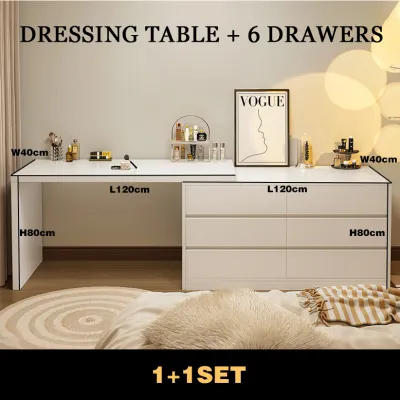
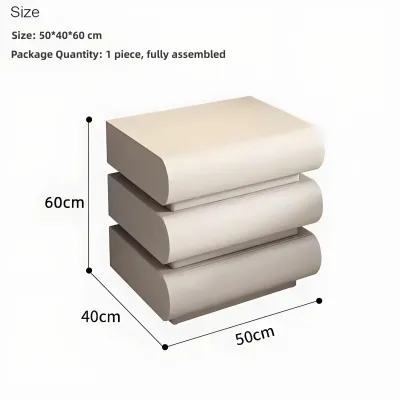
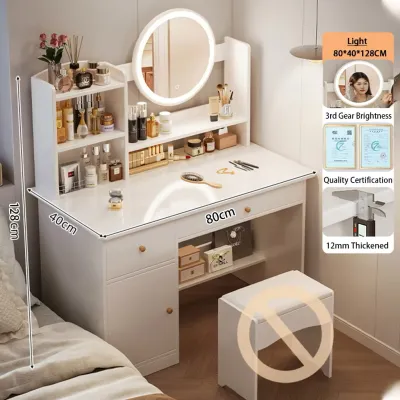
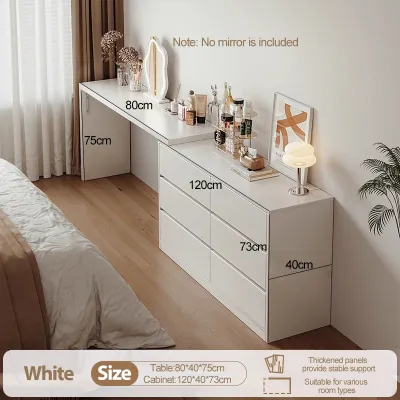
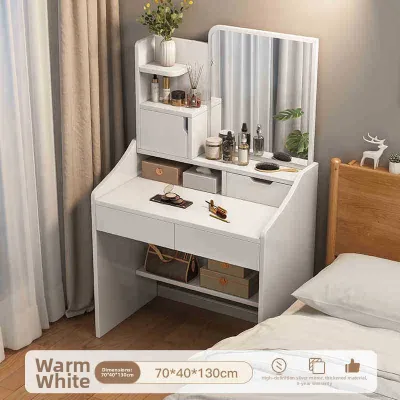
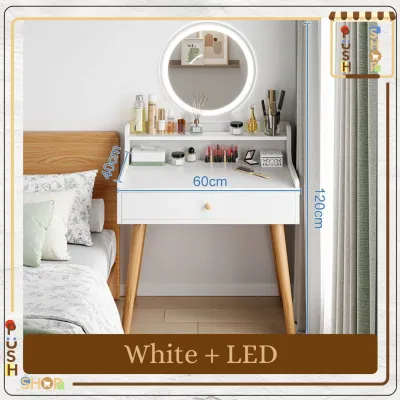
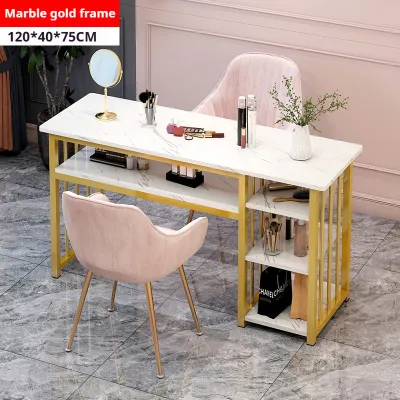
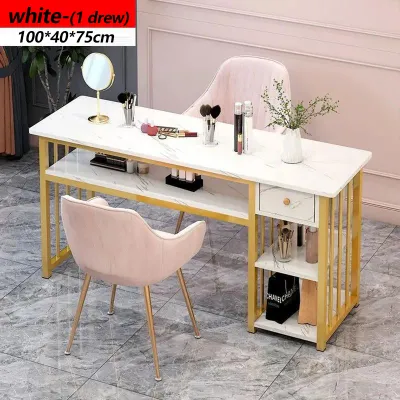
Prices are valid at publication and may change. Please refer to the product page for the latest price.
Lighting and mirror placement also dictate where these pieces can live. A vanity dresser relies heavily on high-quality lighting. To function effectively, a vanity should ideally be placed near a window to capture natural light, or in a spot where you can install dedicated task lighting without creating harsh shadows. If your only available wall space is in a dark corner far from electrical outlets, a vanity’s utility drops significantly. A storage dresser, on the other hand, is highly flexible; because its primary job is holding folded clothes, it can sit in almost any dark corner or alcove without losing its core functionality.
Evaluate Your Daily Grooming and Getting-Ready Routine
Your morning and evening habits are the ultimate test of which furniture piece will serve you better. Consider the complexity of your daily grooming. If your routine involves a multi-step skincare regimen, intricate makeup application, or detailed hair styling, you require a dedicated workspace. Performing these tasks without a proper station often means balancing expensive cosmetics on the edge of a bathroom sink or standing uncomfortably in front of a poorly lit mirror. A vanity provides a centralized hub where all your tools are within arm’s reach, turning a chaotic morning rush into a calm, organized ritual.

Ergonomics play a massive role in this decision. Traditional storage dressers stand between 30 and 36 inches high, which is optimized for standing and reaching down into drawers. Attempting to apply makeup while standing in front of a dresser mirror for thirty minutes can lead to back strain and arm fatigue. A dedicated vanity dresser is typically built to desk height (26 to 30 inches), allowing you to sit comfortably on a stool or chair. This seated position provides the stability needed for precise grooming tasks and keeps your tools at a comfortable elbow height.
Lighting needs further highlight this divide. Standard overhead bedroom lighting often casts downward shadows on your face, making makeup application difficult. Vanities are designed to accommodate close-up, front-facing light sources, such as Hollywood-style LED bulbs or adjustable ring lights, which distribute light evenly. If you share a home or a bathroom with a partner, morning routines can easily clash. Having a separate vanity dresser in the bedroom creates a secondary grooming zone, relieving bathroom congestion during busy mornings.
Analyze Your Clothing and Accessory Storage Needs
The volume and physical characteristics of the items you need to store should heavily influence your choice. If your wardrobe consists of a large volume of folded clothing—such as t-shirts, denim, activewear, and knitwear—that cannot be hung in a standard closet, a high-capacity storage dresser is non-negotiable. These pieces are engineered with deep, wide drawers designed to hold heavy, stacked fabrics without sagging or bowing over time.
Take a critical look at your existing closet space. If your primary wardrobe or built-in closet is already packed to capacity, your bedroom needs structural storage support. A vanity dresser, with its shallow drawers and small compartments, cannot accommodate bulky clothing items like jeans or sweaters. Relying on a vanity to solve a clothing storage crisis will only result in clothes spilling over onto chairs or remaining packed in unsightly plastic bins.
Storage dressers and vanities also differ in drawer design. Storage dressers feature deep, heavy-duty drawer boxes mounted on robust glides designed to withstand repeated, heavy pull-outs. Vanities, conversely, prioritize shallow drawers, often lined with felt or velvet, designed to organize delicate items. In a tropical climate like the Philippines, high humidity can cause solid wood to swell, making drawers stick or warp if they are not properly sealed and finished. When evaluating either option, check the drawer joints and the smoothness of the glides, opting for high-quality metal runners over simple wooden slots to ensure smooth operation year-round.
Signs You Need Maximum Drawer Space
Several clear indicators suggest that clothing overflow is your primary bedroom pain point. If you constantly find clean clothes piled on chairs, overstuffed closet shelves where items are difficult to retrieve, or seasonal garments packed away in cardboard boxes under the bed, your bedroom is crying out for dedicated drawer space.
When shopping for a storage dresser to solve this issue, pay close attention to the drawer construction and load capacity. Look for sturdy drawer glides—ideally full-extension ball-bearing slides—that allow you to pull the drawer out completely to access the very back without the drawer tipping downward. Ensure the dresser has a solid back panel and a sturdy frame to prevent wobbling when fully loaded.
Signs Your Accessories Outnumber Your Clothes
Conversely, you may find that your clothing storage is perfectly adequate, but your personal care items are out of control. If your bedside tables, bathroom counters, and desks are cluttered with makeup palettes, perfume bottles, hair dryers, and jewelry boxes, your primary need is accessory organization rather than clothing storage.
A vanity dresser solves this specific clutter problem by providing specialized compartments. Look for vanities that offer built-in acrylic organizers, velvet-lined jewelry drawers, and deep side cabinets designed to hold tall bottles or hair styling tools like curling irons. Having these items organized in one dedicated space protects your expensive cosmetics and accessories from dust, direct sunlight, and accidental damage.
Decision Matrix: Matching Your Profile to the Right Dresser
To help you finalize your decision, compare the core specifications of both furniture types to see which matches your bedroom layout and daily lifestyle.
| Feature | Storage Dresser | Vanity Dresser |
|---|---|---|
| Primary Function | High-capacity clothing storage | Seated grooming and accessory organization |
| Standard Height | 30 to 36 inches (standing use) | 26 to 30 inches (seated use) |
| Drawer Depth | Deep (usually 8 to 12 inches) | Shallow (usually 2 to 5 inches) |
| Space Footprint | Moderate to large; requires front clearance | Compact to moderate; requires seating clearance |
| Ideal Lighting | General ambient room lighting | Dedicated, front-facing task lighting |
Choose a Storage Dresser if:
- High Clothing Volume: You have a large collection of folded clothes and your wardrobe is completely full.
- Limited Floor Space: You need to maximize vertical storage (e.g., using a tall chest of drawers) to save precious floor area.
- Standing Routine: You prefer a quick, standing routine and do not require close-up mirror work for your daily grooming.
- Heavy-Duty Needs: You need to store heavy items like denim, bed linens, or winter wear that require deep, reinforced drawers.
Choose a Vanity Dresser if:
- Complex Grooming: You spend significant time on detailed makeup, skincare, or hair styling routines daily.
- Seated Preference: You prefer to sit comfortably while preparing for the day, requiring clear legroom under the tabletop.
- Accessory Clutter: Your primary clutter consists of small cosmetics, jewelry, and hair styling tools rather than folded clothes.
- Task Lighting Priority: You require integrated mirrors and specialized lighting to achieve precise grooming results.
When planning your budget, keep in mind that prices vary widely depending on materials and features. In the local market, basic engineered wood or MDF storage dressers typically range from ₱5,000 to ₱12,000, while premium solid hardwood pieces (such as mahogany or acacia) can exceed ₱25,000. Vanity dressers often carry a premium due to integrated components like mirrors, electrical outlets, and built-in LED lighting. A simple vanity table might start around ₱6,000, but high-end models with Hollywood mirrors, glass tabletops, and specialized velvet organizers easily range from ₱15,000 to ₱30,000 or more.
Hybrid Solutions and Space-Saving Alternatives
If you find yourself needing both high-capacity clothing storage and a dedicated grooming station but lack the space or budget for two separate pieces of furniture, several practical compromises can bridge the gap.
One highly effective approach is to pair a low-profile, wide storage dresser (often called a double dresser) with a large, wall-mounted mirror. By selecting a dresser that sits around 30 inches high, you can use the top surface as a makeshift vanity. You can place a tabletop organizer on one side for cosmetics and tuck a small stool underneath or beside the dresser when it is not in use. While you won’t have the legroom of a traditional desk, this setup provides excellent clothing storage while still offering a functional surface for grooming.
Another option is to look for specialized hybrid furniture designs, such as dressers with a flip-top mirror mechanism. When closed, the piece looks like a standard flat-top dresser; when flipped open, it reveals a mirror and a shallow compartment for makeup and jewelry. If floor space is exceptionally tight, you can install a sleek, floating shelf with a drawer on an unused wall to serve as your dedicated grooming station, complete with a wall-mounted mirror and a small stool that slides completely underneath.
Frequently Asked Questions (FAQ)
Can I use a regular storage dresser as a vanity?
Yes, you can adapt a standard storage dresser by placing a tabletop mirror and cosmetic organizers on top. However, keep in mind the ergonomic limitations: standard dressers are 30 to 36 inches tall and lack legroom underneath, meaning you will have to stand or sit sideways, which can cause discomfort during long grooming sessions.
What is the standard height difference between a dresser and a vanity?
Traditional storage dressers usually range from 30 to 36 inches tall to allow easy standing access to drawers. Dedicated vanity tables are designed at desk height, typically ranging from 26 to 30 inches, which accommodates standard chairs or stools and provides comfortable leg clearance underneath the tabletop.
How much clearance do I need to pull out dresser drawers comfortably?
You should leave at least 24 to 30 inches of clear floor space in front of your dresser. This clearance ensures that the drawers can slide open to their full extension and gives you enough physical space to stand, bend, or sit comfortably while retrieving your clothes or accessories.
Community discussion
Share your experience or ask a question. Comments are reviewed before publication.