
To fit a thick bed frame into a small condo bedroom without making the space feel cramped, you must select a frame whose outer dimensions leave at least 60 centimeters (24 inches) of open walkway on all accessible sides. While a standard mattress has fixed industry dimensions, a thick bed frame—characterized by plush upholstery, wide side rails, or integrated storage ledges—can add 10 to 25 centimeters (4 to 10 inches) to both the overall length and width. Prioritizing layout planning, precise measurement of structural obstacles, and selecting low-profile or space-saving storage designs will allow you to enjoy the comfort of a substantial bed frame without sacrificing walkable floor space.
Defining "Thick" Bed Frames and Their Space Footprint
A thick bed frame is defined by its structural bulk and the additional physical space it occupies beyond the mattress itself. Unlike minimalist metal platform frames that sit flush with the mattress edges, thick frames feature prominent design elements such as chunky upholstered side rails, wide wooden platform borders, deep tufted wingback headboards, or thick storage bases. These elements are highly sought after for their aesthetic appeal and comfort, but they significantly expand the bed’s physical footprint.
When planning your bedroom layout, it is crucial to distinguish between mattress dimensions and the actual outer dimensions of the bed frame. In the Philippines, standard mattress sizes are widely known, but a thick frame can easily add 10 to 25 centimeters to both the width and the length. For instance, a frame with a heavily padded headboard and thick footboard will push the entire bed further into the room, reducing the remaining clearance at the foot of the bed.
Products mentioned in this guide



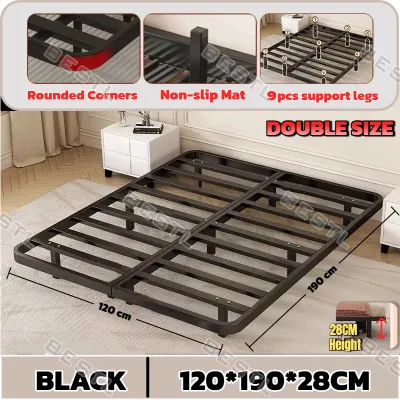

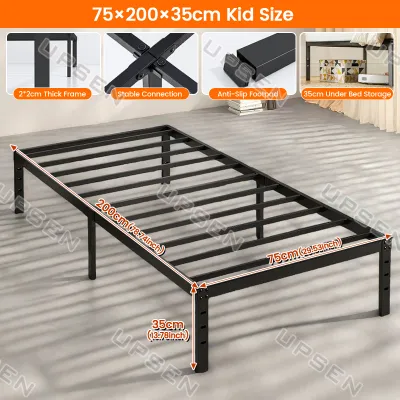

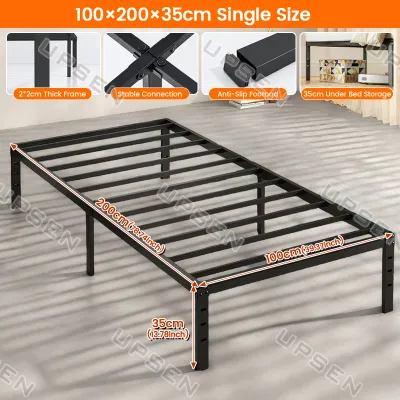
Prices are valid at publication and may change. Please refer to the product page for the latest price.
Beyond the physical dimensions, the visual weight of a thick bed frame heavily influences how large or small a condo bedroom feels. Heavy, solid materials, dark upholstery fabrics, and tall, imposing headboards absorb light and dominate the visual field. In a compact condo room, this high visual weight can create an optical bottleneck, making the walls feel closer and the ceiling feel lower than they actually are. Balancing this visual mass requires careful color selection, strategic placement, and maintaining open space around the frame.
Matching Bed Frame Dimensions to Your Condo Bedroom Size
Selecting the right bed size for a small condo requires a realistic assessment of your floor plan. The goal is to maximize your sleeping surface while preserving enough room to move comfortably and access built-in features.

Single and Super Single Frames for Narrow Layouts
Single (36 x 75 inches or 91 x 190 cm) and Super Single (42 x 75 inches or 107 x 190 cm) mattresses are highly efficient choices for narrow condo bedrooms or studio units. When paired with a thick frame, the outer dimensions typically expand to approximately 105 x 205 cm for a Single and 120 x 205 cm for a Super Single. These compact options are ideal when you need to preserve precious floor space for other furniture, such as a study desk or a wardrobe.
Even with a smaller bed size, positioning a thick frame in a narrow room requires careful strategy. Placing the bed flush against a wall is a common space-saving tactic, but in tropical, humid climates, you must leave a small gap of 2 to 3 centimeters between the frame and the wall to prevent moisture buildup and mold growth on upholstered fabrics. Additionally, ensure the bulk of the headboard or frame does not block low-hanging window air conditioning units, wall outlets, or the entry path to an en-suite bathroom.
Double and Queen Frames for Wider Rooms
If you prefer a larger sleeping area, Double (54 x 75 inches or 137 x 190 cm) and Queen (60 x 75 inches or 152 x 190 cm) beds are popular choices, but they demand careful layout calculation when paired with a thick frame. A thick Queen frame can easily swell to an outer dimension of 175 x 215 cm (approximately 69 x 85 inches). To accommodate this size comfortably, your bedroom should have a minimum width of at least 2.8 meters (about 9.2 feet).
Fitting a thick Queen or Double frame into a typical condo bedroom almost always involves spatial trade-offs. You may need to sacrifice traditional matching bedside tables in favor of slim, wall-mounted floating shelves. You might also need to position the bed slightly off-center to preserve wardrobe clearance, or opt for sliding-door wardrobes instead of traditional swing doors. If the room’s width is exceptionally tight, you must decide whether a larger bed is worth the compromise of having only one accessible side.
Essential Clearances: Maintaining Walkable Space
Maintaining clear pathways is the most critical factor in preventing a small bedroom from feeling cramped and claustrophobic. Physical clearances dictate how easily you can move through the room, while visual clearances impact your psychological comfort.
To maintain basic daily comfort, aim for a minimum walkway width of 60 centimeters (24 inches) around the sides and foot of the bed. This clearance allows an average adult to walk forward naturally without turning sideways or bumping into walls. If you share the bedroom with a partner, increasing this clearance to 70 or 75 centimeters is highly recommended to prevent traffic bottlenecks during morning routines.
Functional clearances must account for the movement of other architectural and furniture elements in the room. Before finalizing your bed placement, measure the swing arcs of your bedroom door, en-suite bathroom door, and built-in wardrobe doors. For wardrobes with standard swing doors, you need at least 60 to 70 centimeters of clear space in front of them to stand comfortably while opening the doors. If your condo features a balcony, ensure the corner of the thick bed frame does not obstruct the sliding door track or block access to the outdoor step-out area.
Visual breathing room is just as important as physical clearance. When you step into the bedroom, the immediate line of sight should ideally be clear of heavy, bulky obstacles. If a thick, tall headboard or a high footboard is positioned right next to the entrance, it creates an instant visual barrier that makes the room feel cramped. Keeping the foot of the bed low and open, and choosing lighter fabric colors for the frame, helps maintain an airy, spacious atmosphere.
Step-by-Step Measurement and Layout Planning
Avoid costly purchasing mistakes by taking precise measurements of your space and simulating the bed frame’s footprint before buying.
1. Measure the finished room dimensions. Do not rely solely on the developer’s pre-construction floor plans, as actual finished walls can vary by several centimeters due to plastering, baseboards, or structural column protrusions. Use a steel measuring tape to measure wall-to-wall distances at floor level.
2. Map out fixed obstructions. Identify the exact locations of wall-mounted split-type air conditioning units, electrical outlets, light switches, internet ports, and window ledges. Ensure your proposed headboard height will not cover switches or block the airflow and maintenance access of your air conditioner.
3. Use the painter’s tape method. This is the most effective way to visualize the layout. Using low-tack painter’s tape, mask out the exact outer dimensions of the thick bed frame on your bedroom floor. Be sure to use the frame’s external dimensions provided by the manufacturer, not the mattress dimensions. Walk around the taped area for a day or two to test the flow of the room and ensure you can move comfortably.
4. Verify condo delivery and access paths. Many condo residents overlook the logistics of getting the bed frame into the unit. Thick, heavy, or solid-platform frames can be incredibly difficult to maneuver through tight spaces. Measure the height, width, and depth of your condo building’s service elevator, as well as the width of the corridors, tight stairwell turns, and your unit’s front door frame. If the frame does not come fully flat-packed, confirm with the retailer that the pre-assembled components can safely clear these entry points.
Common Sizing Mistakes to Avoid in Small Rooms
When shopping for a thick bed frame, avoiding a few common pitfalls can save you from a cramped bedroom layout and frustrating daily use.
- Assuming mattress size equals frame size: This is the most frequent error. Always look for the "overall dimensions" or "finished dimensions" on the product specification sheet. Never buy a frame based solely on the mattress size label (e.g., "Queen"), as the actual frame can be significantly larger.
- Ignoring headboard depth: A plush, heavily padded, or tufted headboard can easily be 15 to 25 centimeters deep. This depth pushes the entire mattress forward, cutting directly into the walkable clearance at the foot of the bed. If your room is short on length, look for frames with slim, low-profile headboards or frames designed to be used without a headboard.
- Choosing outward-opening side drawers in tight spaces: Storage bed frames are excellent for small condos, but frames with drawers that slide out from the sides require at least 50 to 60 centimeters of extra clearance on each side to open fully. If your side walkways are narrow, these drawers become useless. Instead, opt for a hydraulic gas-lift storage bed frame, which lifts the mattress vertically to access storage, or choose a frame with drawers located exclusively at the foot-end.
- Blocking natural light and ventilation: Positioning a thick, high-profile bed frame directly in front of a window cuts off natural sunlight and air circulation. In tropical environments, maximizing natural light and ventilation is crucial for controlling indoor humidity and preventing mold growth on wooden furniture and textiles. Keep your bed frame profile low enough to sit below the window sill, or position it against a solid wall to keep the window area completely clear.
Community discussion
Share your experience or ask a question. Comments are reviewed before publication.