
Quick Answer: Which Hammock Stand Fits Your Lifestyle?
Choosing between a tow hitch hammock stand and a freestanding hammock stand comes down to where you plan to spend your leisure time and how you intend to travel. Your decision rests on whether you prioritize mobile, vehicle-based adventure or stationary, home-based relaxation.
Choose a tow hitch hammock stand if:
- You frequently go on road trips, overlanding adventures, or beach camping excursions.
- You already own an SUV, pickup truck, or crossover equipped with a compatible, frame-mounted receiver hitch.
- Your backyard or outdoor living area is small, sloped, or lacks flat ground, but you have a dedicated parking pad or driveway.
- You want to keep your hammock elevated from wet ground, mud, and crawling insects during outdoor trips.
Choose a freestanding hammock stand if:
Products mentioned in this guide




Prices are valid at publication and may change. Please refer to the product page for the latest price.
- You want a permanent or semi-permanent relaxation spot on your patio, veranda, garden, or even inside your living room.
- You prefer spontaneous, immediate use without having to park, align, or secure a vehicle.
- You do not own a vehicle, or your vehicle lacks a rear tow hitch receiver.
- You want the freedom to move your lounging setup around different areas of your home throughout the day to follow the shade.
Neither option may fit if: If you live in a high-rise condominium with a very narrow, curved balcony, or if you do not own a vehicle with a tow hitch, neither of these heavy-duty setups will be practical. In these scenarios, you should explore alternative hanging solutions, such as semi-permanent wall or ceiling anchor mounts, or ultra-lightweight portable travel hammocks designed to secure to structural balcony pillars.
How Tow Hitch and Freestanding Stands Actually Work
Understanding the physical and mechanical differences between these two systems will help you visualize how they integrate into your daily routine and outdoor spaces.

The Tow Hitch Hammock Stand
A tow hitch hammock stand is a vehicle-mounted accessory designed to slide directly into your vehicle’s rear receiver hitch. This receiver is the metal square tube located beneath your rear bumper, typically measuring either 1.25 inches or 2 inches. The stand utilizes the heavy steel chassis of your parked vehicle as its sole structural anchor point.
Most tow hitch stands consist of a central insert bar, a vertical support column, and one or two extending arms. When fully assembled, the arms extend outward and upward from the rear bumper, allowing you to hang a standard hammock parallel to or trailing behind your vehicle. Because it relies entirely on the vehicle’s weight and structural integrity, it requires no ground contact, making it highly stable even on uneven, rocky, or muddy terrain.
The Freestanding Hammock Stand
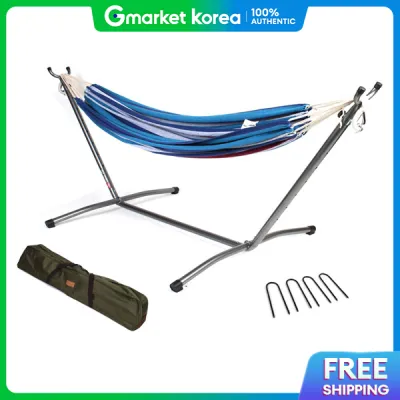
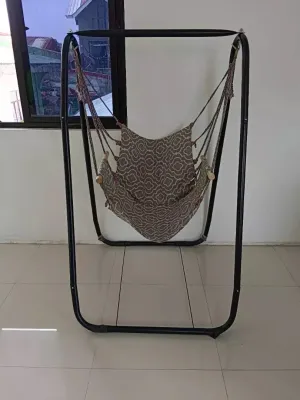
A freestanding hammock stand is an independent, self-supporting frame that rests entirely on the ground. These frames are typically constructed from heavy-gauge steel tubing or laminated wood arcs. They do not require trees, walls, vehicles, or stakes to remain upright.
These stands generally feature a wide, flat base with horizontal ground bars to distribute weight and prevent tipping. The frame curves upward at both ends to create hook attachment points for the hammock. Because they are completely self-contained, you can place them on any flat surface, including grass, concrete patios, wooden decks, or tiled indoor floors.
Hammock Compatibility and Configuration
Before purchasing either system, you must verify the hanging style of your existing hammock. Standard gathered-end hammocks (such as camping hammocks made of nylon parachute material) require a higher hanging angle and a shorter distance between connection points. Spreader-bar hammocks (often made of quilted cotton or woven rope) require a flatter, longer tension setup.
While many freestanding stands are adjustable in length and height, tow hitch stands often have fixed arm dimensions. Always check the manufacturer specifications of both the stand and your hammock to ensure the fabric will not sag too close to the ground or stretch too tightly across the frame.
4 Deciding Factors for Your Outdoor Space and Usage
To make an informed purchase, you must evaluate how each stand type performs against the physical constraints of your property, your travel habits, safety requirements, and the local climate.
Space, Ground, and Location Constraints
Freestanding stands demand a significant amount of physical real estate. A standard adult-sized freestanding frame typically requires a flat, level clearance area of 10 to 15 feet in length and 4 to 5 feet in width. You must also account for a safety buffer zone around the stand to allow the hammock to swing gently without striking nearby walls, balustrades, or patio furniture.
In contrast, a tow hitch stand has a net-zero footprint on your lawn or garden. However, it introduces a different spatial constraint: it requires a dedicated, level parking space where your vehicle can safely remain parked for the duration of your lounging session. If your driveway is steep or your parking area is shared, using a vehicle-mounted stand may block access for others.
Ground conditions also dictate performance. During the rainy season, grassy lawns and garden soil can become soft and saturated. A heavy freestanding stand, especially when loaded with weight, can sink unevenly into wet mud, compromising its stability and potentially damaging your turf. A tow hitch stand completely bypasses ground conditions, keeping you suspended safely above mud, puddles, and ground-dwelling pests.
Portability and Vehicle Dependency
If you plan to use your hammock away from home, portability is a critical consideration. Tow hitch stands are engineered for travel. They are highly modular, allowing you to disassemble the arms, stow them in your trunk or truck bed, and reassemble them at your destination in a matter of minutes. However, their utility is entirely dependent on your vehicle; if you leave your car at home, the stand is unusable.
Freestanding stands, particularly those made of solid wood or heavy powder-coated steel, are heavy and cumbersome. While some metal models utilize push-button spring locks for tool-free disassembly, they are still bulky to transport and are best treated as semi-permanent fixtures on your patio or lawn. Moving them across a yard can be a two-person job.
Furthermore, the tow hitch setup introduces a “vehicle lock-in” factor. Once you have set up your campsite, leveled your truck, and hung your hammock, your vehicle is immobilized. If you need to drive to a nearby store for supplies, you must fully disassemble the hammock and stand, pack them away, and then repeat the entire setup process when you return.
Weight Limits and Safety Verification
Safety is paramount when suspending yourself or your family members above the ground. You must never guess or estimate weight capacities, and you should always verify the ratings of every component in your setup.
When evaluating a tow hitch stand, you must check your vehicle’s owner’s manual for its maximum tongue weight rating. The tongue weight is the maximum static downward force that can be exerted on the hitch receiver. The combined weight of the steel stand, your hammock, and all occupants must not exceed this vehicle rating. For example, a standard Class III hitch typically supports up to 500 pounds of tongue weight, which is generally sufficient for a two-person hammock setup, but smaller Class I or II hitches on compact crossovers have much lower limits.
For freestanding stands, locate the manufacturer’s rated weight capacity, which is typically printed on the product packaging, user manual, or a frame sticker. These limits generally range from 300 pounds for budget steel models to over 450 pounds for heavy-duty wooden arcs.
Remember that your safety is determined by the weakest link in the entire assembly. If your vehicle hitch is rated for 500 pounds, your hammock stand is rated for 400 pounds, and your nylon hammock fabric is rated for 300 pounds, the absolute maximum safe capacity of your system is 300 pounds.
Weather Exposure and Storage in Tropical Climates
In tropical environments characterized by high humidity, intense UV exposure, and heavy seasonal rainfall, outdoor furniture faces rapid deterioration. Understanding how these materials handle the elements will save you from premature structural failures.
Freestanding stands left outdoors year-round are highly vulnerable to the climate. Steel frames will rust quickly if their protective finish is scratched or chipped. If you choose a metal freestanding stand, ensure it features an outdoor-grade, UV-resistant powder coating. Wooden stands require marine-grade varnishes or pressurized weather treatments to prevent rot, warping, and fungal growth. During typhoons or prolonged monsoon periods, you must store these frames indoors or protect them with heavy-duty, waterproof furniture covers.
Tow hitch stands are typically constructed from thick, industrial-grade steel to handle road vibrations and towing stresses. While they are highly durable, they are exposed to harsh road grime, mud, and salt air during transport. This road debris can collect inside the hollow receiver tube and around the hitch pin, accelerating corrosion. To prevent the stand from seizing inside your vehicle’s receiver, you must periodically remove the stand, wash away road grime with clean water, dry all components thoroughly, and apply a thin layer of silicone lubricant or anti-seize grease to the hitch pin and connection joints.
Deep Dive: Tow Hitch Hammock Stands
To help you decide if a vehicle-mounted system fits your lifestyle, let us look closely at its specific advantages, drawbacks, and target user profile.
Advantages
- Zero Yard Footprint: Does not occupy valuable lawn, patio, or garden space, leaving your outdoor areas open for other activities.
- Elevated Lounging: Keeps you high off the ground, protecting you from damp grass, mud, sand, and crawling insects.
- Perfect for Travel: An excellent accessory for tailgating, overland camping, beach trips, and scenic roadside stops.
- High Structural Stability: Utilizes the massive weight of your vehicle to prevent tipping, even when swinging or in windy conditions.
Drawbacks
- Vehicle Dependency: Completely non-functional without a stationary vehicle equipped with a matching receiver hitch.
- Immobilizes Your Vehicle: You cannot drive your vehicle without taking down the entire hammock setup.
- Physical Installation Effort: Inserting and securing heavy, solid steel components into a low-lying hitch receiver requires moderate physical strength.
Ideal User
The tow hitch hammock stand is ideal for active outdoor enthusiasts, overlanders, car campers, and beachgoers who already own an SUV or pickup truck. It is also highly suited for homeowners with very small, sloped, or paved yards who want a temporary lounging setup that can be easily packed away into a garage or trunk when not in use.
Deep Dive: Freestanding Hammock Stands
Let us examine the traditional ground-based alternative to see how it compares in daily use.
Advantages
- Total Independence: Requires no vehicle, trees, or structural walls, allowing you to set up anywhere on your property.
- Instant Accessibility: Remains assembled and ready for spontaneous relaxation at a moment's notice.
- Versatile Placement: Can be positioned on patios, lawns, pool decks, or moved indoors during inclement weather.
- Aesthetic Appeal: Premium wooden arc stands or sleek powder-coated metal frames can serve as attractive design focal points in your garden or patio.
Drawbacks
- Large Footprint: Occupies a substantial amount of flat ground space, which can crowd smaller balconies or patios.
- Difficult to Transport: Heavy and bulky, making them impractical for spontaneous day trips or casual camping.
- Surface Sensitivity: Requires a flat, stable, and level surface to prevent rocking, sliding, or tipping during use.
Ideal User
The freestanding hammock stand is ideal for homeowners or renters with dedicated outdoor spaces, such as a spacious backyard, a wide veranda, or a flat pool deck. It is perfect for those who prioritize daily, low-effort relaxation at home and do not want to deal with the logistics of aligning a vehicle or installing a tow hitch.
Side-by-Side Comparison Summary
This table provides a quick, qualitative comparison of the key differences between the two hammock stand styles to help guide your purchasing decision.
| Feature | Tow Hitch Stand | Freestanding Stand |
|---|---|---|
| Primary Location | Driveways, campsites, beaches, and off-road spots | Patios, gardens, decks, balconies, and indoor spaces |
| Vehicle Required | Yes (must have a 1.25" or 2" receiver hitch) | No |
| Ground Surface Needed | None (suspended entirely by the vehicle) | Flat, level, and stable ground (concrete, deck, or firm grass) |
| Portability | High (modular, fits in trunk, designed for travel) | Low to Moderate (heavy, bulky, best for semi-permanent home use) |
| Space Footprint | Zero yard footprint (requires vehicle parking space) | Large footprint (typically 10 to 15 feet of flat clearance) |
| Ideal Use Case | Tailgating, overlanding, camping, and road trips | Everyday backyard lounging, patio relaxation, and home decor |
Final Checklist Before You Buy
Before finalizing your purchase and investing in a new hammock stand, run through this practical checklist to ensure complete compatibility with your home, vehicle, and existing gear.
1. Measure Your Available Space
If you are leaning toward a freestanding stand, use a tape measure to map out your intended setup area. Ensure you have at least 12 to 15 feet of linear clearance and at least 4 feet of width. Walk around the perimeter to verify that the hammock will not swing into glass doors, railings, potted plants, or sharp corners.
2. Inspect Your Vehicle's Hitch and Towing Specs
If you prefer a tow hitch stand, look underneath your rear bumper. Measure the inside dimensions of your receiver tube opening to determine if it is a 1.25-inch or 2-inch receiver. Next, locate your vehicle’s weight rating sticker (usually on the driver’s side door jamb) or consult your owner’s manual to find the maximum tongue weight capacity. Ensure the combined weight of your stand, hammock, and users remains well below this limit.
3. Verify Your Hammock's Dimensions and Style
Measure the total length of your current hammock from loop to loop when laid flat. Compare this measurement against the attachment span of your chosen stand. If you own a spreader-bar hammock, ensure the stand you select is explicitly rated for spreader bars, as standard curved freestanding stands or compact tow hitch arms may cause a spreader-bar hammock to sit dangerously close to the ground.
4. Check the Warranty and Material Finishes
Given the demanding tropical climate of the Philippines, outdoor gear is highly susceptible to rust, mold, and UV degradation. Look for stands that offer a robust structural warranty. Prioritize manufacturers that specify the use of rust-resistant hardware, thick powder-coat finishes, or UV-stabilized materials.
By matching your physical space, vehicle capabilities, and travel habits to the right equipment, you will secure a safe, durable, and comfortable outdoor lounging setup that will provide years of reliable relaxation under the sun.
Community discussion
Share your experience or ask a question. Comments are reviewed before publication.