
Selecting the right u shape metal bracket for a furniture build or structural project can be frustrating when faced with confusing specification sheets and vague weight capacities. To choose the correct bracket, you must match the bracket’s physical dimensions to your mounting materials, verify the manufacturer’s official load rating against your project’s static or dynamic weight requirements, and select a material finish compatible with your installation environment. Taking the time to analyze these specifications before purchasing prevents costly alignment errors and ensures your finished project remains safe and stable over years of use.
U-shape brackets, often referred to as saddle brackets or channel connectors, are highly versatile hardware components. They are commonly used to secure square timber posts, reinforce bed frames, mount shelving rails, or connect modular furniture components. Because they wrap around three sides of a mounting member, they provide exceptional resistance against twisting and shifting, provided you select the exact specifications required for the job.
What dimensions matter most when measuring a U-shape metal bracket?
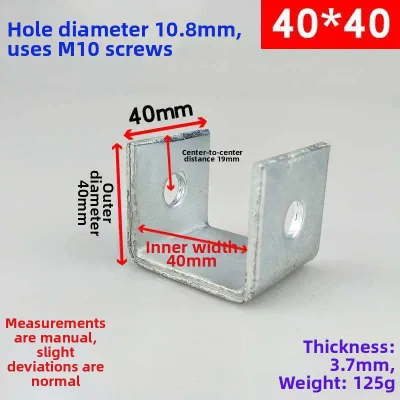
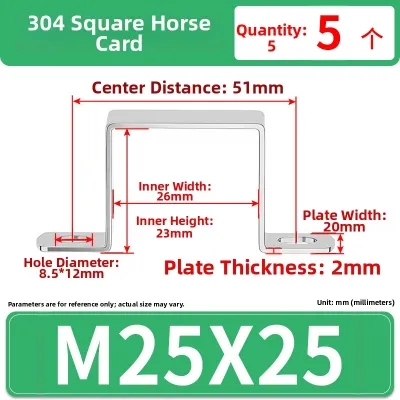
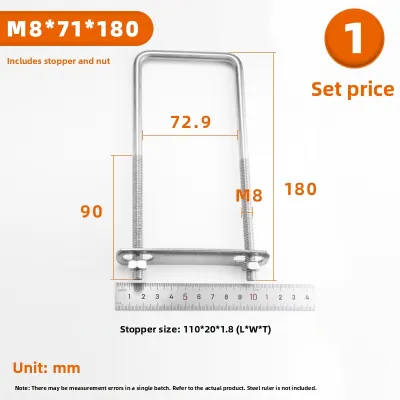
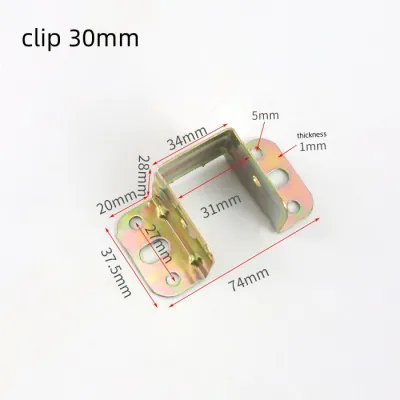
The most critical dimensions of a u shape metal bracket are its inside width, leg height, material thickness, and hole spacing. These measurements determine whether the bracket will snugly fit your mounting material and align properly with your furniture frame or wall studs.
Products mentioned in this guide
2 Lazada user ratings
🔨Durability:Satisfactory 🔌Compatibility:Usefull 🛠️Ease of Installation:Good
3 Lazada user ratings
Great tripod
26 Lazada user ratings
Excellent quality materials. Smooth and seems like real stainless steel. Measurement is precise and uniform across multiple pieces. It has e…Read full reviewShow less
Excellent quality materials. Smooth and seems like real stainless steel. Measurement is precise and uniform across multiple pieces. It has enough clearance to fit the pipe perfectly and for the screws to hold tightly.
Just like described, the value is really great and definitely worth buying, good review.
Very satisfied with price and quality. Thank you for this product
The quality is great, it fits perfectly, and I'm buying it again.
This product is really a great deal and definitely worth it.
17 Lazada user ratings
The customer service at this store is attentive and thorough! A small screw solved my big problem. Kudos to the store owner and staff 👍👍👍
Provides strong support, Durable stainless steel material,
Perfect for fixing pipes, Versatile U-shaped design,
It's affordable and a great value for what you get.
Perfect for my needs
29 Lazada user ratings
Stable furniture connection, Durable iron construction, U-shaped for secure fit, Bought for another purpose but I found out it doesn't work!…Read full reviewShow less
Stable furniture connection, Durable iron construction, U-shaped for secure fit, Bought for another purpose but I found out it doesn't work! So I will just keep it! It might come in handy one of these days!
My gulay, it really is 8 pieces. This is the cheapest I've seen in the market, although It took a month to get here.
Ideal for bed frames, Perfect for furniture repair, U-shaped for secure fit,
Serves its purpose. 🔧Ease of Installation: 10 🛠️Durability: 19
Prices are valid at publication and may change. Please refer to the product page for the latest price.
When reading a manufacturer’s spec sheet, the inside width—often labeled as the opening or clearance—is the most vital dimension. This measurement must match the actual thickness of the wood or metal beam you plan to insert. For example, if you are using standard dressed timber, the actual dimensions are often smaller than the nominal size, so you must measure the physical wood with a caliper or tape measure rather than relying on nominal labels.
The leg height, or the length of the bracket’s vertical arms, determines how much surface area of the inserted member is supported. Taller legs offer greater resistance to lateral forces and tipping, which is essential for heavy-duty shelving or structural framing. Conversely, shorter legs are ideal for low-profile applications where the hardware needs to remain hidden or fit within tight clearances.
Material thickness, or gauge, directly influences the bracket’s rigidity and resistance to bending under load. Thicker metal prevents the bracket arms from splaying outward when weight is applied. Additionally, you must check the hole spacing, which is the center-to-center distance between the pre-drilled mounting holes. Proper hole spacing ensures the fasteners align perfectly with your furniture’s pre-drilled pilot holes or the center of your wall studs.
Finally, always account for the bracket’s overall physical footprint. This includes the outer width and any protruding flanges. If you are installing the bracket inside a cabinet or drawer cavity, failing to account for the outer dimensions can cause the metal to rub against drawer slides, interfere with door hinges, or prevent doors from closing completely.
How do you determine the actual load rating for your specific furniture project?
To find the actual load rating, you must consult the manufacturer’s official specification sheet to see if the weight limit is rated per individual bracket or per pair under static conditions. This theoretical limit must then be adjusted downward based on the weakest link in your assembly, such as the wall material or fastener strength.

Never guess a bracket’s weight capacity based on its visual thickness or physical weight. Manufacturers determine load ratings through controlled testing, and these limits are clearly printed on the official product packaging or technical spec sheets. When reviewing these numbers, check whether the rating applies to a single bracket or a pair, as using a single bracket to support a load rated for a pair can lead to sudden structural failure.
It is also critical to distinguish between static and dynamic loads. A static load refers to stationary weight, such as books on a bookshelf or a display cabinet. A dynamic load involves movement, such as a pull-out keyboard tray, a folding desk surface, or drawers that open and close. Dynamic loads exert significantly more stress on metal brackets due to kinetic energy and vibration, requiring you to choose brackets with a higher rated capacity than the actual weight of the object.
Remember that a bracket’s rated capacity is only as strong as the surface it is mounted to and the fasteners holding it in place. Even if a heavy-duty steel bracket is rated to hold 100 kilograms, mounting it into thin drywall with basic plastic anchors will result in failure long before the metal bends. The density of the wood, the thickness of the mounting panel, and the shear strength of your screws all dictate the true weight limit of your furniture project.
Which material grades and finishes affect the bracket's real-world durability?
The durability of a u shape metal bracket depends on its base metal—typically carbon steel, stainless steel, or aluminum—and its protective surface finish. Choosing the right combination prevents premature rust and structural failure, especially in high-humidity environments.
Carbon steel is the most common base metal for structural brackets due to its high tensile strength and affordability. However, untreated carbon steel is highly susceptible to rust when exposed to oxygen and moisture. Stainless steel offers superior built-in corrosion resistance, making it the ideal choice for outdoor furniture, bathrooms, or kitchen installations where water exposure is common. Aluminum brackets are lightweight and naturally resistant to rust, though they generally offer lower load capacities than steel.
The surface finish applied to the metal acts as the primary barrier against environmental degradation. Zinc plating (often called galvanized steel) provides a basic level of protection suitable for dry indoor environments. For areas with elevated moisture levels, such as kitchens, laundry rooms, or coastal regions in the Philippines, powder-coated or epoxy-coated finishes offer a thick, durable barrier that resists scratching and moisture penetration.
Always review the manufacturer’s care instructions and environmental warnings before installation. Using a bracket rated only for dry indoor use in an outdoor or high-humidity setting will lead to rapid finish degradation, rust, and eventual structural compromise. Regular inspections for signs of flaking paint, rust spots, or discoloration will help you address wear before it affects the bracket’s integrity.
How do you match the bracket specs to your installation surface and hardware?
Matching a bracket to your installation surface requires selecting fasteners that fit the bracket’s pre-drilled hole diameters and penetrate the mounting surface to a safe, load-bearing depth. Using mismatched hardware can lead to loose joints, stripped threads, or sudden structural failure.
Start by checking the hole diameter specifications on the bracket’s technical drawing. The shank of your chosen screw or bolt should fit snugly through the hole without forcing, while the head of the fastener must be wide enough to cover the hole completely and press firmly against the bracket’s surface. If the screw head is too small, it can pull through the bracket hole under tension; if the shank is too small, the bracket will shift and wobble.
The type of fastener you use must match the specific material of your mounting surface. For solid wood furniture frames, use high-quality wood screws with deep threads that grip the wood fibers. If you are mounting the bracket to concrete or masonry walls, you will need expansion anchors or masonry screws. For drywall installations, toggle bolts or heavy-duty threaded anchors are necessary to distribute the weight across a larger surface area.
Finally, verify that the length of your hardware is sufficient to pass through the thickness of the bracket base and penetrate deep into the mounting surface. However, ensure the screw is not so long that it pierces through the opposite side of your finished furniture panels. Balancing fastener length, thread depth, and bracket thickness is the key to achieving a clean, professional, and structurally sound installation.
Community discussion
Share your experience or ask a question. Comments are reviewed before publication.