
Finding the right ergonomic desk chair in the Philippines within a budget of ₱3,000 to ₱15,000 requires understanding exactly what features each price point unlocks. In this range, you transition from basic, mostly fixed chairs to highly customizable seating solutions that support your body through long hours of work. While a lower budget provides essential height adjustments and standard lumbar support, moving toward the higher end introduces dynamic lumbar systems, synchronized tilt mechanisms, and highly adjustable armrests. Knowing these thresholds helps you avoid overpaying for marketing hype and ensures you invest in features that directly protect your posture and comfort.
Defining Your Ergonomic Priorities Before Setting a Budget
Before browsing online marketplaces or local furniture showrooms, you must identify which ergonomic adjustments are non-negotiable for your specific body type and daily routine. Not every user requires a fully customizable chair, but ignoring your primary physical needs can lead to discomfort, muscle strain, or premature fatigue.
Start by differentiating between essential support and premium adjustments. Essential support includes basic pneumatic seat height adjustment and a supportive lumbar curve, which are critical for maintaining the natural alignment of your spine. Premium adjustments, such as 4D armrests that move in four directions or synchro-tilt mechanisms that keep your feet flat while you recline, are highly beneficial but may not be strictly necessary if you only sit for short periods.
Products mentioned in this guide
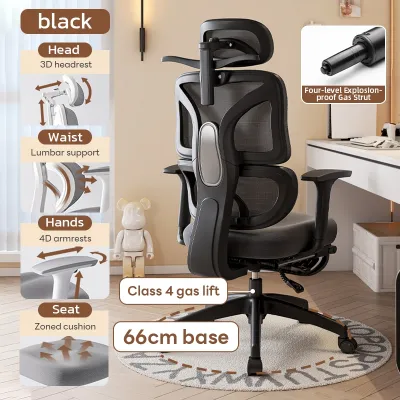
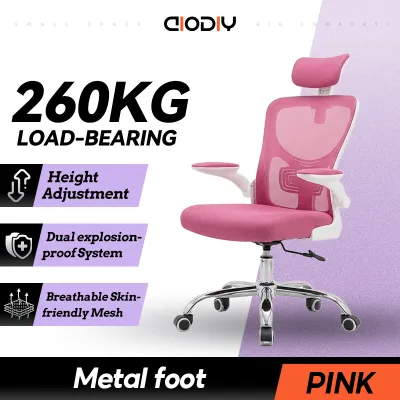
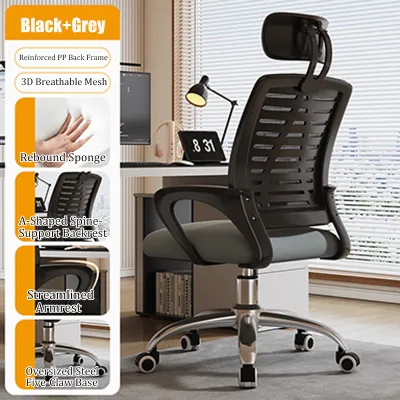
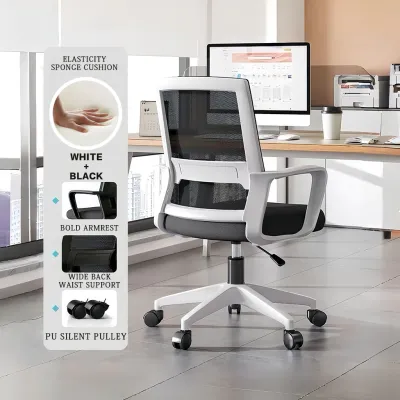
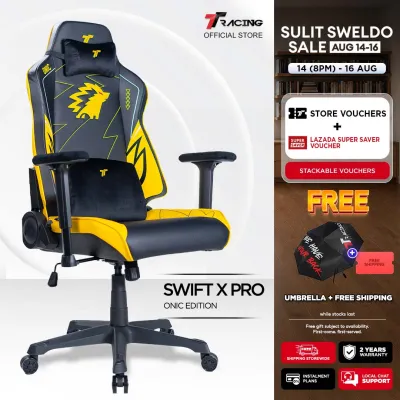
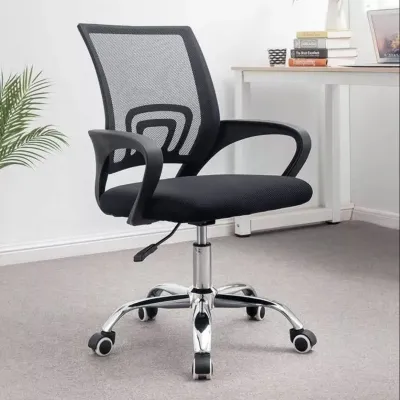
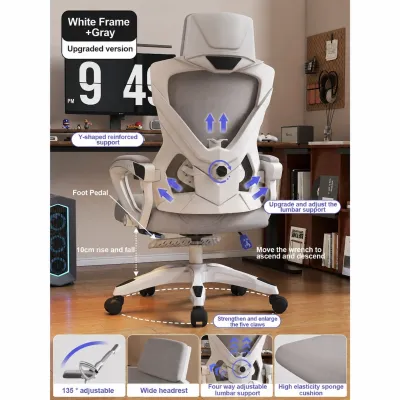
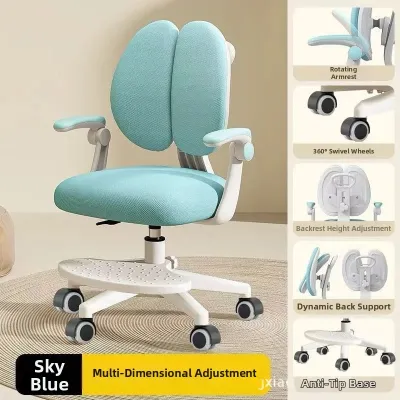
Prices are valid at publication and may change. Please refer to the product page for the latest price.
Your daily usage duration is a primary factor in determining which materials and features to prioritize. If you sit for more than six hours a day, investing in high-density molded foam or high-tension mesh becomes crucial to prevent the seat from flattening out and losing its supportive qualities. In the tropical climate of the Philippines, high-tension mesh is particularly valuable for its breathability, helping to dissipate body heat and keep you cool during warm afternoons.
Establishing a personal hierarchy of features allows you to make logical compromises when a chair within your target budget lacks certain secondary adjustments. For instance, if you suffer from lower back pain, you should prioritize a highly adjustable lumbar support system over adjustable armrests or a headrest. By ranking your physical needs beforehand, you can focus your budget on the components that will have the greatest impact on your long-term comfort and health.
Feature Expectations and Trade-offs Across Budget Tiers
As you explore the market, it is important to understand that retail prices fluctuate due to promotions, shipping costs, and seller margins. The budget tiers from ₱3,000 to ₱15,000 represent general feature thresholds and structural expectations rather than rigid, universal guarantees.

The most significant shift as you move up the price scale is the transition from fixed components to multi-axis adjustability. Lower-priced chairs often rely on static parts that force your body to adapt to the chair’s shape. In contrast, higher-priced models offer multiple adjustment points, allowing you to customize the chair to fit your unique proportions and movement patterns.
Material upgrades also play a major role in price differentiation. While entry-level chairs often use basic nylon frames and standard mesh that can stretch out over time, premium models feature reinforced polymer or aluminum bases, high-tensile mesh that retains its shape, and smoother-rolling casters. These material improvements directly affect the chair’s overall durability, stability, and weight capacity.
Entry-Level (Around ₱3,000 to ₱6,000): Basic Support and Fixed Components
At the entry-level tier of ₱3,000 to ₱6,000, you should expect reliable basic functionality with several physical compromises. These chairs are best suited for light to moderate daily use, typically under four hours, or for users who do not require highly specialized orthopedic support.
In this price range, height adjustment is almost exclusively handled by a standard pneumatic gas lift. Armrests are typically fixed to the frame or designed to flip up out of the way, offering no adjustments for height, width, or angle. While flip-up armrests are convenient for tucking the chair under a low desk, they do not provide customized support for your forearms during typing.
Lumbar support in entry-level chairs is usually a fixed plastic curve molded directly into the mesh backrest, or a simple foam pad that can be slid up and down manually. These systems lack depth adjustment, meaning they may feel too aggressive or barely noticeable depending on your body shape.
The materials used in this tier generally consist of lightweight nylon bases and standard polyester mesh. While these materials are lightweight and reasonably breathable, they are more prone to wear and tear under heavy daily use. The seat cushions are often made of cut foam rather than molded foam, which tends to lose its resilience and flatten out more quickly over time.
Mid-Range (Around ₱6,000 to ₱10,000): Enhanced Adjustability and Better Materials
Stepping up to the mid-range tier of ₱6,000 to ₱10,000 introduces a noticeable upgrade in both adjustability and material quality. This range represents the sweet spot for many home office workers who need a durable chair for full-time daily use without spending a fortune.
One of the key upgrades in this tier is the inclusion of adjustable lumbar support, which often allows you to modify both the height and the depth of the lumbar pad. You will also find more advanced tilt mechanisms, including tilt tension control and the ability to lock the backrest recline at several specific angles, rather than just upright or fully reclined.
Armrests in the mid-range tier transition from fixed designs to adjustable 2D or 3D configurations. This means you can adjust their height and sometimes slide them forward, backward, or pivot them inward. This adjustability helps you align the armrests with your desk surface, reducing strain on your shoulders and neck.
The seat cushions in this price bracket are frequently made of high-density molded foam, which retains its shape and supportive properties far longer than cut foam. The mesh used on the backrest is typically more durable and tightly woven, providing consistent tension and support that does not sag after a few months of use.
Upper-Tier (Around ₱10,000 to ₱15,000): Advanced Ergonomics and Build Quality
At the upper end of the budget, from ₱10,000 to ₱15,000, you enter the territory of advanced ergonomics and heavy-duty build quality. These chairs are designed for intensive, long-term daily use and offer features comparable to high-end commercial office furniture.
A defining feature of this tier is the synchronized tilt mechanism. Unlike basic tilt systems where the seat and backrest tilt back at the same angle, a synchro-tilt mechanism tilts the backrest at a larger ratio than the seat (often 2:1). This keeps your feet flat on the floor and maintains proper spinal alignment as you stretch or recline. You will also frequently find seat depth adjustment, allowing you to slide the seat pan forward or backward to accommodate different thigh lengths.
Lumbar support systems in this range are often dynamic or dual-zone, meaning they automatically adapt to your movements and posture shifts without requiring manual adjustment. The armrests are typically 4D, allowing you to adjust height, width, depth, and angle for precise upper limb support.
The overall build quality is significantly enhanced, often featuring heavy-duty aluminum or highly reinforced nylon bases, premium gas lifts, and ultra-durable, high-tension mesh. These chairs are built to handle higher weight capacities and offer a much more stable, wobble-free sitting experience.
Crucial Specifications to Verify Before Checkout
Before finalizing your purchase on any online marketplace or at a local retailer, you must verify several physical and logistical specifications to ensure the chair fits your body, your workspace, and your home environment.
First, measure your desk height clearance. Compare this with the chair’s minimum and maximum seat height, as well as the height of the armrests. You want to ensure that the armrests can slide comfortably under your desk when the chair is not in use, and that the seat height allows your feet to rest flat on the floor while your elbows form a 90-degree angle with the desk surface.
Next, carefully check the manufacturer’s stated weight capacity and recommended user height range. Do not assume a chair will fit you simply because it is labeled “adult size.” If you are exceptionally tall or short, or if you require a higher weight capacity, look for chairs that explicitly list these specifications in their product descriptions.
Review the warranty terms in detail. A reliable manufacturer should offer a clear warranty covering key mechanical components, such as the gas lift cylinder, the tilt mechanism, and the structural frame. Be sure to check what is excluded from the warranty, as some brands do not cover wear and tear on the mesh or fabric.
Finally, confirm the return policies, shipping dimensions, and assembly requirements. Ergonomic chairs often arrive in large, heavy boxes that require self-assembly. Ensure you have the necessary tools and space to assemble the chair, and verify whether the seller offers customer support or replacement parts if any components are damaged during shipping.
Red Flags and Quality Traps in Budget Ergonomic Chairs
When shopping within the ₱3,000 to ₱15,000 range, you will encounter many products that promise premium features at unbelievably low prices. It is crucial to look past the marketing buzzwords and identify potential quality traps before making a decision.
A common red flag is the generic “ergonomic” label applied to chairs that offer almost no adjustable features. If a chair only allows you to adjust the seat height and has a completely rigid backrest and fixed armrests, it is not truly ergonomic. True ergonomics requires the chair to adapt to the user, not the other way around.
Watch out for chairs with unusually low weight capacities or those that do not specify safety certifications for their gas lift cylinders. Look for recognized safety marks, such as SGS or BIFMA certifications, which indicate that the gas lift has undergone rigorous testing for safety and durability. A failing gas lift is not only a convenience issue but also a serious safety hazard.
Avoid chairs with excessively thick, soft padding that feels comfortable for the first five minutes but offers no structural support. In the humid climate of the Philippines, thick, low-density foam cushions tend to trap heat and sweat, leading to discomfort and unpleasant odors. Over time, this cheap foam will bottom out, leaving you sitting directly on the hard wooden or plastic seat pan.
Be cautious of sellers who do not provide clear dimensional diagrams or fail to specify the exact materials used in the frame and base. A lack of transparency often indicates that the manufacturer has cut corners on structural integrity, using cheap, brittle plastics that can easily crack or break under normal daily use.
Frequently Asked Questions (FAQ)
Is a headrest necessary for an ergonomic desk chair?
A headrest is not strictly necessary for active, upright tasks like typing, writing, or coding, as your head should naturally align over your spine without leaning back. Headrests are primarily beneficial when you recline to read, watch videos, or take a break. If you decide to buy a chair with a headrest, ensure it is highly adjustable; a fixed or poorly positioned headrest can push your neck forward into an awkward, uncomfortable angle.
How long should a desk chair in this price range last?
The lifespan of a desk chair in this price range depends heavily on the materials used, your daily usage hours, and how well you adhere to the weight limits. An entry-level chair (₱3,000 to ₱6,000) typically lasts around one to three years under regular use before the foam or mesh begins to degrade. A high-quality mid-range or upper-tier chair (₱6,000 to ₱15,000) can easily last three to five years or more, especially if it features a reinforced frame, molded foam, and a certified gas lift.
Community discussion
Share your experience or ask a question. Comments are reviewed before publication.