
Fitting a dual purpose folding sofa bed into a 20 square meter condo living area requires balancing seating comfort with open floor space. In a typical studio or small one-bedroom layout, the actual living room zone often occupies only 8 to 10 square meters of the total footprint. To prevent the room from feeling cramped, the ideal sofa bed should have a folded width of 120 cm to 150 cm (equivalent to a small double or standard double bed when unfolded). This size provides comfortable seating for two adults while preserving the essential 60 cm to 75 cm of walkway clearance on either side when the bed is fully extended. Selecting the right dimensions involves analyzing your specific layout, measuring the unfolding mechanism, and verifying that your pathways remain completely unobstructed.
Assessing Usable Space in a 20 Sqm Living Room
When managing a 20 square meter condo, the total floor area stated on your condominium title does not represent your actual furniture layout space. Architectural features, structural columns, and utility placements immediately reduce the areas where you can position furniture. In typical condo designs, entryways, kitchen counters, and bathroom doors dictate fixed pathways that you cannot block. You must subtract these high-traffic zones from your total square footage to identify the true usable footprint for your living area.
Mapping out fixed elements is the next critical step before shopping for a dual purpose folding sofa bed. Take precise measurements of the swing radii for your main entry door, bathroom door, and any built-in wardrobe doors. Balcony sliding doors or outward-opening window panels also require dedicated clearance zones. Positioning a sofa bed too close to these features can restrict fresh air circulation or block emergency exit routes, which are vital in high-rise residential buildings.
Products mentioned in this guide
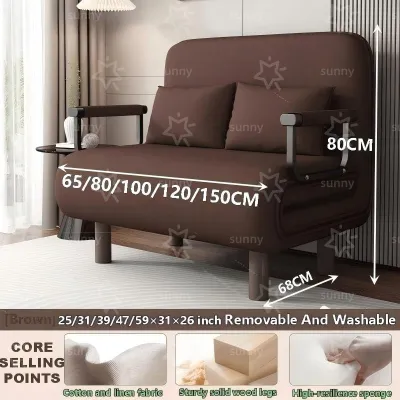
![[Manila 24-hour Boat] 88/108/128/158*78*85CM Foldable Sofa Bed with Storage Cabinet Dual Purpose Small Unit Living Room Lazy Person Sofa Single/Double/Queen Size with Roller Sofa Bed Side Pocket Multi-functional Telescopic Bed 2 Free Throw Pillows](https://img.lazcdn.com/g/p/97417428c04a59ff3f75ec882c347f3f.jpg_400x400q80.jpg_.webp)
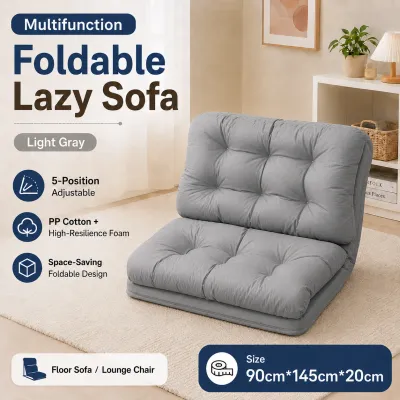
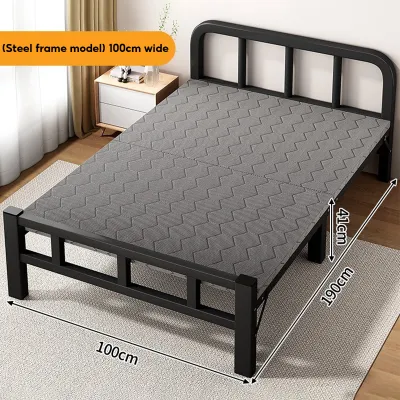
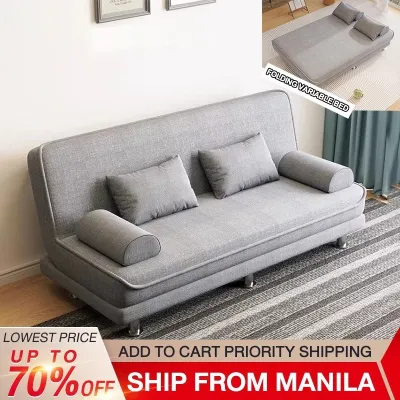
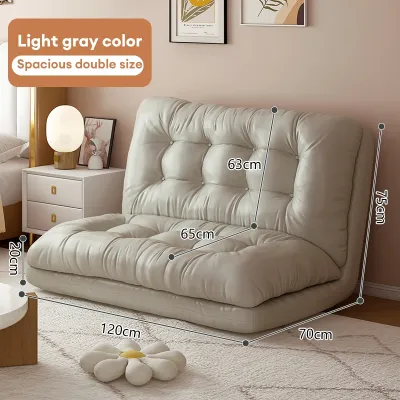
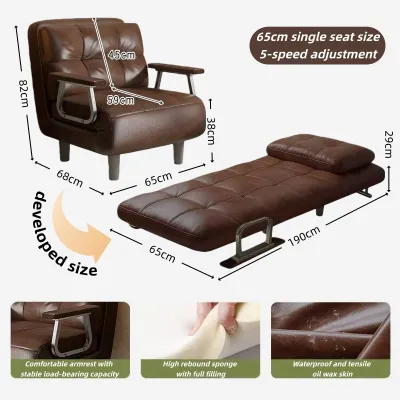
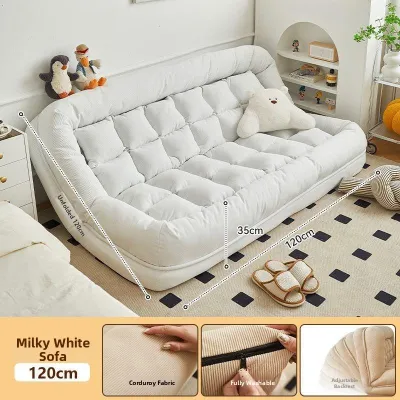
Prices are valid at publication and may change. Please refer to the product page for the latest price.
Establishing primary and secondary circulation paths ensures your living room remains functional and easy to navigate. A primary walkway, such as the path from the entrance to the balcony or kitchen, requires a minimum width of 75 cm to allow comfortable movement. Secondary paths, such as the space between your sofa and a TV console, can be slightly narrower but should not fall below 60 cm. Marking these pathways on your floor with painter’s tape provides a clear visual guide of how much space remains for your seating.
Choosing Proportional Dimensions for a Dual Purpose Folding Sofa Bed
To maintain spatial harmony in a compact living room, you must evaluate both the folded and unfolded dimensions of the sofa bed. For a 20 square meter condo, a sofa bed with a folded width of 120 cm to 150 cm is generally the most proportional choice. This width range fits comfortably against standard condo walls without swallowing the entire room. If your living zone is exceptionally narrow, limiting the sofa’s overall depth to 85 cm or less when folded helps keep the center of the room open.

Comparing a two-seater configuration with a three-seater model reveals significant spatial trade-offs. A compact two-seater sofa bed typically measures around 120 cm to 140 cm in width, making it highly compatible with tight corners and short walls. A three-seater model often exceeds 180 cm in width, which can easily overwhelm a small living room and leave no space for side tables or floor lamps. Unless you frequently host multiple guests, a two-seater configuration offers the best balance of seating utility and floor preservation.
Always verify the manufacturer’s detailed specification sheet for both the folded seating depth and the fully unfolded sleeping length. While a sofa might look compact when folded, its unfolded length can extend anywhere from 190 cm to 210 cm. You must measure your room from the back wall forward to ensure the extended mattress does not collide with your media console or opposite walls. Do not rely on visual estimates; use a tape measure to confirm these dimensions against the manufacturer’s technical drawings.
The visual weight of the sofa bed’s design also affects how spacious your condo feels. Bulky, overstuffed armrests and high, thick backrests consume valuable centimeters of physical space while making the room look visually cluttered. Choosing a model with slim track arms, or even an armless design, maximizes the actual seating and sleeping surface while keeping the overall footprint minimal. Low-profile backrests and raised legs that expose the floor underneath also create an illusion of openness, making your 20 square meter condo feel much lighter and more spacious.
Planning Clearance for Folding Mechanisms and Walkways
Different folding mechanisms require distinct clearance zones that dictate where the sofa bed can be placed. A classic pull-out mechanism extends forward into the room, requiring at least 200 cm of clear space from the back wall to the foot of the bed. A click-clack or fold-down model, on the other hand, often requires you to pull the sofa frame away from the wall by 10 cm to 20 cm before you can lower the backrest. Understanding these mechanical requirements prevents you from purchasing a sofa that cannot be fully deployed in your available space.
Integrating flexible, lightweight furniture around your dual purpose folding sofa bed makes daily transitions seamless. Instead of a heavy, solid wood coffee table, opt for nesting tables or lightweight side tables that you can easily lift and move to the side when unfolding the bed. Small, mobile accent chairs can also be shifted quickly to accommodate the extended mattress. This flexible arrangement ensures you do not have to perform heavy lifting every time you want to convert your living room into a sleeping space.
Double-check that all essential pathways remain functional even when the sofa bed is fully extended for the night. You must be able to walk from the sleeping area to the bathroom or kitchen without climbing over the mattress or squeezing through tight gaps. Ensure that the extended bed does not block the path to your balcony, as tropical climates often require quick access to outdoor areas for ventilation. Keeping these pathways clear is not just a matter of convenience; it is a fundamental safety requirement for condo living.
Avoiding Common Layout Mistakes in Compact Condos
One frequent mistake is overlooking the height of the folded backrest relative to your condo’s windows and wall outlets. If the backrest is too high, it may block natural light from low-set windows or prevent you from opening window panels fully. Additionally, a tall backrest can cover essential electrical outlets, light switches, or air conditioning controls, forcing you to reach awkwardly behind the furniture. Measure the height from the floor to these wall features before selecting your sofa bed model.
Before finalizing your purchase, verify that the packaged dimensions of the sofa bed can fit through your condo building’s service elevator, narrow hallways, and entry doorway. Many condo owners overlook this delivery constraint, only to find that their new furniture cannot physically reach their unit. Checking these entry clearances beforehand saves significant delivery hassle and potential return fees.
Another common oversight is ignoring the storage space required for pillows, sheets, and heavy blankets. Some dual purpose folding sofa beds feature built-in under-seat storage compartments, which are incredibly valuable in a 20 square meter condo. However, you must check how these compartments open; if they require sliding drawers, you need extra floor clearance in front of the sofa to access them. If the sofa bed lacks built-in storage, you must allocate space in your wardrobe or a separate storage ottoman for your bedding.
Finally, never finalize a purchase without verifying the physical deployment process and the actual mattress thickness. A mechanism that is too stiff or heavy to operate can make daily conversion a frustrating chore, especially in humid tropical conditions. Furthermore, very thin mattresses may fail to provide adequate support, while excessively thick mattresses might make the folded seating height uncomfortably high. Check the manufacturer’s guidelines regarding the maximum weight capacity and recommended operation steps to ensure the sofa bed is practical for your lifestyle.
Frequently Asked Questions (FAQ)
Can a dual purpose folding sofa bed serve as my primary everyday bed?
While a dual purpose folding sofa bed is excellent for occasional guests or studio living, using it as your primary everyday bed requires careful evaluation of its internal structure. Standard folding mechanisms and thin foam mattresses can wear down quickly under continuous daily use, potentially leading to sagging and back discomfort. If you plan to sleep on it every night, look for models specifically rated by the manufacturer for daily use, featuring robust steel frames and high-density foam or pocket spring mattresses. Additionally, factor in the daily effort required to fold and unfold the unit, as well as the accelerated wear on the mechanical joints.
How do I protect my condo flooring from the sofa bed mechanism?
To protect your condo’s laminate, vinyl, or engineered wood flooring from scratches, always check the contact points of the sofa bed mechanism. Many pull-out models rely on caster wheels that roll across the floor during deployment; ensure these wheels are made of soft polyurethane or rubber rather than hard plastic. For stationary legs, apply heavy-duty felt pads or rubber floor protectors to the bottom of each foot to prevent gouging when the sofa shifts. Avoid dragging the entire frame across the floor when converting the bed, and periodically inspect the wheels and legs for trapped dirt or debris that could act as an abrasive.

Community discussion
Share your experience or ask a question. Comments are reviewed before publication.