
To comfortably seat 6 to 10 people, you need an extendable glass dining table that measures 72 to 84 inches long in its collapsed state and extends to 108 to 120 inches long when fully opened. The width of the table should remain between 36 and 42 inches to ensure everyone has enough room to dine without crowding. This configuration allows you to host intimate family dinners on regular days and easily accommodate larger gatherings during holidays or special occasions.
Selecting the right size involves balancing the physical dimensions of the table with the layout of your dining room. A glass top offers a distinct aesthetic advantage by keeping your space feeling open and light, but it still requires careful planning regarding clearance, weight distribution, and extension mechanisms. Understanding these spatial and structural requirements ensures your dining area remains both functional and comfortable.
Standard Table Dimensions for 6 to 10 Seats
When planning your dining setup, standard per-person space requirements serve as the foundation for comfort. Each diner requires approximately 24 to 30 inches of table width and 12 to 15 inches of table depth. This personal zone provides enough elbow room to prevent diners from bumping into one another while leaving sufficient space for individual place settings, glassware, and shared serving platters in the center of the table.
Products mentioned in this guide
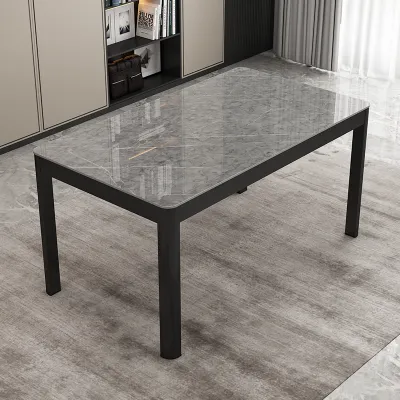
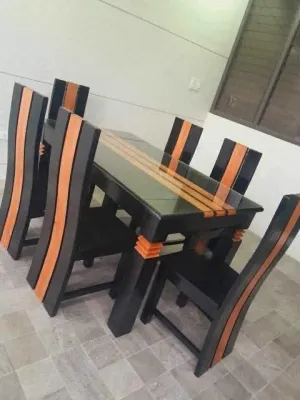
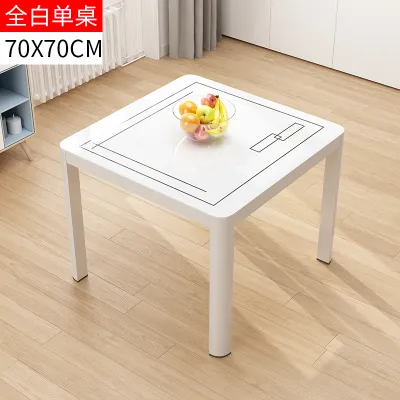
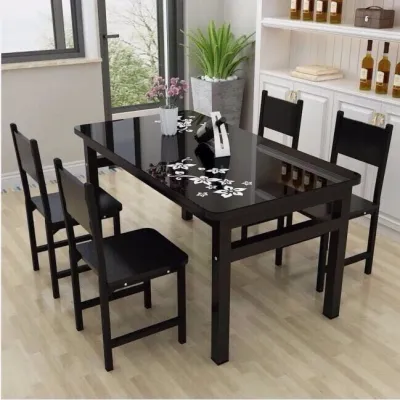
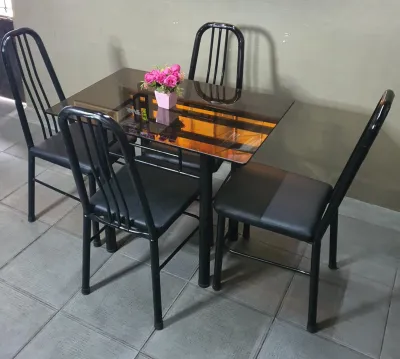
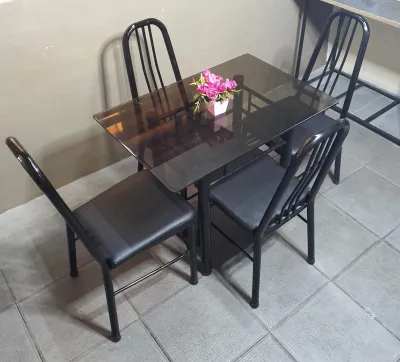
Prices are valid at publication and may change. Please refer to the product page for the latest price.
For a group of 6 people, the typical collapsed table dimensions should be 72 to 84 inches long and 36 to 42 inches wide. This length allows for three diners on each long side, or two on each side and one at each head of the table. Maintaining a width of at least 36 inches is crucial; anything narrower makes it difficult to place serving dishes down the center of the table once place settings are laid out.
To expand the seating capacity to comfortably accommodate 10 people, the table must extend to a length of 108 to 120 inches while keeping the same width. This extended length provides enough space to place four diners along each long side and one at each end. If you choose a slightly wider table of 42 inches, you gain extra room in the center for decorative centerpieces or large serving platters, which is highly beneficial for traditional Filipino salo-salo gatherings where multiple dishes are served simultaneously.
The standard height for a dining table ranges from 28 to 30 inches above the floor. This height pairs optimally with standard dining chairs, which typically have a seat height of 18 to 20 inches. When selecting a complete table glass dining set, manufacturers design the chairs and table to align perfectly, ensuring that the chair heights accommodate the specific thickness of the glass top and any supporting aprons or frames beneath it. If you purchase chairs separately, always measure the distance from the floor to the underside of the table frame to ensure there is at least 12 inches of clearance for comfortable leg movement.
Measuring Your Dining Room for an Extendable Table
A common mistake when purchasing an extendable table is only measuring the room for its collapsed state. To ensure a comfortable flow of traffic, you must measure your dining room based on the table’s fully extended length of 108 to 120 inches. The key to a functional dining room layout is the “pull-out” rule, which dictates leaving 24 to 30 inches of space between the edge of the table and the nearest wall, sideboard, or other furniture. This clearance allows guests to pull their chairs out and sit down without feeling restricted or hitting the wall.

Beyond the space needed for seated guests, you must account for active walkways. Adding an extra 12 to 18 inches behind the pulled-out chairs ensures that people can walk behind diners safely without forcing them to lean forward. This extra clearance is especially important in high-traffic zones near doorways, kitchen entrances, or hallways.
To determine the maximum table footprint your room can accommodate, use a simple formula. Measure the total length and width of your dining room, then subtract the required clearance spaces for both sides. For example, if your room is 15 feet (180 inches) long and you want to leave 36 inches of clearance on both ends for walking space, the maximum extended table length you can accommodate is 108 inches. If your room measurements fall short of this, a 120-inch extended table will make the space feel cramped and block essential pathways.
While measuring, consider the visual impact of your furniture. A glass top dining table has a unique visual weight; because it is transparent, it allows light to pass through, making a large 10-seater table appear much smaller and less bulky than a solid wood or marble equivalent. This makes glass an excellent choice for modern apartments or open-plan homes in the Philippines, where maximizing the perception of space is highly valued. However, you must remember that the physical footprint and clearance requirements of a glass table remain exactly the same as a solid wood table. The transparency does not change the physical space required for chairs and walkways.
Extension Mechanisms and Glass Weight Considerations
Extendable tables rely on various mechanical systems to transition between sizes, and each type interacts differently with glass tops. The butterfly leaf mechanism features a self-storing leaf that folds and hides beneath the main tabletop when collapsed. This is highly convenient because you do not need to find closet space to store a separate leaf. Slide-out or drop-leaf mechanisms allow panels to slide out from the ends of the table, while removable center leaves require you to manually pull the table apart and insert separate glass panels.
Because glass is significantly heavier than wood or medium-density fiberboard (MDF), the structural demands on these extension mechanisms are exceptionally high. The metal tracks, hinges, and support brackets must be heavy-duty and specifically rated to support the weight of tempered glass panels. When shopping, check the smoothness of the mechanism; heavy glass can cause cheaper, low-quality metal tracks to sag, bind, or grind over time, making extension difficult and potentially damaging the frame.
In the humid tropical climate of the Philippines, moisture can accelerate the wear and tear of mechanical parts. Look for extendable tables that utilize high-quality, corrosion-resistant hardware, such as stainless steel or powder-coated aluminum tracks, which resist rust and maintain smooth operation over years of use.
Additionally, prioritize safety boundaries when selecting an extension system. Always check the manufacturer’s specified weight limits for both the main tabletop and the extended leaves. Ensure the mechanism features safety locks or dampers that prevent the heavy glass panels from sliding unexpectedly, pinching fingers, or dropping suddenly during setup. If the manufacturer’s instructions do not specify a weight limit or if the mechanism feels unstable, consult a professional furniture specialist before finalizing your purchase.
Choosing the Right Shape and Base for Maximum Legroom
The shape of your extendable glass dining table plays a major role in how many people you can comfortably seat and how much legroom they will have. Rectangular glass tops are the most popular choice because they maximize straight-edge seating, allowing you to align chairs neatly along the sides. However, oval glass tops offer distinct advantages; they eliminate sharp corners, which saves valuable floor space in tight rooms and softens the visual footprint of a large 120-inch table. Oval shapes also make it easier to squeeze in an extra chair at the curved ends without anyone being blocked by a sharp corner.
The design of the table base is equally critical when trying to maximize seating capacity for up to 10 people. Traditional four-leg bases can block chairs at the corners, making it difficult for guests sitting at the ends or corners to find comfortable legroom. In contrast, pedestal or central column bases offer maximum flexibility because they eliminate corner legs entirely. This allows you to slide extra chairs around the perimeter of the table without anyone having to straddle a table leg.
For long extended tables, trestle bases are often used to provide structural stability. A trestle base consists of two or more vertical supports connected by a horizontal bar, which distributes the heavy weight of a long glass top safely. While trestle bases offer excellent stability, you must check the width of the footboard and the placement of the supports; if the trestle legs are positioned too close to the ends of the table, they may limit the legroom for guests seated at the heads of the table.
Before purchasing, always verify the stability of the base when the table is fully extended. A base that is too narrow can cause the table to become unbalanced or tip if a guest leans heavily on the outer extended edges. Ensure the base has a wide, sturdy footprint that remains centered and stable even when the extension leaves are fully deployed.
Common Sizing and Clearance Mistakes to Avoid
To ensure a successful purchase, avoid common pitfalls that can lead to a cramped or unsafe dining experience. One frequent mistake is forgetting to account for armchair dimensions. While armless dining chairs typically measure 18 to 22 inches wide, dining chairs with armrests can require up to 24 to 28 inches of width. If your table glass dining set includes armchairs for the heads of the table, ensure they can slide completely under the table apron when not in use, otherwise they will protrude into your walkways and reduce usable space.
Another common error involves rug sizing. If you plan to place an area rug under your dining table, it must be sized to accommodate the table in its fully extended state. The rug should extend at least 24 inches beyond the edges of the fully extended table so that when guests pull their chairs back to sit down or stand up, the back legs of the chairs do not catch on the border of the rug. For a 120-inch extended table, you will need a rug that is at least 14 feet long.
Finally, pay close attention to glass thickness and edge finishing. For large tables spanning over 80 inches, the glass top should be at least 1/2 inch (12mm) thick to prevent bowing or flexing under load. Thinner glass may sag over long spans, creating structural instability. Additionally, ensure the glass features polished or beveled edges. In high-traffic family dining areas, sharp unpolished glass edges present a significant safety hazard, whereas rounded or beveled edges prevent accidental cuts and resist chipping.
Frequently Asked Questions (FAQ)
Can a glass dining table safely support 10 people?
Yes, a high-quality extendable glass dining table can safely support 10 people, provided it is constructed with thick tempered glass and a robust supporting frame. While diners do not sit on the table itself, they do lean on it and place heavy serving dishes, plates, and glassware on the surface. To ensure safety, verify that the table features tempered glass of at least 10mm to 12mm in thickness and a sturdy base that prevents tipping. Proper weight distribution is essential; avoid placing exceptionally heavy items solely on the extended outer edges, and ensure the extension mechanism is locked securely in place. In the Philippines, high-quality extendable glass dining tables generally range from ₱15,000 for standard models to over ₱60,000 for premium imported sets featuring synchronized extension systems.
What is the best chair width for a 10-seater extendable table?
The best chair width for a 10-seater table is between 18 and 20 inches for armless chairs. To calculate how many chairs can fit along the sides, take the extended length of the table and divide it by the chair width plus a 2-inch gap on each side for elbow room. For example, on a 108-inch extended side, you can comfortably fit four 20-inch chairs (requiring 80 inches of chair width plus 10 inches of total clearance gaps), leaving plenty of space for guests to sit comfortably without feeling squeezed.
Community discussion
Share your experience or ask a question. Comments are reviewed before publication.