
Finding the perfect balance between functionality and open space is the ultimate design challenge in a compact Philippine condominium. When every square meter of your living room in Manila, Quezon City, or Cebu must serve multiple purposes, standard bulky furniture simply will not work. A center table foldable offers an elegant solution, transforming from a discreet, space-saving unit into a functional surface for dining, working, or entertaining. However, selecting the wrong dimensions can quickly turn your cozy sanctuary into a cramped, navigation-defying obstacle course.
To achieve a harmonious layout, the ideal expanded length of a foldable coffee table for a typical 20- to 30-square-meter condo unit should range between 80 and 100 centimeters, with a width of 45 to 60 centimeters. When collapsed or folded, the table should ideally shrink by at least 40% to 50% in surface area, or fold down to a thickness of under 15 centimeters so it can be tucked away effortlessly. This ensures you maintain the vital clearance zones needed to move freely around your seating area without sacrificing surface utility when you need it most.
How to Measure Your Condo Living Room Space
Before browsing online marketplaces or visiting showrooms, you must establish the physical boundaries of your usable floor area. Condo living rooms in the Philippines often share space with dining areas and open kitchens, meaning your floor plan is highly dynamic. Start by measuring the total length and width of your primary seating zone, focusing specifically on the footprint of your sofa. This measurement forms the baseline for all subsequent furniture decisions.
Products mentioned in this guide
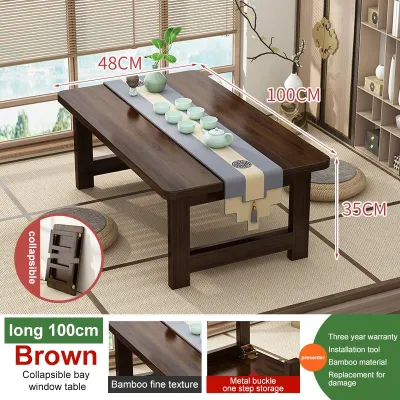
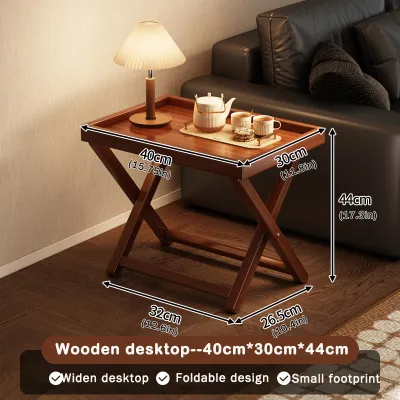
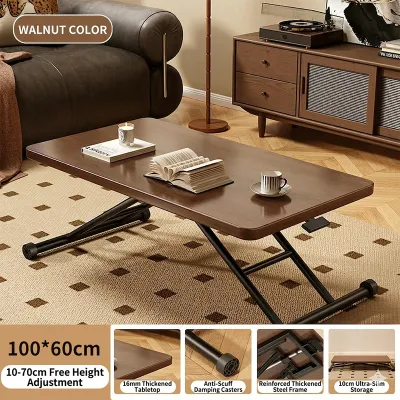
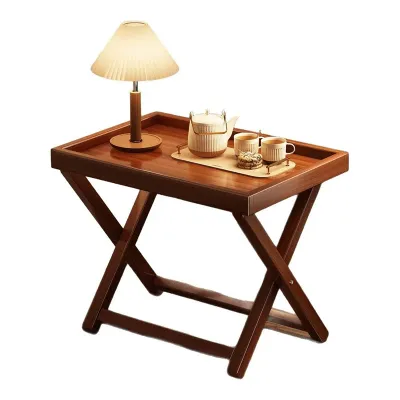
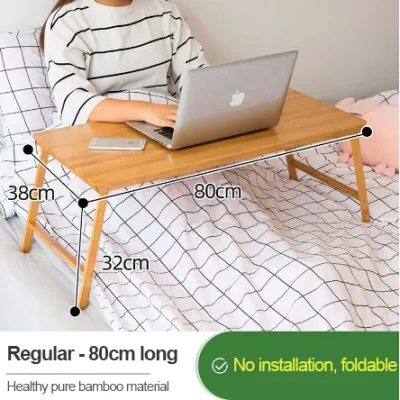
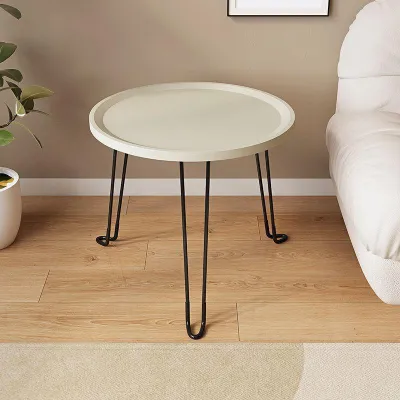
Prices are valid at publication and may change. Please refer to the product page for the latest price.
Next, identify the fixed architectural obstacles that define your room’s layout. In many high-rise developments, features like sliding balcony doors, floor-mounted electrical outlets, built-in structural columns, or low-hanging window-type air conditioning units restrict where furniture can sit. Opening a balcony door or pulling out a sofa bed requires dedicated clearance that cannot be permanently occupied by a table, even a foldable one.
Define the “active zone” where your table will sit during its fully expanded state. This zone must not encroach upon the primary walking paths or traffic flow of your unit, such as the route from the entrance to the kitchen or the bathroom. A simple way to visualize this active zone is to lay down sheets of newspaper or painter’s tape on the floor matching the exact expanded dimensions of the table you are considering. Walk around this mock-up for a day to see if it disrupts your daily movement or makes the room feel claustrophobic.
Proportional Guidelines for Foldable Center Tables
Selecting a table that fits is not just about physical clearance; it is also about visual scale. A table that is too small looks lost and cheap, while one that is too large dominates the room, making the entire condo feel smaller than it actually is. Adhering to established interior design proportions ensures your foldable table looks like an intentional design choice rather than an afterthought.

Length and Width Proportions
As a general rule of thumb, the length of your center table should be between one-half and two-thirds of the total length of your sofa. For example, if you have a standard two-seater condo sofa that measures 150 centimeters in length, your target table length should be between 75 and 100 centimeters. This proportion keeps the table visually anchored to the seating while leaving sufficient breathing room on either side for people to step into the seating area.
Width considerations are equally critical to prevent knee bumping and maintain comfortable traffic flow. The width of your table should not exceed one-third of the total distance between your sofa and the opposite wall or TV console. If the distance from your sofa cushion to your TV stand is 240 centimeters, your table width should ideally top out at 80 centimeters when fully expanded. Keeping the width within this boundary ensures that you do not have to shuffle sideways just to get past the table.
Height Alignment with Seating
The height of your center table directly impacts both the visual flow of your living room and its ergonomic usability. For standard coffee table use, the top surface of the table should sit flush with, or be up to 5 centimeters lower than, the top of your sofa’s seat cushions. This typically translates to a standard table height of 40 to 45 centimeters, which keeps the sightlines open and makes the room feel more spacious.
However, because foldable tables in compact condos often double as dining surfaces or work-from-home desks, height adaptability becomes a major consideration. If you choose a multi-functional lift-top table, verify both its collapsed height and its fully extended height. When raised, a dining or working surface should sit between 60 and 65 centimeters high to pair comfortably with your existing sofa cushions. A table that is too high when collapsed will disrupt the visual horizon of the room, while one that is too low when extended will cause back strain during long working sessions.
Matching the Folding Mechanism to Your Space
The mechanism that allows your table to fold determines how much space you save when it is not in use, as well as how stable it will feel during daily tasks. Different mechanisms cater to different spatial layouts and storage options, so matching the mechanism to your lifestyle is essential.
Drop-Leaf Mechanisms
- How they work: These tables feature hinged side panels that can be lowered when you need to save space or raised to expand the surface area.
- Best for: Condos where the table remains in the center of the room but needs to scale up for meals or guests.
- Space savings: Reduces the surface width by 50% or more, allowing the table to function as a slim console against a wall when folded.
Nesting Tables
- How they work: A set of two or three tables of graduating sizes that slide completely underneath one another.
- Best for: Highly modular layouts where you need flexible surface areas that can be scattered around the room when hosting.
- Space savings: Consolidates multiple tables into the footprint of a single small table, though they do not fold flat.
Lift-Top and Flip-Top Designs
- How they work: The tabletop lifts upward and forward on mechanical hinges, or flips open like a book to double its surface area.
- Best for: Residents who use their living room as a home office or dining area and need a sturdy, elevated surface.
- Space savings: Maintains a constant floor footprint but optimizes vertical space and functional versatility.
Folding Legs (Flat-Fold)
- How they work: The legs fold flat against the underside of the tabletop, similar to a tray table.
- Best for: Ultra-compact studio units where the living area must be completely cleared of furniture for exercise, cleaning, or folding laundry.
- Space savings: Folds down to a thickness of 10 to 15 centimeters, allowing you to slide it under a sofa, behind a wardrobe, or inside a utility closet.
Regardless of the style you choose, always prioritize the stability of the expanded state. Inspect the quality of the folding joints, hinges, and locking pins, as these components bear the brunt of daily wear and tear. A high-quality mechanism should lock securely into place with no noticeable wobbling or flexing when pressure is applied. If you are purchasing online, look closely at user reviews regarding structural integrity and joint durability over time.
Finally, consider the table’s “stored footprint.” If you plan to fold the table flat when it is not in use, measure the storage space beforehand. Ensure you have a designated spot—such as a gap next to the refrigerator, space under the bed frame, or a closet nook—that can comfortably accommodate the collapsed dimensions of the table without creating new clutter.
Common Sizing and Placement Mistakes to Avoid
One of the most common mistakes condo owners make is choosing a table with too much depth. While a deep, square table might look appealing in a spacious showroom, it quickly congests a narrow condo living room. A deep table forces you to stretch awkwardly to reach items on the far side and severely restricts the walkway between the table and the TV console, turning a simple walk across the room into a physical hurdle.
Another frequent error is ignoring the visual weight of the furniture piece. A solid, block-like wooden table with a heavy base acts as a visual barrier, absorbing light and making a small room feel incredibly cramped. Instead, opt for designs with slender metal legs, open wireframes, or light-colored wood finishes. These elements allow light to pass through and keep the floor plane visible, which tricks the eye into perceiving the room as larger and airier than it actually is.
Lastly, do not forget to account for the physical clearance required to operate the folding mechanism itself. Some tables require you to swing wide panels outward or lift heavy tops forward. If your layout is so tight that you must move your sofa, accent chairs, or TV console every time you want to unfold the table, you will quickly grow tired of using it. Ensure there is a clear “operating radius” around the table that allows you to easily transition it between its folded and expanded states without striking surrounding furniture or walls.
Checking Delivery and Access Dimensions
A beautifully proportioned table is of no use if it cannot physically make its way into your condominium unit. High-rise living in urban areas presents unique logistical challenges that are easy to overlook during the excitement of furniture shopping. Before finalizing any purchase, you must verify the delivery path from the unloading bay to your living room.
Start by measuring the entry doors of your condo unit, as well as any narrow hallway corners or tight turns in your building’s corridors. Next, measure the dimensions of your building’s service or passenger elevator, focusing on the door opening width, the interior cabin height, and the cabin depth. Many delivery failures occur because a large, pre-assembled piece of furniture simply cannot fit inside the elevator or clear a low ceiling beam in the stairwell.
Additionally, check whether the table arrives fully assembled in a large crate or if it is flat-packed for home assembly. Flat-packed furniture is significantly easier to transport through tight spaces, but it requires you to have enough open floor area in your living room to assemble the piece safely. If the product details state that the table is delivered fully assembled, pay close attention to the packaging dimensions rather than just the product dimensions, as the box or crate will add several centimeters of bulk on all sides.
Frequently Asked Questions (FAQ)
How much clearance should I leave between the sofa and the table?
For comfortable legroom and easy movement, you should maintain a clearance of 30 to 45 centimeters between the front edge of your sofa cushions and the edge of the center table. A gap of 30 centimeters is the absolute minimum required to sit comfortably without your knees hitting the table, while 45 centimeters allows most adults to walk past the table without having to shuffle sideways. If your space is exceptionally tight, you can temporarily reduce this gap to 25 centimeters when the table is fully expanded for dining, provided it can be pushed back or folded away immediately afterward.
Can a foldable center table safely hold hot meals or heavy laptops?
Yes, but you must verify the manufacturer’s specified weight capacity before loading the table. Because foldable center tables rely on mechanical joints, hinges, and support brackets, they typically have lower weight limits than solid, non-folding tables. A high-quality foldable table can generally support between 15 and 30 kilograms of evenly distributed weight, which is more than enough for laptops, books, and dining plates. To protect the tabletop surface from heat damage and prevent warping near the folding hardware, always use heat-resistant mats, coasters, or trivets when serving hot meals.
Community discussion
Share your experience or ask a question. Comments are reviewed before publication.