
Finding the right furniture for a 20 square meter condo living room requires a careful balance of functionality and physical footprint. To keep your limited living space from feeling cramped, the ideal folding lazy sofa bed should feature a folded width of 120 to 150 centimeters and a folded depth of no more than 85 centimeters. This compact size provides comfortable seating for two adults while leaving enough open floor area for daily movement. When fully unfolded into a bed, the length should not exceed 190 centimeters, ensuring you can still navigate around the room without bumping into walls or other furniture.
Quick Answer: Space Rules for a 20 Sqm Condo
A fundamental rule of thumb for compact condo design is that furniture should occupy no more than 30% of the total usable floor area in any given zone. In a 20 square meter condo, the living room portion typically spans about 6 to 8 square meters. This means your primary seating option must have a highly controlled footprint to prevent the room from feeling overcrowded.
Ergonomic comfort relies heavily on maintaining clear walkways. For primary traffic paths—such as the route from your front door to the balcony or kitchen—you need a minimum clearance of 75 to 90 centimeters. Secondary paths, like the space between your sofa and a coffee table, require at least 50 to 60 centimeters. If your sofa bed encroaches on these zones, the room will instantly feel restricted and difficult to navigate.
Products mentioned in this guide
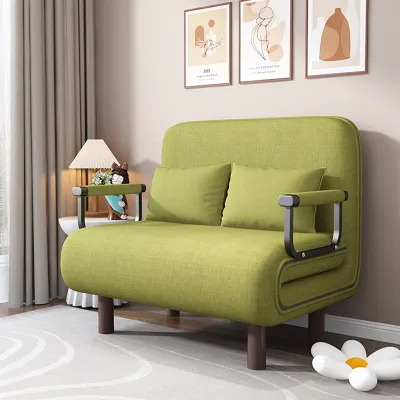

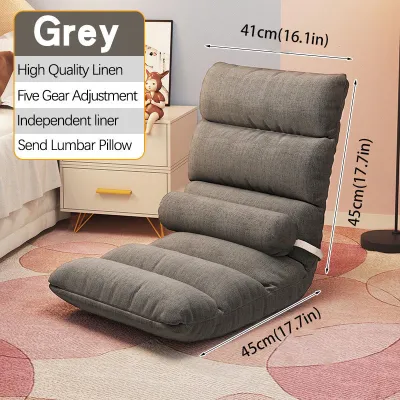
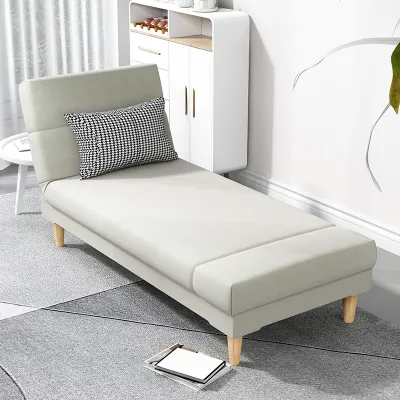
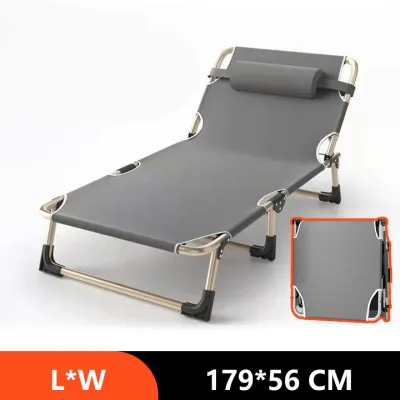


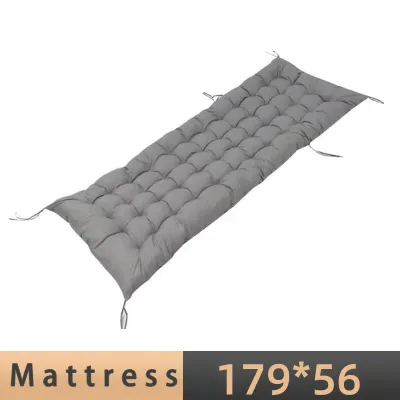
Prices are valid at publication and may change. Please refer to the product page for the latest price.
Opting for a folding lazy sofa bed offers distinct spatial advantages over traditional, heavy-framed sleeper sofas. These models are typically frameless, low-profile, and sit directly on the floor. By eliminating bulky wooden armrests, thick metal pull-out mechanisms, and high backrests, they reduce visual weight. This low-profile design allows more natural light to circulate and keeps sightlines open, making your ceiling appear higher and the entire room feel more spacious.
Measuring Your Living Room and Traffic Flow
Before browsing online marketplaces or visiting local showrooms, you must establish the exact physical boundaries of your living zone. A common mistake is relying solely on the total floor area listed on your condo’s floor plan. Real-world layouts include structural columns, protruding pillars, wall skirting, and built-in fixtures like kitchen counters or entryway closets that significantly reduce your actual usable footprint.

To map your space accurately, use a steel measuring tape to record the length and width of the specific corner or wall where you plan to place the sofa. Draw a simple sketch of the room to map out primary and secondary walkways. Mark the paths you walk most frequently throughout the day. For instance, ensure the path from the main living area to the bathroom or kitchen remains completely unobstructed, even when the sofa bed is fully extended.
Additionally, account for physical swing clearances. Measure the swing radius of your entry door, bedroom doors, and bathroom doors to ensure they will not strike the sofa. Pay close attention to balcony sliding doors and window openings. If your sofa bed sits too close to a sliding track, it can block access to your outdoor space or prevent you from opening windows for ventilation. Don’t forget to check the height and placement of electrical outlets, light switches, and internet ports along the wall, as blocking them with a heavy piece of furniture creates long-term daily inconveniences.
Finally, measure your condo building’s access points. A sofa bed might fit perfectly in your living room, but it must first get there. Check the dimensions of the building’s service elevator, narrow hallway corners, and your unit’s front doorway. Frameless folding lazy sofa beds are often easier to maneuver through tight spaces because they can flex slightly, but verifying these entry clearances beforehand prevents delivery day complications.
Evaluating Folding Lazy Sofa Bed Dimensions
When shopping for a folding lazy sofa bed, you must evaluate two distinct sets of dimensions: the folded seating configuration and the fully unfolded sleeping layout. Balancing these two footprints is key to maintaining a proportional and functional living room.
First, compare the folded depth and width against your available wall space. A standard compact two-seater lazy sofa bed typically measures between 120 and 150 centimeters in width. If your designated wall is 200 centimeters wide, a 120-centimeter sofa leaves a comfortable 40 centimeters on either side for a small side table or a floor lamp. The folded depth should ideally remain under 85 centimeters. Anything deeper will push the seating too far into the center of the room, narrowing your main walkway.
Second, calculate the fully unfolded length. Most folding sofa beds extend to a length of 180 to 190 centimeters when laid flat. You must verify that this extended length does not collide with your television console, media cabinet, or opposite wall. If your living room’s total width from the sofa wall to the TV wall is 240 centimeters, a 190-centimeter unfolded bed leaves only 50 centimeters of clearance. While tight, this is manageable for temporary sleeping arrangements, provided no permanent furniture blocks the remaining path.
Lastly, assess the visual dimensions of the piece. Look closely at the cushion thickness, backrest height, and armrest bulk. In a 20 square meter condo, heavy, overstuffed cushions and thick, wide armrests create visual clutter. Choosing an armless design or a model with thin, streamlined fabric armrests maximizes the actual seating area while keeping the overall footprint minimal. A lower backrest height (around 60 to 70 centimeters) also helps maintain an unobstructed view across the room, preserving a sense of openness.
Layout Strategies to Prevent a Cramped Feel
How you position your furniture is just as important as its physical dimensions. In a compact condo, smart layout strategies can make a small room feel significantly larger and more organized.
For most rectangular or square living rooms, a wall-hugging placement is the most efficient choice. Placing the back of the folding lazy sofa bed directly against the longest solid wall opens up the center of the room, maximizing floor space for daily activities. However, if you live in a long, narrow studio-style condo, you might consider a floating placement. Positioning the sofa bed perpendicular to the wall can serve as a functional zone divider, separating the living/sleeping area from the kitchen or dining space without the need for solid walls.
To complement your sofa bed, pair it with highly adaptable, space-saving furniture. Avoid heavy, solid-base coffee tables that are difficult to move. Instead, opt for lightweight nesting tables that can be stacked together when not in use, or a foldable coffee table that can be tucked away when you need to unfold the bed. Round or oval tables are excellent choices because their lack of sharp corners makes navigating tight spaces much easier and safer.
Maintaining visual balance is the final step in preventing a cramped atmosphere. Keep the surrounding decor minimal and intentional. Instead of cluttering the floor with storage bins or wide cabinets, utilize vertical space. Install floating shelves or tall, narrow bookcases that draw the eye upward, emphasizing the room’s height rather than its limited floor area. Choose light, neutral colors for your sofa bed upholstery—such as soft grays, beige, or cream—which reflect natural light and blend seamlessly with light-colored condo walls.
Common Sizing and Clearance Mistakes
Avoiding common spatial planning mistakes can save you from purchasing a sofa bed that is either unusable or makes your condo feel claustrophobic.
The most frequent error is focusing solely on the folded seating dimensions and neglecting the fully unfolded sleeping footprint. Many buyers assume that if the sofa fits nicely against the wall, it will function perfectly as a bed. However, once unfolded, the bed may block the path to the bathroom, prevent the balcony door from opening, or press tightly against the TV console. To avoid this, use painter’s tape to outline both the folded and unfolded footprints on your living room floor before making a purchase.
Another critical mistake is blocking essential utility access points. Ensure that the unfolded bed does not sit directly beneath a low-hanging split-type air conditioning unit, where cold drafts or potential water drips could cause discomfort. Additionally, verify that the sofa does not block access to electrical outlets, internet routers, light switches, or your condo’s main electrical panel. Keeping these utilities accessible is vital for safety and daily convenience.
Finally, avoid choosing a sofa bed with excessively deep seats or an overly high backrest. While deep seating may seem comfortable, it pushes the entire unit forward, eating into valuable walkway space. A high backrest can block natural light coming from your windows or balcony doors, casting shadows and making the ceiling feel lower. Stick to low-profile, streamlined designs that respect the scale of a 20 square meter home.
Frequently Asked Questions (FAQ)
Can a folding lazy sofa bed fit in a studio condo?
Yes, a folding lazy sofa bed is highly suitable for studio condos due to its frameless, floor-level design. Because it lacks a heavy wooden or metal frame, it can be easily folded up during the day to free up floor space for work, exercise, or dining, and unfolded at night for sleeping. To ensure it does not overwhelm the studio, choose a model that serves as your primary seating and position it against the longest wall, keeping it clear of the kitchen and entryway zones.
How much clearance is needed to unfold a lazy sofa bed?
You generally need an expansion path equal to the fully unfolded length of the bed (typically 180 to 190 centimeters) plus at least 45 to 50 centimeters of clearance at the foot of the bed for basic movement. Before unfolding, ensure that lightweight furniture like coffee tables or side chairs can be easily moved out of the folding path without blocking other walkways.
What is the best material for a sofa bed in a humid condo?
In humid tropical climates, look for breathable, moisture-resistant fabrics. Check the manufacturer’s care labels for materials like high-density polyester blends or treated canvas, which resist moisture absorption better than heavy velvet or synthetic leather. Removable, washable covers are highly recommended, as they allow you to clean and air out the fabric regularly to prevent musty odors and mold growth.
Community discussion
Share your experience or ask a question. Comments are reviewed before publication.