
When designing a cozy outdoor retreat on a small condominium balcony, selecting the right furniture requires balancing comfort, utility, and spatial limits. For most typical Philippine condo balconies—which often range from a compact 2 to 4 square meters—the most functional folding table with storage is one that measures 24 to 30 inches wide and 12 to 18 inches deep for an intimate setup, or 36 to 48 inches wide for an extended bar or dining layout. Choosing the correct size ensures you can comfortably enjoy your morning coffee or evening drinks without blocking essential pathways or crowding out your favorite lounge chairs.
In high-rise developments across Metro Manila and other urban hubs, the balcony serves as a vital breath of fresh air. However, these spaces are frequently narrow and must accommodate multiple functions, from housing air conditioning condensers to serving as a laundry drying area. Introducing a folding table with storage can transform this underutilized zone into a functional lounge, provided you carefully match the table’s physical dimensions to your balcony’s layout. By understanding how to measure your space, evaluate storage configurations, and select the right folding mechanism, you can create a seamless outdoor extension of your living room.
Assessing Your Balcony Space and Clearance Needs
Before browsing online catalogs or visiting furniture showrooms, you must establish the exact baseline measurements of your balcony. Do not rely on general floor plans provided by your developer, as these often omit structural columns, drainage pipes, or the protruding frames of sliding doors. Grab a tape measure and map out the actual usable floor area.
Products mentioned in this guide
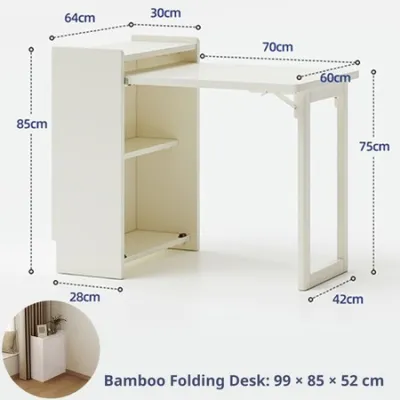
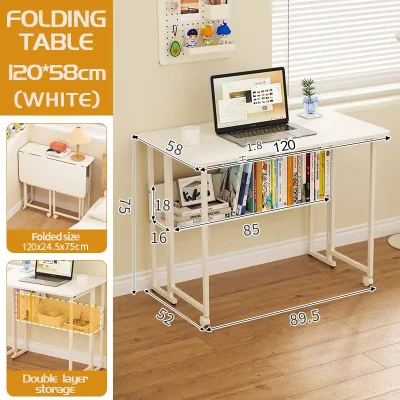
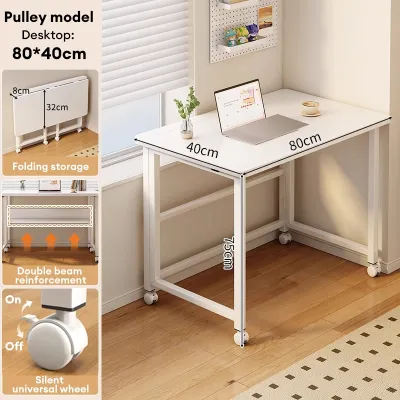
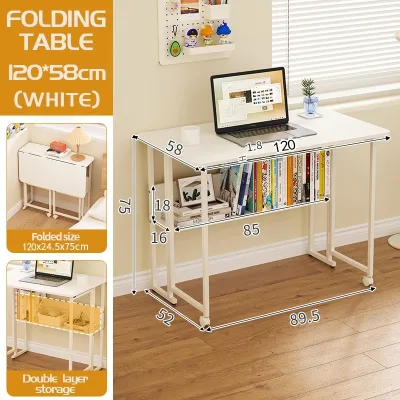
![Adjustable 2 layers Liftable Laptop Bed Desk Multifunction storage and wheels Foldable Multifunction dining table [80x40cm] sc-11](https://img.lazcdn.com/g/p/338c5963ef9d20e852ee510bf2aec02b.jpg_400x400q80.jpg_.webp)
Prices are valid at publication and may change. Please refer to the product page for the latest price.
First, measure the total length and width of the balcony floor. From this total, subtract the footprint of any permanent fixtures. This includes air conditioning condenser units, wall-mounted utility cages, large planters, and any existing lounge chairs or outdoor rugs you plan to keep. What remains is your true “active floor area” where a new table can sit.
Next, account for the operational clearance of doors and windows. Measure the swing radius of your balcony sliding door, screen door, or any nearby storage cabinets. A table placed too close to a swinging screen door will inevitably lead to frustrating collisions and potential damage to both the furniture and the door frame. If you have a sliding door, ensure the table does not overlap with the opening side, which would restrict your physical entry and exit.
You must also evaluate the balcony railing. Note the railing’s height, depth, and the presence of any structural lip or concrete curb at the base. If you plan to push your folding table flush against the railing or explore railing-mounted designs, these structural elements will dictate how close the table can sit to the edge. A pronounced concrete curb, for example, might prevent a freestanding table from sitting flush, forcing it several inches inward and eating into your valuable floor space.
Finally, map out a clear, unobstructed walking path. For a balcony to feel like a relaxing lounge rather than a cramped storage closet, you must maintain a walking corridor of at least 24 to 30 inches. This clearance allows you to move safely around your furniture, water plants, or access utility areas without having to squeeze sideways or climb over chairs. In the event of an emergency, keeping this pathway completely clear is also a critical safety requirement for rapid egress.
Ideal Dimensions for Balcony Folding Tables with Storage
Selecting the perfect dimensions for your folding table with storage depends heavily on how you intend to use your balcony lounge and how many people you plan to accommodate regularly. The table must scale proportionally with your seating to maintain a balanced, visually appealing layout.

Compact Sizes for Intimate Lounging (24 to 30 Inches Wide)
For narrow, linear balconies typical of studio and one-bedroom condo units, tables measuring 24 to 30 inches in width are the gold standard. These compact dimensions are tailored specifically for 1-to-2-person setups where maximizing the remaining floor space for comfortable, reclining lounge chairs is the primary goal. A table of this size provides just enough surface area to hold two coffee mugs, a small plate of snacks, and a book or tablet, without dominating the balcony’s visual profile.
Storage options in this compact category are designed to be highly efficient and lightweight. You will typically find tables equipped with a single lower shelf, side-mounted hooks for hanging utensils, or a shallow hidden compartment directly beneath the tabletop. This minimalist approach to storage keeps the overall weight of the table low, making it easy to fold and move when needed.
When selecting a compact table, pay close attention to its depth, which is the front-to-back measurement. A depth of 12 to 16 inches is ideal. Anything deeper can severely restrict legroom, especially if you are pairing the table with low-profile, deep-seated lounge chairs. Ensure that when you are seated, there is still comfortable clearance between your knees and the table’s edge or its lower storage shelf.
Extended Sizes for Entertaining or Bar Setups (36 to 48 Inches Wide)
If you have a slightly wider balcony, such as those found in corner units or two-bedroom condos, you can consider an extended table measuring 36 to 48 inches in width. This size range is perfect if you want your balcony to function as a dedicated outdoor bar or a casual dining spot for entertaining guests. The broader surface allows you to set down multiple serving platters, a small ice bucket, or a laptop if you enjoy working outdoors.
With the increased width comes significantly more robust storage capacity. Tables in this category often feature deeper multi-tier shelves, side racks for bottles, or integrated hanging racks for wine glasses. While these features add immense utility, they also increase the physical bulk and weight of the furniture piece, making it a more permanent fixture on your balcony.
Because of their size, wider tables require careful, strategic placement to avoid disrupting the flow of traffic. Positioning a 48-inch table directly parallel to a narrow railing can block the entire length of the balcony. Instead, these tables are often best positioned perpendicular to the railing, or centered in a wider alcove. This layout requires a more generous floor plan to ensure the table remains fully functional and accessible from all sides when unfolded.
Balancing Storage Capacity with Table Footprint
A common pitfall when shopping for a folding table with storage is focusing solely on storage capacity while ignoring how that storage impacts the table’s physical footprint. While it is tempting to choose a model with multiple shelves, deep drawers, and side pockets to hide away gardening tools or outdoor cushions, every added storage feature comes with a spatial trade-off.
Compare how different storage configurations affect the table’s utility. Lower shelving is excellent for placing potted plants or heavy items that lower the table’s center of gravity. Side-mounted racks and integrated hooks are highly space-efficient because they utilize vertical space without adding to the table’s depth. Hidden top compartments offer a clean, clutter-free look but can limit the table’s folding capabilities.
Consider the physical weight of the unit. A folding table with storage constructed with heavy-duty shelving and thick framing will weigh substantially more than a basic folding table. If you plan to fold and store the table frequently—such as during heavy tropical downpours or when you need to clear the floor for other activities—a heavy, bulky table can quickly become a chore to handle, especially for a single person.
The most critical, yet frequently overlooked, measurement is the “folded footprint.” This refers to the total thickness and dimensions of the table when it is fully collapsed. While a standard folding table might fold down to a slim 2 inches, a model with fixed lower shelves, storage bins, or protruding side racks might still measure 6 to 10 inches in thickness even when folded. This added bulk makes it much harder to slide the table under a bed, tuck it into a narrow utility closet, or store it discreetly behind a large planter on the balcony.
If you plan to stow your table away frequently to protect it from the elements or to free up floor space for hosting larger gatherings, prioritize tables with removable or collapsible storage accessories. Models with clip-on side baskets, detachable canvas storage bags, or folding lower shelves allow you to strip the table down to an ultra-slim profile before collapsing it, giving you the best of both worlds: maximum storage when open, and minimal footprint when closed.
Space-Saving Folding Mechanisms for Small Balconies
The mechanism by which your table folds plays a massive role in how adaptable your balcony lounge remains. Different folding designs cater to different lifestyles and space constraints, so it is important to choose one that aligns with your daily routine.
Drop-leaf designs are exceptionally popular for small balconies because they offer a highly flexible middle ground. These tables feature one or two hinged panels (leaves) that can be folded down when not in use, effectively halving the tabletop surface while keeping the central base and lower storage shelves fully intact. This allows you to keep a slim, low-profile console table against the wall for daily use, which can then be quickly expanded into a full-sized dining or bar table when you have guests over.
Fully collapsible tables are the best choice if you need to completely clear your balcony floor on a regular basis. Whether you use your balcony for morning yoga, home workouts, or simply want to keep the space entirely open when the weather is bad, a fully collapsible table can be folded completely flat. The legs fold up into the underside of the tabletop, allowing you to store the entire unit indoors or in a protected corner of your condo.
For balconies with absolute premium floor space, wall-mounted folding tables with built-in storage compartments are an outstanding alternative. These tables mount directly to the balcony wall or parapet. When folded up, they look like a slim wall cabinet, with the interior shelves serving as storage for small items. When folded down, the cabinet door or front panel becomes your tabletop. While they free up 100% of your floor space, they do require structural installation. You must verify your balcony wall material—whether it is solid concrete, hollow blocks, or exterior cladding—and ensure it can support both the weight of the table and the items placed on it.
Regardless of the mechanism you choose, always inspect the quality and stability of the folding joints and hinges. Tables that incorporate complex storage features often have more moving parts, hinges, and locking pins. Over time, exposure to outdoor elements can cause these joints to loosen or stiffen. Opt for models with sturdy, rust-resistant hardware, and be prepared to perform periodic tightening and maintenance to keep the table stable and safe.
Common Sizing and Placement Mistakes to Avoid
To ensure your balcony lounge remains a safe, comfortable, and functional space, avoid these common design and placement errors:
- Ignoring the center of gravity: Tables with deep upper storage compartments or heavy overhead racks can become top-heavy. During the Philippine typhoon season or periods of strong monsoon winds (Habagat), a top-heavy table can easily tip over, potentially shattering glass doors, damaging other furniture, or posing a severe safety hazard to anyone nearby. Ensure your table is bottom-heavy, or secure it to the floor or railing.
- Measuring only the unfolded dimensions: Many condo residents purchase a folding table only to find that the boxed unit cannot fit through their condo unit's main door, narrow hallways, or the building's elevator during delivery. Always check the packaged shipping dimensions and your building's elevator clearance before finalizing a purchase.
- Placing lower storage shelves in water-pooling zones: If your balcony floor is uneven or has a slow-draining outlet, rainwater can pool in certain areas. Placing a table with low-slung, non-removable storage shelves directly in these zones will trap moisture, leading to mold, rust, or wood rot on the bottom shelf and ruining any items stored there.
- Choosing dark, heat-absorbing materials for unshaded spots: Metal or dark plastic tables placed in direct, unshaded Philippine sunlight can reach extremely high temperatures. Not only does this make the tabletop uncomfortable to touch, but it also turns the enclosed storage compartments into miniature ovens, making them unsafe for storing items like candles, electronic accessories, or sunscreens.
Frequently Asked Questions (FAQ)
How do I protect a folding table with storage from humidity and rain?
Always check the manufacturer’s care label for specific outdoor, moisture-resistant, or UV-protected ratings rather than assuming a material is naturally weatherproof. For tropical climates like the Philippines, look for powder-coated metals, treated teak, or high-density polyethylene (HDPE). To maximize longevity, use a breathable, weatherproof cover when the table is not in use, or bring fully collapsible tables indoors during heavy monsoon rains. Avoid leaving items in enclosed storage compartments for extended periods, as trapped humidity can quickly promote mold and mildew growth.
Do I need permission to install a wall-mounted folding table in a condo?
Yes, you should always consult your condominium corporation’s property management office (PMO) or review the building’s house rules before installing a wall-mounted table. Most condo associations have strict guidelines prohibiting drilling into exterior walls, balcony parapets, or structural columns, as this can compromise the building’s waterproofing, structural integrity, or uniform aesthetic. If drilling is strictly prohibited, you must rely on freestanding folding tables or temporary, non-damaging railing-mounted tables that hang securely over the balcony rail without permanent fasteners.
Community discussion
Share your experience or ask a question. Comments are reviewed before publication.