
Finding the right kids sofa chair with foam involves looking beyond simple age brackets to your child’s physical measurements. While age serves as a helpful starting point, a child’s height, leg length, and weight are the true determinants of ergonomic comfort and support.
The primary diagnostic check for proper seating is simple: when your child sits back in the chair, their feet must rest flat on the floor, and their knees should form a comfortable, roughly 90-degree angle. The seat’s front edge should never press tightly against the back of their knees.
Selecting the wrong size can lead to poor posture, discomfort, and a chair that quickly becomes unused clutter in your play area. This guide explains how to measure your child, interpret product dimensions, and account for how foam compresses under weight, ensuring you find a durable, supportive seat for your home.
Products mentioned in this guide
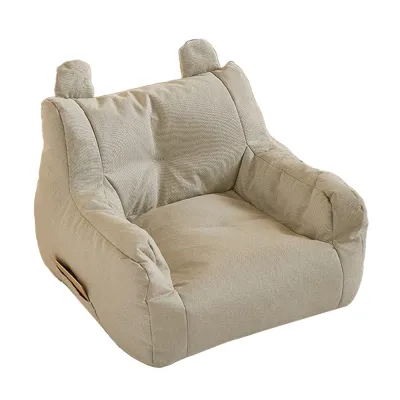
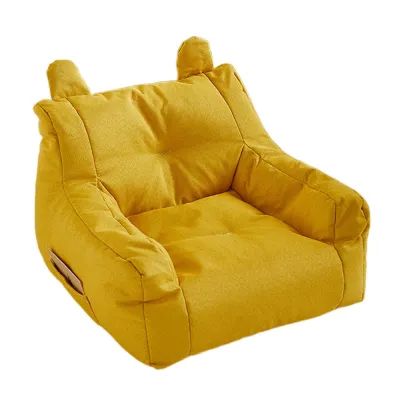
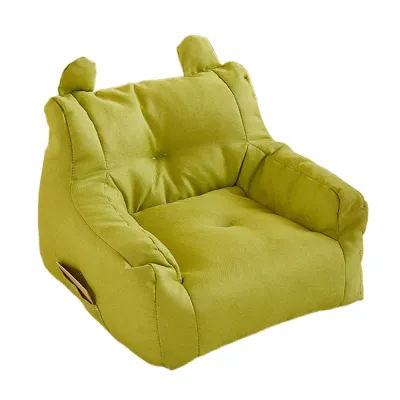
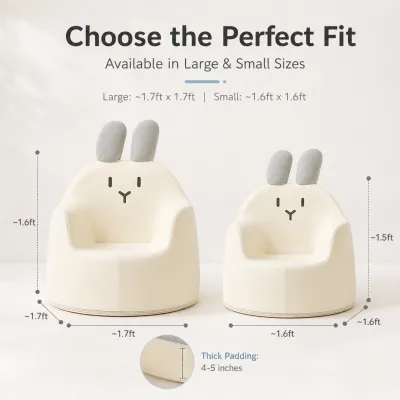
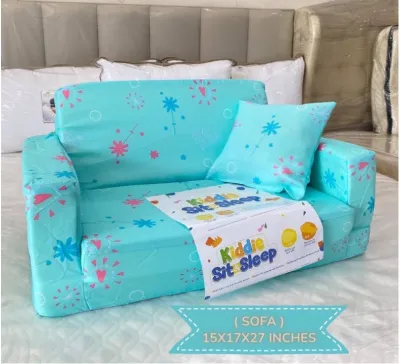
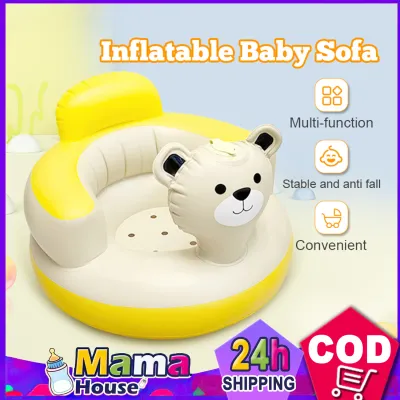
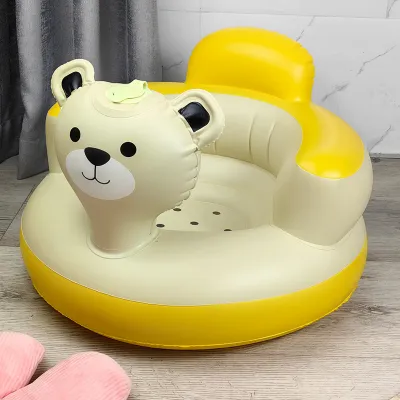
Prices are valid at publication and may change. Please refer to the product page for the latest price.
Which Chair Measurements Actually Matter for Comfort?
Standard furniture listings often display overall product dimensions, but these outer measurements do not tell you how a child will actually sit. To find a kids sofa chair with foam that offers genuine comfort, you must focus on the internal seating area dimensions.
When planning a reading corner or play area, the physical footprint of the furniture is just as critical as its internal seating measurements. Before purchasing, measure the available floor space in your child’s room to ensure the chair does not block walkways or closet doors. Additionally, check doorway and hallway widths to guarantee the chair can be easily brought into your home, especially if you are opting for a fully assembled, non-folding modular foam sofa. While lightweight foam is easy to lift and maneuver, a bulky design can still present spatial challenges in compact urban homes.
Stability is another key factor to verify. Look for a kids sofa chair with foam that features a wide, low-profile base. This layout prevents the chair from tipping over when a child leans heavily over the armrests or climbs onto the seat. If the chair is designed to sit against a wall, ensure it has a non-slip bottom fabric to keep it from sliding across smooth tile or wooden floors during active use.
Seat Height and Leg Length
To determine the ideal seat height, measure your child’s lower leg length while they sit in a standard chair. Run a tape measure from the bottom of their heel up to the crease behind their knee. This gives you the maximum seat height your child can comfortably use without their legs dangling. A proper fit ensures their weight is evenly distributed across the thighs and buttocks, reducing fatigue during longer sitting sessions.
The chair’s compressed seat height should be slightly lower than this measurement. This small difference ensures your child’s feet can plant firmly on the ground, which stabilizes their pelvis and supports their developing spine.
When feet dangle, gravity pulls the legs down, placing uncomfortable pressure on the back of the thighs and restricting blood flow. Conversely, a seat that is too low forces the knees higher than the hips, tilting the pelvis backward and forcing the child to slouch.
Seat Depth and Thigh Support
Seat depth measures the distance from the front edge of the seat cushion to the backrest. For optimal support, this depth must align with the length of your child’s thighs.
When your child sits all the way back, there should be a small gap—approximately the width of two fingers—between the back of their knees and the front edge of the seat. Anatomically, this area is known as the popliteal space.
If the seat is too deep, the front edge will press into this sensitive area, causing discomfort and poor circulation. To escape this pressure, children naturally slide their hips forward, which removes all lumbar support and bends the spine into an unhealthy curve. This issue is particularly pronounced in soft foam chairs, where sliding forward causes the material to sag unevenly.
Backrest Height and Overall Width
A supportive backrest should extend at least to the mid-to-upper back of the child. This height provides adequate support during activities like reading or watching educational programs, preventing neck strain.
The width of the seat should accommodate your child’s natural movements, allowing them to shift positions without feeling restricted. For reading corners, a slightly wider seat can be beneficial, as it allows the child to curl up with a book or snuggle with a favorite stuffed toy. However, ensure the armrests remain close enough to provide comfortable elbow support, which helps relax the neck and shoulder muscles.
How Density Changes Sizing for a Kids Sofa Chair with Foam
Unlike solid wood or rigid plastic chairs, a kids sofa chair with foam is dynamic, meaning its dimensions change the moment a child sits down. This physical change is known as foam sinkage or compression, and it directly impacts the chair’s effective seat height and depth.

For example, a foam chair with a listed, uncompressed seat height of 12 inches may easily compress to 9 or 10 inches under the weight of a toddler. If you do not account for this compression, you may purchase a chair that sits much lower to the ground than intended, causing your child’s knees to bend at an awkward upward angle.
To prevent this, parents should pay close attention to the density of the foam used in the construction. High-density polyurethane foam offers superior structural integrity, maintaining its supportive angles and height even under continuous use.
When evaluating foam density, look for polyurethane foam with a high density rating. High-density foam contains more material per cubic foot, which translates to better support, greater resilience, and longer product life. This is particularly important for children’s furniture, which is subjected to jumping, climbing, and rough play. Low-density foam may feel soft and plush initially, but it quickly degrades, losing its shape and leaving your child sitting directly on the hard floor frame.
In tropical climates like the Philippines, high humidity can affect the performance and longevity of certain foam materials. Excess moisture in the air can cause low-quality foam to soften and lose its resilience more rapidly. To protect your investment, look for foam chairs that feature breathable, moisture-wicking inner liners and removable, washable outer covers. These covers not only make cleaning spills easier but also protect the inner foam core from sweat and ambient humidity, ensuring the chair maintains its supportive dimensions for years.
Additionally, consider the assembly conditions of your furniture. Many foam chairs are shipped vacuum-packed to save space. Upon arrival, they require anywhere from 24 to 72 hours to fully expand and reach their true finished dimensions and load capacity. Placing a child on the chair before the foam has fully decompressed can permanently damage the cellular structure, leading to premature sagging and incorrect seat height.
Recommended Proportions and Fit Checks by Age Group
Children grow at highly individual rates, making rigid age-to-dimension charts unreliable on their own. However, grouping children by developmental stages allows you to target specific proportions and perform observable fit checks during use.
Toddlers (Ages 1 to 3)
For toddlers, safety and ease of access are the primary design priorities. Look for foam chairs with a very low seat height, often just 5 to 7 inches off the floor, which allows young children to climb in and out independently without risk of tipping.
A low center of gravity is essential for this age group, as toddlers frequently shift weight, lean over the sides, or sit cross-legged. A wide, shallow seat base accommodates these active, varied play positions while ensuring that any accidental roll-offs result in a harmless, short step to the floor.
Safety is paramount during the toddler years, as children are still developing their balance and coordination. A foam chair for this age group should have a very low profile, keeping their center of gravity close to the ground. This minimizes the risk of injury from accidental falls if they roll or climb over the sides. Look for designs with rounded edges and soft, fabric-covered zippers to prevent scratches and scrapes.
Toddlers also benefit from highly stable, modular foam pieces that can be configured in multiple ways. These multi-functional designs allow the chair to transform from a standard seat into a flat play mat, providing a safe, cushioned surface for active floor play. When selecting a modular design, verify that the individual pieces connect securely to prevent sliding or separating while your child is climbing on them.
Preschoolers (Ages 4 to 5)
As children reach preschool age, they begin to spend more time engaged in focused activities like looking at picture books, drawing, or playing with tablet devices. This transition requires a slightly higher, more structured seat, typically ranging from 8 to 10 inches.
At this stage, a more defined backrest is crucial to help encourage healthy, upright sitting habits. The chair should support the lower and mid-back, preventing the slouching that often occurs when children sit on soft, unsupportive cushions.
The preschool years are an excellent time to introduce a dedicated reading corner or quiet play space in your home. Setting up a cozy nook with a kids sofa chair with foam, a small bookshelf, and soft lighting can encourage a love for books and independent play. For this setup, choose a chair with a supportive, upright backrest that helps your child maintain a comfortable posture while turning pages or coloring.
At this stage, children are also growing rapidly, so look for a chair that offers a bit of room to grow without being overwhelmingly large. A seat height of 8 to 10 inches is usually ideal, providing a comfortable transition from toddler-sized furniture. Ensure the outer fabric is durable and easy to spot-clean, as preschool activities often involve crayons, markers, and snacks.
When testing the fit, check the alignment of the armrests if the chair has them. The armrests should support the child’s elbows naturally; if their shoulders are pushed upward toward their ears, the armrests are too high, which can cause neck tension.
School-Age Kids (Ages 6 to 9)
School-age children require larger seating options to accommodate their rapidly growing limbs and longer lounging sessions. For this group, look for seat heights between 11 and 13 inches, coupled with a deeper seat cushion to support longer thighs.
The backrest must be tall enough to support the upper back, especially during extended reading or gaming sessions. This prevents the child from having to crane their neck forward to see their book or screen.
For school-age children, a foam chair often becomes a favorite spot for relaxing after school, reading longer chapter books, or playing hand-held video games. Because they spend more time sitting in one place, ergonomic support becomes increasingly important. Look for a chair with a contoured seat and a high backrest that supports the natural curves of their spine.
Since school-age kids are highly active, the chair must be durable enough to withstand frequent shifts in position. A wider seat allows them to sit cross-legged or lounge sideways, which helps prevent stiffness during extended use. Check the manufacturer’s load capacity guidelines to ensure the foam can support your child’s increasing weight without bottoming out or losing its shape.
Pre-Teens (Ages 10 and Up)
By the time children reach age ten, standard kids’ foam furniture is generally too small, restricting shoulder width and offering inadequate leg support. Continuing to use an undersized chair can cause joint discomfort and poor posture.
At this stage, it is time to transition to oversized youth foam loungers, modular foam chairs, or small adult accent chairs. These options offer the casual, relaxed feel of foam while providing the deeper seat and higher backrest needed for a larger frame.
As children enter their pre-teen years, their furniture needs shift toward more mature, adult-like designs. Standard kids’ foam chairs will feel cramped and uncomfortable, leading to poor sitting posture. Instead, look for oversized foam loungers, bean bag chairs with structured foam cores, or modular lounge seating that fits their larger frames.
These transitional pieces should offer a deeper seat and a taller backrest to support their longer limbs and torso. They also serve as stylish additions to a pre-teen’s bedroom or study area, providing a comfortable spot for studying, chatting with friends, or relaxing. When choosing a chair for this age group, involve your child in the selection process to ensure the design and color match their personal style while meeting your standards for quality and support.
4 Signs Your Child Has Outgrown Their Foam Chair
Regularly evaluating your child’s seating posture prevents discomfort and protects their physical development. Watch for these four clear diagnostic signs that indicate it is time to upgrade or repurpose their current foam chair:
- Knee-to-Chest Cramping: If your child's knees sit significantly higher than their hips when seated, the chair has become too low. This position places excessive pressure on the tailbone and lower back.
- Calf Pressure: When the front edge of the seat cushion presses tightly against the back of your child's calves, the seat depth is no longer proportioned correctly for their thigh length. This pressure can restrict circulation and cause numbness.
- Shoulder Spillage: If your child's shoulders spill over narrow armrests, or if the backrest no longer reaches at least the middle of their back, the chair is too small to provide adequate upper-body support.
- Foam Bottoming Out: If the foam cushion compresses completely to the floor or base frame under your child's weight, the material can no longer support their mass. This means the chair has lost its ergonomic utility and should be replaced.
Frequently Asked Questions (FAQ)
Can a foam sofa chair be too big for a toddler?
Yes, an oversized chair poses safety and postural risks. A toddler sitting in a chair that is too deep will slide forward to bend their knees, slouching their spine and losing all back support. Furthermore, oversized foam structures often encourage toddlers to use them as unstable climbing toys, increasing the risk of falls.
How do I measure my child for a custom or handmade foam chair?
To get accurate measurements, have your child sit upright on a flat, firm surface with their knees bent at a 90-degree angle. First, measure from the floor to the crease behind their knee to find the ideal seat height. Next, measure from the back of their buttocks to the back of their knee for the seat depth. Finally, measure the distance across their shoulders to determine the minimum backrest width.
Community discussion
Share your experience or ask a question. Comments are reviewed before publication.