
Finding the perfect storage solution for your footwear often leads to utilizing the unused floor space at the bottom of your wardrobe. However, placing a shoe rack inside an active closet requires careful spatial planning to prevent your shoes from wrinkling, staining, or blocking your hanging clothes. To achieve a seamless fit, the ideal shoe rack should generally stand no higher than 30 to 45 centimeters, with a depth of 30 to 35 centimeters, depending on your wardrobe’s internal footprint and the length of your hanging garments.
By taking precise measurements of your wardrobe’s interior and calculating the clearance of your longest clothes, you can select a storage unit that maximizes floor space while keeping your wardrobe organized and functional.
Measuring Your Wardrobe and Hanging Garment Clearance
Relying on generic “standard” wardrobe labels is a common misstep that often results in ill-fitting furniture. Wardrobe manufacturers use highly varied internal dimensions, meaning a rack labeled as “compact” or “closet-friendly” might still protrude or stand too tall for your specific setup. To avoid frustrating returns, you must measure the exact internal height, width, and depth of your wardrobe’s hanging compartment using a reliable metal measuring tape.
Products mentioned in this guide
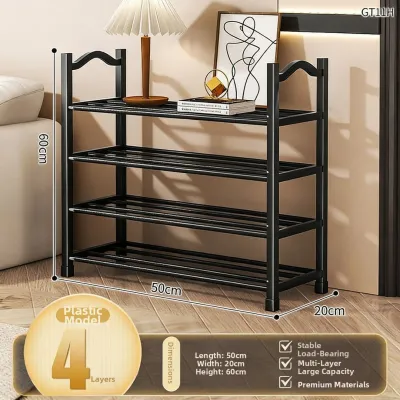
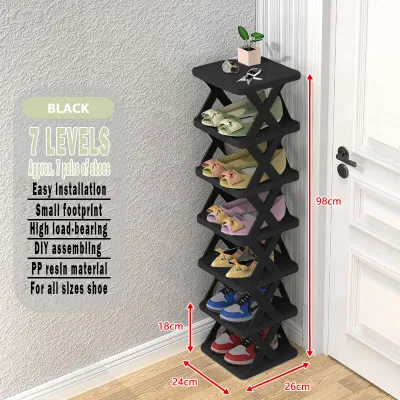
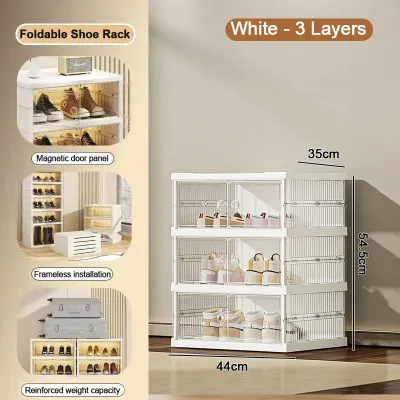
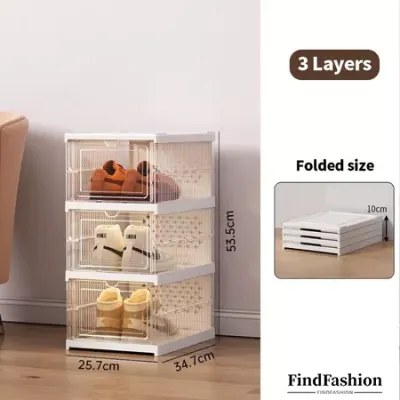
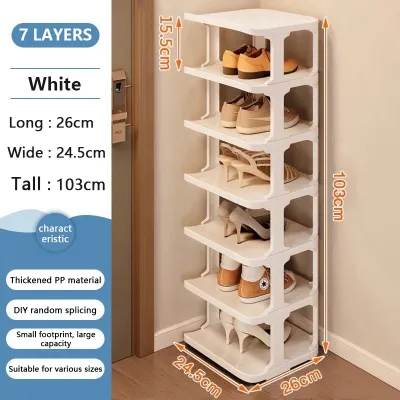
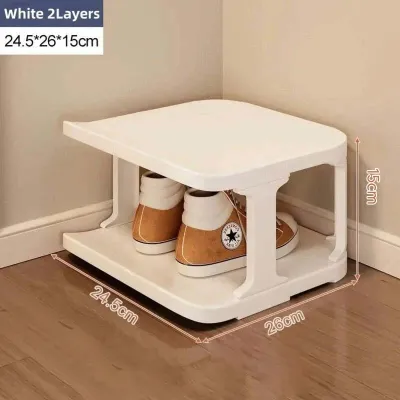
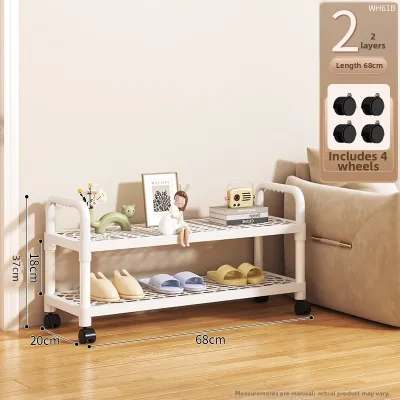
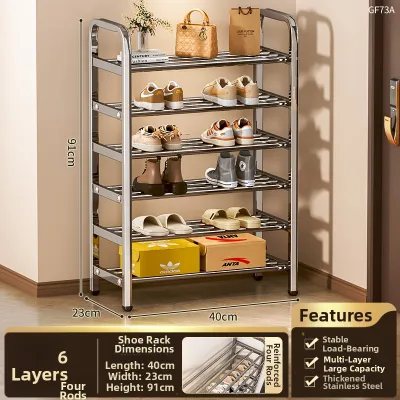
Prices are valid at publication and may change. Please refer to the product page for the latest price.
Most standard wardrobes feature an internal depth ranging between 50 cm and 60 cm for hanging sections. This depth is designed to accommodate standard clothes hangers without the garments brushing against the doors. Because your shoe rack will sit directly on the floor beneath these hangers, this internal depth dictates the absolute maximum depth your shoe rack can have. If your wardrobe has a shallow depth of 50 cm, a shoe rack deeper than 35 cm may force your shoes to press against the closed doors, causing scuffs or preventing the doors from latching.
Next, you must determine the vertical space consumed by your hanging garments. Locate the longest items in your wardrobe, which typically include long dresses, trench coats, trousers hung vertically, or formal wear. Measure these garments from the very top of the hanger hook down to the lowest point of the hem. Do not guess these lengths, as fabrics drape differently when hung, and thick hangers can add several centimeters to the overall drop.
Finally, measure the distance from the top of the hanging rod down to the floor of the wardrobe. This measurement establishes the total vertical canvas you have to work with. By subtracting the length of your longest hanging garments from this total height, you will reveal the remaining open floor space available for your shoe storage unit.
Calculating the Safe Maximum Height for Your Shoe Rack
To find the exact height limit for your new shoe rack, you can use a straightforward, reliable formula. Take the total height of the hanging rod from the floor, subtract the length of your longest hanging garment, and then subtract a safety clearance gap. This calculation ensures that your clothing hangs freely, maintaining its shape and staying clean.

The safety clearance gap should ideally measure between 5 cm and 10 cm. This small but crucial buffer zone prevents the lower hems of your shirts, trousers, or dresses from brushing against the tops of your shoes. Without this gap, dust, leather polish, or dirt from the soles of your footwear can easily transfer to your clean fabrics. Additionally, a clearance gap ensures sufficient air circulation, which helps prevent musty odors from settling into your clothes.
Your footwear collection itself will also influence the necessary shelf spacing and the overall height of the rack. Different styles of shoes require varying vertical clearances:
- Flat footwear: Sandals, slippers, and low-profile sneakers generally require only 10 cm to 12 cm of vertical space per shelf.
- Standard shoes: Casual leather shoes, running shoes, and low heels typically need 12 cm to 15 cm of clearance.
- Boots and high heels: Ankle boots, high-top sneakers, and high heels require 18 cm to 25 cm of vertical space, while tall boots may require up to 40 cm.
If your calculated maximum height only allows for a 35 cm tall rack, you might choose a two-tier design dedicated strictly to flats and low-profile sneakers. For those with diverse shoe collections, adjustable or modular shoe racks offer excellent flexibility. These systems allow you to customize individual shelf heights—such as setting a lower shelf for flat sandals and a taller shelf for boots—while keeping the entire unit strictly within your calculated safe height limit.
Verifying Depth, Width, and Door Swing Constraints
A shoe rack must do more than just fit beneath your clothes; it must also coexist with the physical structure of your wardrobe. Depth constraints are particularly critical. Since standard adult shoes measure between 25 cm and 32 cm in length, a flat shoe rack must be at least 30 cm deep to hold shoes without them overhanging. You must verify that this depth fits comfortably within your wardrobe’s internal depth while leaving enough room for the wardrobe doors to close completely.
Width constraints require similar diligence. Measure the clear internal width of the floor space, making sure to subtract any space occupied by internal dividers, vertical partition panels, or structural support blocks. If your wardrobe has multiple compartments, treat each section as an independent space rather than measuring the wardrobe’s total exterior width.
Door-specific clearances present their own unique challenges depending on your wardrobe’s design:
- Hinged doors: Ensure the shoe rack does not block the door's inward swing or catch on the lower hinges. Heavy-duty hinges often protrude several centimeters into the cabinet space near the floor, which can prevent a wide shoe rack from sitting flush against the side panel.
- Sliding doors: The shoe rack must sit entirely clear of the floor tracks. If the rack is too wide or sits too far forward, it can obstruct the sliding door panels as they glide past, potentially scratching the doors or derailing them from their tracks.
Beyond physical fit, consider daily ergonomics. You must leave enough physical space to comfortably reach down, see, and retrieve your shoes. If the shoe rack is packed too tightly beneath long garments, you will find yourself constantly pushing clothes aside, which can lead to wrinkled fabrics and general frustration during your morning routine.
Common Sizing and Placement Mistakes to Avoid
Even with careful planning, several easily overlooked details can disrupt your wardrobe storage integration. One of the most common mistakes is forgetting to account for the wardrobe’s internal baseboards, bottom trim, or uneven flooring. Many modern wardrobes feature a raised bottom lip or decorative molding along the inner base, which can reduce the actual usable floor width by several centimeters. Always measure the narrowest point of the floor rather than the space midway up the cabinet.
Another frequent error is underestimating the physical bulk of your footwear. Buying a shoe rack based solely on the number of pairs it claims to hold often backfires. For example, a rack designed for ten pairs of delicate flats will struggle to accommodate five pairs of chunky athletic sneakers or wide-soled boots. When selecting a rack, compare the manufacturer’s specified shelf depth and width with the physical dimensions of your widest and bulkiest shoes.
Ignoring the visual and physical clutter factor can also ruin your closet’s organization. Placing a shoe rack too close to the front edge of the wardrobe makes the space feel cramped and restricts your access to the hanging clothes above. If you must use a deeper rack, try to position it slightly offset or choose a model with angled shelves, which reduces the required depth footprint while keeping shoes easily accessible.
Finally, always check the weight capacity of your wardrobe floor. While solid wood or heavy-duty steel shoe racks offer excellent stability, they also add significant dead weight. When fully loaded with multiple pairs of heavy shoes, a robust rack can place immense stress on the wardrobe’s base. This is especially critical for free-standing wardrobes with raised bases or thin MDF floor panels. To prevent bowing, cracking, or structural failure, verify that your wardrobe floor is sturdy enough to support the combined weight of the rack and your footwear, or opt for a lightweight aluminum or plastic modular system.
Managing Footwear Storage in Humid Closet Environments
Enclosing shoes inside a dark, unventilated wardrobe can create serious maintenance challenges, particularly in tropical and highly humid climates like the Philippines. When damp or dirty shoes are placed in a closed closet, they trap moisture and odors. This stagnant environment provides the perfect breeding ground for mold, mildew, and bacteria, which can quickly ruin leather, canvas, and fabric linings while transferring unpleasant smells to your hanging clothes.
To combat moisture buildup, prioritize shoe rack designs that promote maximum airflow. Look for open wire shelves, slatted wooden designs, or breathable mesh tiers rather than solid plastic or solid wood panels. These open structures allow air to circulate freely around the entire shoe, helping dry out residual perspiration and preventing moisture from pooling beneath the soles.
It is important to remember that material names alone, such as “bamboo” or “rust-resistant steel,” do not guarantee long-term mold or moisture resistance. Always check the manufacturer’s care instructions and verify the quality of the protective finish. For wooden racks, ensure the surface is sealed with a moisture-resistant varnish. Most importantly, establish a strict rule to never place wet, damp, or dirty shoes directly onto your wardrobe rack. Allow your footwear to air out completely in a well-ventilated room before storing them away.
To provide additional protection, consider placing moisture-absorbing products on or near your shoe rack. Silica gel packets, activated charcoal bags, or small hanging dehumidifier tubs work exceptionally well in enclosed wardrobe spaces. Always follow the specific product instructions for these absorbers, and replace or regenerate them regularly to maintain a dry, fresh environment for both your footwear and your clothing.
Frequently Asked Questions (FAQ)
Can I use an over-the-door shoe rack inside a wardrobe?
Yes, over-the-door shoe racks can work on the inside of hinged wardrobe doors, provided you have sufficient depth clearance. You must measure the gap between the closed door and your hanging garments; typically, you need at least 15 cm to 20 cm of clear space so the hanging shoes do not crush your clothes or prevent the door from latching closed.
How much clearance should I leave between hanging clothes and the shoe rack?
You should leave a safety clearance gap of at least 5 cm to 10 cm between the lowest hem of your hanging clothes and the top of the shoe rack (or the shoes stored on the top shelf). This buffer prevents dirt and oils from transferring to your clothes and ensures adequate air circulation to prevent mold.
Community discussion
Share your experience or ask a question. Comments are reviewed before publication.