
Finding a vanity drawer with mirror that fits a small bedroom requires balancing tight floor space with daily grooming needs. In typical Philippine homes—ranging from compact studio condominiums in metropolitan areas to cozy townhouse bedrooms—space is at a premium. The ideal dimensions for a compact vanity in these settings are a width of 60 to 80 centimeters and a depth of 30 to 40 centimeters. This narrow profile ensures you do not block essential pathways while still providing adequate tabletop space and storage for your daily essentials.
Choosing the wrong size can quickly make a bedroom feel cramped, block closet doors, or restrict movement around the bed. By focusing on slim profiles, vertical space utilization, and smart seating integration, you can establish a highly functional grooming corner. The key is analyzing your room’s physical layout, understanding clearance zones, and selecting a configuration that matches your specific storage requirements.
Measuring Your Space and Clearance Requirements
Before purchasing a vanity drawer with mirror, you must accurately measure the physical boundaries of your designated bedroom corner. Begin by measuring the width of the clear wall space where the unit will sit, using a metal measuring tape for accuracy. Write down the maximum width available, keeping in mind that the vanity should not overlap with window frames, light switches, or electrical outlets. Next, measure the depth from the wall outward into the room, identifying how far the table can protrude before it interferes with your bed or walking paths.
Products mentioned in this guide
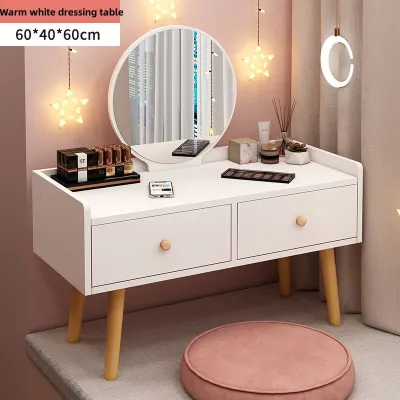
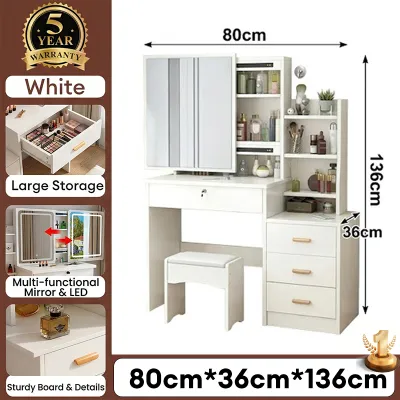
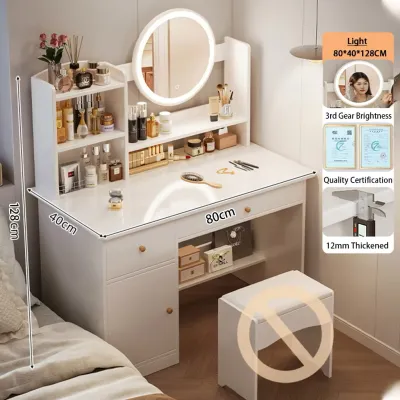
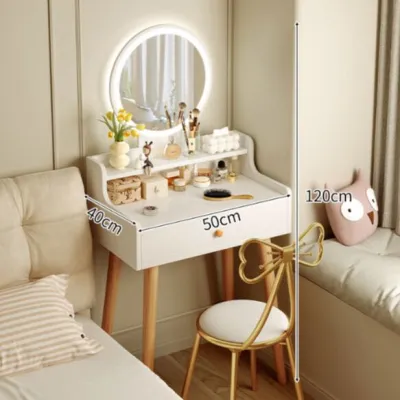
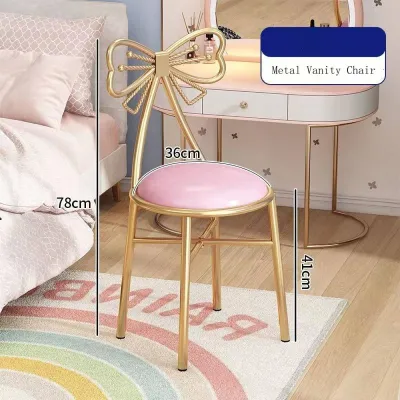
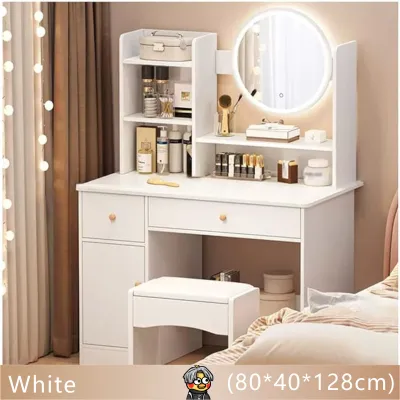
Prices are valid at publication and may change. Please refer to the product page for the latest price.
Clearance is the most critical factor in a small bedroom layout. You must account for the swing radius of all nearby doors, including the main bedroom door, wardrobe doors, and any adjacent bathroom or balcony entries. If you have a built-in closet with swing-out doors, measure the exact distance the doors extend when fully opened. A vanity placed too close to a wardrobe can prevent you from accessing your clothes or lead to accidental collisions with your vanity mirror.
Wall obstructions are frequently overlooked but can ruin a tight installation. Inspect the lower wall for baseboards, which can prevent a standard four-legged vanity from sitting flush against the wall, leaving an awkward gap where small items can fall. Note the location of wall-mounted air conditioning units, window sills, and light switches. Additionally, identify all electrical outlets; you will need easy access to these outlets for hair dryers, straighteners, or vanity mirror lights without forcing cords into tight, hazardous bends behind heavy furniture.
Finally, factor in the footprint of the vanity chair, stool, or ottoman. A vanity setup is incomplete without seating, and that seating requires its own dedicated space. Measure the area needed to pull the chair out, sit down comfortably, and push it back under the table when not in use. If your walkway is narrow, a backless stool that slides completely underneath the vanity tabletop is highly recommended to keep the pathway clear when the vanity is idle.
Ideal Dimensions for a Compact Vanity Drawer with Mirror
Small-space vanities are specifically engineered to prioritize a compact footprint without sacrificing storage capacity or mirror usability. Standard bedroom furniture is often too bulky for modern homes, making specialized compact designs a necessity. By reducing the depth of the tabletop and utilizing vertical space for the mirror and shelving, these units provide a dedicated grooming station that feels light and open rather than heavy and obstructive.

The width of your vanity should be chosen in direct proportion to the available wall length and adjacent furniture. In a room where the bed takes up the majority of the space, a vanity that is too wide will make the layout feel unbalanced and cramped. Selecting a width that leaves at least 15 to 20 centimeters of breathing room between the vanity and adjacent furniture pieces helps maintain a sense of visual order and physical comfort.
Depth is the dimension that most directly impacts room flow and usability. While a deep desk might seem appealing for storage, a deep vanity forces you to sit further back, cutting into valuable walking space. A shallow depth ensures that drawers can open fully without hitting the edge of your bed or wardrobe. It also places the mirror at an ideal distance for close-up grooming tasks like applying skincare or styling hair.
The relationship between table height, stool height, and ergonomic comfort is vital for daily use. Standard vanity tables typically stand between 70 and 76 centimeters tall, which accommodates most standard stools and chairs. When choosing a setup, ensure there is at least 18 to 22 centimeters of clearance between the top of your thighs and the underside of the vanity drawer to allow for comfortable movement while seated.
Width and Depth Guidelines
For exceptionally tight spaces, narrow console-style vanities with a width of 50 to 60 centimeters offer a highly streamlined solution. These ultra-compact units are perfect for placing alongside a bed as a dual-purpose nightstand and grooming station. If your wall space is slightly more generous, a standard compact width of 70 to 80 centimeters is ideal, providing enough tabletop surface for a makeup organizer, a jewelry tray, and a freestanding or attached mirror.
Keep the depth of your vanity strictly within the 30 to 40-centimeter range. Anything deeper than 40 centimeters will likely protrude into the primary walking path of a small bedroom, creating a constant physical obstacle. Ensure that the drawer slides are equipped with smooth, high-quality rollers or soft-close mechanisms; this prevents the drawers from sticking or requiring excessive force to open, which can cause the entire lightweight vanity unit to wobble.
Height and Mirror Placement
The standard height for a vanity tabletop is approximately 75 centimeters from the floor. This height aligns perfectly with standard seating and allows your arms to rest comfortably while applying makeup or styling your hair. When evaluating height, also consider the vertical clearance of the mirror, especially if the vanity features an attached, tall mirror frame.
In small bedrooms, choosing the right mirror style can dramatically alter the perception of space. A wall-mounted mirror or a tri-fold mirror that can be folded flat when not in use is excellent for saving vertical space and maintaining clean sightlines. Wall-mounted mirrors are particularly advantageous because they do not rest on the tabletop, freeing up the entire surface of your vanity for cosmetics and grooming tools while preventing the room from looking cluttered.
Space-Saving Configurations for Small Bedrooms
To make the most of a limited bedroom layout, look for innovative furniture configurations designed specifically for compact living. These designs focus on multi-functionality, smart storage, and physical efficiency to maximize every square centimeter.
Wall-mounted, or floating, vanities are an outstanding option for small rooms. By eliminating table legs, these units expose more floor space, which instantly makes a small bedroom feel larger and more open. This design is also highly practical for tropical climates like the Philippines, where keeping floors clear makes it much easier to sweep, mop, and prevent the accumulation of dust and moisture. Ensure your wall type is compatible before installing a floating unit; solid concrete or hollow block walls common in local homes provide excellent support when paired with heavy-duty masonry anchors, whereas drywall requires mounting directly into wall studs.
Corner vanity setups are another excellent way to utilize often-wasted space. The corners of a bedroom are frequently left empty or underutilized, making them the perfect spot to tuck in a triangular or angled vanity. A corner vanity keeps the center of the room open, preserves primary walking paths, and often provides surprisingly deep storage compartments due to the unique geometry of the corner cabinet drawers.
For multi-purpose spaces, consider a drop-leaf or flip-top vanity design. These units feature a hinged tabletop section with a mirror mounted on the underside. When the lid is closed, the vanity functions as a sleek, flat-topped writing desk or laptop workspace—perfect for those who work from home. When you need to get ready, simply flip the lid up to reveal the mirror and a hidden storage compartment underneath for your cosmetics.
Drawer configurations should be carefully evaluated based on what you plan to store. A combination of shallow top drawers and deeper bottom drawers is highly efficient. Shallow drawers (around 5 to 8 centimeters deep) are perfect for makeup organizers, brushes, and jewelry, preventing items from getting lost in a deep pile. Deeper bottom drawers (15 centimeters or more) are better suited for hair dryers, styling tools, and taller bottles of skincare products.
Common Sizing and Placement Mistakes to Avoid
One of the most common mistakes when buying a vanity drawer with mirror is forgetting to measure the delivery and assembly path. Even if a vanity fits perfectly in your bedroom corner, it must first get there. Measure the width of your front door, condo elevators, stairwells, hallways, and the bedroom doorway itself. If you are purchasing a pre-assembled unit, ensure it can navigate tight corners and low ceilings without damaging the walls or the furniture.
Another frequent error is ignoring the swing radius of nearby doors and drawers. A vanity placed too close to a closet can block wardrobe doors from opening fully, or worse, a swinging bedroom door could strike the vanity mirror, causing damage or injury. Always map out the swing paths of all doors in the room and leave a safe buffer zone of at least 10 to 15 centimeters beyond the maximum swing arc.
Many homeowners also overlook the visual weight of a vanity’s design. A vanity with a thick, dark wood frame and a massive, heavily detailed mirror can overwhelm a small room, making it feel dark and cluttered even if it physically fits the space. For small bedrooms, opt for light-colored finishes (such as white, light oak, or pastel tones), slim metal or wooden legs, and frameless or thin-framed mirrors to maintain a bright, airy aesthetic.
Finally, failing to account for the vanity chair’s footprint when it is not in use can turn a functional room into an obstacle course. If you choose a chair with wide armrests or a bulky base, it may not slide fully under the vanity table. This leaves the chair sticking out into the walking path, creating a tripping hazard and restricting movement around the bed. Always verify that the chair’s width and height allow it to tuck completely beneath the vanity frame.
Frequently Asked Questions (FAQ)
Can I use a regular desk as a vanity drawer with a mirror?
Yes, you can use a regular desk, but you must pay close attention to the depth. Standard office desks are typically 60 centimeters deep, which is often too bulky for a small bedroom and forces you to sit too far from a wall-mounted mirror. If you use a desk, look for a slim writing desk or console table with a depth of 35 to 40 centimeters. Ensure the desk has at least one shallow drawer for cosmetics, and mount a separate mirror on the wall at eye level to complete the setup without cluttering the tabletop.
How much space do I need for a vanity chair?
To use a vanity chair comfortably, you need a minimum clearance of 50 to 60 centimeters of open space behind the vanity table. This distance allows you to pull the chair out, sit down, and stand up without bumping into your bed, walls, or wardrobe. In very tight spaces, opt for a compact, round stool or an ottoman that can slide completely underneath the vanity table when not in use, keeping your primary walking paths entirely unobstructed.
Are floating vanities with drawers safe for bedroom walls?
Floating vanities are highly safe, provided they are installed correctly and mounted to a structurally sound wall. In the Philippines, many bedroom walls are made of solid concrete or concrete hollow blocks, which are incredibly strong and ideal for supporting floating furniture when installed with proper masonry wall plugs and heavy-duty screws. If your wall is made of drywall, you must secure the mounting brackets directly into the wooden or metal wall studs; never rely solely on drywall anchors for a vanity. Always check the manufacturer’s specified weight capacity and avoid overloading the drawers with heavy items.
Community discussion
Share your experience or ask a question. Comments are reviewed before publication.