
To find the right size wooden sofa bed (kahoy na sofa bed) for a family of three to five, you must match the physical footprint of the furniture with both your daily seating requirements and your available floor space when the bed is fully deployed. For a three-person household, a standard 3-seater wooden sofa bed is often sufficient, providing compact seating and a double-sized sleeping surface. For larger families of four or five, or those who frequently host guests, a 5-seater or L-shaped configuration offers the necessary seating space and can often convert into a larger queen-sized bed or dual sleeping zones.
Choosing the correct size requires a balance of seat-to-sleeper conversion dimensions, room clearance, and structural durability tailored to local living conditions. By measuring your space accurately and understanding how your family interacts with the room, you can select a frame that provides comfort without overcrowding your home.
Assessing Your Living Room Layout and Family Usage
Before browsing local furniture shops or online catalogs, you must establish a clear baseline of your living room’s physical boundaries. Start by measuring the specific area where you intend to place the sofa bed. Use a steel tape measure to record the maximum width, depth, and height of the designated zone. It is vital to account for architectural features that cannot be moved, such as low windows, structural pillars, electrical outlets, light switches, and doors leading to balconies or adjacent rooms. A common oversight is selecting a frame that blocks natural light or prevents a balcony door from opening fully, which can quickly make a living room feel cramped and dysfunctional.
Products mentioned in this guide
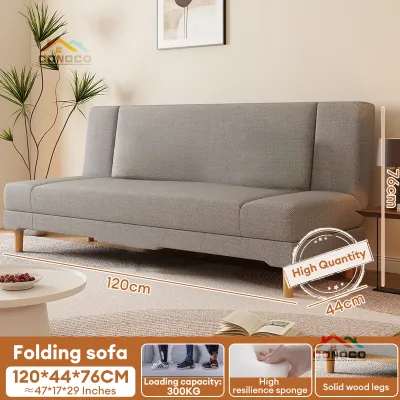
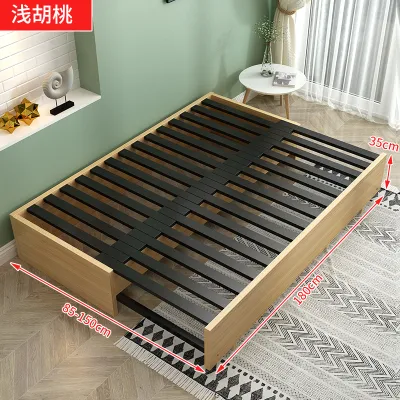
![[Thick Solid Wood Board] Sofa Bed with Storage Cabinet 108*78*85CM Foldable Dual Purpose Lazy Sofa Latex Pad Multi-functional Bed Small Unit Single Person Fabric Sofa Lunch Bed 2 Free Pillows Side Pockets](https://img.lazcdn.com/g/p/1a98b29ce255d35d478fa6052e8e1a3c.jpg_400x400q80.jpg_.webp)
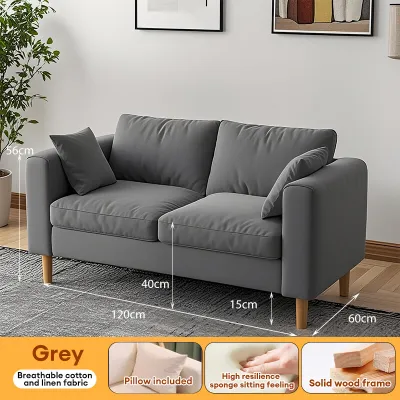
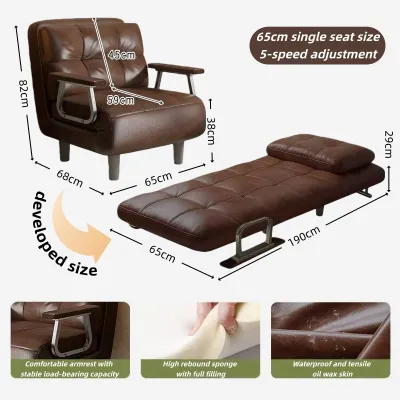
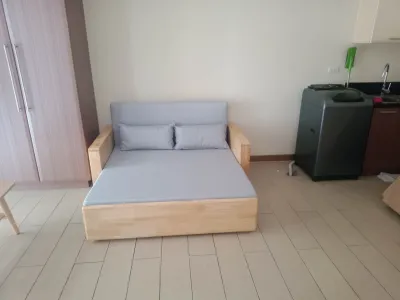
Prices are valid at publication and may change. Please refer to the product page for the latest price.
Next, evaluate how your household actually uses the space on a daily basis versus how often the sleeping function will be used. A family of three to five people typically requires comfortable, supportive seating for several hours each day, whether for watching television, studying, or relaxing together. If the sofa bed will serve as the primary couch, the depth of the seat, the height of the backrest, and the quality of the cushions are just as critical as the sleeping surface. Conversely, if the bed function is only utilized occasionally for visiting relatives during holidays, you can prioritize a more compact seating arrangement. However, if a family member sleeps on it every night, the ease of conversion and the mattress quality become your primary decision factors.
Finally, map out the traffic flow of your living room. A functional layout requires clear walking paths even when the sofa bed is in its standard upright position. You should plan for a minimum clearance path of 60 to 75 centimeters around the furniture to allow family members to move freely without bumping into corners. If your living room serves as a central thoroughfare connecting the kitchen, bedrooms, or main entryway, a massive wooden frame that restricts movement will cause daily frustration. Mark the proposed dimensions of the sofa bed on your floor using painter’s tape or newspapers to visualize how much physical space the unit will occupy during daily activities.
Comparing Kahoy na Sofa Bed Sizes and Configurations
Wooden sofa beds come in various configurations, each offering distinct spatial advantages and trade-offs. Selecting the right design depends on whether you need to maximize floor space or maximize seating capacity for your family.

3-Seater Wooden Sofa Beds
A standard 3-seater wooden sofa bed is one of the most versatile options for smaller living rooms or three-person households. These units typically feature a continuous wooden frame with three distinct seat cushions, offering comfortable daytime seating for three adults. However, you must distinguish between daytime seating capacity and nighttime sleeping capacity. While three people can sit comfortably side-by-side, the unfolded sleeping surface of a 3-seater usually translates to a standard double or full-size mattress, which is designed to sleep two adults close together.
For a three-person family living in a condominium or a townhome where space is at a premium, a 3-seater is highly efficient. It provides the necessary daily seating without overwhelming the room’s footprint. When shopping, always verify the manufacturer’s exact unfolded dimensions. Frame designs vary; some 3-seaters unfold forward to reveal a longitudinal bed, while others use a click-clack or fold-down backrest mechanism where the length of the sofa becomes the length of the bed. Knowing these exact dimensions prevents surprises when it is time to transform the space at night.
5-Seater and L-Shaped Wooden Sofa Beds
For families of four or five, or those with open-concept living areas, a 5-seater or L-shaped wooden sofa bed provides the expansive seating required for everyone to gather comfortably. These larger frames require a significant spatial footprint, often occupying an entire corner or acting as a natural room divider between the living and dining zones. The primary benefit of an L-shaped configuration is the inclusion of a chaise lounge, which offers a built-in spot for putting your feet up during the day and can often house a hidden storage compartment underneath for pillows and blankets.
In terms of sleeping capacity, these larger configurations often convert into a generous queen-size sleeping area or even dual sleeping zones where the main sofa and the chaise section can accommodate multiple guests. When selecting an L-shaped wooden sofa bed, you must carefully check the orientation of the chaise. Manufacturers typically specify whether a model is left-facing or right-facing. Placing a left-facing chaise in a corner that requires a right-facing orientation can block doorways, obstruct pathways, or force the furniture into awkward, unusable positions.
Modular and Expandable Wooden Frames
If your family’s needs change frequently or you plan to move houses in the near future, modular and expandable wooden sofa beds offer excellent long-term flexibility. These systems consist of individual wooden seating sections that can be arranged in multiple ways, allowing you to expand a basic 3-seater into a larger 5-seater or L-shaped configuration by purchasing additional matching modules. This adaptability is highly useful for growing families who want to invest in high-quality wooden furniture that can grow with them.
When evaluating modular designs, pay close attention to the connection mechanisms. Inspect how the individual wooden frames link together; they should feature heavy-duty steel brackets or secure interlocking wooden joints that prevent the sections from sliding apart during use. A loose connection can create uncomfortable gaps in both the seating and sleeping surfaces. Additionally, remember that modular designs require meticulous measurement. You must measure the dimensions of each individual piece to ensure they can pass through your home’s entryways, as well as the combined footprint of your desired final configuration.
Critical Clearances and Delivery Measurements
A wooden sofa bed must not only fit your room when closed, but it must also function seamlessly when fully extended and, crucially, fit through your home’s entryways during delivery.
- Unfolded Footprint: The most critical measurement for any convertible furniture is its fully extended footprint. When you convert a sofa bed, the depth of the unit can double or even triple, depending on the mechanism. You must measure the total distance from the back wall to the foot of the fully extended bed. If the mechanism rolls or folds out forward, ensure there is enough physical space to accommodate this extension without forcing you to relocate heavy furniture like television consoles or storage cabinets every single night.
- Walking Paths and Clearance: Even when the bed is fully deployed, you must maintain safe walking paths. Ideally, you should leave at least 50 to 60 centimeters of clearance around the sides and foot of the extended bed. This ensures that someone sleeping on the bed can get up in the middle of the night without tripping over other furniture or stepping directly against a wall. If you have a coffee table, choose a lightweight or wheeled model that can be easily pushed aside to accommodate the unfolded bed.
- Delivery Route: Many homeowners forget to measure the path the furniture must take to reach the living room. Wooden sofa beds often feature solid, heavy frames that cannot be easily bent or disassembled into tiny pieces. Measure the width and height of all entry doors, hallway clearances, stairwell turns, and elevator doors. If you live in a multi-story condominium or apartment building, check the maximum weight and interior dimensions of the service elevator. Ensuring the delivery crew can safely maneuver the wooden frame into your home prevents costly return fees and accidental damage to your walls or the furniture itself.
Common Sizing and Placement Mistakes
Avoiding common spatial planning errors can save you from purchasing a sofa bed that is either too large for your room or too small for your family’s needs.
- Confusing Seating Capacity with Sleeping Capacity: A frequent mistake is assuming that a sofa labeled as a "5-seater" will comfortably sleep five adults. While five people can easily sit on a large L-shaped couch, the converted sleeping surface rarely accommodates more than two or three sleepers. Always look at the actual mattress or sleeping surface dimensions rather than the seating designation to ensure your guests or family members have enough shoulder and legroom.
- Ignoring the Swing Radius and Pull-Out Clearance: Different conversion mechanisms require different operating clearances. A click-clack mechanism requires you to pull the sofa away from the wall to lower the backrest, while a pull-out drawer mechanism requires ample floor clearance in front of the couch. Failing to account for these operational paths can result in the wooden frame repeatedly scraping against walls, baseboards, or nearby furniture, leading to unsightly scratches and structural wear over time.
- Improper Placement Near Environmental Hazards: Wood is a natural material that reacts to its environment. Placing your wooden sofa bed directly against a wall can trap moisture, while positioning it too close to heat sources or in direct sunlight from large windows can cause the wood to warp, crack, or fade. In tropical environments, ensure there is a gap of at least 5 to 10 centimeters between the back of the wooden frame and the wall to allow for proper air circulation, protecting both the wood finish and the upholstery from dampness.
Inspecting Wooden Frames for Stability and Humidity
Because a sofa bed serves a dual purpose and experiences frequent movement, the structural integrity of the wooden frame is paramount, especially in humid climates.
- Verifying Weight Limits: Always check the manufacturer's specified weight limits for both the seating and sleeping configurations. A frame designed for a family of three to five must be robust enough to support the combined weight of multiple active users. Look for frames constructed from durable hardwoods and ensure the weight capacity is clearly documented in the product specifications.
- Inspecting Joinery and Support: Examine the quality of the construction. High-quality wooden furniture utilizes traditional joinery techniques, such as mortise-and-tenon joints or corner blocks secured with heavy-duty screws, rather than simple staples or cheap glue. The slat support system beneath the cushions should be thick, closely spaced, and securely fastened to prevent sagging. Test the folding mechanism in the store or check user manuals to ensure the metal hinges and tracks operate smoothly without binding or putting excessive stress on the wooden frame.
- Humidity and Wood Maintenance: In the humid tropical climate of the Philippines, moisture and wood-boring pests (locally known as bukbok) are significant concerns. Do not assume that a wooden frame is automatically resistant to these issues based on the wood name alone. Instead, check the manufacturer's care instructions regarding humidity management. Verify if the wood has been properly kiln-dried and treated with a protective sealant or finish. Regularly inspect the frame for signs of moisture buildup, and follow the manufacturer's guidelines for cleaning and maintaining the protective finish to ensure your investment lasts for years to come.
Frequently Asked Questions (FAQ)
Does a 3-seater sofa bed provide enough sleeping space for two adults?
While a 3-seater sofa bed provides ample seating space for three adults during the day, its unfolded sleeping surface typically matches the dimensions of a standard double or full-size mattress (approximately 135 centimeters wide). This size can accommodate two adults, but it may feel tight for taller individuals or those who prefer more room to move. If you plan to use the bed frequently for two adults, it is highly recommended to check the exact unfolded mattress dimensions in the product specifications. If space allows, opting for a larger L-shaped or expandable wooden frame that offers a queen-size sleeping surface will provide a significantly more comfortable night’s rest.
Community discussion
Share your experience or ask a question. Comments are reviewed before publication.