
Finding the right executive office chair in the ₱3,000 to ₱8,000 range requires balancing professional style with functional comfort. In this budget tier, a high-quality executive chair office setup provides a commanding visual presence, essential pneumatic height adjustments, tilt-lock mechanisms, and reliable baseline support. However, buyers must navigate specific trade-offs regarding material durability, advanced ergonomic adjustments, and long-term wear, especially under the demands of a tropical climate.
By understanding what features are realistic at this price point, you can avoid marketing gimmicks and select a chair that supports your posture throughout long working hours. This guide breaks down the structural, material, and functional expectations for mid-budget executive chairs in the Philippines to help you make an informed purchase.
Understanding the "Executive" Label at a Mid-Budget
In the furniture industry, the term “executive” historically conjures images of heavy, deep-padded leather chairs with polished wood accents. In the ₱3,000 to ₱8,000 price bracket, however, the executive designation refers primarily to a specific visual aesthetic rather than premium materials or advanced, multi-axis ergonomic engineering.
Products mentioned in this guide
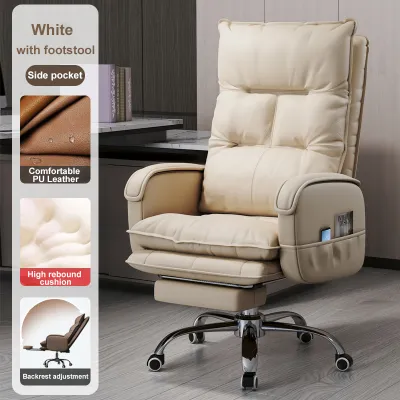
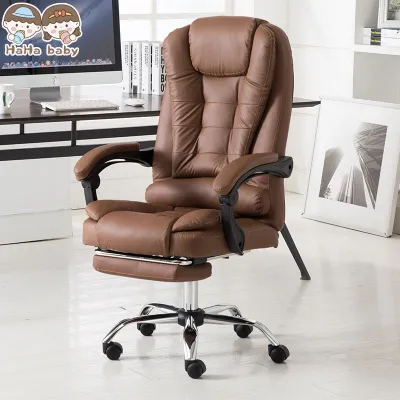
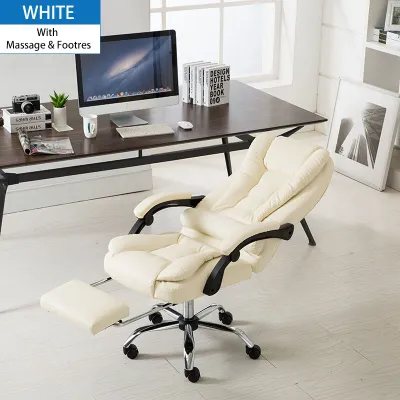
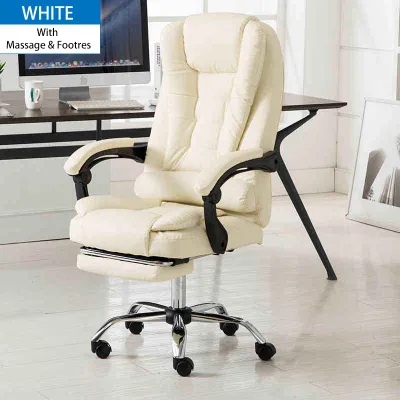
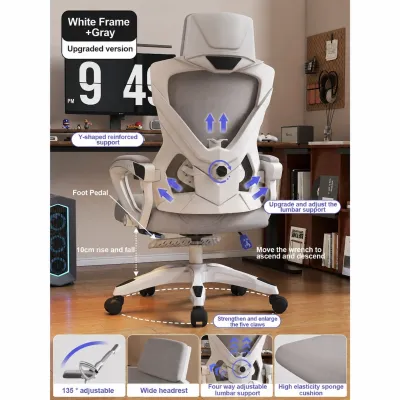
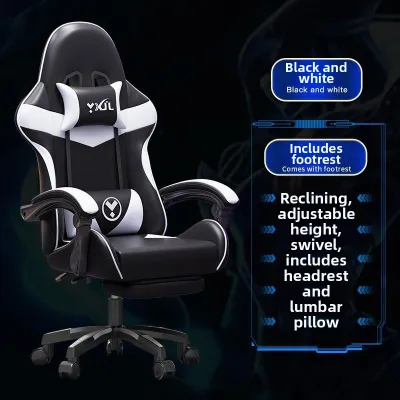
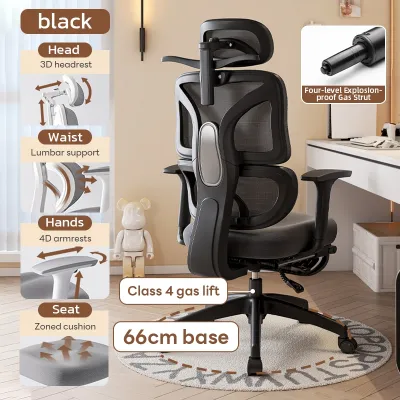
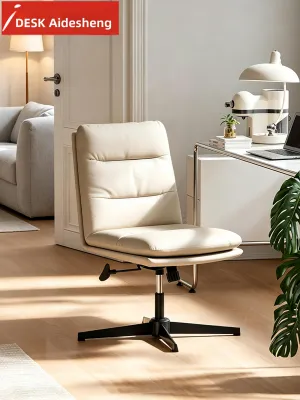
Prices are valid at publication and may change. Please refer to the product page for the latest price.
Chairs in this range mimic the authoritative silhouette of high-end office seating by offering high backrests, integrated headrests, and plush, generous padding. This design is intended to look impressive on video calls and provide an immediate sense of comfort when you first sit down. However, it is crucial to distinguish between a chair that looks prestigious and one designed for specialized orthopedic support.
At this budget, manufacturers achieve the executive look by using synthetic materials and simplified mechanical components. Instead of complex, synchronized tilt systems that adapt dynamically to your body’s micro-movements, these chairs rely on standard upright tension controls. The padding is often standard polyurethane foam, which feels incredibly soft initially but may lose its shape faster than high-density molded foam.
Your core decision logic at this price point should focus on identifying your non-negotiable physical needs. If you require a chair for intensive eight-hour typing sessions, you must prioritize structural stability and core lumbar alignment over purely decorative stitching or oversized armrests. Knowing that you are buying a stylish, entry-level professional chair allows you to evaluate its features with realistic expectations.
Essential Ergonomic Features You Should Demand
Even within a modest budget of ₱3,000 to ₱8,000, you should never compromise on basic ergonomic adjustments. Any chair in this price range must feature a reliable pneumatic gas lift for seat height adjustment. This mechanism allows you to align your feet flat on the floor with your knees bent at a healthy 90-degree angle, preventing pressure buildup on your thighs and lower back.

Tilt tension control with an upright locking mechanism is another essential feature to demand. A central knob beneath the seat pan should allow you to adjust the resistance of the backrest when reclining. At this price tier, expect a single-position lock that secures the chair strictly in an upright, task-oriented posture. While you may not get multi-angle locking positions, the ability to control tilt tension ensures the chair does not tip back too easily under your weight.
Lumbar support in mid-budget executive chairs is typically built directly into the frame or cushion shape rather than being independently adjustable. Because you cannot move the lumbar support up, down, in, or out, you must verify the chair’s backrest dimensions before buying. Compare the height of the built-in lumbar curve against your own torso measurements to ensure the support actually aligns with the natural curve of your lower spine.
Armrests in this price bracket are generally fixed or offer basic 1D (height-only) adjustment. Fixed armrests often connect the seat pan directly to the backrest, which actually adds structural rigidity to the chair but limits customization. To ensure fixed armrests will work for you, measure the clearance height of your desk and your natural elbow height while sitting. If the fixed armrests are too high, they will prevent you from sliding the chair under your desk, forcing you to lean forward and strain your shoulders.
If an executive chair in this price range lacks pneumatic height adjustment, tilt tension control, or basic lower-back contouring, it should be disqualified immediately. Visual appeal should never override these foundational physical supports.
Realistic Expectations for Materials and Build Quality
Evaluating materials in the ₱3,000 to ₱8,000 range requires looking past marketing buzzwords like “premium leatherette” or “breathable mesh” to inspect the actual construction details.
Upholstery and Tropical Performance
PU (polyurethane) leather is highly popular in this segment because it looks sleek and is incredibly easy to wipe clean. However, in the high humidity of the Philippines, standard PU leather retains body heat and can cause significant sweating during long working hours. Over time, exposure to sweat, body oils, and ambient moisture can cause cheap PU leather to hydrolyze, leading to unsightly cracking and peeling. If you prefer the executive look of synthetic leather, look for perforated PU designs that allow minor airflow, or plan to use the chair in a consistently air-conditioned room.
Mesh is an excellent alternative for tropical climates, offering superior breathability by allowing air to circulate freely around your back. However, budget mesh can vary wildly in quality. Lower-end mesh can feel abrasive against bare skin and may lose its tension within a year, causing your back to press directly against the hard plastic frame. Look for double-layered mesh or models that pair a mesh backrest with a fabric-upholstered foam seat cushion to get the best of both worlds.
Base, Frame, and Structural Stability
At this price point, the five-star base of the chair is typically constructed from reinforced nylon or heavy-duty industrial plastic rather than polished aluminum or steel. Nylon bases are highly durable and rust-resistant, making them ideal for humid environments. To verify the quality of a plastic or nylon base, check the underside of the star prongs for structural ribbing. A network of thick, molded support ribs indicates the base is engineered to distribute weight safely and resist warping.
Gas Lift Cylinder Quality
The pneumatic cylinder is the most critical safety component of any office chair. You should expect a Class 3 or Class 4 gas lift cylinder in this price range. To verify this, look for physical stamps from safety certification bodies such as SGS or TUV laser-etched directly onto the metal casing of the cylinder. Avoid chairs where the seller cannot verify the cylinder class, as low-grade gas lifts are prone to gradual sinking or mechanical failure.
Casters and Flooring Protection
Standard hard nylon casters are the default option for mid-budget chairs. While these roll smoothly on carpets and office tiles, they can easily scratch local hardwood, engineered wood, or vinyl plank flooring. If your home office has delicate flooring, you should budget for a protective desk mat or plan to swap the stock casters for floor-friendly alternatives.
Compromises and "Nice-to-Have" Features to Skip
To stay within the ₱3,000 to ₱8,000 range, manufacturers must make deliberate design compromises. Recognizing which premium features are unrealistic at this price point will help you avoid low-quality products that try to promise too much.
Features you should expect to skip include:
- 4D Armrests: Adjustments for height, width, depth, and angle require complex mechanical joints that are expensive to manufacture. Armrests at this price are almost exclusively fixed or basic 1D.
- Synchro-Tilt Mechanisms: True ergonomic chairs feature synchro-tilt, where the backrest reclines at a 2:1 ratio compared to the seat pan, keeping your feet flat on the floor. Mid-budget executive chairs use simple center-tilt mechanisms where the entire chair tilts as a single unit.
- Seat Depth Adjustment: The ability to slide the seat pan forward or backward to accommodate different thigh lengths is highly uncommon in this tier.
- Multi-Dimensional Headrests: Expect integrated, non-adjustable headrests that are part of the high-back frame rather than independently pivoting head supports.
Be highly skeptical of any chair priced under ₱8,000 that claims to offer all of these advanced features. To fit these mechanisms into a tight budget, manufacturers often use thin, fragile plastics and low-grade metal alloys. This results in a chair that squeaks constantly, develops severe wobbling, or suffers structural failure within a few months of daily use. It is far better to buy a structurally simple, well-built chair with basic features than a highly adjustable model made of flimsy components.
Weight capacity is another area where compromises occur. While premium chairs are rated for 130kg to 150kg of continuous daily use, budget executive chairs are typically rated for 100kg to 120kg. Always check the manufacturer’s verified weight limit and ensure your body weight sits comfortably below that limit to prevent premature wear on the gas cylinder and frame joints.
Pre-Purchase Checklist: Verifying Specs and Avoiding Hidden Costs
Before clicking the buy button on an online marketplace or local furniture store, use this practical checklist to ensure a smooth delivery and assembly process.
- Verify the Box and Doorway Dimensions: Executive chairs are bulky and often ship in large, heavy boxes. Measure your doorways, hallways, and elevator cabins—especially if you live in a high-rise condominium—to ensure the package can be delivered to your door without incident.
- Understand the Return Policy: Many e-commerce platforms have strict return policies regarding assembled furniture. Once a gas lift cylinder is pressed into the seat mechanism and the five-star base, it becomes incredibly difficult to disassemble without specialized tools. Many retailers will not accept returns on assembled chairs unless there is a clear, verified manufacturing defect.
- Calculate Total Shipping Costs: Because executive chairs are heavy and bulky, shipping fees can add a significant surcharge, especially if you are ordering from outside major metropolitan areas like Metro Manila, Metro Cebu, or Metro Davao. Factor these delivery fees into your total ₱3,000 to ₱8,000 budget.
- Check Assembly Requirements: Most budget chairs are shipped flat-packed to save on transit costs. Verify if the package includes all necessary tools (usually a standard Allen wrench) and clear English instructions. If you are not comfortable with DIY assembly, check if the retailer offers an optional assembly service for a small fee.
- Review Warranty Limitations: Warranties in this price bracket typically range from 3 to 12 months and are highly specific. They generally cover major structural failures, such as a failing gas lift or a broken metal base plate. They almost never cover cosmetic wear and tear, such as peeling PU leather, sagging mesh, or squeaking joints caused by normal daily use.
Frequently Asked Questions (FAQ)
Is a mesh back better than PU leather for tropical climates?
Yes, a mesh backrest is generally superior for tropical climates like the Philippines. The open weave of mesh allows body heat to dissipate and promotes continuous airflow, which prevents sweat buildup during hot afternoons. While PU leather offers a classic, premium executive look and is easy to wipe clean, it traps heat and moisture. Without consistent air conditioning, PU leather can feel uncomfortably warm and is highly susceptible to peeling and cracking over time due to sweat exposure.
Can I upgrade the casters or armrests later?
You can easily upgrade the casters, but upgrading the armrests is rarely possible. Most office chairs use a standard 11mm x 22mm grip stem for their wheels, allowing you to easily swap out stock hard plastic casters for soft polyurethane or rollerblade-style wheels to protect your floors. In contrast, armrests on budget executive chairs use proprietary mounting patterns, screw hole spacing, and structural connection points that are integrated directly into the seat pan or backrest, making third-party upgrades incompatible.
Community discussion
Share your experience or ask a question. Comments are reviewed before publication.