
Selecting the right 2-door wardrobe involves balancing storage capacity with the physical constraints of your bedroom. In many Philippine homes, where space can be at a premium in urban condominiums or cozy townhouses, a 2-door configuration offers a practical footprint without overwhelming the room. However, finding a unit that stands up to daily use and local climate conditions requires looking closely at specific construction details, internal configurations, and material finishes.
To make a lasting investment, you must evaluate how a wardrobe’s physical dimensions, door mechanisms, and interior layout align with your daily habits. A wardrobe is not merely a decorative piece of furniture; it is a highly functional workhorse that must protect your clothing from dust and humidity while keeping your daily essentials organized and accessible. By focusing on observable quality indicators and precise measurements, you can confidently select a wardrobe that fits both your room and your lifestyle.
Assessing Your Space and Size Requirements
Before browsing designs online or visiting a showroom, you must establish the exact physical boundaries of your room. Begin by measuring the available floor width and depth using a steel measuring tape, as fabric tapes can stretch and yield inaccurate results. Note the location of baseboards, electrical outlets, light switches, and window frames, as these will dictate where the wardrobe can safely stand without blocking access or utilities.
Products mentioned in this guide
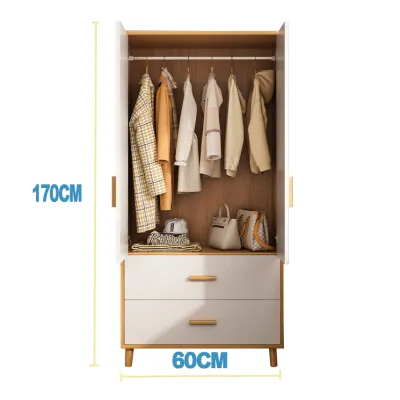
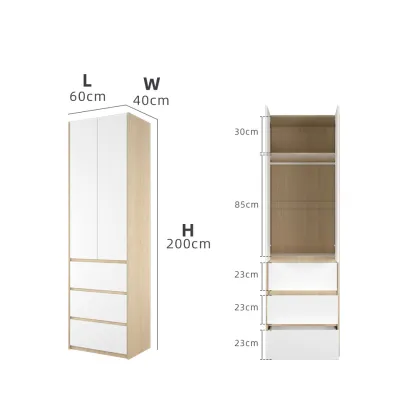
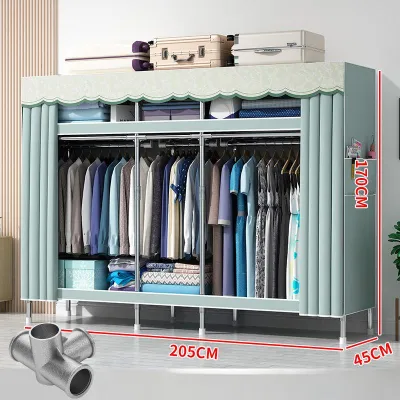
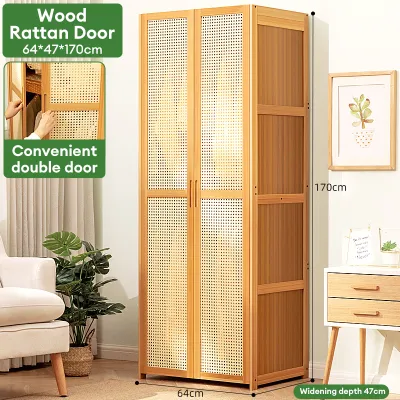
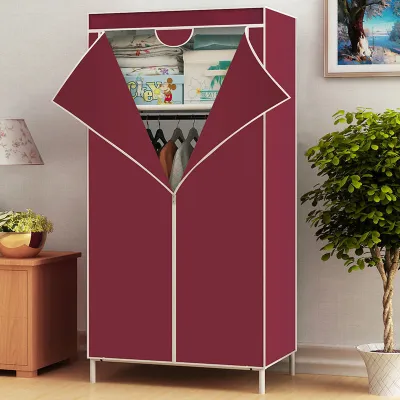
Prices are valid at publication and may change. Please refer to the product page for the latest price.
Vertical clearance is equally critical when selecting a wardrobe. Standard 2-door wardrobes typically range in height from 180 centimeters to over 220 centimeters. Measure your ceiling height at the exact spot where the unit will stand, ensuring there is at least 10 to 15 centimeters of clearance at the top if the wardrobe requires upright assembly. Additionally, verify the path of ceiling fans and light fixtures; a spinning fan must have a generous safety clearance from the top edge of any wardrobe door when it is fully opened.
Door swing clearance is a major spatial factor that dictates whether you should choose a hinged or sliding door model. For a hinged 2-door wardrobe, you must measure the width of the doors—usually 40 to 50 centimeters each—and ensure that this space remains completely clear in front of the unit. There should be enough remaining floor space for you to stand comfortably in front of the open doors without being pressed against your bed, desk, or adjacent walls.
Finally, plan the delivery and assembly pathway from your building’s entrance to your bedroom. Measure the height and width of all doorways, narrow hallway corners, stairwells, and elevator cabins. Many homeowners face the frustration of purchasing a pre-assembled wardrobe only to find it cannot clear a tight turn in a staircase or fit inside a standard residential lift. If your access pathways are restricted, prioritizing flat-pack models that can be assembled directly inside the bedroom is often the safest approach.
Evaluating Internal Layout and Storage Configurations
An efficient wardrobe interior must match the specific types of clothing and accessories you own. Rather than choosing a generic layout, analyze your wardrobe to determine the ratio of hanging space to folded storage you require. This simple assessment prevents situations where you run out of hanging space while leaving multiple shelves completely empty.

For hanging storage, pay close attention to the vertical clearance below the rail. Long garments such as dresses, barongs, maxi skirts, and trousers hung by the cuff require a continuous vertical drop of 120 to 150 centimeters to prevent the fabric from bunching and wrinkling at the bottom. Conversely, shirts, blouses, jackets, and folded trousers require only 80 to 90 centimeters of vertical space. If your wardrobe consists mostly of shorter items, a double-rail configuration—featuring one rail positioned above another—effectively doubles your hanging capacity within the same footprint.
Adjustable shelving offers the flexibility needed to adapt your storage as your needs change over time. Look for shelves supported by metal pegs inserted into pre-drilled holes along the interior side panels, which allow you to raise or lower the shelf height easily. Fixed shelves limit your storage options, making it difficult to store bulky items like extra bedding, travel bags, or thick winter wear when they are not in use.
Drawers are essential for organizing smaller items such as undergarments, socks, and accessories. When evaluating a 2-door wardrobe, check whether the drawers are positioned internally behind the doors or externally at the base of the unit. Internal drawers offer a cleaner exterior aesthetic but require you to open the main wardrobe doors fully to access them. External drawers provide quick access to daily essentials but reduce the continuous vertical hanging space available inside the main compartment.
Choosing the Right Door Mechanism and Hardware
The choice between hinged and sliding doors directly impacts both the usability of your wardrobe and the layout of your entire bedroom. Hinged doors are the traditional choice, offering the distinct advantage of opening fully to reveal the entire interior at once. This complete visibility makes organizing and selecting outfits much easier. However, hinged doors rely heavily on the structural integrity of the side panels, as the weight of the open doors puts continuous leverage stress on the hinge mounting points.
Sliding doors are an excellent space-saving alternative for compact bedrooms where a bed or other furniture sits close to the wardrobe face. Because the doors slide horizontally within the frame, they require zero clearance in front of the unit. The primary trade-off is that you can only view and access one half of the wardrobe interior at any given time. Additionally, sliding mechanisms require regular maintenance, as dust, lint, and pet hair can accumulate in the bottom tracks, causing the doors to stick or jump off their rails.
During your evaluation, inspect the quality of the hardware components closely, as these are the parts most prone to wear and tear. For hinged models, look for heavy-duty, adjustable steel hinges—ideally with integrated hydraulic soft-close mechanisms that prevent the doors from slamming shut. For sliding models, examine the roller assemblies and tracks; high-quality systems use smooth-rolling ball bearings and aluminum tracks rather than plastic rollers on plastic tracks, which tend to warp and degrade over time.
Handle designs should also be assessed for both ergonomics and durability. Recessed or flush-pull handles are ideal for tight spaces as they do not protrude into walking paths, while sturdy metal bar handles offer a secure grip for daily use. Avoid flimsy plastic handles that can become brittle and snap, especially on doors that require a firm pull to open.
Checking Material Quality and Construction Durability
In the tropical climate of the Philippines, high humidity levels can severely affect furniture materials. When evaluating a 2-door wardrobe, you must understand the characteristics of the materials used and perform physical checks to ensure long-term durability. While solid wood offers exceptional strength, engineered wood products like Medium-Density Fiberboard (MDF), particle board, and plywood are highly common and can perform well if constructed and sealed correctly.
If you are considering a wardrobe made from engineered wood, inspect the surface finish thoroughly. Melamine and high-pressure laminate (HPL) finishes provide a protective barrier that resists scratches and moisture. However, this protection is only effective if the edges of the panels are completely sealed. Examine the edge banding—the thin strip of material covering the raw edges of the boards—for any signs of peeling, gaps, or sharp, unaligned edges. Unsealed edges allow moisture from the air to penetrate the core of the board, leading to swelling, warping, and structural weakening.
Structural stability depends heavily on the thickness and support of the wardrobe panels. The side and top panels should ideally be at least 15 to 18 millimeters thick to prevent bowing under weight. Check the back panel of the wardrobe as well; cheap models often use a paper-thin piece of hardboard that is simply stapled to the frame. A durable wardrobe should feature a back panel that is at least 5 to 9 millimeters thick, ideally slotted into grooves within the main frame to provide essential lateral stability and prevent the unit from swaying.
Finally, look at the base construction of the wardrobe. Because many residential floors are not perfectly level, a wardrobe without proper support can tilt, causing the frame to twist and the doors to become misaligned. Look for units equipped with adjustable leveler feet hidden beneath the base, which allow you to compensate for uneven flooring and ensure the wardrobe remains perfectly upright and stable.
Building Your Conditional Shortlist for Online and In-Store Shopping
When you are ready to shop, creating a systematic verification process will help you filter out low-quality options and avoid costly purchasing mistakes. Whether you are browsing online marketplaces or visiting physical showrooms, use a structured checklist to evaluate each candidate before making a final decision.
First, cross-reference the dimensions provided in product listings with your home measurements. Do not rely solely on general category descriptions like “standard size.” Look for detailed technical drawings or specification sheets that show the exact external width, depth, and height, as well as the internal shelf spacing. If shopping on an online marketplace, read the customer Q&A section or message the seller directly to clarify any ambiguous measurements or material specifications.
Second, clarify the delivery, handling, and assembly terms before completing your purchase. Some retailers deliver wardrobes as flat-pack boxes that require complete self-assembly, while others offer professional assembly services for an additional fee. Given the complexity of aligning doors and leveling large frames, opting for professional assembly is highly recommended to ensure the wardrobe is structurally sound and safe to use. Additionally, verify the warranty coverage, paying close attention to what parts are covered (such as hinges, tracks, or structural panels) and the duration of the protection.
Lastly, establish a clear inspection routine for the moment your wardrobe arrives. Before the delivery team leaves, inspect the packaging for any signs of rough handling, such as crushed corners or punctured cardboard. Open the packages and check the panels for scratches, dents, or chipped edges, particularly along the corners and edge banding. Verify that all hardware components, screws, and assembly instructions are present. If you detect any transit damage or missing parts, document them immediately with clear photographs and contact the seller or delivery service to initiate a resolution before attempting assembly.
Frequently Asked Questions (FAQ)
How can I verify the weight capacity of a wardrobe hanging rail?
To verify the weight capacity of a hanging rail, consult the manufacturer’s product manual or specification sheet, which typically lists the maximum load limit in kilograms. Physically inspect the rail material; thick-walled steel or aluminum rails resist bending much better than thin, hollow metal or plastic rails. Additionally, check how the rail is supported. Rails that slot into heavy-duty metal brackets screwed directly into the side panels offer significantly more stability than those resting on shallow plastic pegs. To prevent sagging over time, distribute your clothing weight evenly across the rail rather than clustering heavy jackets in the center.
Why is ventilation spacing important behind a wardrobe?
Ventilation spacing is crucial for preventing moisture buildup and mold growth, especially in humid tropical climates. When a wardrobe is pushed flush against a wall—particularly an exterior wall or one shared with a bathroom—cool air becomes trapped in the narrow gap. This temperature difference can cause condensation to form on the back panel of the wardrobe, creating an ideal environment for mold and mildew to thrive. To maintain healthy airflow, always leave a clearance gap of at least 5 centimeters between the back of the wardrobe and the wall, and avoid placing the unit directly in front of air conditioning vents or windows.
What daily habits help prevent musty odors inside a closed wardrobe?
To keep your wardrobe smelling fresh, establish a habit of ensuring all clothing is completely dry before storing it away, as even slight dampness from laundry or sweat can quickly lead to musty odors in a closed space. Regularly place safe moisture-absorbing sachets or dehumidifier tubs on the shelves, checking and replacing them as soon as they fill with water. On dry, sunny days, leave your wardrobe doors open for an hour or two to allow fresh air to circulate through the interior compartments and disperse any trapped humidity.
Community discussion
Share your experience or ask a question. Comments are reviewed before publication.