
Finding the perfect balance between a comfortable daytime seat and a supportive nighttime sleeper is a common challenge for busy households. In a multi-functional family home, a sofa bed double size serves as an incredibly versatile furniture piece, maximizing limited living room footprints while providing a welcoming spot for overnight guests. To choose the right model, you must evaluate spatial constraints, mechanism durability, mattress construction, and upholstery that can withstand daily family life.
Diagnose Your Space and Sleeping Needs First
Before browsing online marketplaces or visiting local furniture showrooms, map out how your living room operates on a normal day. If your living room is primarily a high-traffic zone for active play, media viewing, and family gatherings, the sofa’s primary role is daytime seating. A bulky, delicate, or difficult-to-clean unit will quickly become a source of frustration if it interferes with your family’s daily comfort.
Consider how often the bed configuration will actually be used. If you host overnight guests only once or twice a year, prioritize seating comfort, cushion resilience, and a streamlined frame. However, if you frequently accommodate extended family members or use the sleeper weekly, invest in a more robust folding mechanism and a higher-quality mattress that can handle frequent transitions without wearing down.
Products mentioned in this guide
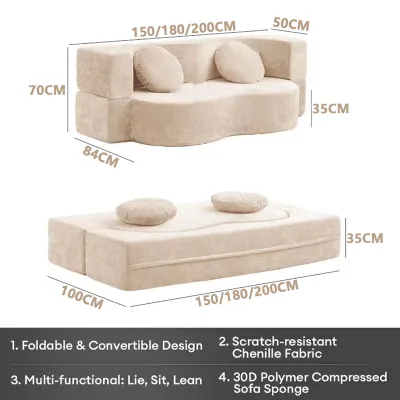
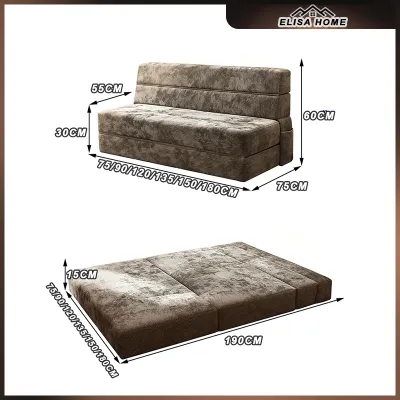
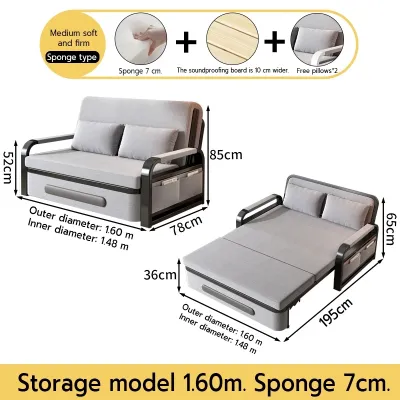
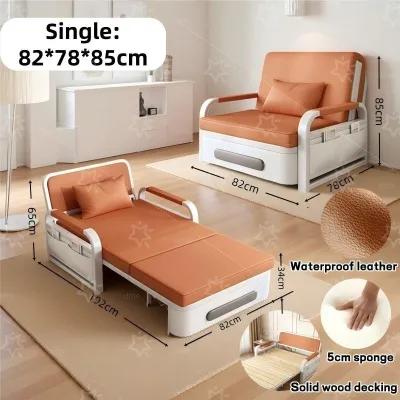
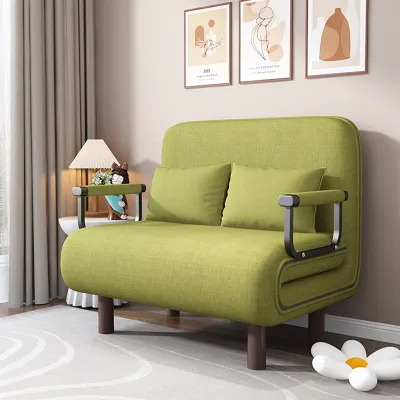
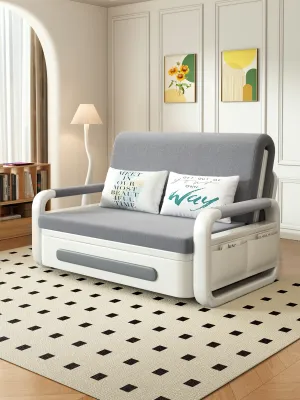

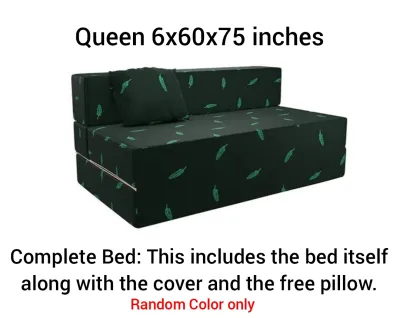
Prices are valid at publication and may change. Please refer to the product page for the latest price.
Finally, chart the household traffic flow. When fully extended, the bed should not block essential pathways. In busy households with children or pets, an open sofa bed can turn a living room into an obstacle course. Ensure there is still a clear path to the kitchen, bathroom, and main exit when the mattress is deployed to maintain safety and convenience during the night.
Verify Dimensions and Clearance for Double-Size Models
A common pitfall is assuming that a “double-size” label translates to a uniform set of exterior dimensions. While a standard double-size mattress typically measures approximately 54 inches wide by 75 inches long (about 137 cm by 190 cm), the outer frame of the sofa can vary wildly. Wide, rolled armrests or a thick, padded backrest can add up to 20 inches to the overall width, potentially overcrowding a compact living room. Always check the manufacturer’s specification sheet for the exact outer dimensions of the closed sofa.

Next, calculate the unfolded clearance. Measure the distance from the back wall to the foot of the fully extended bed. You will need at least 24 to 30 inches of walking space around the perimeter of the bed to allow comfortable movement. If the extended bed blocks access to balcony doors, built-in cabinets, or walkways, you may need to rearrange your layout or consider a smaller configuration.
Do not overlook delivery access checks. Many homeowners purchase a beautifully sized sofa bed only to find it cannot fit through the condominium elevator door, up a narrow stairwell, or around a tight hallway corner. Measure the height and width of all entryways, doors, and elevator interiors before ordering. Keep in mind that sofa beds are significantly heavier and less flexible than standard couches due to their internal metal or wooden frames.
Evaluate the Folding Mechanism and Mattress Comfort of a Sofa Bed Double Size
The longevity of your sleeper sofa depends largely on the quality of its internal mechanism and the comfort of its mattress. Balancing these two elements ensures that your family enjoys sitting on the couch during the day and your guests get a restful night’s sleep.
Compare Pull-Out, Click-Clack, and Futon Designs
Pull-out mechanisms house a folded frame and mattress entirely beneath the seat cushions. The primary advantage of this design is that daytime seating comfort remains uncompromised, as you sit on dedicated sofa cushions rather than the mattress itself. However, converting these models requires some physical effort to lift and roll out the frame, and the internal metal structure adds substantial weight to the overall piece.
Click-clack and futon designs operate by folding the backrest flat to align with the seat cushion, creating a unified sleeping surface. These are highly valued for their mechanical simplicity and ease of use, making them a great option for quick setups. The trade-off is that you sleep directly on the seating cushions, which can lead to uneven wear over time. The hinges on budget click-clack models are also prone to misalignment if subjected to rough handling or heavy daily use.
Durability checks are essential before making a purchase. If shopping in a physical showroom, test the mechanism multiple times. It should glide smoothly without grinding, squeaking, or requiring excessive force. Inspect the quality of the hinges, locking pins, and joints. Look for thick steel or reinforced aluminum components, as flimsy metal linkages can easily bend under repeated stress.
Match Mattress Materials to Guest Frequency
Innerspring vs. foam mattresses offer distinct sleep experiences. Traditional innerspring mattresses provide familiar bounce and excellent airflow, but low-quality spring units can feel bouncy or noisy. High-density foam mattresses offer superior contouring support and motion isolation, meaning a sleeping guest won’t be easily disturbed if their partner tosses and turns.
Thickness and base support are critical indicators of sleeping comfort. A thin mattress (under 4 inches) often allows sleepers to feel the hard metal support bars or wooden slats underneath. Look for a mattress thickness of at least 4 to 5 inches, paired with a sturdy canvas, steel mesh, or flexible wooden slat base. Avoid models that rely solely on thin, sagging wire grids.
Ventilation considerations are vital, especially in tropical climates like the Philippines where high humidity can lead to moisture retention. When a mattress is folded inside a closed sofa frame for weeks or months, trapped moisture can foster mold, mildew, and musty odors. Opt for open-cell polyurethane foam, latex, or pocket-spring mattresses with breathable covers, and make it a habit to leave the bed unfolded for a few hours after use to let it air out before folding it back.
Select Family-Friendly Fabrics and Sturdy Frames
A living room sofa bed must be tough enough to survive children jumping on it, pets scratching, and accidental spills, all while resisting the structural challenges of a humid environment.
- Fabric durability indicators: Look for performance fabrics with a high Martindale rub count (ideally 20,000 rubs or higher for heavy domestic use). Synthetic fibers like polyester, nylon, or microfiber blends are highly resistant to staining, wear, and fading. Avoid delicate fabrics like pure linen, silk, or low-grade bonded leather, which can peel or crack in warm, humid weather. Removable, machine-washable covers are highly recommended for households with young kids or pets, allowing you to easily clean up spills and dirt.
- Frame material checks: Look for frames constructed from kiln-dried hardwood (such as mahogany or engineered birch) or heavy-duty powder-coated steel. Kiln-drying removes moisture from the wood, preventing it from warping, cracking, or bowing over time. Ensure the corner joints are double-doweled, glued, and reinforced with corner blocks rather than just stapled together.
- Hardware and climate suitability: High humidity can cause untreated metal parts to rust and bind. Verify that the folding mechanism features rust-proof, galvanized, or powder-coated finishes. Additionally, check that any exposed wooden elements are sealed with a moisture-resistant varnish to prevent wood rot and insect damage.
- Safety edges: Sofa beds contain multiple moving parts, heavy metal frames, and scissor-like hinges that can pose a hazard. Look for models with fully padded frames, rounded wooden corners, and fabric guards over the folding joints to prevent pinched fingers or accidental bumps during active play.
Alternatives to Consider if a Sofa Bed Doesn't Fit
If your space assessment reveals that a double-size sofa bed is too bulky or heavy for your living room, several practical alternatives can still accommodate overnight guests without overwhelming your layout.
- Daybeds with trundles: These are an excellent option for rooms where a semi-permanent bed aesthetic is acceptable. A daybed functions as a deep sofa by day when styled with large throw pillows, and features a pull-out trundle bed underneath for sleeping. This setup provides two independent single sleeping surfaces without requiring a complex folding frame.
- Modular sectionals with sleeper ottomans: These offer immense flexibility. Instead of a built-in mechanism, you can pair a standard L-shaped sofa with a matching, heavy-duty storage ottoman. By pushing the ottoman against the open corner of the sectional, you create a makeshift double-sized sleeping surface. This eliminates the heavy internal metal frame entirely, making the sofa much easier to move and rearrange.
- Dedicated fold-away guest beds: High-quality rollaway beds are ideal if you prioritize daily seating comfort above all else. By purchasing a standard, highly comfortable family sofa and keeping a premium folding bed stored in a closet or utility room, you avoid the comfort compromises and weight of a dual-purpose furniture piece.
Frequently Asked Questions (FAQ)
How much weight can a standard double-size sofa bed support?
To ensure safety and longevity, always check the manufacturer’s stated weight capacity for both the seating and sleeping configurations. Generally, a standard double-size sofa bed can support between 400 to 500 pounds (approximately 180 to 227 kilograms) of distributed weight in its bed configuration. This capacity is determined by the frame material, the thickness of the metal support rails, and the design of the base (such as wooden slats versus steel mesh), rather than the mattress size alone. Exceeding these limits can bend the folding mechanism or crack the wooden support joints.
Is a sofa bed comfortable enough for everyday sleeping?
Most standard sofa beds are engineered for temporary, occasional use rather than everyday sleeping. Because the mattresses are designed to fold, they are typically thinner and less supportive than traditional stationary mattresses, which can lead to back discomfort over extended periods. If you must use a sofa bed as a primary daily sleeper, look for premium models featuring thick pocket-spring or high-density memory foam mattresses. Additionally, adding a high-quality, removable mattress topper (such as a 2-inch latex or memory foam topper) can significantly improve ergonomic support and protect the underlying mattress from premature wear.
Community discussion
Share your experience or ask a question. Comments are reviewed before publication.