
Finding the right vanity table small enough to fit a tight bedroom or studio apartment requires balancing physical dimensions, storage efficiency, and structural safety. In compact living spaces, every square centimeter counts, meaning a standard dressing table can quickly overwhelm a room. To make a small space highly functional, you must select a vanity that offers sufficient tabletop space and storage without disrupting the room’s flow or blocking essential walkways.
In tropical climates like the Philippines, where indoor humidity levels fluctuate, choosing a vanity also involves verifying the durability of the furniture’s finish and joint construction. By focusing on smart design configurations, precise spatial measurements, and multi-functional features, you can establish a comfortable grooming station that fits seamlessly into your home.
Assessing Your Space: Measurements and Clearances
Before browsing online marketplaces or visiting showrooms, measure your available floor footprint. Do not simply measure wall-to-wall; account for baseboards, skirting boards, and wall trim. If a baseboard protrudes even one or two centimeters, it will prevent a flat-backed vanity table from sitting flush against the wall, creating an unstable gap or eating into your precious walkway space.
Products mentioned in this guide
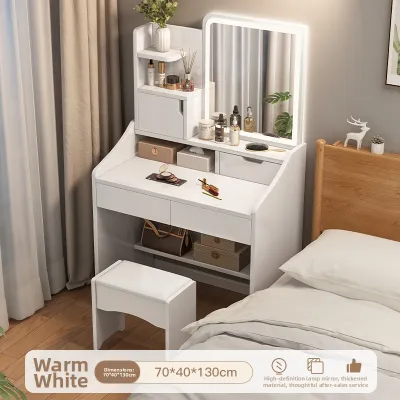
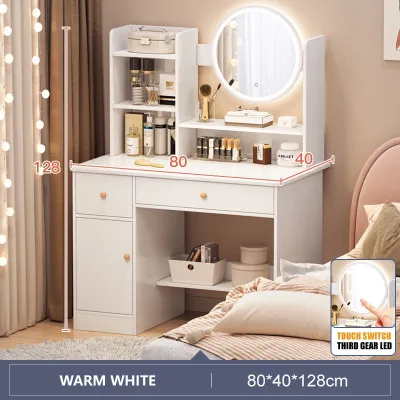
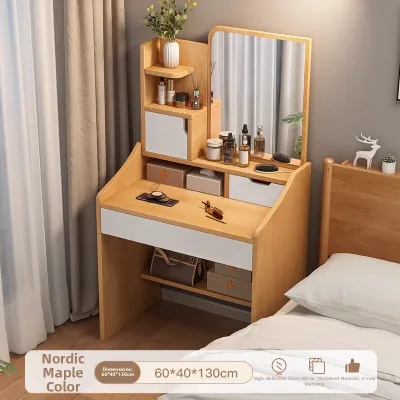
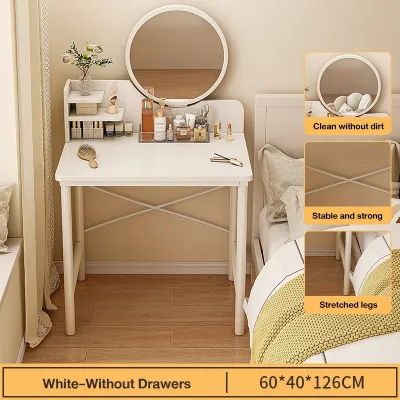
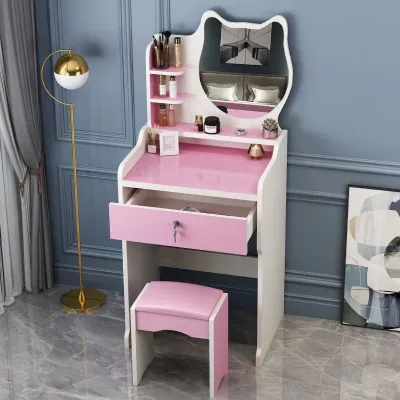
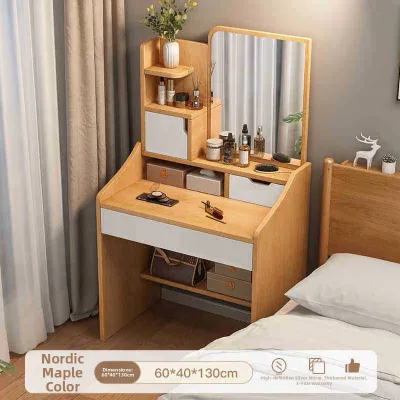
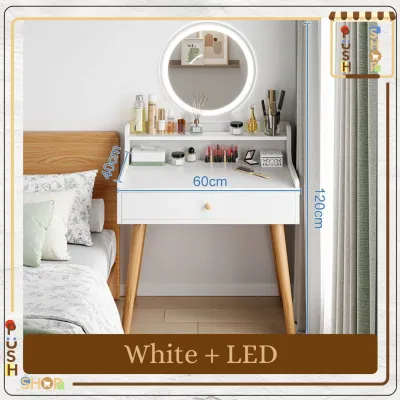
Prices are valid at publication and may change. Please refer to the product page for the latest price.
Walkway clearance and door swing paths are critical for maintaining a comfortable living environment. A vanity table requires a dedicated zone not just for the piece itself, but also for the chair and the person using it. Ensure there is at least 60 to 75 centimeters of clearance behind the table so you can pull out the stool and sit down comfortably. Verify that this seating area does not block the swing paths of entry doors, closet doors, or wardrobe drawers. A poorly placed vanity that restricts room access will quickly become a daily source of frustration.
Vertical space also requires careful inspection. Check the ceiling height and look out for any sloped ceilings, exposed beams, or wall-mounted fixtures like split-type air conditioning units. A vanity with a tall, integrated mirror might not clear these low-hanging obstacles. Finally, locate your existing electrical power outlets. Hair dryers, straighteners, and lighted mirrors all require power. Running extension cords across tight walkways creates a serious tripping hazard, so place your vanity within direct reach of an outlet, or consult a licensed electrician to safely install a new one.
Key Dimensions and Proportions for Compact Vanities
When searching for a vanity table small enough for tight layouts, understanding standard furniture proportions is essential. Manufacturers generally categorize small vanities into two main width brackets. Compact units typically measure under 60 centimeters in width, making them ideal for narrow bedside alcoves or tight corners. Standard small units range between 60 and 80 centimeters, providing a slightly larger workspace and more drawer capacity. Always verify the manufacturer’s exact dimensional specifications rather than relying on generic product labels like “mini” or “space-saving.”

Table depth is the most critical dimension for preserving floor space in narrow rooms. Shallower tabletops measuring between 30 and 40 centimeters keep walkways open and prevent the room from feeling cramped. However, a shallow depth limits the size of the mirror you can place on the table and reduces the internal storage space of the drawers. If you opt for a very shallow table, you will need to rely more heavily on wall-mounted organizers to keep the tabletop clear.
Standard vanity table heights generally range from 75 to 80 centimeters, but you must check the legroom clearance underneath. If a vanity features a thick drawer unit directly below the tabletop or a solid, decorative base, the actual space for your legs may be severely restricted. Ensure the distance from the floor to the bottom of the drawer frame allows you to sit comfortably without your knees hitting the structure.
Finally, do not forget to plan the delivery path. Measure the width of your building’s elevators, stairwells, corridors, and apartment door frames. Even if a vanity is small once assembled, the flat-pack boxes or pre-assembled frames must be able to reach your bedroom without getting stuck.
Space-Saving Designs and Configurations
Choosing the right structural configuration can dramatically improve both the utility and the visual spaciousness of a compact room. Different designs cater to various spatial layouts and daily needs.
Wall-Mounted and Floating Vanities
Floating or wall-mounted vanities are highly effective for tight spaces because they lack legs, leaving the floor underneath completely clear. This design creates the visual illusion of a larger room and makes floor cleaning much easier, preventing dust from accumulating in hard-to-reach corners.
However, floating vanities carry strict installation and safety requirements. Because these units are cantilevered, they must be anchored securely to load-bearing walls, solid concrete, or structural wall studs. Mounting a floating vanity to a simple gypsum board or hollow partition wall without proper reinforcement can lead to structural failure and damage. If you are unsure of your wall’s composition, always consult a professional carpenter or contractor to handle the installation. Additionally, if you plan to install a vanity with an integrated sink or built-in electrical wiring, the plumbing and cables must be routed through the wall, which may not be permitted in rental properties.
Fold-Down and Convertible Desks
For multi-use studio apartments, dual-purpose furniture is highly practical. Convertible desk-to-vanity setups feature a tabletop panel that lifts or folds open to reveal a hidden mirror and storage compartments underneath. When the lid is closed, the unit functions as a clean, flat writing desk or laptop station, making it perfect for those who work from home.
When selecting a fold-down or convertible unit, you must check the quality of the hardware. Inspect the hinges, gas struts, and support brackets to ensure they are robust enough for daily use. Check the manufacturer’s specified weight capacity; a poorly constructed folding mechanism will wobble or sag when you apply pressure during makeup application. Also, verify that the table in its open state does not protrude too far into your primary walkway or interfere with your bed placement.
Corner and Slim-Profile Units
Corner vanities utilize awkward, dead space that would otherwise go unused. While they are highly efficient, keep in mind that sitting diagonally requires a deeper diagonal floor footprint for your chair or stool.
Slim-profile console-style vanities offer an exceptionally narrow depth, making them suitable for placement at the foot of a bed or along a narrow hallway. If you select a slim-profile unit, check that any drawers can slide out fully without hitting the bed frame or adjacent walls.
Maximizing Storage and Functionality in a Small Footprint
To maintain daily functionality without cluttering a small vanity table, you must optimize your storage strategy. Utilizing vertical wall space is a highly effective way to keep your tabletop clear. Consider installing matching floating shelves, wall-mounted ledges, or a custom pegboard system directly above your vanity. This allows you to store daily skincare bottles, perfumes, and decorative items vertically, leaving the main table surface open for active use.
When evaluating a vanity’s built-in storage, look for smart internal configurations. A practical small vanity should feature shallow top drawers equipped with built-in dividers or acrylic organizers. These dividers prevent small items like lipsticks, brushes, and jewelry from rolling around and becoming disorganized. Deeper lower drawers or side cabinets are better suited for storing bulkier items, such as hair dryers, styling irons, or tall bottles.
Always check the drawer glide mechanisms and weight limits before purchasing. Look for smooth-rolling metal ball-bearing glides rather than simple wooden runners. In the high humidity of the Philippines, wooden drawers without proper glides can swell, warp, and jam, making them difficult to open. Verify the manufacturer’s care instructions and ensure the wood or composite material has been treated with a moisture-resistant protective finish, such as polyurethane or high-quality laminate seals. Avoid overloading small drawers beyond their specified weight limits to prevent the drawer bottoms from sagging or detaching from their tracks.
Additionally, look for vanities with multi-functional mirrors, such as mirrored cabinets or sliding mirror panels that conceal hidden shelving. This design provides ample storage space for cosmetics and toiletries while maintaining a clean, minimalist aesthetic that reduces visual clutter in a small room.
Lighting and Mirror Considerations for Small Areas
The right mirror and lighting setup can make a compact vanity highly functional while visually expanding a small room. To keep your dressing area looking light and airy, choose frameless mirrors or those with ultra-slim metal frames. Bulky, heavily ornate wooden frames add unnecessary visual weight and can make a tight corner feel cramped and dark. If possible, choose a tall mirror that extends upward toward the ceiling, as this reflects more natural light and makes the entire room feel larger and brighter.
In tight spaces, integrated LED mirror lighting is highly superior to bulky external wall sconces or standalone desk lamps. Integrated LEDs save valuable wall and tabletop space, keeping your vanity setup streamlined and free of tangled cords. If you choose a model with integrated lighting, verify that the electrical components are safety-certified and that the power cord can reach your outlet without stretching.
In the tropical climate of the Philippines, high humidity can cause cheap mirror backings to degrade over time, resulting in unsightly black spots known as mirror rot. To prevent this, check that the mirror features a high-quality protective backing seal, and ensure your bedroom has adequate ventilation, especially if it is located near an en-suite bathroom.
Common Sizing and Placement Mistakes to Avoid
Avoiding common planning and installation errors can save you from buyer’s remorse when setting up your small vanity. One of the most frequent mistakes is failing to account for the vanity chair or stool. Always measure the physical footprint of the stool and ensure it can tuck completely underneath the vanity table when not in use. If the stool protrudes into the room, it becomes a constant tripping hazard and disrupts the flow of a tight space.
Another critical mistake is placing your vanity too close to climate control fixtures. In the Philippines, placing furniture directly under or next to a split-type air conditioning unit, humidifier, or mechanical vent can expose the materials to rapid temperature and moisture changes. This constant cycling can warp solid wood, crack veneer finishes, loosen joint adhesives, and damage sensitive cosmetics. Maintain a safe distance between your vanity and any cooling or ventilation units to preserve both your furniture and your beauty products.
Finally, never assume that all “small” vanities share the same standard depth or proportions. Always cross-reference the product’s exact dimensional diagram with your physical room measurements before making a purchase. A difference of just a few centimeters can determine whether a drawer can open fully or if a walkway remains safely passable.
Frequently Asked Questions (FAQ)
Can I use a regular small desk as a vanity table?
Yes, a small writing desk or console table can easily function as a vanity, provided the height and legroom are comfortable for seated use. Because standard desks lack the specialized shallow drawers and built-in dividers found in dedicated vanities, you will need to customize the setup. You can add a high-quality tabletop or wall-mounted mirror and use acrylic organizers or small desktop trays to keep your cosmetics and tools neatly sorted. Ensure the desk’s surface finish is resistant to liquid spills and makeup stains, and check the manufacturer’s care instructions for maintaining the tabletop.
What type of chair is best for a small vanity space?
The best seating option for a compact vanity is a backless stool, an ottoman with hidden storage, or a folding chair that can be tucked entirely underneath the table when not in use. Avoid bulky office chairs with wide armrests, high backs, or large swivel bases. These designs require significant extra clearance to maneuver and will visually overcrowd a small room, disrupting the flow of your space.
Community discussion
Share your experience or ask a question. Comments are reviewed before publication.