
When looking for a net hammock for your balcony or garden in the Philippines, the primary factors to prioritize are space compatibility, weather-resistant materials, and certified weight capacities. Net hammocks are highly valued in tropical climates for their exceptional breathability, allowing cooling breezes to circulate around you during hot, humid afternoon hours. However, selecting the wrong material or using improper mounting hardware can lead to premature wear under the intense sun or sudden monsoon downpours. By matching the hammock’s specifications to your physical setup, you can establish a safe, comfortable, and long-lasting outdoor lounging area.
Evaluate Your Balcony or Garden Space for Installation
Before purchasing a net hammock, you must carefully evaluate the physical dimensions and structural integrity of your intended installation area. Balconies and gardens present very different structural challenges that dictate how your hammock should be supported and anchored safely.
For balcony installations, your primary task is identifying solid, load-bearing structures. Concrete columns, reinforced concrete walls, or structural ceiling beams are suitable anchor points, whereas decorative drywall, thin wooden railings, and hollow block partitions are unsafe. Before drilling any holes or installing heavy-duty anchors, check your condominium or subdivision’s property management guidelines. Many homeowner associations restrict exterior modifications, drilling into structural concrete, or hanging items that extend past the balcony railing. If permanent drilling is prohibited, a compact, self-supporting metal hammock stand is an excellent alternative that fits within limited balcony footprints.
Products mentioned in this guide
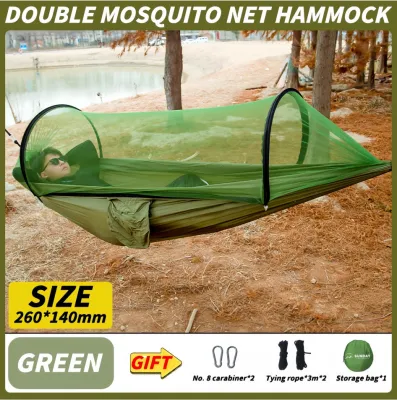
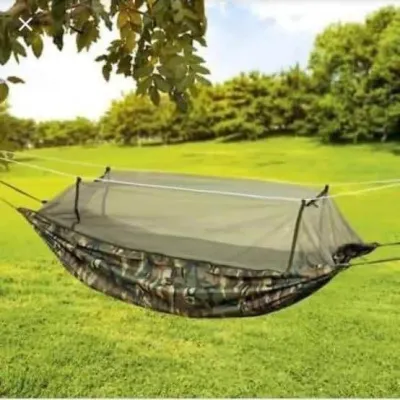
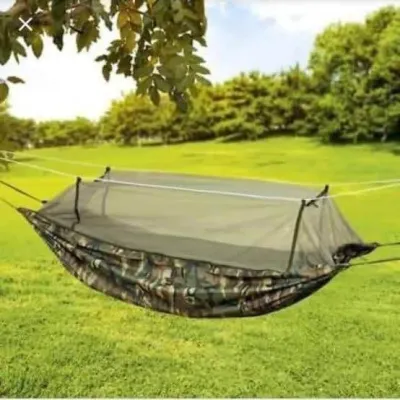
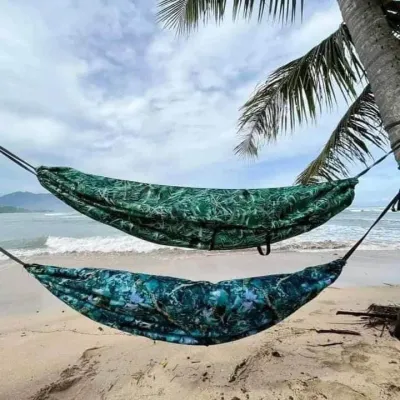
Prices are valid at publication and may change. Please refer to the product page for the latest price.
For garden installations, look for healthy, mature trees that can easily support your weight. Inspect the trees for signs of decay, hollow trunks, or dead branches overhead that could pose a safety hazard. As a general rule, consult the hammock manufacturer’s instructions for the minimum trunk diameter required; most manufacturers recommend trees with a diameter of at least 15 to 20 centimeters. If your garden lacks suitable trees, a weather-treated wooden or powder-coated steel hammock stand can be placed on a flat, level lawn or patio surface.
Regardless of where you hang your net hammock, you must calculate the clearance and sag. Measure the horizontal distance between your two anchor points. Most traditional net hammocks require a distance of approximately 3 to 4 meters to hang correctly. The suspension ropes or straps should angle upward at roughly 30 degrees to create a gentle, banana-shaped curve. Ensure that the lowest point of the hammock sits at least 30 to 50 centimeters off the ground when occupied, preventing the fabric from dragging or bottoming out.
Select Net Materials Suited for Tropical Climates
The climate in the Philippines is characterized by high humidity, intense UV exposure, and heavy seasonal rainfall. These environmental factors will rapidly degrade poorly chosen materials, making material selection one of your most critical purchasing decisions.

While net hammocks are celebrated for their open-weave breathability—which prevents sweat buildup on humid afternoons—the netting can easily trap dirt and moisture if left exposed. To ensure longevity, do not rely on generic material names alone. A label that simply states “polyester” or “cotton” does not guarantee weather resistance. Look for verified manufacturer specifications indicating UV-stabilized coatings, marine-grade synthetic fibers, or mold-resistant treatments.
Synthetic fibers like polyester and treated nylon are highly recommended for Philippine outdoor spaces. These materials resist moisture absorption, meaning they dry quickly after sudden tropical showers and are highly resistant to mold, mildew, and rot. Untreated natural cotton, while exceptionally soft and comfortable against bare skin, is highly absorbent. If left in a damp garden or humid balcony, cotton fibers will quickly develop black mold and weaken structurally, posing a safety risk. If you prefer the feel of cotton, ensure it is treated with a water-repellent finish, and be prepared to bring it indoors after every use.
Next, inspect the weave density and knot quality. Fine, tightly woven netting (often referred to as micro-weave or Mayan-style) distributes your body weight more evenly and prevents fingers, toes, or buttons from getting caught in the gaps. Examine the gathered ends where the net meets the suspension loops. High-quality net hammocks feature hand-tied or reinforced machine-woven knots that prevent unraveling under tension. Always check the manufacturer’s care instructions; synthetic net hammocks can often be hand-washed with mild soap and cool water, then air-dried in the shade to maintain their structural integrity.
Check Sizing and Weight Capacity for Safety
To avoid accidents and ensure maximum comfort, you must verify the physical dimensions and load limits of the net hammock before finalizing your purchase. Never guess or assume capacities based on visual appearance alone.
Start by comparing single and double net hammocks. A single hammock is designed for one person and typically features a bed width of 100 to 140 centimeters. A double hammock, with a bed width of 150 to 180 centimeters or more, allows you to lie diagonally. Lying diagonally is the correct way to use a hammock, as it flattens the net under your body, preventing your back from curving uncomfortably. However, double hammocks require a wider spread between anchor points and more clearance. Always check both the “bed length” (the woven net portion) and the “total length” (including the end loops and integrated suspension cords) to ensure it fits your designated space.
Weight capacity is a non-negotiable safety specification. Always locate the manufacturer’s explicitly stated maximum weight limit, which typically ranges from 100 kilograms for budget single models to over 200 kilograms for heavy-duty double models. When calculating your needs, always include a safety margin for dynamic movement. The force exerted when gently sitting down or shifting positions is significantly higher than your static weight. If you weigh 80 kilograms, choosing a hammock rated for at least 120 to 150 kilograms provides an essential safety buffer.
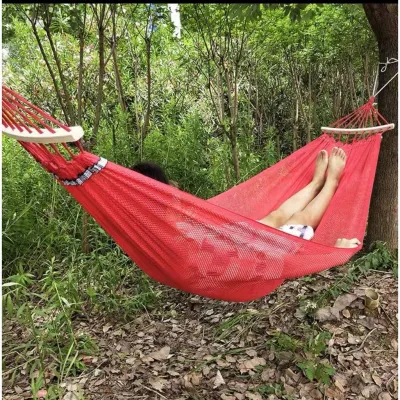
Additionally, consider the design style. Gathered-end net hammocks bunch together at the head and foot, cocooning your body. They are highly stable and make it difficult to accidentally fall out. Spreader-bar net hammocks utilize wooden or metal bars at each end to keep the net permanently splayed open. While spreader-bar designs look inviting and stay flat, they have a higher center of gravity, making them much more prone to tipping or flipping if you shift your weight off-center.
Choose the Right Hardware and Accessories
A net hammock is only as secure as the hardware holding it up. Investing in high-quality, load-rated suspension accessories is essential to prevent structural damage to your home, protect your garden trees, and keep you safe.
When choosing suspension hardware, match the accessories to your specific anchor points. For garden trees, never use bare ropes, wires, or chains, as these will cut into the bark, damaging the tree’s vascular system and potentially killing it. Instead, use wide tree straps made of heavy-duty, non-stretch polyester webbing (at least 2.5 to 5 centimeters wide). For concrete balcony walls or overhead beams, use heavy-duty steel expansion bolts or masonry anchors.
Before drilling or installing any anchor bolts, check the manufacturer’s instructions for both the hardware and your hammock. If you are unsure about the structural integrity of your wall or the correct installation method, stop and consult a qualified professional contractor. Ensure all carabiners, S-hooks, and wall mounts are explicitly load-rated to meet or exceed the maximum weight capacity of your hammock setup. Avoid cheap, decorative hardware from online marketplaces that lacks certified load ratings.
Because net hammocks feature an open weave, they offer no protection against environmental elements. Consider purchasing compatible accessories to enhance your comfort. A lightweight rain tarp or sun shade is highly beneficial for garden setups to block intense midday UV rays and sudden drizzles. If you plan to lounge in your garden during the early morning or evening, an attachable mosquito net is an essential accessory to protect yourself from mosquitoes and other biting insects common in tropical environments.
Finally, establish a routine safety check. Inspect your hardware and straps at least once a month. Look for signs of rust on metal carabiners and eye bolts, and check straps and net loops for fraying, sun bleaching, or fiber degradation. In humid coastal areas of the Philippines, salty air accelerates metal corrosion, requiring more frequent inspections and the use of marine-grade stainless steel hardware.
Adapt Your Setup for Balcony and Garden Use
Optimizing your net hammock setup involves adapting to the specific microclimate of your balcony or garden to maximize both comfort and product lifespan.
On a balcony, wind exposure is a major consideration, especially on higher floors of condominium buildings. Strong gusts can catch an empty net hammock, causing it to swing violently and potentially damage glass sliding doors, windows, or railings. To prevent this, always untie or unhook at least one end of the hammock and secure it when not in use. Additionally, if your balcony is semi-enclosed, ensure the hammock is completely dry before storing it nearby to prevent musty odors and indoor humidity issues.
In a garden setting, position your hammock in a partially shaded area under a tree canopy or patio roof. This not only keeps you cool but also shields the synthetic netting from direct, prolonged UV exposure, which can weaken the fibers over time. If you are using tree straps, remember to adjust them periodically. As trees grow, the trunk diameter expands, and straps left in place for years can girdle the tree. Loosening and repositioning the straps annually prevents this damage.
For both setups, proper seasonal storage is the most effective way to extend your hammock’s lifespan. During the heavy rains of the wet season or when a typhoon warning is active, do not leave your hammock outdoors. Take the net hammock down, ensure it is completely dry, and store it in a breathable storage bag in a cool, dry indoor space. This simple habit prevents mold growth, fabric rot, and premature hardware failure.
Frequently Asked Questions (FAQ)
Can I leave my net hammock outside all year round in the Philippines?
No, leaving any net hammock permanently exposed to the elements in the Philippines is not recommended. The combination of intense tropical UV rays, high humidity, and heavy seasonal rainfall will rapidly degrade even high-quality synthetic fibers and cause metal hardware to rust. To maximize the lifespan of your hammock, take it down and store it indoors during the wet season or whenever it will go unused for an extended period.
Is a net hammock comfortable for sleeping overnight?
While net hammocks are excellent for daytime lounging and short afternoon naps due to their superior airflow, they are generally not ideal for overnight sleeping. The open weave of the netting can press into your skin over several hours, leaving temporary patterned marks and potentially causing discomfort. Additionally, net hammocks lack the structured back support required for a full night’s sleep, and adding a thick mattress pad to improve comfort will block the airflow, defeating the primary benefit of the net design. For overnight sleeping, a solid fabric camping hammock is a more suitable choice.
Community discussion
Share your experience or ask a question. Comments are reviewed before publication.