
Finding the right cabinet for kitchen storage requires looking beyond aesthetics to evaluate how a piece of furniture handles your specific household items. Whether you need to house delicate glassware, heavy cooking pots, or dry pantry staples, the ideal buffet cabinet must offer a structural layout that matches your daily routine. By selecting a configuration that balances open display with concealed, heavy-duty storage, you can keep your dining and cooking spaces organized and clutter-free.
In tropical climates like the Philippines, where humidity levels fluctuate throughout the year, choosing the right storage setup also involves protecting your items from moisture and dust. A well-chosen cabinet serves as an extension of your kitchen, bridging the gap between food preparation and dining. To make an informed decision, you must first audit your current kitchen overflow and understand how different cabinet designs serve different storage functions.
Assess Your Kitchen Storage Needs
Before browsing designs, take a detailed inventory of the items currently cluttering your countertops and kitchen shelves. Group these items into distinct categories: everyday dinnerware, bulky small appliances, seasonal serving platters, and dry pantry goods. Understanding exactly what needs to go inside the cabinet prevents you from purchasing a unit with unusable shelf heights or insufficient weight capacities.
Products mentioned in this guide
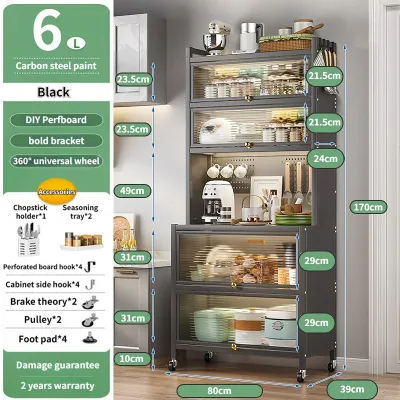
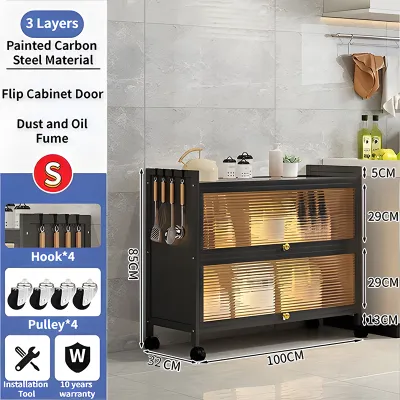
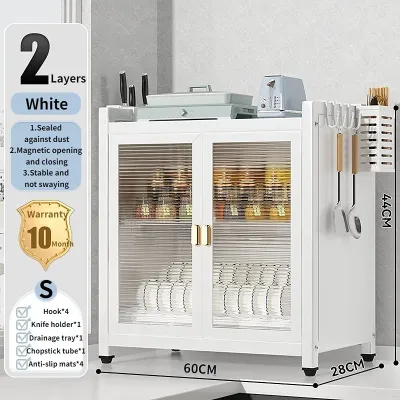
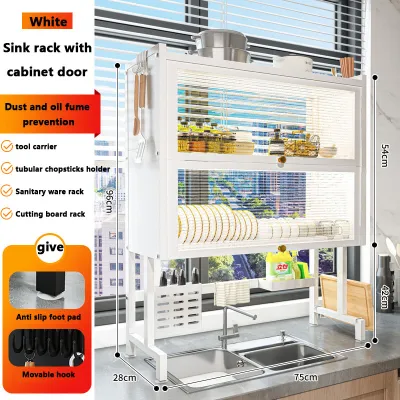
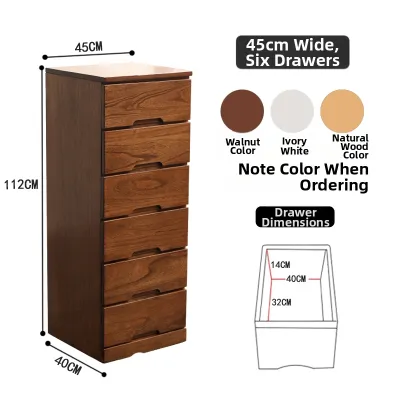
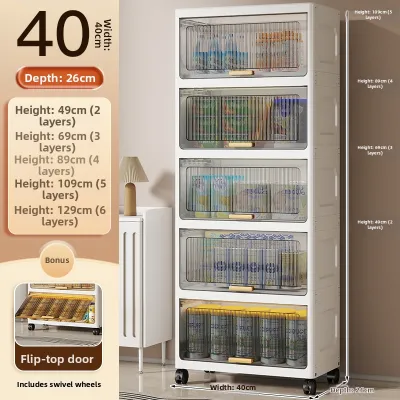
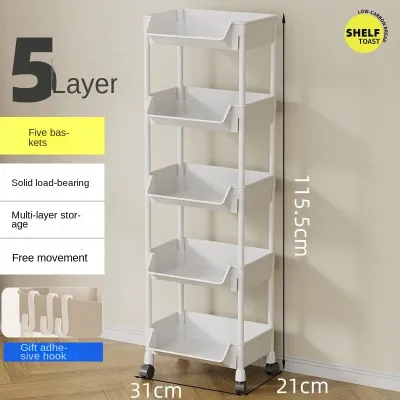
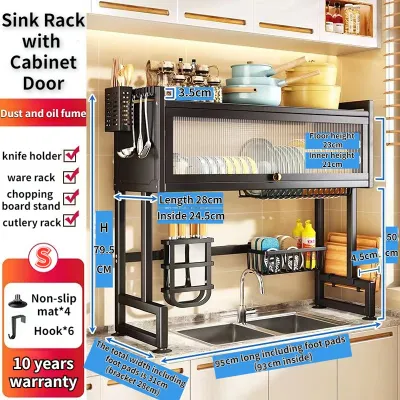
Prices are valid at publication and may change. Please refer to the product page for the latest price.
Next, determine how frequently you access each group of items. Daily-use plates, bowls, and coffee mugs should reside at a comfortable waist-to-shoulder height for quick retrieval. Conversely, seasonal items like large serving platters or holiday-themed glassware can be placed on higher shelves or deeper within the cabinet. If you plan to store heavy appliances like rice cookers, stand mixers, or air fryers, these must be allocated to the lowest, most stable sections of the unit.
Finally, identify the primary zone where the cabinet will stand. A cabinet placed directly in the dining room often functions as a display piece for fine glassware and a serving station during family gatherings. A cabinet positioned inside a busy kitchen or utility area, however, prioritizes maximum utility and closed storage to hide pantry clutter. Defining this zone helps you decide whether to prioritize glass doors and open shelving or solid, fully enclosed compartments.
Match Cabinet Configurations to Your Items
The internal layout of a cabinet for kitchen storage directly dictates its daily usability. A static cabinet with fixed shelves limits your ability to adapt to changing storage needs over time. Look for configurations that combine adjustable shelving, deep drawers, and a mix of open and closed compartments to maximize versatility.

Storing Dishes and Glassware
Fragile dinnerware and glassware require stable, highly adjustable shelving to prevent accidental chips and breakage. Look for cabinets featuring shelves with multiple peg holes, allowing you to customize the vertical clearance based on the height of your stacked plates or tall wine glasses. This flexibility prevents you from wasting vertical space or stacking items too high, which makes them unstable and difficult to retrieve.
For items you use frequently or wish to showcase, consider glass-front doors or open shelving. Glass doors offer the visual benefit of an open display while providing a crucial barrier against dust, pests, and airborne grease from cooking. If your dining area is located near a high-traffic hallway or entryway, fully enclosed glass doors keep your clean dishes protected from ambient dust.
When evaluating glass doors, check the manufacturer’s specifications for tempered glass to ensure safety in busy households. Additionally, look for doors with magnetic catches or soft-close hinges. These features prevent doors from slamming shut, reducing the risk of vibrations that could cause delicate glassware inside to shift or tip over.
Organizing Cookware and Heavy Items
Bulky cookware, cast iron pans, and small kitchen appliances require robust structural support. Prioritize deep lower cabinets with solid doors or heavy-duty drawers that can handle substantial weight without sagging. Storing these heavy items near the base of the cabinet also lowers the unit’s overall center of gravity, significantly improving stability.
Before purchasing, verify the thickness of the shelves and the strength of the supporting brackets or pegs. Thin composite shelves can bow over time under the weight of heavy ceramic baking dishes or metal pots. Look for solid wood or reinforced shelving options, and check the manufacturer’s load capacity ratings for individual shelves and drawers to ensure they meet your storage requirements.
Adequate cabinet depth is another critical factor for cookware storage. Standard dinner plates fit comfortably in shallower cabinets, but large frying pans, stockpots, and appliance boxes often require a depth of at least 40 to 45 centimeters. Measure your largest pots and appliances beforehand to ensure they will fit completely inside with the cabinet doors fully closed.
Managing Pantry Goods and Dry Ingredients
If you plan to use your cabinet as an auxiliary pantry, the configuration should focus on visibility and organization for smaller items. Opt for units with multiple closely spaced shelves or shallow drawers. This setup prevents small spice jars, canned goods, and condiment bottles from getting lost behind larger packages, reducing food waste and double-buying.
Solid doors are highly recommended for pantry storage to protect dry ingredients from direct sunlight and heat. Exposure to sunlight can accelerate the spoilage of oils, spices, and dry goods, especially in warm, tropical environments. Fully enclosed wooden or laminate doors keep your pantry items in a dark, cool environment, helping to preserve their shelf life.
For maximum convenience, look for cabinets that feature smooth drawer glides or accommodate pull-out wire baskets. Pull-out organizers allow you to easily access items stored at the very back of the cabinet without having to remove everything in front. Ensure the drawer slides operate smoothly under load and feature pull-out stops to prevent drawers from accidentally slipping out of their tracks.
Evaluate Space, Dimensions, and Clearance
A cabinet for kitchen storage must fit harmoniously within your room without obstructing daily foot traffic. Begin by measuring the exact floor footprint where you plan to place the unit. Be sure to account for baseboards, wall trim, and any unevenness in your flooring or walls, as these factors can prevent a cabinet from sitting flush against the wall.
Next, carefully evaluate the clearance required for doors and drawers to open fully. Standard swing doors and pull-out drawers require ample clearance space in front of the cabinet. Measure the distance between the proposed cabinet location and nearby dining tables, chairs, or kitchen islands. If space is tight, consider cabinets with sliding doors, which provide full access to the interior without encroaching on your walkway.
Do not overlook the delivery path when planning your purchase. Measure the width and height of all entryways, hallways, stairwells, and elevator doors through which the cabinet must pass. If you live in a multi-story home or a condominium, ensuring the boxed or fully assembled cabinet can navigate tight corners is just as important as verifying its final placement in your dining area.
Check Material and Build Quality for Kitchen Use
Kitchen and dining environments expose furniture to unique challenges, including moisture, spills, and temperature shifts. When evaluating materials, inspect the surface finishes to ensure they are easy to clean. Look for manufacturer labels indicating water-resistant or wipeable finishes, which allow you to easily clean up spills from sauces, oils, or water without staining the surface.
Examine the joint construction and hardware quality of the cabinet. High-quality joints, such as dowels or reinforced screws, provide long-term structural integrity compared to simple glued joints. Check that the hinges, drawer slides, and handles are made of durable, corrosion-resistant metals that can withstand the high relative humidity common in tropical regions.
Finally, review the manufacturer’s care instructions to ensure the cabinet’s materials are compatible with your home’s environment. Some natural wood veneers or untreated solid woods may require regular conditioning or specific humidity controls to prevent warping or cracking. Choosing a material with a protective, sealed finish ensures your cabinet remains stable, functional, and visually appealing for years to come.
Frequently Asked Questions (FAQ)
Can a buffet cabinet be used in a small kitchen?
Yes, a buffet cabinet can be highly effective in a small kitchen if you select a model with a shallow depth. Look for units with a depth of 30 to 35 centimeters, which provide ample space for plates and pantry goods without blocking narrow walkways. Utilizing vertical space with a taller hutch-style cabinet or choosing sliding doors instead of swing doors also helps maximize storage capacity while preserving valuable floor space.
How do I prevent a freestanding buffet cabinet from tipping?
To ensure safety, always secure a freestanding buffet cabinet to the wall using anti-tip hardware or wall-anchor kits, which are often included in the product packaging or available at local hardware stores. Additionally, place your heaviest items—such as cast iron cookware, small appliances, and heavy canned goods—on the lowest shelves or in the bottom drawers. This lowers the cabinet’s center of gravity, making it significantly more stable and resistant to tipping.
Community discussion
Share your experience or ask a question. Comments are reviewed before publication.