
Finding the right couch with storage box for a household of three to five people requires balancing daily seating comfort with practical organization. A large family demands a configuration that can withstand heavy daily use, accommodate everyone during shared activities, and offer easily accessible storage without cluttering the living area. The ideal choice depends heavily on your room’s layout, how often you rearrange your furniture, and the specific items you plan to store.
Assessing Your Family's Seating and Storage Needs
To make an informed decision, start by analyzing your family’s daily habits and seating patterns. A household of three to five people typically requires a minimum of four dedicated seats for comfortable daily lounging, but you must also account for guests, extended family, or children who like to stretch out. If your family frequently gathers in the living room simultaneously, a configuration that allows everyone to face each other or the television without feeling cramped is essential.
Next, identify exactly what you intend to store inside the couch compartments. In tropical climates like the Philippines, high humidity levels mean that stored items must be protected from moisture and dust. If you plan to store bulky seasonal blankets, extra pillows, or guest linens, you will need a deep, continuous compartment like those found under a chaise lounge. For smaller, frequently used items such as children’s toys, board games, or media accessories, shallower, segmented compartments or pull-out drawers are far more practical because they allow for quick access without disrupting anyone who is currently seated.
Products mentioned in this guide
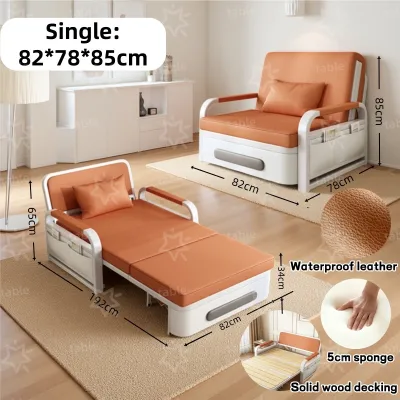
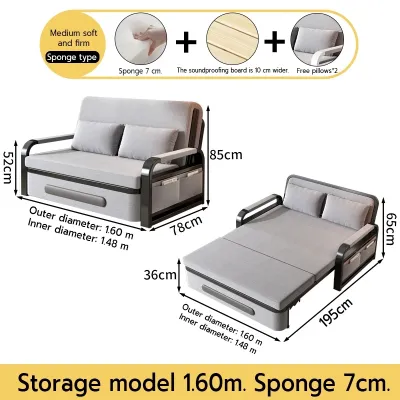
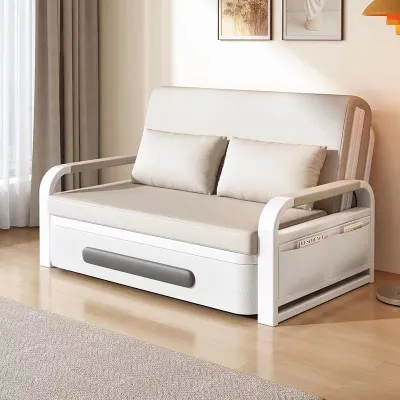
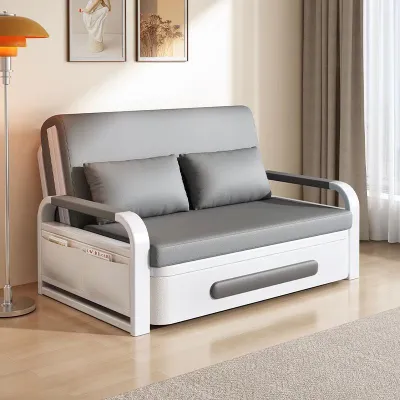
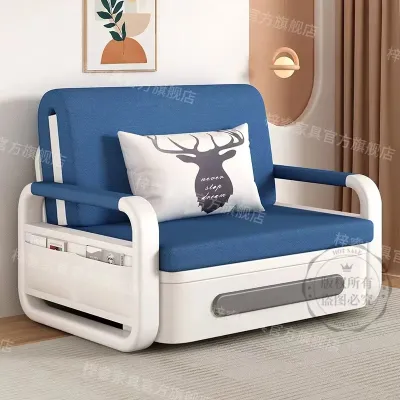
Prices are valid at publication and may change. Please refer to the product page for the latest price.
Finally, evaluate your primary room layout to understand how the couch will anchor the space. A large couch can easily overwhelm a room if its visual weight and physical dimensions are not carefully matched to the floor plan. Consider the natural traffic flow of your home, ensuring that the couch does not block entryways, pathways to other rooms, or access to balconies and windows.
Comparing Storage Couch Configurations for Large Households
Choosing between an L-shaped sectional, a modular sofa, or a standard linear couch requires a clear understanding of how each structure functions in a shared family space. Each configuration offers distinct advantages in terms of seating capacity, storage distribution, and spatial flexibility.

The decision matrix should weigh room shape against your household’s need for adaptability and the specific storage mechanisms available. While one configuration might maximize corner space, another might offer superior flexibility for future home moves or room redecorations.
L-Shaped Sectionals With Storage
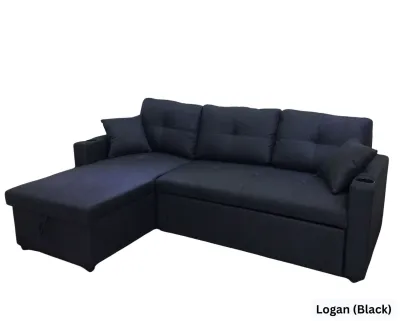
L-shaped sectionals with storage are highly efficient for maximizing seating in corner placements, making them a popular choice for open-plan living areas or large family rooms. These couches typically feature a lift-up storage mechanism located inside the chaise lounge portion. Because the chaise is longer and deeper than standard seats, it provides a massive, continuous storage compartment that is ideal for bulky items like spare mattresses, heavy blankets, or travel gear.
However, L-shaped sectionals come with notable limitations, particularly regarding their fixed orientation. When purchasing, you must choose between a left-facing or right-facing chaise, which permanently dictates how the couch can be positioned in your room. This lack of flexibility can become a major drawback if you decide to rearrange your living room or move to a new home. Additionally, the large, single-piece frame of a sectional chaise can be exceptionally difficult to maneuver through narrow doorways, tight stairwells, or standard apartment elevators during delivery.
Modular Sofas With Hidden Compartments
Modular sofas with hidden compartments offer excellent flexibility for growing or active families. These systems consist of individual seat units, or modules, that can be rearranged into various configurations, such as a long linear sofa, an L-shape, or even separate seating blocks. Each individual module typically features its own independent under-seat storage box, distributing your storage space across multiple smaller compartments rather than one large bin. This setup is highly convenient for separating different types of items, such as keeping toys in one module and media cables in another.
The modular design also simplifies delivery and assembly, as each unit can easily fit through narrow corridors and standard doorways. However, when selecting a modular storage sofa, it is critical to check the stability of the interlocking mechanisms that hold the modules together. Without robust connectors, the individual units may slide apart during daily use, especially when children or multiple adults sit down. Additionally, you should verify the weight capacity of each individual module to ensure it can support active family use over time.
Standard 3-to-5 Seater Couches With Storage Boxes
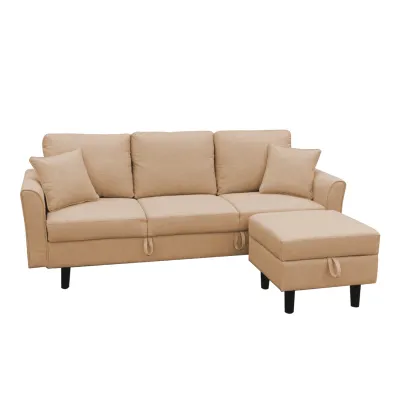
Standard 3-to-5 seater couches with storage boxes are the most practical choice for narrow, rectangular, or compact living rooms. Unlike sectionals or modular setups that extend outward into the room, a standard linear couch maintains a shallow depth, preserving essential walkway space and preventing the room from feeling overcrowded. Storage in these models is typically accessed via a central pull-out drawer at the base or a lift-up seat cushion.
Accessing storage in a standard couch can sometimes be more straightforward than in a sectional, especially if the model features smooth-gliding pull-out drawers that do not require you to lift heavy cushions. However, pull-out drawers require significant clearance space in front of the couch to open fully, meaning you cannot place a heavy coffee table directly in front of the sofa without blocking access. If your living room layout is tight, a lift-up seat mechanism might be more appropriate, though it requires anyone sitting on that section to stand up before you can open the compartment.
Critical Space, Delivery, and Assembly Checks
Before finalizing your purchase of a couch with storage box, conducting precise physical checks is essential to avoid costly delivery failures and layout mistakes. Start by measuring the intended floor space in your living room, mapping out the exact footprint of the couch using painter’s tape or newspaper. Be sure to leave at least 60 to 90 centimeters of clearance for walkways around the couch, and account for the extra space needed to fully extend pull-out drawers or lift up storage seats without hitting coffee tables, TV consoles, or walls.
Next, meticulously verify the delivery path from the delivery truck to your living room. Measure the width and height of all door frames, hallway turns, stairwell clearances, and elevator doors. Many apartment buildings and condominiums have strict size limits for freight elevators, so confirming these dimensions with your building administration beforehand is crucial. If you are opting for a large, single-piece L-shaped sectional, ensure that the chaise unit can clear any low ceilings or tight corners along the entry path.
Finally, consider the structural support and weight-bearing capacity of both the couch and your home’s flooring. A storage couch is inherently heavier than a standard sofa because of the built-in wooden or metal storage boxes and the hydraulic lifting hardware. When these compartments are fully loaded with heavy books, toys, or linens, the total weight increases significantly. Check that the couch features sturdy, wide legs or a solid plinth base that distributes weight evenly to prevent denting or damaging your flooring, especially if you have soft wood or vinyl tiles.
Upholstery and Maintenance for High-Traffic Homes
For a high-traffic family home with three to five people, selecting the right upholstery and maintaining the couch’s structural components are vital for long-term durability. Rather than assuming a fabric is durable based on its name alone, always check the manufacturer’s specifications for the Wyzenbeek or Martindale rub count. For a busy household, look for fabrics rated for heavy domestic or commercial use, typically exceeding 15,000 to 20,000 rubs, to ensure the material will not thin or pill quickly.
Stain resistance is another critical factor, especially if you have young children or pets. Look for fabrics treated with water-repellent finishes, or opt for synthetic fibers like polyester and nylon blends, which are naturally easier to clean than delicate natural fibers. If possible, choose a storage couch with fully removable and machine-washable covers. This feature is incredibly practical for busy families, allowing you to easily wash away spills, sweat, and dust without needing expensive professional cleaning services.
In addition to fabric care, plan for regular structural maintenance of the storage mechanisms. The hydraulic gas struts or spring hinges used in lift-up storage compartments are under constant tension and should be inspected periodically for smooth operation. Check that the hinges are securely bolted to the wooden frame and tighten any loose screws immediately to prevent the lid from aligning incorrectly or warping. For modular configurations, regularly inspect the interlocking brackets or alligator clips under the seats to ensure they remain tightly joined, preventing the modules from shifting and causing structural wear.
Frequently Asked Questions (FAQ)
Can a storage couch support the weight of multiple adults sitting at once?
Yes, a high-quality storage couch can comfortably support multiple adults, but you must verify the manufacturer’s specified weight capacity before purchasing. Look for couches constructed with solid hardwood or reinforced metal frames rather than lightweight particleboard, as the frame must support both the weight of the seated individuals and the structural load of the storage compartment. Always check the maximum weight limit per seat or module, which typically ranges from 100 to 135 kilograms per seat in well-built models. Additionally, avoid overloading the storage boxes themselves with excessively heavy items, as this can put downward pressure on the base panel and cause it to sag or detach from the frame over time.
Is it better to have lift-up seats or pull-out drawers for storage?
The choice between lift-up seats and pull-out drawers depends on what you plan to store and how much clearance space you have in front of the couch. Lift-up seats, often assisted by hydraulic gas struts, provide access to the entire interior cavity of the couch, making them excellent for storing large, bulky items that you do not need to access daily. However, you must remove any throw pillows, blankets, or seated family members before lifting the seat. Pull-out drawers, on the other hand, offer quick and easy access to smaller items without requiring anyone to get up, but they require ample open floor space in front of the couch to slide open. Ensure you check the quality of the drawer glides or hydraulic hinges in the product specifications to guarantee they operate smoothly under daily use.
Community discussion
Share your experience or ask a question. Comments are reviewed before publication.