
Choosing the right bedroom furniture requires a careful balance of aesthetic appeal, spatial limits, and daily utility. If you are looking to upgrade your bedroom with a Mila Living dresser or vanity, you are likely trying to solve a specific problem: either your wardrobe is overflowing, or your morning grooming routine lacks a dedicated, organized space. Selecting the incorrect model can lead to a cramped room, blocked walkways, or storage that does not actually fit your belongings.
To make a smart investment, you must evaluate your bedroom’s physical layout, diagnose your actual storage habits, and understand the functional differences between various furniture categories. By taking a systematic approach to measurements, ergonomics, and local environmental factors, you can find the exact piece that fits both your lifestyle and your floor plan.
Measure Your Bedroom Space and Clearance Requirements
Before browsing any furniture catalog, you must understand the exact physical limits of your bedroom. Eyeballing a space often leads to purchasing furniture that dominates the room or blocks essential pathways. Start by using a metal tape measure to map out the exact floor area where you plan to place the unit, taking note of existing pieces like your bed frame, wardrobes, and bedside tables.
Products mentioned in this guide
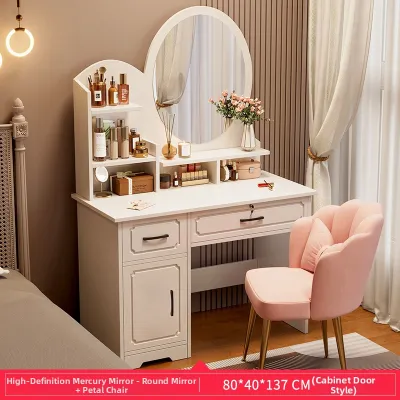
Prices are valid at publication and may change. Please refer to the product page for the latest price.
Clearance is just as critical as the physical footprint of the furniture. A dresser or vanity may fit perfectly when its drawers are closed, but it can quickly become an obstacle when opened. To calculate the necessary clearances, follow these guidelines:
- Drawer Extension: Standard drawers typically slide out by 30 to 45 centimeters. Ensure there is at least 60 centimeters of open space in front of the unit so you can stand comfortably while opening drawers fully.
- Door Swings: If you are considering a unit with cabinet doors, measure the full swing radius of the doors to ensure they do not collide with your bed frame or bedside tables.
- Walkways: Maintain a clear pathway of at least 70 to 80 centimeters between the extended drawers and any parallel surfaces to ensure safe movement through the room.
Never rely on generic size assumptions when planning your layout. Always cross-reference your physical measurements with the exact length, width, and depth specifications listed on the official Mila Living product pages before making a decision.
Additionally, consider the local indoor climate when positioning your furniture. In the humid tropical climate of the Philippines, pushing wooden furniture flush against a concrete wall traps moisture and restricts airflow. This lack of ventilation can lead to mold growth on the back panel of your dresser and ruin your clothes. To prevent this, plan for a safety gap of at least 5 to 10 centimeters between the back of the furniture and the wall to allow adequate air circulation.
Evaluate Your Daily Grooming and Storage Habits
Your daily routine should dictate the type of furniture you buy. If you purchase a piece based solely on how it looks, you may find yourself struggling with impractical storage or poor ergonomics. Begin by taking a quick inventory of the items you need to store, separating them into distinct categories.

Folded clothing, such as denim, t-shirts, towels, and bed linens, requires deep, wide drawers that can handle bulk. Conversely, small cosmetics, skincare bottles, jewelry, and hair accessories are easily lost in deep drawers; these items are much better suited for shallow, partitioned drawers or dedicated countertop organizers.
Understanding the ergonomic differences between a standard dresser and a dedicated vanity will help you choose the right category:
- Standard Dressers: These units typically stand between 80 and 95 centimeters high. They are designed for standing use, allowing you to quickly grab folded clothing or accessories on your way out.
- Dedicated Vanities: These are designed specifically for seated use, usually standing around 75 centimeters high. They feature a central knee well (open space underneath) so you can pull a stool or chair close, along with an integrated mirror at eye level.
To decide which setup is right for you, perform a quick self-check. If your primary daily frustration is a lack of closet space and piles of folded clothes on your chairs, a high-capacity dresser is your priority. If your main pain point is a cluttered bathroom counter, poor lighting for your morning skincare, and having to stand while applying makeup, a dedicated vanity is the superior choice.
Finally, remember to verify the internal drawer dimensions and weight capacity specifications on the Mila Living product sheets. Storing heavy items in drawers that are only rated for light cosmetics can cause the drawer glides to warp or the drawer bottoms to sag over time.
Match Your Profile to Mila Living Furniture Categories
Once you have diagnosed your spatial limits and storage habits, you can match your needs to the specific categories within the Mila Living range. The brand offers distinct configurations designed for different bedroom sizes and functional requirements.
Compact Vanities for Small or Shared Bedrooms
If you live in a studio apartment, a shared condominium, or a bedroom with limited floor space, a compact vanity is often the best choice. These models feature narrow depths and vertical storage configurations, allowing you to establish a dedicated grooming station without sacrificing precious walking space.
When shopping for space-constrained rooms, look for Mila Living models that incorporate smart, multi-functional design elements. Features like foldable mirrors—which can be flipped down to transform the vanity into a temporary writing desk—or hidden compartments beneath the tabletop are excellent for maximizing utility. Always verify the exact width of the vanity to ensure it can slide neatly into tight alcoves, corners, or the space directly adjacent to your bedside.
Standard Dressers for High-Volume Clothing Storage
For bedrooms where wardrobe organization is the primary concern, a standard 5-drawer or 6-drawer dresser is the ideal solution. These units maximize horizontal storage, providing wide, deep drawers that can accommodate bulky fabrics and seasonal bedding.
When evaluating a standard dresser, pay close attention to the construction details. Check the manufacturer specifications for high-quality drawer glide mechanisms, such as smooth-rolling metal runners, which ensure the drawers remain easy to pull open even when packed with heavy items like jeans or thick towels. Review the internal depth of the drawers to ensure they can accommodate your preferred folding method, whether you roll your clothes vertically or stack them flat.
Combo Units for Dual-Purpose Functionality
If you need both clothing storage and a dedicated grooming station but only have room for a single piece of furniture, a dresser-vanity combo unit offers an excellent middle ground. These hybrid designs typically feature a multi-tiered layout, combining a standard chest of drawers on one side with a lower, open-center vanity desk and an attached mirror on the other.
Before purchasing a combo unit, carefully verify the dimensions of the seated section. Ensure the knee clearance height and width are compatible with your preferred stool or chair. Additionally, check the structural stability of the attached mirror assembly; because these units are wider and heavier than standard dressers, they require robust joints and a level floor to prevent the mirror frame from wobbling during daily use.
Final Checks: Delivery, Assembly, and Safety Standards
Before finalizing your purchase, you must plan for the logistics of getting the furniture into your home and securing it safely. Many buyers overlook the physical path the furniture must travel, leading to delivery day complications.
Measure all delivery clearances along the path to your bedroom. This includes the width and height of your front door frame, narrow hallway corners, stairwells, and condominium elevators. Compare these measurements against the packaged box dimensions listed on the Mila Living product details to ensure the delivery team can safely transport the boxes to your room without damaging your walls or the furniture.
Next, understand the assembly requirements of your chosen model. Review the product page to see if the unit arrives fully assembled, partially assembled, or flat-packed. Flat-pack units require patience, basic tools, and often a two-person lift to assemble safely. If you do not have the tools or the time, check if professional assembly services are available in your area.
Finally, prioritize home safety by addressing tip-over hazards. Tall dressers, heavy chest of drawers, and large combo units can easily tip over if multiple drawers are pulled open simultaneously or if a child attempts to climb on them.
To prevent serious accidents, always secure your furniture to the wall using the manufacturer-provided anti-tip kits. Because many homes in the Philippines feature concrete, hollow block, or brick walls rather than drywall, you must verify the wall type in your bedroom. If the included wall anchors are designed solely for drywall, visit a local hardware store to purchase appropriate masonry plugs and heavy-duty screws to ensure a secure, permanent anchor.
Frequently Asked Questions (FAQ)
Can I use a standard Mila Living dresser as a makeup vanity?
Yes, you can repurpose a standard dresser as a makeup vanity, but you must account for the ergonomic differences. Standard dressers are typically 80 to 95 centimeters high, which is designed for standing. If you want to sit, you will need a tall bar stool rather than a standard vanity chair, and you must ensure there is enough clearance for your knees, as dressers do not have an open knee well. You will also need to add a tabletop mirror or mount a mirror on the wall directly above the dresser.
How do I protect my dresser or vanity from humidity in the Philippines?
To protect your furniture from tropical humidity, keep it away from direct sunlight and out of the direct path of air conditioning vents, as extreme temperature fluctuations can cause wood to warp or crack. Leave a 5 to 10-centimeter gap between the furniture and the wall to promote air circulation. Additionally, place silica gel packs or hanging moisture absorbers inside the drawers to protect your clothes and cosmetics from dampness, and always follow the specific care and cleaning instructions provided in the Mila Living user manual.
Community discussion
Share your experience or ask a question. Comments are reviewed before publication.