
Quick Answer: Matching Sofa Types to a 20 sqm Space
Choosing the right space saver sofa for a 20 square meter condo living room depends entirely on how you intend to use the area. If your priority is maximizing open floor space for daily movement, a compact loveseat is generally the most efficient choice. For those who frequently host overnight guests, a multi-functional sofa bed provides a practical sleeping surface without requiring a dedicated guest room. If you prefer a highly adaptable layout that can change for social gatherings, a modular sofa allows you to rearrange individual seating pieces as needed.
In a compact 20 square meter room, every centimeter counts. You must balance the physical footprint of the sofa with essential walkways, ensuring that your seating does not block access to balconies, kitchens, or entryways. Selecting the wrong style can quickly make a small condo feel cramped and difficult to navigate.
Assessing Your 20 sqm Living Room Constraints
Before browsing online marketplaces or visiting local showrooms, you need to establish the actual usable floor area of your living room. A 20 square meter space is rarely a perfect, empty rectangle. You must subtract the space taken up by structural columns, built-in cabinets, and the swing radius of main doors or balcony entryways.
Products mentioned in this guide
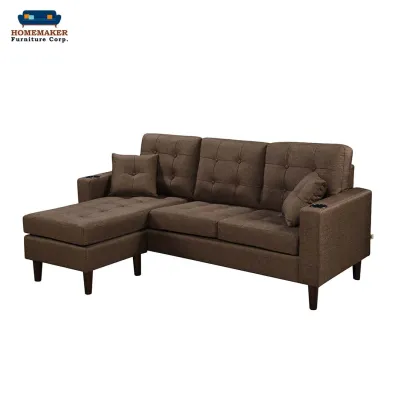
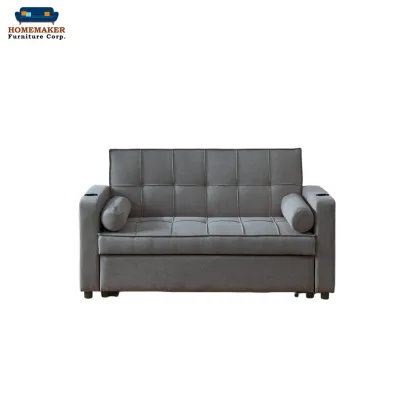
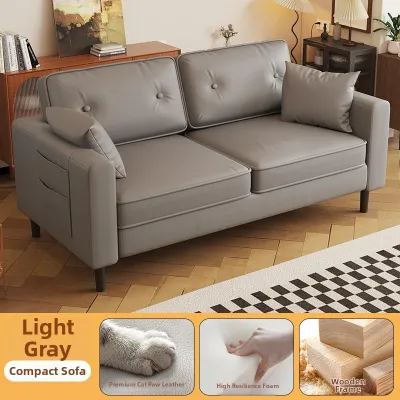
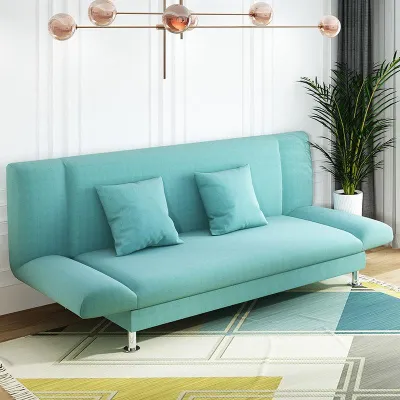
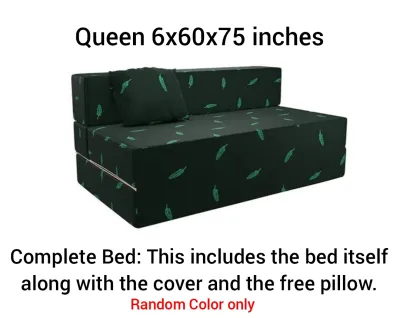
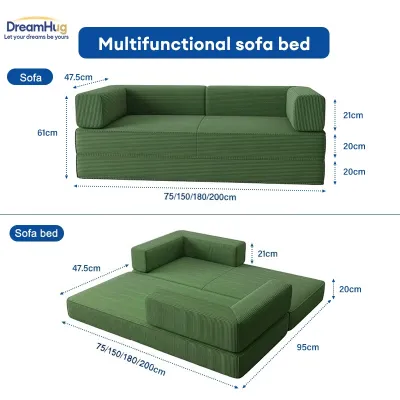
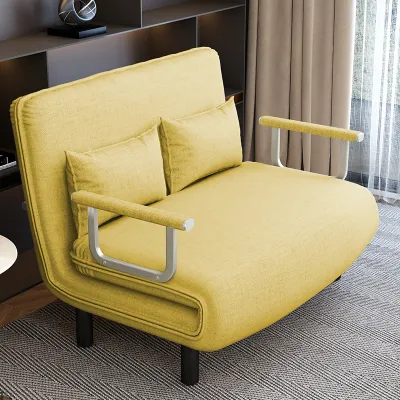
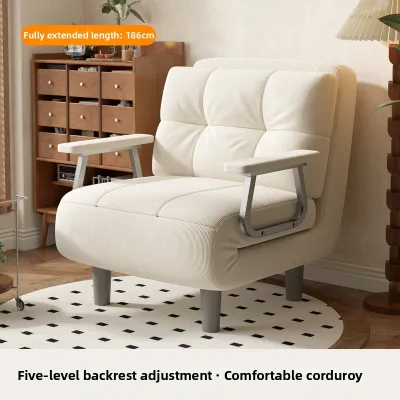
Prices are valid at publication and may change. Please refer to the product page for the latest price.

Map out the primary traffic paths through the room. Walkways should remain clear of furniture to prevent a cluttered feel and ensure safe movement. Mark the locations of wall outlets, light switches, and air conditioning units, as blocking these fixtures with a large sofa backrest can cause daily inconvenience and restrict airflow.
High humidity levels in tropical climates like the Philippines also require careful furniture placement. Pushing a sofa directly against a concrete wall can trap moisture, potentially leading to mold growth on fabric upholstery. Leaving a small gap of five to ten centimeters between the sofa and the wall promotes healthy air circulation.
Comparing Space Saver Sofa Types for Small Condos
Evaluating different sofa styles requires a clear framework based on seating capacity, physical footprint, and overall multifunctionality. The goal is to find a piece that accommodates your household comfortably while leaving enough open floor space for other essential furniture.
Loveseats and Compact Sofas
A classic two-seater loveseat offers a highly predictable footprint that fits easily into tight corners or along short walls. Because these pieces typically measure between 120 and 150 centimeters in width, they leave ample room for companion pieces like a small coffee table, a slender floor lamp, or a media console.
This style is highly suitable for single occupants or couples who do not require extensive seating. When shopping, pay close attention to the width of the armrests. Wide, overstuffed arms consume valuable horizontal space without adding to the actual seating area; choosing a model with slim or track arms maximizes the usable cushion space.
Check the seat depth as well. A shallower seat depth of around 80 to 85 centimeters keeps the sofa from protruding too far into the center of the room, preserving precious floor space for walking paths.
Sofa Beds and Sleepers
A sofa bed serves as an excellent dual-purpose solution for studio apartments or one-bedroom condos where hosting guests is a priority. However, this functionality comes with spatial trade-offs that you must carefully calculate before purchasing.
While the daily seating footprint of a sofa bed might resemble a standard loveseat, the fully extended sleeping footprint is significantly larger. You must measure the total length of the unit when it is completely unfolded to ensure it does not collide with your television console or block the path to the bathroom.
When evaluating options, check the thickness of the mattress and the smoothness of the folding mechanism. Heavy pull-out frames can be difficult to operate in tight spaces and may scratch delicate laminate or vinyl flooring. Look for models with protective rubber wheels or smooth click-clack mechanisms that transition easily.
Modular and Sectional Sofas
Modular sofas consist of individual seating units that you can arrange, separate, or expand depending on your immediate needs. This adaptability makes them highly useful for irregular room layouts or homes with awkward structural columns.
To prevent a modular sectional from visually overwhelming a 20 square meter room, look for low-profile designs with low backrests and exposed legs. Sofas that sit flat on the floor can look heavy and block sightlines, whereas elevated legs allow light to pass underneath, creating an illusion of spaciousness.
Always verify the connection mechanisms between the modules. On smooth condo floors like polished tiles or polished wood, unsecured modules can slide apart when sat upon. Look for sturdy metal interlocking brackets underneath the frames to keep the configuration stable.
Essential Measurements and Delivery Checks
A common mistake is purchasing a space saver sofa that fits perfectly in the living room but cannot physically enter the condo unit. You must measure the maximum diagonal depth of the sofa to ensure it can clear tight corners, narrow hallways, and the main entrance door frame.
Take precise measurements of the building’s elevator doors, interior cabin height, and depth. If the sofa is too long to fit inside the elevator, delivery personnel may have to carry it up the stairwell, which introduces risks of damage and may incur extra handling fees.
Additionally, check your condominium’s move-in policies before scheduling delivery. Many properties require unit owners to reserve the freight elevator in advance and restrict large deliveries to specific hours on weekdays. Verifying these rules beforehand prevents costly delivery delays or turned-away trucks.
Layout Strategies to Maximize a 20 sqm Floor Plan
How you position your sofa dictates the flow and feel of the entire living room. While pushing the sofa flat against the longest wall is the most common way to maximize central floor space, floating the sofa slightly away from the wall can sometimes make a room feel deeper and more open.
Use area rugs to define the boundaries of your seating zone without installing physical barriers. A rug that sits comfortably under the front legs of your sofa helps anchor the space visually, making the living area feel like a distinct, cozy zone within a larger open-plan condo.
To minimize visual clutter, pair your space saver sofa with highly functional accent furniture. Consider using nested coffee tables that slide underneath one another when not in use, or opt for storage ottomans that serve as footrests, extra seating, and hidden compartments for blankets or remote controls.
Frequently Asked Questions (FAQ)
How much walking space should I leave around the sofa?
For major traffic paths, aim to maintain a clearance of at least 75 to 90 centimeters to allow comfortable movement without bumping into furniture. For secondary walkways, such as the space between your sofa and a coffee table, a clearance of 30 to 45 centimeters is generally sufficient to allow easy access while keeping drinks and books within arm’s reach.
Are armless sofas better for small living rooms?
Armless sofas are highly effective for small spaces because they eliminate the visual and physical bulk of side panels, making the room feel more open. The main trade-off is a reduction in lateral lounging comfort, as you lose a solid structure to lean against. You can easily resolve this by placing firm, decorative throw pillows at the ends of the sofa to provide comfortable support when sitting sideways.

Community discussion
Share your experience or ask a question. Comments are reviewed before publication.