
Finding the right space-saving shoe rack requires matching your closet’s physical dimensions with your specific footwear collection and local environmental conditions. In tropical climates like the Philippines, where high humidity can accelerate mold growth on leather and canvas, your choice must also prioritize ventilation. By analyzing your available floor area, vertical clearance, and door construction, you can select a configuration—whether hanging, door-mounted, stackable, or pull-out—that maximizes storage density without compromising the condition of your shoes or the structural integrity of your closet.
Assess Your Closet Space and Shoe Inventory
Before purchasing any storage system, establish the exact physical boundaries of your closet. Use a metal measuring tape to record the width, depth, and height of the floor area, as well as the distance between existing shelves. Do not rely on visual estimates; even a small discrepancy can prevent a door from closing or cause a rack to wobble. Note the location of baseboards, door hinges, light fixtures, and closet rods, as these elements frequently obstruct installation paths.
Next, conduct a thorough inventory of your footwear. Group your shoes by type, such as flat sandals, heavy sneakers, high heels, and boots, and count the pairs in each category. Measure the height of your tallest shoes to ensure the rack shelves provide adequate clearance. Weighing a representative pair of your heaviest shoes will help you calculate the total load capacity your new rack must support.
Products mentioned in this guide
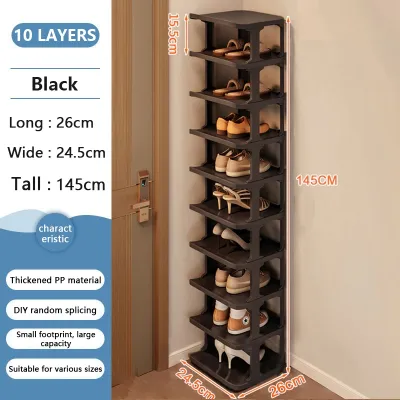
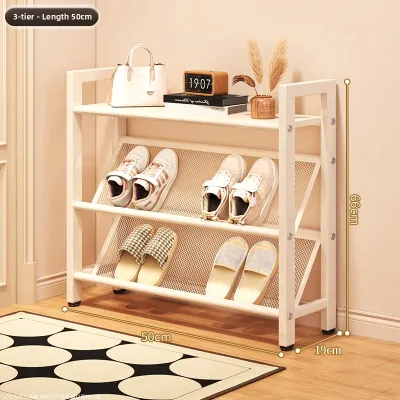
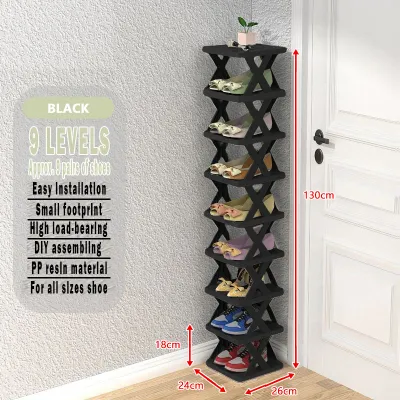
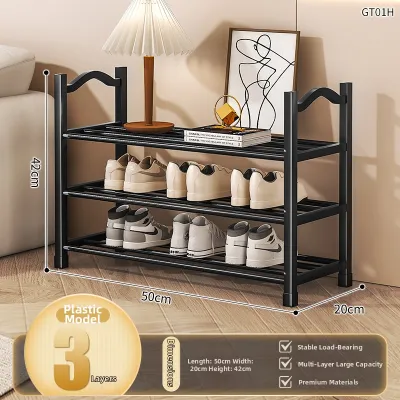
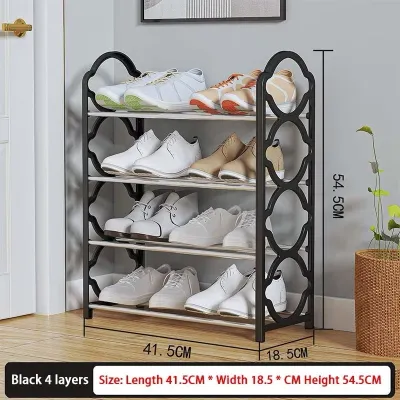
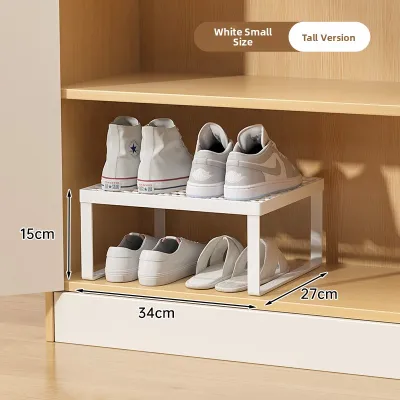
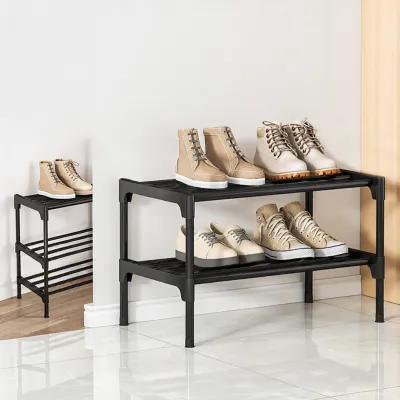
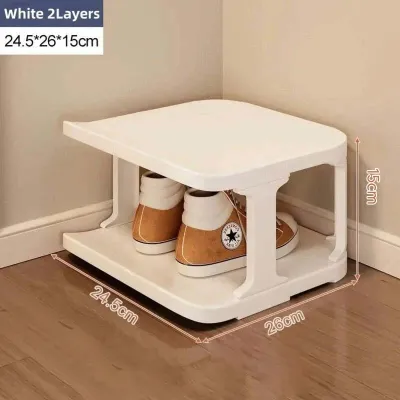
Prices are valid at publication and may change. Please refer to the product page for the latest price.
In humid environments, air circulation is just as important as physical space. Closely packed shoes trap moisture, which encourages mold growth and degrades adhesives. When planning your layout, factor in a buffer zone of at least two to three centimeters between each pair of shoes to allow continuous airflow.
Evaluate Space-Saving Rack Styles by Closet Layout
Different closet layouts demand distinct storage strategies to optimize efficiency. For narrow closets with limited floor space, vertical solutions like hanging organizers or door-mounted racks utilize underused areas without blocking the entryway. If you have open floor space beneath hanging clothes, modular stackable racks allow you to customize the height and width to fit those exact gaps. Deep closets or custom cabinetry benefit most from pull-out sliding systems, which bring shoes stored in dark corners directly into view.

Each style presents specific trade-offs regarding accessibility, capacity, and stability. Hanging organizers offer rapid access but are limited to lighter footwear and can strain closet rods. Door-mounted options maximize unused vertical planes but can stress door hinges if overloaded. Stackable frames provide excellent stability and high capacity but require a level floor and secure interlocking joints. Pull-out systems offer seamless access but require precise installation and consume valuable internal cabinet depth for their track mechanisms.
Hanging and Door-Mounted Racks for Tight Spaces
Hanging and door-mounted systems are highly effective for small bedrooms or apartments where floor space is at a premium. Over-the-door racks hang from metal brackets placed over the top edge of the door, utilizing the vertical plane of either side. Before selecting this style, measure your door thickness and check the clearance between the top of the door and the frame to ensure the brackets will not prevent latching. You must also verify that the door hinges are securely screwed into the frame and can handle the additional dynamic weight.
Hanging organizers suspend directly from an existing closet rod using heavy-duty fasteners or metal hooks. It is critical to inspect the closet rod itself; wooden or thin-walled metal rods can bow under heavy loads. Ensure the rod supports are anchored into wall studs rather than simple drywall anchors.
These vertical fabric or plastic pocket systems are best suited for lightweight footwear such as slippers, sandals, and canvas sneakers. Heavy leather boots or thick-soled running shoes can stretch fabric pockets, cause the organizer to sag, and put excessive concentrated stress on the closet rod or door frame.
Stackable and Adjustable Racks for Floor and Shelf Gaps
Stackable and adjustable racks offer a modular approach, allowing you to build a custom storage configuration that fits beneath hanging garments or on existing closet shelves. These racks typically feature metal, plastic, or treated wood frames with interlocking pins or clips that secure one tier to the next. When evaluating stackable options, inspect the connection points; they must fit tightly without play to prevent the upper tiers from shifting.
Adjustable shelves are particularly valuable if your shoe collection includes a mix of flat shoes and high-top sneakers or heels. Look for models with removable or tilt-adjustable shelves that let you alter the vertical spacing as your storage needs change. If you plan to place a stackable rack on an upper closet shelf, verify that the shelf’s load capacity can support both the weight of the rack and the shoes.
As stackable configurations grow taller, their center of gravity rises, increasing the risk of tipping. For any setup exceeding three tiers or reaching waist height, you must assess the stability of the base. Ensure the feet rest flat on the floor, free from carpet edges or uneven tile grout, and prepare to install wall anchors if the manufacturer recommends them.
Pull-Out and Sliding Systems for Deep or Custom Closets
Pull-out and sliding shoe systems convert deep, hard-to-reach closet cavities into highly accessible storage zones. These systems utilize ball-bearing drawer slides or bottom-mounted tracks to glide the shoe shelves outward, allowing you to view and reach pairs stored at the very back of the closet. To install these systems, you must have a flat, level mounting surface, such as a sturdy closet floor or a reinforced cabinet shelf.
Before purchasing, measure the internal depth of your closet cabinet and compare it to the fully closed length of the slide hardware. You must also account for the clearance required by the sliding tracks on either side of the shelf. Ensure that when the rack is fully extended, it does not collide with open closet doors, door frames, or adjacent furniture.
The structural integrity of the supporting cabinet walls or shelves is paramount for sliding systems. Unlike static shelves, pull-out racks exert dynamic, cantilevered forces on their mounting points when fully extended. Check that the cabinet walls are made of solid wood or high-density plywood rather than thin particleboard, which can crumble under the leverage of a fully loaded, extended drawer slide.
Verify Clearances, Weight Limits, and Installation Safety
A successful installation relies on precise physical verification rather than assumptions. Once you have selected a shoe rack type, cross-reference its fully assembled dimensions with your closet measurements. Remember to account for shoe overhang; shoes often extend two to five centimeters beyond the front edge of the rack shelf, which can prevent closet doors from closing if clearances are too tight.
Always review the manufacturer’s installation instructions for maximum weight limits and anchoring requirements. If you are installing a wall-mounted or over-the-door system, verify that your wall material (such as concrete, brick, or drywall) is compatible with the supplied anchors. In many homes in the Philippines, interior walls may consist of hollow concrete blocks or lightweight drywall partitions, each requiring specific wall plugs to ensure a secure hold.
Establish clear stop conditions before beginning your installation. If you discover that your closet walls are fragile, if the existing closet rod shows signs of sagging, or if you are unsure of the load limits of your shelving, halt the process immediately. Do not attempt to force an unstable installation; instead, consult a qualified carpenter or professional organizer to reinforce the structure before proceeding.
Frequently Asked Questions (FAQ)
Can I use a door-mounted shoe rack on a hollow core door?
Yes, but you must take specific precautions to avoid damaging the door. Hollow core doors consist of thin outer wood veneer panels over a cardboard honeycomb interior, meaning they have very little structural strength in the center. To identify a hollow core door, gently tap the middle of the door panel; a hollow, echoing sound indicates a hollow core, whereas a solid thud indicates a solid wood door.
To safely install a rack on a hollow core door, use over-the-door brackets that distribute the weight across the top edge of the door frame rather than screwing directly into the door face. Avoid overloading the rack with heavy boots or thick-soled shoes, and limit the storage to lightweight sandals, slippers, and canvas flats to prevent warping the door or pulling the hinges loose.
How do I prevent stackable shoe racks from tipping over?
Preventing a stackable shoe rack from tipping requires proper weight distribution and secure physical anchoring. Always place your heaviest footwear, such as work boots and heavy sneakers, on the bottom shelves to lower the overall center of gravity. Ensure the rack is assembled on a completely flat, level surface, and check that all interlocking joints between tiers are fully engaged and locked.
If your stacked rack is tall, narrow, or placed in a high-traffic area, you should secure it to the wall behind it. Use the anti-tip straps or L-brackets provided by the manufacturer, ensuring they are anchored directly into a wall stud or secured with appropriate wall anchors for your specific wall type.
Community discussion
Share your experience or ask a question. Comments are reviewed before publication.