
Quick Answer: Sizing a 4-Seater Folding Table for Balconies
A 4 seater folding table can comfortably fit many standard balconies, but its viability depends heavily on your balcony’s depth and the physical space required for seating. While the table’s static footprint might seem small enough on paper, you must account for the active space needed to pull out chairs, sit down comfortably, and walk around the furniture safely.
To determine if this setup will work for your outdoor space, you cannot rely on the table’s dimensions alone. You must measure your actual usable floor area, calculate the seating clearance zones, and map out clear walking paths. By taking these precise measurements before purchasing, you can avoid the frustration of an overcrowded balcony and ensure a functional, relaxing outdoor environment.
Typical Dimensions of 4-Seater Folding Tables
Before taking out your measuring tape, it is essential to understand that folding table sizes vary by manufacturer and design. Always check the exact specifications of the specific model you intend to buy rather than relying on generic estimates.
Products mentioned in this guide
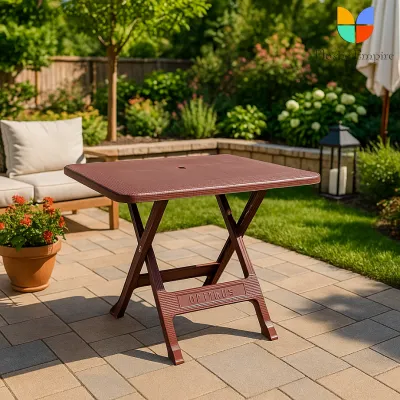
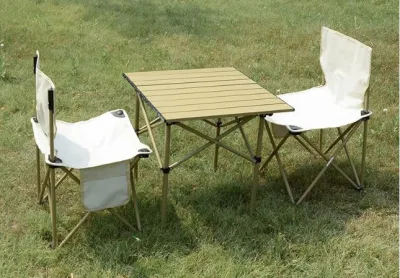

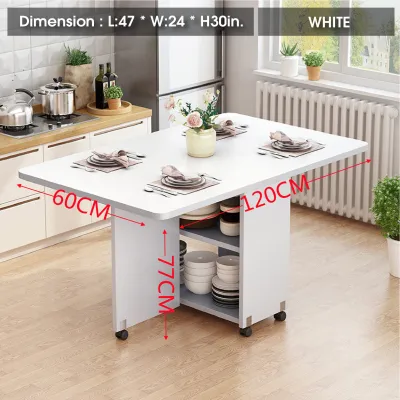
Prices are valid at publication and may change. Please refer to the product page for the latest price.

When planning your layout, stick to a single unit of measurement—such as centimeters—to prevent calculation errors. Mixing inches and centimeters during your planning can lead to ordering mistakes that leave you with a table that is slightly too large for your space.
Rectangular Table Footprints
Rectangular 4 seater folding table models generally require more length but less depth, making them highly compatible with long, narrow balconies. A typical rectangular table of this capacity measures approximately 110 cm to 120 cm in length and 60 cm to 70 cm in width.
Seating for these tables is typically distributed with two people sitting on the long sides and one person on each short end. This specific arrangement means you must plan for chair pull-out clearance at the narrow ends of the table as well as along the sides, which can block narrow balcony pathways if the table is placed parallel to the railing.
Square Table Footprints
Square 4 seater folding table designs require equal width and depth, making them better suited for wider, more square-shaped balconies. A standard square table for four usually measures between 80 cm by 80 cm and 90 cm by 90 cm.
Because seating is arranged with one person on each of the four sides, you must plan for uniform clearance around the entire perimeter. This layout demands a balanced square of open space, which can quickly overwhelm a narrow balcony even if the table itself seems relatively compact.
How to Measure Your Balcony for Seating and Movement
To ensure your folding table and chairs will fit without blocking essential pathways, follow a systematic measurement process. Visualizing the layout on the actual floor will help you prevent spacing mistakes.
First, measure the total usable floor space of your balcony. Do not simply measure wall-to-wall; you must subtract the footprint of any permanent or semi-permanent obstacles. Common balcony fixtures in the Philippines, such as air conditioning condenser units, large planters, laundry drying racks, or utility boxes, take up valuable floor space and must be excluded from your calculations.
Second, calculate your active “seating zone” by adding the table’s dimensions to the depth of your chairs. To sit down and get up comfortably, a person needs an additional 60 cm to 75 cm of clearance behind the edge of the table. Multiply this clearance by two for opposing seats to find the total depth required for comfortable dining.
Third, map out your “walkway zone” to maintain a safe and accessible balcony. Ensure there is a clear path of at least 60 cm—ideally 90 cm—to access the balcony door, reach the railing safely, and move around the furniture. Squeezing past chairs or stepping over table legs compromises safety, especially on high-rise balconies.
Finally, check the swing radius of your balcony door. If your door swings outward onto the balcony rather than sliding, measure its path to ensure it will not strike your table or chairs when opened. A blocked door is not only inconvenient but also poses a serious safety hazard during an emergency.
What to Do If a 4-Seater Table Is Too Big
If your measurements reveal that a standard 4 seater folding table will overcrowd your balcony, you do not have to abandon your outdoor dining plans. Several space-saving alternatives can provide the functionality you need without compromising movement.
- Downsize the set: Consider opting for a 2-seater folding table or a compact bistro set. This setup preserves open floor space for daily use while still providing a comfortable spot for coffee or light meals.
- Choose a drop-leaf design: Look for drop-leaf or extendable folding tables. These models allow you to keep one or both sides folded down for daily use, and then expand the table to accommodate four people only when you have guests.
- Use low-profile seating: Swap traditional high-backed outdoor chairs for compact stacking stools or backless benches. Backless benches can be tucked completely underneath the table when not in use, instantly freeing up valuable walkway space.
- Install a wall-mounted bar: For exceptionally narrow balconies, a wall-mounted or railing-mounted folding balcony bar is an excellent alternative. These units fold completely flat against the wall or railing when not in use, leaving your balcony floor entirely clear.
Safety, Weather, and Storage Checks for Balcony Furniture
Before finalizing your purchase, you must evaluate how your furniture will interact with your building’s rules and the local environment. Balcony furniture requires careful consideration due to its exposure to the elements.
Always check your condominium or building management guidelines before buying heavy or large furniture. Many residential buildings in the Philippines enforce strict rules regarding the weight, height, and placement of balcony items to prevent wind hazards, structural strain, or safety risks near railings.
Because the tropical climate brings high humidity, intense sun, and heavy monsoon rains, material durability is critical. Do not assume a material is durable based on its name alone; instead, verify that metal frames feature rust-resistant powder coating or galvanized finishes, and check that wooden surfaces are treated with outdoor-grade sealants. Inspect the hinges and moving parts to ensure they are robust and well-protected.
Additionally, check the folded dimensions of the table before purchasing. Since folding tables are designed to be stored when not in use, you must plan a dedicated, dry storage spot—such as an indoor closet or a weatherproof balcony cabinet—to protect the folding mechanisms from moisture, dust, and rust.
Frequently Asked Questions (FAQ)
Can I leave a folding table outside on the balcony all the time?
While many outdoor tables feature weather-resistant materials, leaving a folding table exposed to the elements continuously is not recommended. The hinges, brackets, and folding joints are highly vulnerable to rust, water pooling, and debris buildup, which can stiffen or damage the folding mechanism over time.
To maximize the lifespan of your furniture, fold and store the table in a dry, sheltered location during heavy rains or extended periods of non-use. If indoor storage space is limited, protect the table with a fitted, breathable, and waterproof outdoor furniture cover secured tightly to prevent wind damage.
How much clearance do I need between the table and the balcony railing?
For safety and ease of movement, maintain a minimum clearance of 60 cm between your balcony furniture and the railing. This space ensures you can comfortably stand, clean the railing, or appreciate the view without feeling cramped or trapped against the edge.
Furthermore, ensure that chairs cannot easily catch on the railing or tip backward when pushed out. In high-wind conditions, keeping a safe distance from the edge prevents lightweight folding chairs from being blown against or over the railing, protecting both your property and those below.
Community discussion
Share your experience or ask a question. Comments are reviewed before publication.