
Fitting a queen mahogany bed frame into a small bedroom is entirely possible, but it requires careful planning and precise measurements. While a standard queen mattress has a fixed size, the solid wood frame supporting it can vary dramatically in actual physical footprint. To avoid turning your sanctuary into a cramped, impassable space, you must look beyond the mattress label and evaluate the physical boundaries of your room.
Success comes down to balancing the rich, classic appeal of mahogany with the practical realities of limited floor space. By measuring your room’s layout, checking entry pathways, and accounting for the visual weight of dark wood, you can confidently decide if this premium furniture piece fits your lifestyle.
Understand the True Dimensions of a Queen Mahogany Bed Frame
When planning your bedroom layout, never mistake mattress dimensions for the actual size of the bed frame. A standard queen mattress typically measures 60 inches wide by 80 inches long (approximately 152 cm by 203 cm). However, a solid wood mahogany frame is rarely flush with the mattress. The structural components required to support heavy solid wood add significant inches to all sides.
Products mentioned in this guide
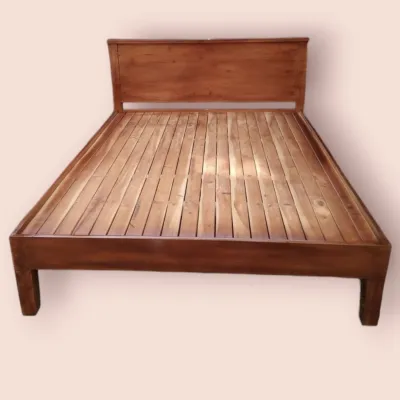


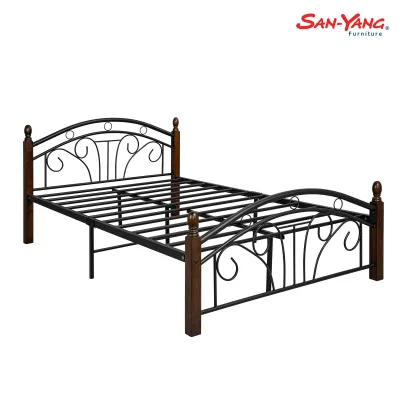

Prices are valid at publication and may change. Please refer to the product page for the latest price.
Mahogany headboards and footboards are often thick and robust, extending the total length of the bed. Side rails made of solid timber also add to the overall width. Depending on the design, a classic mahogany frame can easily add 5 to 10 inches (12 to 25 cm) to both the length and width of the mattress footprint.
To find the exact exterior measurements, always consult the manufacturer’s detailed specification sheet or product label before purchasing. Do not rely on generic size charts. Look for the “overall dimensions” or “assembled dimensions” rather than the “compatible mattress size” to get an accurate picture of the floor space required.
Additionally, pay close attention to protruding design elements that might not be captured in basic width and length numbers. Hand-carved details, extended corner posts, crown molding on the headboard, and flared legs can project outward at various heights. These protrusions can snag bedding, block walkways, or prevent the bed from sitting flush against your bedroom wall.
Measure Your Bedroom for Clearance and Flow
A bed that physically fits inside a room can still make the space unusable if it blocks essential pathways. To maintain a comfortable flow, you must map out the swing radius of every door, closet, and window in the bedroom. An outward-swinging closet door or a bedroom entry door must be able to open fully without striking the corner of your mahogany frame.

Walking clearance is another critical factor for daily comfort. Ideally, you should maintain a clear path of at least 60 to 75 centimeters (approximately 24 to 30 inches) around the sides and the foot of the bed. This space allows you to walk naturally, make the bed without straining, and access nearby storage easily. In tight condo spaces, you might need to compromise, but reducing clearance below 50 centimeters will make the room feel incredibly cramped.
Do not plan your bed placement in isolation. You must factor in the footprint of other essential furniture pieces, such as nightstands, a wardrobe, or a small vanity. Draw a simple floor plan on paper or use painter’s tape on the floor to mark the exact boundaries of the mahogany frame alongside your existing furniture. This physical visualization helps ensure you do not block electrical outlets, light switches, or air conditioning vents.
Check Delivery and Assembly Access
One of the most common mistakes when buying heavy solid wood furniture is forgetting to measure the journey from the delivery truck to the bedroom. Mahogany is a dense, heavy hardwood, and its components—especially a solid headboard—cannot be bent or easily maneuvered around tight corners. If you live in a high-rise condominium, you must measure the elevator door opening, interior cabin height, and depth to ensure the longest pieces can fit inside.
Stairwells and narrow hallways present another set of obstacles. Measure the ceiling height and the turning radius of any landings along your building’s stairwell. A long side rail or a tall headboard can easily get wedged in a low-ceilinged turn, turning an exciting delivery day into an expensive logistical headache.
Once the pieces arrive safely at your bedroom door, verify that the doorway itself has enough clearance. You must also ensure there is sufficient interior maneuvering space within the bedroom to assemble the frame. Because solid mahogany pieces require secure bolting and heavy lifting, you need enough open floor space for two people to stand, lift, and safely secure the joints without damaging the walls or the wood finish.
Evaluate Visual Weight and Room Proportions
Beyond physical inches, furniture has “visual weight,” which refers to how much space an object appears to occupy. Mahogany is celebrated for its deep, reddish-brown tones and prominent grain patterns, but these dark colors naturally draw the eye and can make a small room feel smaller. A massive, traditional mahogany bed with a high headboard and a closed footboard can easily overwhelm a compact bedroom, making the ceiling feel lower and the walls closer.
To prevent the dark wood from dominating the room, you can use strategic design techniques to balance the visual weight. Pair the rich mahogany frame with light-colored, breathable bedding in shades of white, cream, or soft gray. Placing a large mirror on an adjacent wall can bounce light around the room, while keeping window treatments light and airy helps maintain an open, bright atmosphere.
You can also look for streamlined mahogany designs that offer the beauty of the wood without the bulky profile. Consider a platform-style mahogany frame that sits lower to the ground, or a design with an open, slatted headboard instead of a solid wooden panel. Choosing a frame without a footboard—or with a very low-profile footboard—instantly opens up the sightlines at the end of the bed, making the entire room feel more spacious.
Practical Alternatives if the Space is Too Tight
If your measurements reveal that a queen-sized mahogany frame will leave you with virtually no walking space, you have several practical fallback options. One straightforward solution is to downsize to a full or double-sized bed frame. This adjustment saves about 6 inches in width and 5 inches in length, which can make a massive difference in a tight layout while still allowing you to enjoy the premium look of solid mahogany.
Another space-saving alternative is to select a mahogany platform bed that features built-in under-bed storage drawers. By utilizing the space directly beneath your mattress, you can eliminate the need for a bulky dresser or an extra wardrobe in the room. This consolidation frees up valuable floor space elsewhere, allowing the queen-sized bed to fit comfortably without cluttering the rest of the bedroom.
Finally, look for minimalist frame designs that maximize physical clearance. A frame that utilizes a wall-mounted headboard or completely eliminates the headboard and footboard altogether can save several inches of depth. This streamlined approach keeps the focus on the beautiful wood grain along the side rails while keeping the overall footprint as compact as possible.
Frequently Asked Questions (FAQ)
Does a mahogany bed frame require special care in a humid condo?
Yes, solid wood is sensitive to environmental changes, especially in tropical climates with high humidity. To protect your mahogany frame, ensure your bedroom has consistent ventilation and avoid placing the bed directly under an air conditioning unit, where cold drafts and condensation can affect the wood. Keep the frame out of direct sunlight to prevent the rich finish from fading unevenly. Always follow the manufacturer’s specific care instructions, using a dry or slightly damp microfiber cloth for dusting, and avoid harsh chemical cleaners that can strip the protective topcoat.
Can I use a standard queen mattress on any mahogany queen frame?
You must verify the frame’s support system before pairing it with your mattress to ensure compatibility and protect your mattress warranty. Some mahogany frames feature a traditional slat system, while others use a solid platform. Check the spacing between the wooden slats; many modern foam and hybrid mattresses require slats to be spaced no more than 3 inches apart to prevent sagging. Additionally, check if the frame’s design requires a box spring or foundation, as using one on a frame designed solely for a platform can make the bed inconveniently high and block the beautiful headboard details.

Community discussion
Share your experience or ask a question. Comments are reviewed before publication.