
Selecting the ideal wood storage shelves for a home office in the Philippines requires balancing structural strength, spatial constraints, and the challenges of a tropical climate. The best wood storage option is not a single universal product, but rather a choice tailored to your specific storage load—whether heavy legal binders or light stationery—and your room’s layout. By understanding how different wood materials perform under local humidity levels and how to verify structural specifications, you can create an organized, durable, and visually appealing workspace.
Quick Guide to Choosing Wood Storage Shelves
When selecting wood storage shelves, the primary decision often involves choosing between solid wood and engineered wood. Solid wood, such as mahogany, acacia, or rubberwood, offers exceptional load-bearing capacity and natural resistance to sagging, making it a durable investment. Engineered wood, including medium-density fiberboard (MDF) and particleboard, provides a highly accessible and budget-friendly alternative, though it requires careful load management to prevent bowing over time.
Matching the shelf dimensions to your specific office supplies is crucial for efficient organization. Standard books and novels fit comfortably on shelves with a depth of 20 to 25 centimeters, while large binders, storage boxes, and office equipment require a depth of 30 centimeters or more. Before browsing online marketplaces or local furniture showrooms, establish a clear workflow: measure your available wall space, list the items you intend to store to calculate weight requirements, and verify the manufacturer’s structural limits.
Products mentioned in this guide
Prices are valid at publication and may change. Please refer to the product page for the latest price.
What to Check Before Buying Wood Shelves
Before finalizing any furniture purchase, you must verify that the physical dimensions of the shelving unit are compatible with your home office layout. Measure the path from your front door, through hallways, and into the office to ensure the unit can be delivered and assembled without obstruction. Tall bookcases require adequate ceiling clearance during assembly, especially if they must be tilted upright in rooms with low ceilings or decorative light fixtures. Additionally, check that the shelf placement does not block power outlets, light switches, or the swing radius of doors and office chairs.

Load capacity indicators are essential for preventing structural failure and ensuring long-term safety. Look for the manufacturer’s specified weight limit per shelf, which is typically listed in kilograms. Heavy reference books, legal archives, and printer paper can easily weigh 2 to 3 kilograms per volume, meaning a single shelf holding fifteen books needs a verified capacity of at least 30 to 45 kilograms. Avoid assuming that a thick shelf automatically translates to high load capacity; always verify the structural rating on the product label.
Material verification is key to understanding how a shelving unit will perform in your home. Solid hardwood and high-grade plywood feature continuous grain patterns and robust edge construction that resist moisture absorption. In contrast, MDF and particleboard are made from compressed wood fibers covered with a paper or plastic veneer. Inspect the bottom or back edges of these engineered wood units; if the raw compressed fibers are exposed, they can easily absorb ambient moisture from the air, leading to swelling and structural degradation.
Stability and safety must be prioritized, particularly for tall freestanding units that exceed 120 centimeters in height. These units present a serious tip-over hazard if they are overloaded or placed on uneven flooring. Check the product description to confirm if the unit includes wall-anchoring hardware or anti-tip kits. If your home office has concrete walls, which are common in Philippine residential construction, you will need to purchase compatible masonry wall plugs and screws to secure the brackets properly.
Best Wood Shelf Styles for Different Office Needs
Different home office setups demand distinct storage solutions depending on the nature of your work and the size of your room. We examine solid wood bookcases, modular cube shelves, and floating wood shelves to help you match your organizational needs with the correct structural design.
Solid Wood Bookcases for Heavy Documents
Solid wood bookcases are the traditional choice for professionals who need to store extensive physical files, textbooks, or heavy office equipment.
- Ideal for: Thick binders, legal documents, heavy reference books, and desktop printers.
- Key checks: Look for a shelf thickness of at least 2 centimeters to prevent sagging under continuous weight. Verify if the shelf support pins are made of metal rather than plastic, and ensure the unit features a solid or reinforced back panel to maintain lateral stability.
- Limitations: These units are heavy and difficult to relocate without assistance. They occupy a permanent footprint on your floor and generally require a higher initial budget in ₱ compared to engineered alternatives.
Modular Cube Shelves for Flexible Organization
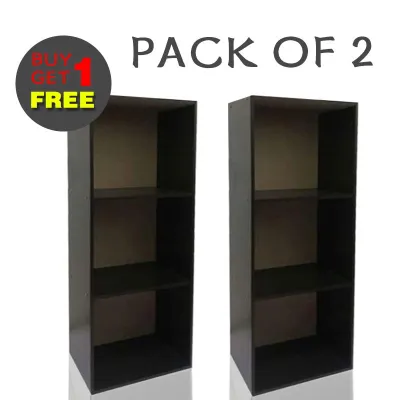
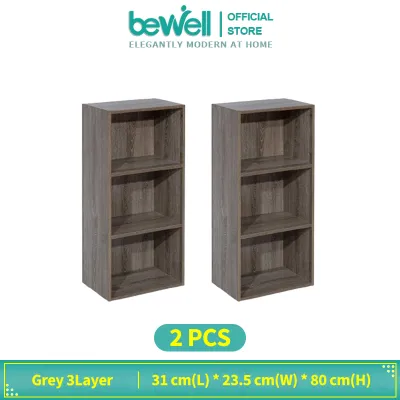
Modular cube shelves offer an adaptable storage system that allows you to mix open display space with concealed storage bins.
- Ideal for: Sorting daily mail, storing stationery inside fabric or plastic bins, and displaying decorative items, small plants, or awards.
- Key checks: Inspect the quality of the interlocking mechanisms or dowel joints that connect the individual cubes. Ensure the interior dimensions of the cubes match standard, widely available storage bins if you plan to use concealed storage.
- Limitations: Open cubes accumulate dust quickly in well-ventilated rooms, requiring regular maintenance. The overall structural integrity relies heavily on precise assembly; loose screws or misaligned dowels can cause the entire unit to wobble under uneven loads.
Floating Wood Shelves for Compact Spaces
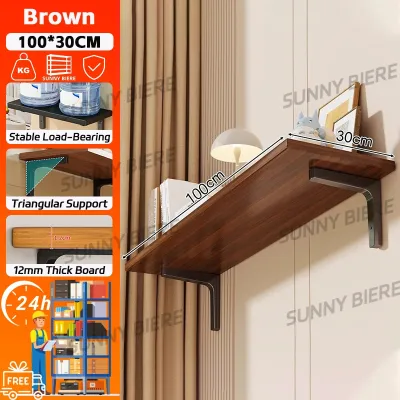
Floating wood shelves provide a minimalist storage solution that utilizes vertical wall space without consuming valuable floor area.
- Ideal for: Light office supplies, small plants, frequently accessed notebooks, and decorative frames.
- Key checks: Confirm wall compatibility before installation. Concrete or solid brick walls provide the strongest support for heavy-duty anchors, while drywall or hollow block walls require specialized toggle bolts and have much lower weight limits. Inspect the quality of the hidden metal brackets to ensure they are rigid and rust-resistant.
- Limitations: Floating shelves are not designed for heavy book collections or bulky binders. They require precise drilling, leveling, and installation, and any installation error can result in sagging shelves or wall damage.
How to Measure and Plan Your Office Layout
Accurate measurement is the foundation of a functional and comfortable home office layout. Use a metal measuring tape rather than a soft ruler, as metal tapes remain rigid over long distances. Measure the width of your designated wall space at the floor, middle, and ceiling levels, as walls in residential buildings are rarely perfectly square. Account for the thickness of baseboards or skirting boards, which can prevent a flat-backed bookcase from sitting flush against the wall, leaving an unsightly and unstable gap.
Traffic flow must be carefully planned to ensure your workspace remains ergonomic and easy to navigate. An office chair requires at least 90 to 100 centimeters of clearance behind the desk to roll back and turn comfortably. Ensure that cabinet doors, desk drawers, and room entryways can open fully without striking your wood shelves. If space is tight, consider low-profile shelves or sliding-door cabinets that do not require extra clearance to open.
Visual balance plays a significant role in how spacious and inviting your home office feels. Placing multiple tall, dark wood bookcases in a small room can make the space feel cramped, dark, and top-heavy. To avoid this, balance a tall vertical unit with lower horizontal shelves or floating shelves on adjacent walls. This arrangement keeps your sightlines open, allows more natural light to circulate through the room, and creates a more professional backdrop for video calls.
Caring for Wood Shelves in Humid Climates
Maintaining wood shelves in tropical environments requires proactive care to protect the material from high humidity and daily wear. Dust your shelves weekly using a dry or slightly damp microfiber cloth to remove dust and prevent grime buildup. Avoid using harsh chemical sprays, abrasive cleaners, or multi-purpose household detergents, as these can strip away protective varnishes and leave the wood vulnerable to moisture absorption.
Moisture management is critical for preventing wood from expanding, warping, or developing mold. Position your wood shelves away from direct air conditioning vents, which cause rapid temperature fluctuations, and keep them out of prolonged direct sunlight to prevent the finish from fading or cracking. To prevent mold growth on the back of the unit, leave a gap of 2 to 3 centimeters between the back panel of the shelf and the wall to allow for adequate airflow.
Periodically inspect the finish of your shelves for signs of wear, such as rough patches, water rings, or minor scratches. Check the manufacturer’s guidelines regarding the use of wood wax or specialized sealants to restore the protective barrier. Regularly applying a thin layer of compatible wood polish can help seal the surface against ambient humidity, ensuring your office furniture remains durable and visually appealing for years to come.
Frequently Asked Questions (FAQ)
Can I use engineered wood shelves for heavy books?
Engineered wood shelves, such as those made from MDF or particleboard, can support books, but they are highly susceptible to sagging under continuous heavy loads over time. To prevent this, always check the manufacturer’s stated weight limit per shelf before loading them with heavy volumes. If you must use engineered wood for books, look for shorter shelf spans (under 80 centimeters) or units with central vertical supports, or consider upgrading to solid wood or high-grade plywood for heavy archival storage.
How do I prevent tall wood shelves from tipping over?
Preventing a tall bookcase from tipping over is essential for home office safety. Always install the anti-tip safety kits or wall straps included with your furniture, anchoring them securely into a wall stud or using appropriate wall plugs for concrete. Additionally, place your heaviest items, such as thick binders and storage boxes, on the bottom shelves to lower the center of gravity, and avoid placing heavy objects near the top of the unit. If you are unsure about drilling into your specific wall material, consult a qualified local professional to ensure a secure installation.
Community discussion
Share your experience or ask a question. Comments are reviewed before publication.