
Quick Answer: Framework for Selecting Wood Wall Shelves
To choose the best wood wall shelves for your home study in the Philippines, you must balance your storage needs with your specific wall construction and the local tropical climate. The ideal selection depends on whether you need to store heavy academic textbooks or simply display lightweight office accessories.
Before making a purchase, follow a simple three-step decision framework. First, identify your wall type, as concrete walls support significantly more weight than drywall or fiber cement partitions. Second, calculate your required load capacity and match it to the shelf’s bracket design and thickness. Third, verify that the wood species and surface finish are treated to withstand high relative humidity. By aligning these physical factors with your daily study habits, you can select a durable shelving system that keeps your workspace organized and safe.
Key Specifications to Evaluate Before Buying
Load Capacity and Bracket Design
When browsing product listings for wood wall shelves, the manufacturer’s stated load capacity is the most critical safety metric to verify. This weight limit is not an absolute guarantee; it is highly conditional on the quality of your wall anchors and the spacing of the brackets. A shelf rated for 15 kilograms may sag or pull away from the wall if the brackets are spaced too far apart or mounted to weak plaster.
Products mentioned in this guide
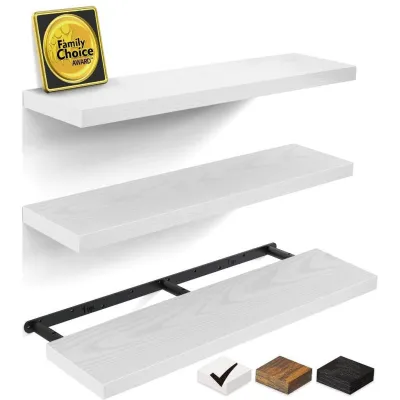
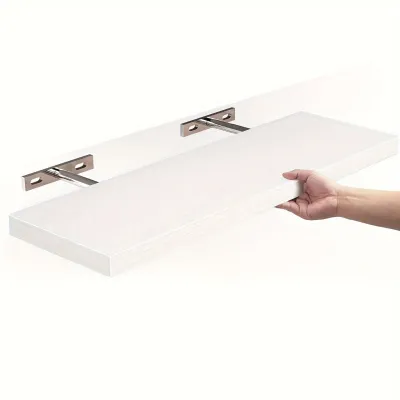
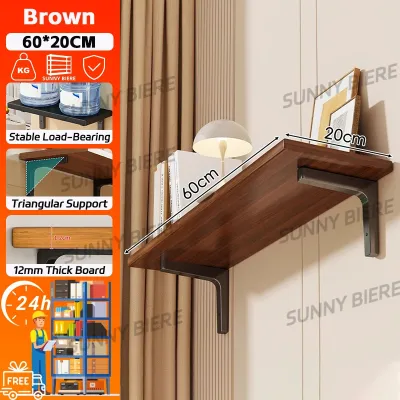



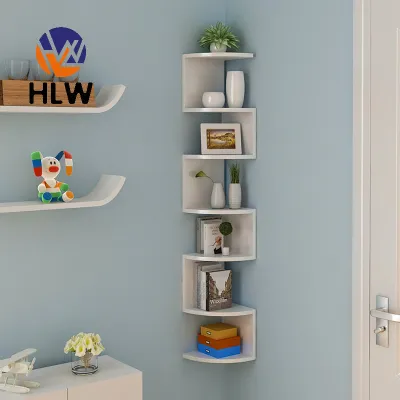
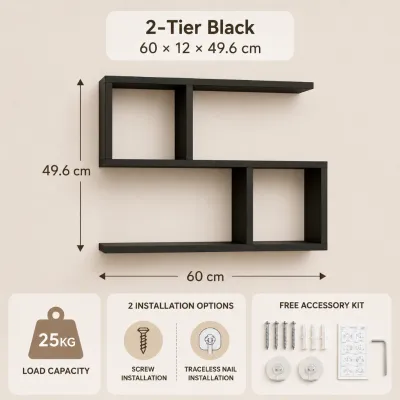
Prices are valid at publication and may change. Please refer to the product page for the latest price.

Look for shelves that utilize heavy-duty support systems. For heavy books, brackets made of powder-coated steel or wrought iron offer the best structural integrity. If you prefer a minimalist look, floating shelves with internal metal brackets are available, but they generally support less weight than shelves with visible, external L-shaped brackets. Ensure the product specifications detail the bracket material and recommend a maximum distance between supports, especially if you plan to customize the length.
Depth and Clearance
Your study workflow dictates the physical dimensions of the shelves you need. Standard novels and paperbacks require a shelf depth of at least 20 centimeters, while large reference manuals, binders, and storage boxes need a depth of 30 centimeters or more. Measuring your items before purchasing prevents the frustration of books overhang or unstable stacking.
Additionally, consider the vertical clearance of your study area. If you are mounting shelves directly above your desk, ensure there is enough vertical space so you do not bump your head when standing up. Measure the height of your computer monitor, desk lamp, and other desktop equipment to ensure the lowest shelf sits comfortably above them without casting harsh shadows over your primary writing surface.
Wood Type and Surface Finish
Wood wall shelves generally fall into two categories: solid wood and engineered wood. Solid wood options, such as acacia, mahogany, or pine, offer natural grain patterns and excellent resistance to bending under heavy loads. However, because solid wood is a natural material, it reacts to environmental changes. In the tropical climate of the Philippines, where indoor humidity levels fluctuate significantly between the wet and dry seasons, untreated solid wood can warp, cup, or split.
Engineered wood, including medium-density fiberboard (MDF), particleboard, and plywood, is highly stable and less prone to humidity-induced warping. However, standard engineered wood is highly susceptible to moisture damage if the edges are left unsealed. When evaluating either material, check the product description for protective surface finishes. Look for shelves sealed with polyurethane, water-resistant lacquer, or high-pressure laminates. These coatings act as a moisture barrier, preventing humidity from penetrating the core fibers and making the surfaces easier to wipe clean.
Hardware Inclusions
Never assume that the mounting hardware included in a retail package is suitable for your specific walls. Many imported shelving kits come with standard plastic wall plugs designed solely for drywall installations. If your home study has concrete or hollow block walls, these standard plugs will not expand properly, leading to a loose and dangerous mount.
Carefully read the product packaging or online listing to see what hardware is included. Look for specifications that detail the screw length, anchor type, and required drill bit size. If the manufacturer does not specify the wall type for the included anchors, plan to purchase dedicated masonry plugs or expansion bolts from a local hardware store to ensure a secure installation.
Matching Shelf Configurations to Your Study Workflow
Heavy Reference Storage
If your home study serves as a professional home office, a law library, or an academic research space, your primary need is heavy-duty storage. Textbooks, legal binders, and technical manuals exert continuous downward pressure on shelving boards. Over time, this constant load can cause thin shelves to bow permanently, a phenomenon known as creep.
To prevent bowing, select solid wood shelves or high-grade plywood with a thickness of at least 2 centimeters. Pair these thick boards with heavy-duty metal brackets spaced no more than 60 centimeters apart. For maximum stability, mount the brackets directly into concrete walls or, if installing on drywall, screw them directly into the vertical wall studs. This configuration ensures that your valuable reference materials remain securely supported without risking a sudden structural failure.
Active Workspace Extensions
For smaller study rooms or minimalist setups, wall shelves can function as physical extensions of your desk surface. By moving daily essentials off your desktop and onto a low-hanging wall shelf, you free up valuable space for writing, typing, and active project work.
For this setup, choose shallow shelves with a depth of 15 to 20 centimeters mounted within arm’s reach of your seating position. These shelves are ideal for holding active notebooks, pen holders, external hard drives, and desk clocks. Because these items are relatively lightweight, you can opt for sleek, floating wood shelves that maintain a clean, uncluttered visual profile. Position the shelf high enough to clear your monitor but low enough that you do not have to stand up or strain your shoulders to reach your tools.
Aesthetic and Display Zones
A productive home study should also be an inspiring space. Dedicating a portion of your wall shelves to personal items, certificates, small indoor plants, and decorative objects helps personalize the room and reduce work-related stress.
For display zones, floating wood shelves are highly preferred because their hidden mounting hardware creates a clean, modern aesthetic. Since display items are typically light, you can prioritize visual design over extreme load capacity. Consider choosing woods with prominent natural grains, such as acacia, to add warmth to your study. When arranging these shelves, leave open space between items to prevent the room from feeling cramped, and ensure any potted plants are placed in watertight saucers to protect the wood finish from water rings during watering.
Installation and Safety Checks for Wall-Mounted Shelves
Wall Type Identification
Before you drill a single hole, you must identify the exact construction of your study walls. In the Philippines, residential walls are commonly constructed from concrete, concrete hollow blocks (CHB), or interior drywall partitions framed with metal studs. Mounting techniques and load capacities differ drastically between these materials.
To identify your wall type, tap on the surface with your knuckles. A solid, dull thud indicates a concrete or hollow block wall, which offers excellent load-bearing capacity but requires a hammer drill and masonry bits to penetrate. A hollow, echoing sound indicates drywall or fiber cement board. Drywall partitions cannot support heavy shelves unless the mounting brackets are anchored directly into the internal wooden or metal framing studs.
Stud and Anchor Selection
If you are installing shelves on a drywall partition, using a stud finder is essential to locate the vertical framing members behind the wall board. Mounting a shelf directly into drywall using only plastic anchors is highly risky; the weight of books will eventually pull the anchors straight through the soft gypsum core. Always aim to secure at least one screw per bracket into a solid stud.
For concrete and masonry walls, standard plastic wall plugs (often referred to locally as tox plugs) are highly effective when paired with the correct screw size. For exceptionally heavy loads, consider using metal sleeve anchors or expansion bolts. These hardware components expand inside the concrete cavity, providing a mechanical grip that can support substantial weight without slipping.
Leveling and Alignment
An unlevel shelf is not just visually distracting; it also creates lateral forces that can cause books to slide and put uneven stress on your mounting brackets. Always use a spirit level (bubble level) to mark your drilling points. Do not rely on the line of your desk, ceiling, or floor as a reference, as these surfaces are rarely perfectly level.
Place the bracket against the wall at your desired height, place the spirit level on top, and adjust until the bubble is perfectly centered. Mark the screw holes with a pencil. Before drilling, double-check the distance between the marked holes to ensure they align perfectly with the mounting points on your shelf board. Taking these precise measurements beforehand prevents the need to drill corrective holes, which can weaken your wall structure.
When to Stop and Consult a Professional
While installing wall shelves is a common weekend project, certain situations require professional assistance. If you begin drilling into a wall and encounter sudden, hard resistance that does not yield to a masonry bit, you may have hit a steel reinforcing bar (rebar) or a metal electrical conduit. Stop drilling immediately to avoid damaging your tools or risking electrical shock.
Additionally, if you live in an older building and find that the concrete crumbles into a fine, sandy powder when drilled, the masonry may lack the structural integrity to hold expansion anchors safely. In such cases, or if you are unsure about the location of hidden water pipes and electrical wiring behind your study walls, it is best to hire a professional handyman to complete the installation safely.
Sourcing Options and Delivery Inspection
Channel Selection
When shopping for wood wall shelves, you can choose between visiting local furniture showrooms or browsing online marketplaces. Physical showrooms allow you to inspect the wood quality firsthand, feel the weight of the shelves, and check the sturdiness of the joints and brackets. This is highly recommended if you are looking for premium solid wood pieces where grain consistency is important.
Online marketplaces offer a much wider variety of designs, sizes, and price points, making it easier to find a shelf that fits your exact dimensions. However, when buying online, you must rely on product descriptions and customer feedback. Always check seller ratings, read reviews specifically mentioning packaging quality, and verify the store’s return policy in case the product arrives damaged or does not match the advertised specifications.
Delivery Inspection Checklist
Once your shelves arrive, perform a thorough inspection before starting the installation process. Unpack the items carefully and check all wood panels for signs of transit damage, such as cracked corners, deep scratches, or split wood grain. Inspect the edges of engineered wood shelves to ensure the laminate or veneer is not peeling, as open edges will easily absorb moisture in humid rooms.
Next, lay the shelf boards on a flat floor to check for warping. If a board does not lie completely flat, it may have warped during transit or storage. Finally, count all the included hardware components against the instruction manual. Verifying that you have every screw, bracket, and wall plug before you begin prevents frustrating delays midway through your project.
Acclimatization
Because wood is a natural, hygroscopic material, it constantly absorbs and releases moisture to balance itself with the surrounding air. When new wood shelves are delivered, they may have been stored in a dry warehouse or transported in a hot, sealed delivery truck. Installing them immediately can lead to rapid moisture absorption, causing the wood to swell or warp after it is mounted.
To prevent this, allow your new wood shelves to acclimatize to your home study’s environment. Unpack the wood boards and lay them flat in your study room for at least 48 hours before installation. Keep the room well-ventilated during this period. This simple step allows the wood fibers to stabilize under your home’s natural humidity and temperature levels, ensuring the shelves remain flat and structurally sound once mounted to your wall.
Frequently Asked Questions (FAQ)
How much weight can a standard wood wall shelf hold?
The weight capacity of a wood wall shelf is determined by a combination of wood thickness, bracket design, wall anchor strength, and the wall material itself. A standard floating shelf mounted on drywall using basic plastic anchors may only support 2 to 5 kilograms safely. Conversely, a thick solid wood shelf mounted on a solid concrete wall with heavy-duty metal brackets and expansion bolts can easily support 15 to 30 kilograms or more.
To determine the safe limit for your setup, always refer to the manufacturer’s maximum load rating specified on the product packaging. Remember that these ratings assume the weight is distributed evenly across the surface. To maximize safety, place your heaviest books and items directly over or close to the mounting brackets, and avoid concentrating heavy loads at the outer edges of the shelf.
Are solid wood shelves better than engineered wood for studies?
Neither material is universally superior; the best choice depends on your budget, storage requirements, and environmental conditions. Solid wood shelves offer exceptional strength, natural beauty, and long-term durability. They can be sanded down, repaired, and refinished if they get scratched. However, solid wood is more expensive and can warp if exposed to extreme humidity fluctuations without a proper protective sealant.
Engineered wood shelves, such as MDF or high-quality plywood, are highly cost-effective, perfectly flat, and resistant to humidity-induced warping. They are excellent for budget-friendly study setups and light-to-medium storage. However, engineered wood is difficult to repair once damaged by water, and the screw-holding capacity of particleboard can degrade if the shelves are disassembled and reassembled multiple times. Choose solid wood for heavy, lifetime book storage, and engineered wood with a high-quality laminate finish for affordable, everyday organization.
Community discussion
Share your experience or ask a question. Comments are reviewed before publication.