
Fitting a wooden sofa bed into a 20 square meter condo living room requires balancing daytime comfort with nighttime utility. In a compact living space, every centimeter counts, and a wooden frame introduces fixed, unyielding dimensions that do not compress. To prevent your living room from feeling overcrowded, the ideal size of your sofa bed must be determined by its fully extended footprint rather than its folded sofa state. By calculating precise clearances, assessing your room’s physical boundaries, and selecting complementary modular furniture, you can maintain a comfortable, walkable layout.
Assessing Your 20 sqm Living Room Layout
Before browsing online marketplaces or local furniture showrooms, you must establish the exact physical boundaries of your living area. A 20 square meter condo typically features a combined living, dining, and kitchen zone, meaning the actual space dedicated to seating is often limited to a fraction of that total area. Begin by measuring the length and width of this specific zone with a standard tape measure.
Do not rely on the developer’s floor plan alone, as actual wall-to-wall distances can vary after plastering and finishing. Deduct the thickness of baseboards, as these prevent heavy wooden furniture from sitting completely flush against the wall. Note the locations of electrical outlets, light switches, and media ports to ensure your sofa bed does not block access to essential power sources.
Products mentioned in this guide
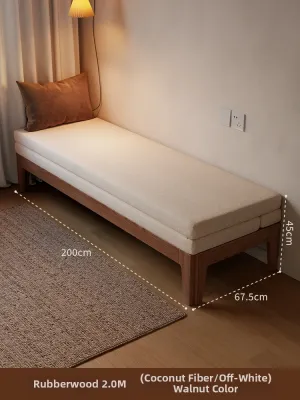
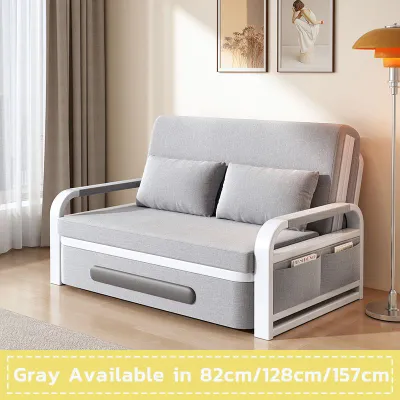
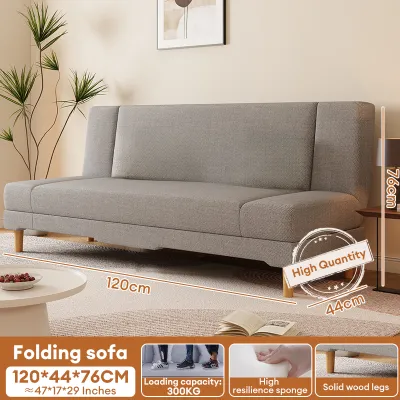
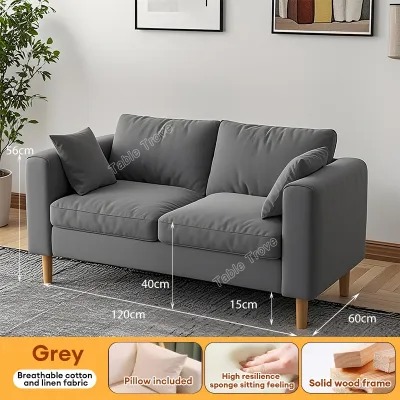
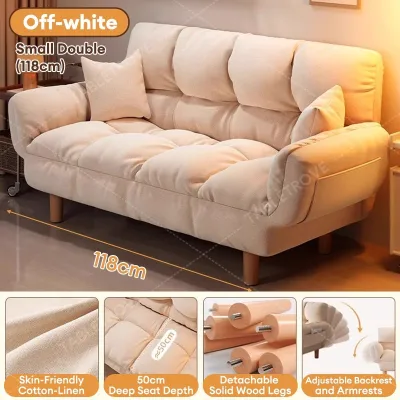
Prices are valid at publication and may change. Please refer to the product page for the latest price.
Next, map out the operational zones of your room’s existing fixtures. Measure the swing radius of entry doors, balcony doors, and low-hanging windows to ensure they can open fully without striking the sofa frame. In tropical climates like the Philippines, you must also account for the airflow paths of wall-mounted air conditioning units or standing fans, ensuring the sofa bed placement does not obstruct ventilation or expose the wooden frame to direct condensation.
Finally, identify any immovable structural elements. Structural columns, built-in pantry cabinets, or protruding kitchen counters create rigid boundaries that cannot be altered. Mark these on a simple sketch of your floor plan to define the absolute maximum envelope available for your new furniture.
Determining the Ideal Wooden Sofa Bed Dimensions
A wooden sofa bed operates in two distinct phases, and both must fit comfortably within your measured envelope. The primary step is calculating the footprint difference between the folded sofa mode and the fully extended bed mode. While a standard three-seater sofa might occupy a depth of 90 centimeters, unfolding it into a bed can easily extend that depth to 190 centimeters or more.

To maintain a sense of openness in a small condo, aim for a conservative floor coverage ratio. As a general guideline, the fully extended sofa bed should not occupy more than one-third of the dedicated living room floor area. Keeping the extended footprint within this limit ensures you do not have to climb over the mattress just to cross the room.
When evaluating dimensions, look beyond the standard mattress sizes like single, double, or queen. The actual exterior dimensions of a wooden sofa bed are always larger than the mattress itself due to the wooden outer frame. Thick wooden armrests, decorative side panels, and the pitch of the backrest can add 15 to 30 centimeters to the overall width and depth.
When selecting a wooden frame, remember that the wood type alone does not guarantee durability or resistance to tropical humidity. Instead, check the quality of the protective finish, inspect the stability of the joints, and review the manufacturer’s care instructions to ensure the frame can withstand the local indoor environment. During selection, prioritize checking the manufacturer’s specified load capacity and frame stability, ensuring the support legs lock securely when extended.
Check the manufacturer’s specifications for the finished exterior dimensions rather than relying on generic mattress terms. If space is exceptionally tight, consider armless wooden designs or models with slim, low-profile wooden frames. These options maximize the sleeping surface while minimizing the physical bulk in your living room.
Balancing the Sofa Bed with Other Essential Furniture
A living room is rarely home to just a sofa; you will likely need a coffee table, side tables, lighting, and media storage. To prevent overcrowding when the wooden sofa bed is deployed, choose lightweight or highly mobile companion pieces. Nesting coffee tables are highly practical because they can be stacked together and tucked into a corner when it is time to unfold the bed.
Alternatively, look for a lightweight coffee table that can be easily lifted and moved to the side of the room. Avoid heavy, solid-wood coffee tables that require two people to shift, as this makes the daily transition from living room to bedroom highly inconvenient. If you require storage, a lift-top coffee table can serve as a workspace while keeping clutter out of sight.
Side tables and floor lamps must be positioned carefully to avoid interfering with the folding mechanism of the wooden frame. If your sofa bed folds outward from the front, ensure side tables are placed far enough to the left or right that they do not block the path of the extending legs. Using wall-mounted sconces instead of floor lamps is an excellent way to free up valuable floor space.
Maximize your vertical space to keep the floor clear of clutter. Wall-mounted shelves, floating media consoles, and tall, narrow bookcases draw the eye upward and reduce the number of floor-level items. This vertical approach preserves the open floor space needed for the sofa bed to expand without requiring you to rearrange the entire room every evening.
Checking Clearance, Delivery, and Assembly Requirements
An often-overlooked aspect of buying furniture for a condo is the journey from the delivery truck to your living room. Before finalizing your purchase, verify the dimensions of your condo building’s service elevator. Measure the elevator door width, the interior cabin height, and the diagonal depth to ensure the largest packaged component of the wooden frame can fit inside.
If your building does not have an elevator, or if the package is too large, you must measure the stairwell corners and ceiling clearances. Next, check the clear width of your condo’s main entrance door, hallway turning radiuses, and the living room entry door. A wooden sofa bed frame is rigid and cannot be bent around tight corners like a traditional soft mattress.
Inquire whether the sofa bed is delivered fully assembled or as a flat-pack item. Flat-pack models are significantly easier to transport through tight condo corridors, but they require sufficient assembly space inside your unit. Ensure you have enough open floor area in your living room to safely lay out the wooden pieces, tools, and hardware during the assembly process.
Additionally, check the operational clearance required around the folding mechanism. Some wooden sofa beds require a few centimeters of clearance behind the backrest to transition smoothly into a bed, meaning they cannot sit completely flush against the wall. Understanding these mechanical requirements beforehand prevents damage to your walls and ensures smooth daily operation.
Common Sizing Mistakes to Avoid in Small Condos
One of the most common mistakes is focusing solely on mattress dimensions while ignoring the extra volume of the wooden outer frame. A double sofa bed does not merely occupy the space of a double mattress; the solid wood armrests and rear support structures can make the actual footprint significantly wider, potentially blocking walkways.
Another frequent pitfall is overlooking the safe passage distance between the fully extended bed and the opposite wall or TV console. You should maintain a clear walking path of at least 50 to 60 centimeters around the extended bed. Without this clearance, moving around the room at night becomes difficult and potentially hazardous.
Lastly, avoid choosing excessively deep seats or thick, reclined backrests. While deep seating is comfortable for lounging, it permanently encroaches on the central living area even when the unit is folded into sofa mode. Opt instead for a shallower seat depth with supportive, upright wooden backrests that keep the room feeling spacious and easy to navigate.
Frequently Asked Questions (FAQ)
Does a solid wood frame make a sofa bed harder to reposition in a small condo?
Yes, solid hardwood frames are significantly heavier than those made from engineered wood or metal. This extra weight can make daily repositioning or cleaning underneath the unit challenging in a compact space. To mitigate this, look for wooden sofa beds designed with modular components that can be disassembled easily, or check if the frame features protective felt pads on the legs to allow for smoother sliding without scratching your condo’s flooring.
Can I use a standard area rug under a fold-out wooden sofa bed?
You can use an area rug, but you must check its thickness and placement carefully. A thick, high-pile rug can obstruct the folding mechanism or cause the extending wooden legs to catch and unevenly distribute weight, which may strain the joints over time. Opt for a low-pile, flat-weave rug instead, and ensure it is equipped with a high-quality non-slip underlay to keep the rug from bunching up when the sofa bed is deployed.

Community discussion
Share your experience or ask a question. Comments are reviewed before publication.