
Quick Answer: Which Shelf Tier Configuration Fits Your Study?
Finding the right furniture configuration for a home office requires balancing floor space, storage needs, and visual comfort. When choosing between a 3-tier and a 5-tier shelf, there is no single option that suits every home study. The ideal setup depends on your room’s ceiling height, your physical stature, and the total volume of materials you need to organize.
A 3-tier unit offers exceptional accessibility and a light visual profile, keeping your study feeling open and airy. Conversely, a 5-tier unit maximizes vertical space, providing high-density storage within a compact floor footprint. Your choice should align with how much physical material you need to store and how you prefer to interact with your workspace throughout the day.
When to Choose a 3-Tier Shelf
- Low Ceilings or Compact Spaces: Ideal for rooms with lower ceilings where a taller unit would feel imposing or block natural light.
- Minimalist Aesthetic: Perfect if you prefer a clean, uncluttered look with plenty of open wall space left for artwork or acoustic panels.
- Seated Accessibility: Keeps all books, reference files, and office supplies within arm's reach while you remain seated at your desk.
- Flexible Placement: Fits comfortably underneath windows, behind a desk as a low console, or as a subtle room divider in shared spaces.
When to Choose a 5-Tier Shelf
- High-Volume Storage: Necessary if you have an extensive collection of textbooks, reference binders, or heavy documentation.
- Vertical Space Optimization: Best for small study rooms where floor space is limited but vertical wall space is completely unobstructed.
- Standard to High Ceilings: Fits beautifully in rooms with standard or high ceilings without crowding ceiling fixtures or fans.
- Secure Installation Capability: Suitable if you are willing and able to anchor the unit securely to your wall to prevent tipping.
Space Efficiency and Visual Impact in a Study Room
Both 3-tier and 5-tier shelves often share the exact same floor footprint, meaning they occupy the same width and depth on your study floor. The fundamental difference lies in how they utilize the vertical dimension of your room. Choosing a taller configuration allows you to multiply your storage capacity without sacrificing precious floor real estate.
Products mentioned in this guide
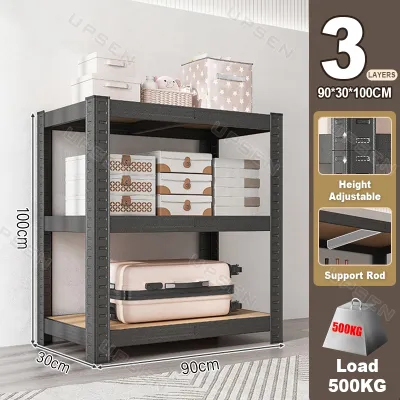
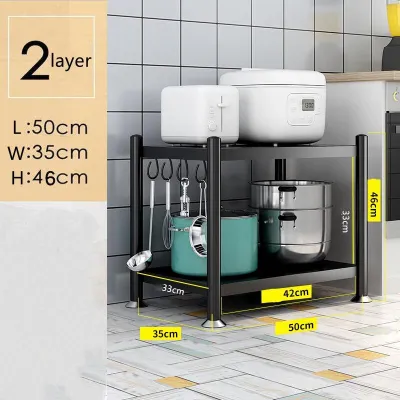
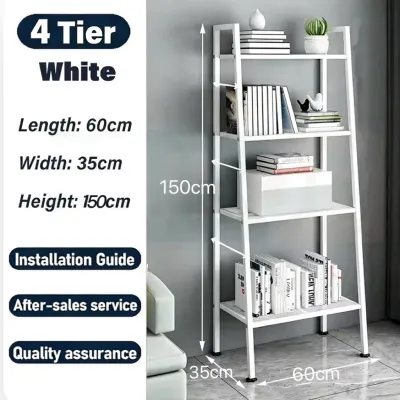
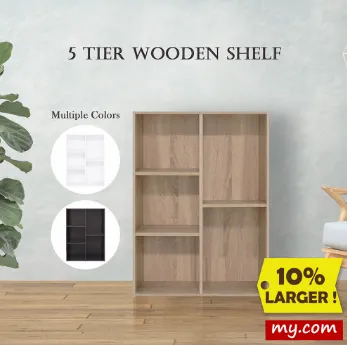
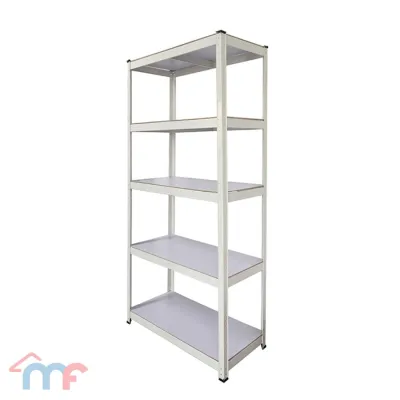
Prices are valid at publication and may change. Please refer to the product page for the latest price.

The height of your shelving unit heavily influences the perceived size of your study. A 5-tier shelf carries substantial visual weight, which can make a small or narrow room feel cramped and dark if the shelves are packed solid. To counter this, interior designers recommend leaving some negative space on the upper shelves, using them for small plants or decorative items rather than solid rows of books.
In contrast, a 3-tier shelf leaves the upper half of your wall entirely open. This empty wall space can be utilized for functional elements like whiteboards, clocks, or sound-absorbing acoustic panels. It also allows natural light from windows to bounce freely across the room, creating a brighter and more inviting work environment.
Before selecting a taller unit, you must carefully measure your ceiling height and account for architectural features. In tropical climates like the Philippines, many home studies rely on ceiling fans for air circulation. A tall 5-tier shelf placed too close to a ceiling fan can restrict airflow or pose a physical hazard if items are retrieved from the top shelf while the fan is spinning. You should also check for crown moldings, air conditioning units, and wall-mounted light fixtures that might block a tall shelf.
The physical height of a 3-tier shelf gives it superior placement flexibility. It can sit directly under a window sill, act as a backing console for a freestanding desk, or serve as a low room divider that separates your workspace from a bedroom or living area. A 5-tier shelf, however, almost always requires a dedicated, flat stretch of wall where it can stand undisturbed and be safely secured.
Storage Capacity and Organization Strategies
When it comes to raw storage capacity, a 5-tier shelf is the clear winner, offering roughly 66% more linear shelf space than its 3-tier counterpart. This makes it the standard choice for academic researchers, lawyers, writers, or anyone with a substantial physical library. If your work requires keeping decades of archives, heavy binders, and reference materials nearby, a shorter shelf will quickly overflow.
A taller shelf enables a highly logical, tiered organization strategy based on your daily workflow. You can categorize items by their frequency of use, placing active project files and daily reference books on the middle shelves (tiers two and three) where they are easiest to grab. The lower shelves can hold heavy storage boxes, while the topmost shelves are reserved for archived materials or seasonal items that you rarely need to access.
Regardless of the number of tiers, proper weight distribution is critical for structural integrity. You should always place your heaviest items—such as thick textbooks, printers, or backup paper reams—on the bottom shelf. This lowers the unit’s center of gravity, significantly improving stability and reducing the risk of structural bowing or tipping.
For those who do not possess massive book collections, a 3-tier shelf offers an excellent platform for curated storage. It encourages you to keep only your most essential resources, preventing the accumulation of unnecessary clutter. The limited space makes it easier to mix functional books with decorative accents, such as small potted tropical plants, framed certificates, or desk organizers, creating a balanced and professional background for video calls.
In the Philippine market, quality shelving units span a wide range of price bands. Budget-friendly metal-and-wood options start around ₱1,500, while premium solid hardwood bookcases can exceed ₱15,000. Evaluating your actual storage volume before purchasing ensures you do not overspend on capacity you will never use.
Accessibility and Ergonomics for Daily Use
Ergonomics play a vital role in productivity, and shelf height directly impacts how comfortable it is to retrieve your tools. On a standard 5-tier shelf, the top two levels often sit well above shoulder height for an average adult. Retrieving heavy binders or books from these upper tiers requires stretching, standing on your tiptoes, or using a dedicated step stool, which can interrupt your focus and strain your muscles over time.
A 3-tier shelf, by contrast, keeps almost every item within a comfortable reach. If you position the shelf immediately adjacent to your desk, you can easily reach sideways to grab a folder or reference book without even standing up. This seamless lateral access supports a highly efficient, seated workflow where your momentum remains unbroken.
Your physical stature and mobility should guide your configuration choice. Shorter users, older adults, or individuals with limited mobility will find a 3-tier shelf far more practical and safer for daily operations. If a 5-tier shelf is used in a household where children share the study, the upper shelves must be treated strictly as out-of-reach zones, containing only items that adults handle.
Consider how you transition between tasks during the workday. If your routine involves constant switching between reference materials, a low-profile shelf that sits within your immediate reach is highly beneficial. If you only need to access physical files once or twice a day, the minor inconvenience of standing up to retrieve an item from a 5-tier shelf is a reasonable trade-off for the massive increase in storage capacity.
Stability, Safety, and Maintenance Considerations
The physical structure of your shelving unit introduces distinct safety considerations. Taller 5-tier shelves naturally have a higher center of gravity, making them inherently more susceptible to tipping over if they are loaded unevenly or accidentally bumped. Even a minor earthquake or a stumble in the study can cause an unanchored tall shelf to fall, posing a severe safety hazard.
Because of these risks, securing a 5-tier shelf to the wall is an absolute necessity. In the Philippines, home walls are frequently constructed from concrete or hollow blocks rather than drywall. This requires specific masonry drill bits, plastic wall plugs, or expansion shields to achieve a secure hold. While 3-tier shelves are much more stable due to their low profile, they should still be anchored if they are exceptionally narrow, top-heavy, or placed in homes with active pets or young children.
Environmental factors also dictate how you maintain your shelving. In warm, humid environments, dust can easily combine with moisture in the air to form a sticky grime that clings to surfaces. A 5-tier shelf requires more intensive maintenance, as the top tiers are difficult to see and clean without a step stool, often leading to unnoticed dust accumulation. Furthermore, solid wood shelves must be checked regularly for signs of swelling or mold, while metal frames should have rust-resistant coatings to withstand high humidity.
Before loading any shelf, always check the manufacturer’s specified weight limits for both individual tiers and the overall unit. Overloading a shelf can cause the wood or metal to sag permanently, compromising the structural joints and increasing the risk of a sudden collapse. If you are unsure of the load capacity, err on the side of caution by distributing weight evenly and avoiding stacking heavy items on a single shelf.
Final Checklist: Matching the Shelf to Your Study Setup
To ensure your chosen shelving unit fits seamlessly into your workspace, complete this pre-purchase verification checklist:
- Measure Your Space: Use a tape measure to record the exact height, width, and depth of your available wall space. Be sure to account for baseboards, wall outlets, light switches, and the swing path of doors or windows.
- Assess Storage Volume: Count your current books, binders, and equipment. Estimate future growth over the next two to three years to determine if three tiers will suffice or if you truly require five tiers of storage.
- Check Delivery Pathways: Measure the clearance of your doorways, hallways, stairwells, and elevator cabins. Ensure that either the fully assembled unit or the flat-pack packaging can easily navigate these spaces to reach your study room.
- Verify Wall Construction: Determine whether your wall is drywall, plaster, or concrete. Purchase the correct anchoring hardware (such as masonry plugs or heavy-duty toggle bolts) matching your wall type before starting assembly.
When finalizing your decision, let your daily workflow and safety capabilities guide you. Prioritize room flow, visual openness, and immediate seated accessibility by choosing a 3-tier shelf for light to moderate storage needs. Opt for a 5-tier shelf only when you must maximize vertical storage capacity, have verified that your ceiling fan and light fixtures are clear, and are fully prepared to anchor the unit securely to your wall.

Community discussion
Share your experience or ask a question. Comments are reviewed before publication.