
Quick Answer: 4-Seater vs. Extendable Table
Choosing between a compact four seater dining table and a versatile extendable 6-10 seater table comes down to your daily lifestyle, space constraints, and how often you host guests. A standard four seater dining table is the practical choice for smaller households of one to four people who have limited dining space and rarely host large gatherings. It offers a streamlined footprint, keeping your living area open and easy to navigate.
Conversely, an extendable 6-10 seater table is designed for larger families or frequent hosts who want to save space when eating alone. However, this flexibility requires enough physical clearance to accommodate the table’s fully expanded footprint. In the Philippines, where condo living is popular but family gatherings are frequent, the right decision depends on your daily spatial reality rather than occasional peak hosting scenarios.
Assess Your Household Size and Hosting Reality
To make a practical choice, start by tracking your household’s actual daily headcount. Consider how many people sit down for meals on a normal weekday morning or evening. If your household consists of two to four people, a standard four seater dining table easily accommodates your daily routine without overcrowding your dining room. Buying a table that matches your baseline needs ensures that your dining area remains functional, uncluttered, and comfortable for the people who use it every single day.
Products mentioned in this guide
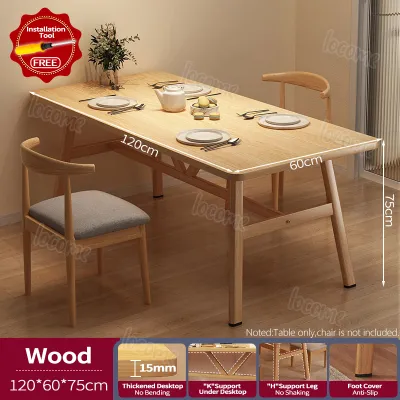
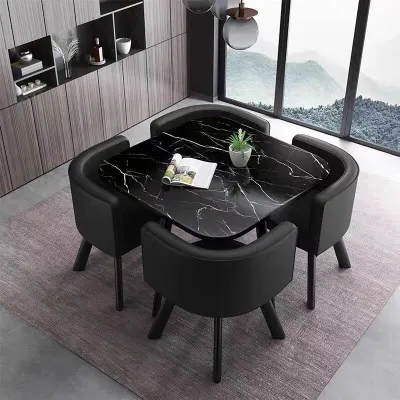
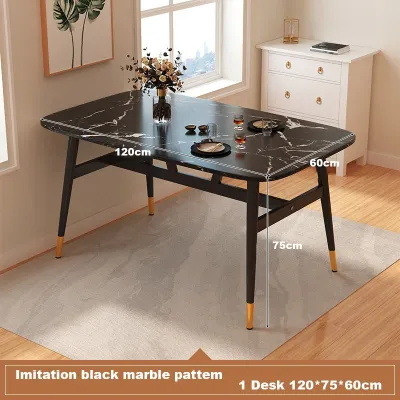
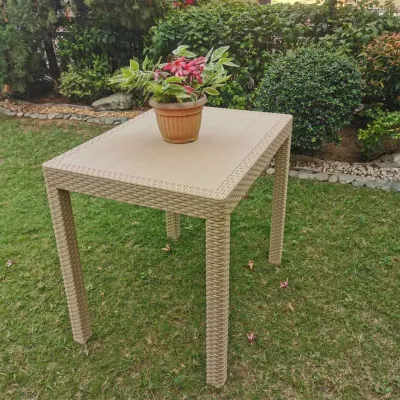
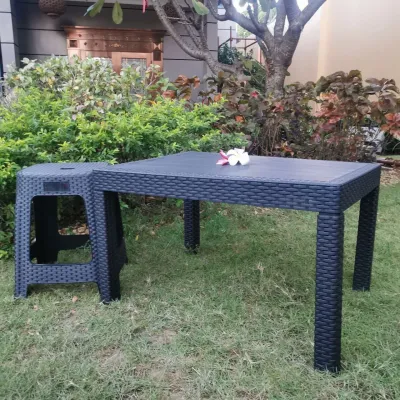
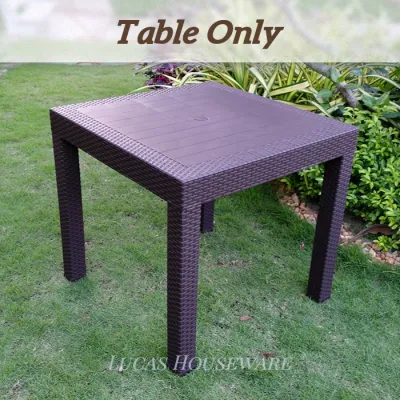
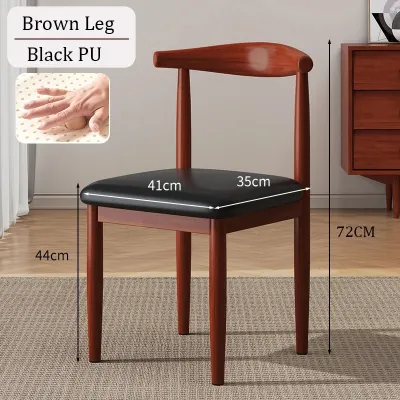
Prices are valid at publication and may change. Please refer to the product page for the latest price.

Next, conduct an honest hosting reality check. Ask yourself how often you actually host larger groups of six to ten people. In many Filipino homes, weekend family lunches and casual get-togethers are a regular tradition. If you host these gatherings weekly or even bi-weekly, investing in an extendable table is highly practical. However, if your large gatherings only happen once or twice a year—such as during major holidays or annual milestone celebrations—buying a massive, specialized table may not be the most efficient use of your space or budget.
Falling into the “occasional guest” trap can lead to long-term frustration. Placing a heavy, bulky extendable table in a room where it is rarely fully utilized sacrifices valuable daily living space for a temporary convenience. If you only host large groups occasionally, a standard four seater dining table paired with creative, flexible seating is often a much better solution. You can easily supplement your main table with lightweight folding tables, nesting stools, or bench seating that can be stored away in a closet or utility area when your guests depart.
Measure Your Dining Space and Walkway Clearance
Before committing to any dining table, you must verify the physical dimensions of your dining room. Start by comparing the footprint of a standard four seater dining table against both the collapsed and fully extended dimensions of your target extendable table. A typical four-seater table measures approximately 120 cm to 140 cm in length, making it highly compatible with smaller dining zones. An extendable table might start at a compact 150 cm but stretch to over 220 cm when fully extended, requiring a significantly larger room layout to remain functional.
Chair clearance is another critical factor that directly impacts comfort. As a general rule, you need approximately 60 cm to 90 cm of open space behind each chair to allow people to pull their chairs out, sit down, and stand up comfortably. However, because chair designs vary widely—from slim metal frames to bulky upholstered armchairs—you should always verify the specific clearance requirements based on your chosen chair styles and the table’s leg configuration. If your dining chairs have wide bases or high backs, they will require more breathing room to prevent the space from feeling cramped.
Maintaining clear walkways and traffic flow is essential, particularly in compact apartments and modern open-plan condos. When a table is fully extended, it should not block major pathways to the kitchen, living room, or bathrooms. If family members have to squeeze sideways or step carefully around the table to move through the house, the table is too large for the space. Ensure that even with the table fully extended and chairs occupied, there is still a clear path of at least 70 cm for comfortable foot traffic.
Finally, do not overlook delivery access and assembly logistics. Many homeowners select a beautiful, heavy extendable table only to find that the delivery team cannot maneuver it through narrow apartment corridors, tight stairwells, or standard elevator doors. Before finalizing your purchase, carefully measure all entryways, elevator heights, and tight corners along the delivery route. Because extendable tables feature complex internal mechanisms and heavy structural frames, verifying that the flat-pack boxes or fully assembled pieces can safely reach your dining room is a vital step in the buying process.
Compare Daily Usability and Extension Mechanisms
Beyond physical dimensions, you should consider the visual weight and proportion of the table within your room. An extendable table, even when collapsed, often carries a heavier visual presence than a dedicated four seater dining table. To support the weight of the extension leaves and internal tracks, these tables typically feature thicker legs, wider aprons, and more robust frames. In a small dining area, this extra bulk can make the room feel visually crowded, whereas a streamlined four-seater table maintains a light, airy, and modern aesthetic.
The type of extension mechanism also plays a major role in daily maintenance and usability. Common options include butterfly leaves (which fold and store inside the table frame), drop-leaf designs (where the sides hang down when not in use), and removable leaves that must be stored separately in a closet. When shopping, test the mechanism for smooth, effortless operation and check for potential pinch points that could catch fingers. In the tropical, high-humidity climate of the Philippines, solid wood components can expand and contract; therefore, it is crucial to follow the manufacturer’s care and lubrication instructions closely to prevent the tracks or hinges from sticking over time.
Surface continuity is another practical consideration. Extendable tables feature seams where the leaves meet, which can easily trap food crumbs, dust, and liquids during daily meals. Additionally, because the extension leaves are stored away and shielded from sunlight while the main tabletop is exposed to daily wear and natural light, you may notice slight variations in wood grain, color, or finish sheen over time. If a perfectly seamless, uniform tabletop is a priority for your home, inspect the table in-store or review detailed product specifications before buying.
Lastly, keep in mind the overall weight and mobility of the furniture. Because of their internal metal tracks, extra leaves, and reinforced frames, extendable tables are significantly heavier than standard fixed tables. This added weight makes them much harder to slide or lift when you want to sweep, mop, or rearrange your living space. If you prefer lightweight furniture that can easily be moved to accommodate different activities or routine cleaning, a standard four-seater table offers far superior mobility.
Make Your Decision: When to Choose Which Table
To make your final decision, apply a clear, conditional framework based on your spatial limits and hosting frequency. Choose a standard four seater dining table if your dining area is compact, your daily household consists of one to four people, and large gatherings are rare. This option keeps your home feeling spacious, is easy to clean around, and avoids the unnecessary expense and weight of a complex extension mechanism.
Choose an extendable 6-10 seater dining table if you have verified that your room has the physical clearance to accommodate the fully extended footprint without blocking walkways. This option is ideal if you host large groups on a regular basis, or if you have a growing family and expect your daily seating needs to increase in the near future. It offers the perfect compromise between daily space-saving and occasional high-capacity hosting.
As an actionable next step, use painter’s tape to map out the exact dimensions of both options on your dining room floor. Mark the collapsed footprint, the fully extended footprint, and the required chair clearance zones. This simple visual exercise will help you see exactly how much floor space remains for movement. Once you have a clear picture, verify the exact product dimensions with the retailer, and carefully read the assembly instructions, warranty terms, and weight limits before making your investment.
Frequently Asked Questions (FAQ)
Can I use an extendable table as a daily 4-seater without the leaves?
Yes, you can physically use an extendable table in its collapsed state as a daily four-seater, but you should consider the visual proportions and leg placement. Because these tables are engineered to support a much larger surface, the legs and underframe may look disproportionately bulky when the table is collapsed. Additionally, you must check whether the table’s leg placement or thick support aprons interfere with your knee space or prevent your dining chairs from sliding fully under the table when it is closed.
Are extendable dining tables less stable than fixed ones?
High-quality extendable dining tables are highly stable for normal daily use, but they do require more care than fixed tables. To ensure long-term structural integrity, always follow the manufacturer’s specified weight limits and ensure all locking mechanisms are fully engaged when the table is extended. Because the extended sections rely on cantilevered support or internal tracks, you should avoid leaning heavily on the outer edges, never allow children to climb on the table, and check the manufacturer’s warranty to ensure the extension mechanism is fully covered against defects.

Community discussion
Share your experience or ask a question. Comments are reviewed before publication.